Nature of Science
 Call Kai
 Learn
 Practice Test
 Spaced Repetition
 Match
 Flashcards
 Knowt Play
1/64

Earn XP
Description and Tags
Teaching Science
65 Terms
Carl Linnaeus
Swedish biologist known as the father of taxonomy; developed the modern system of classification used to name, identify, and classify living things
Principle of Uniformitarianism
the belief that physical laws, and therefore geologic processes, are constant; these processes have always occurred in the same manner at the same rate and will continue to do so
Werner Heisenberg
German physicist who developed the uncertainty principle
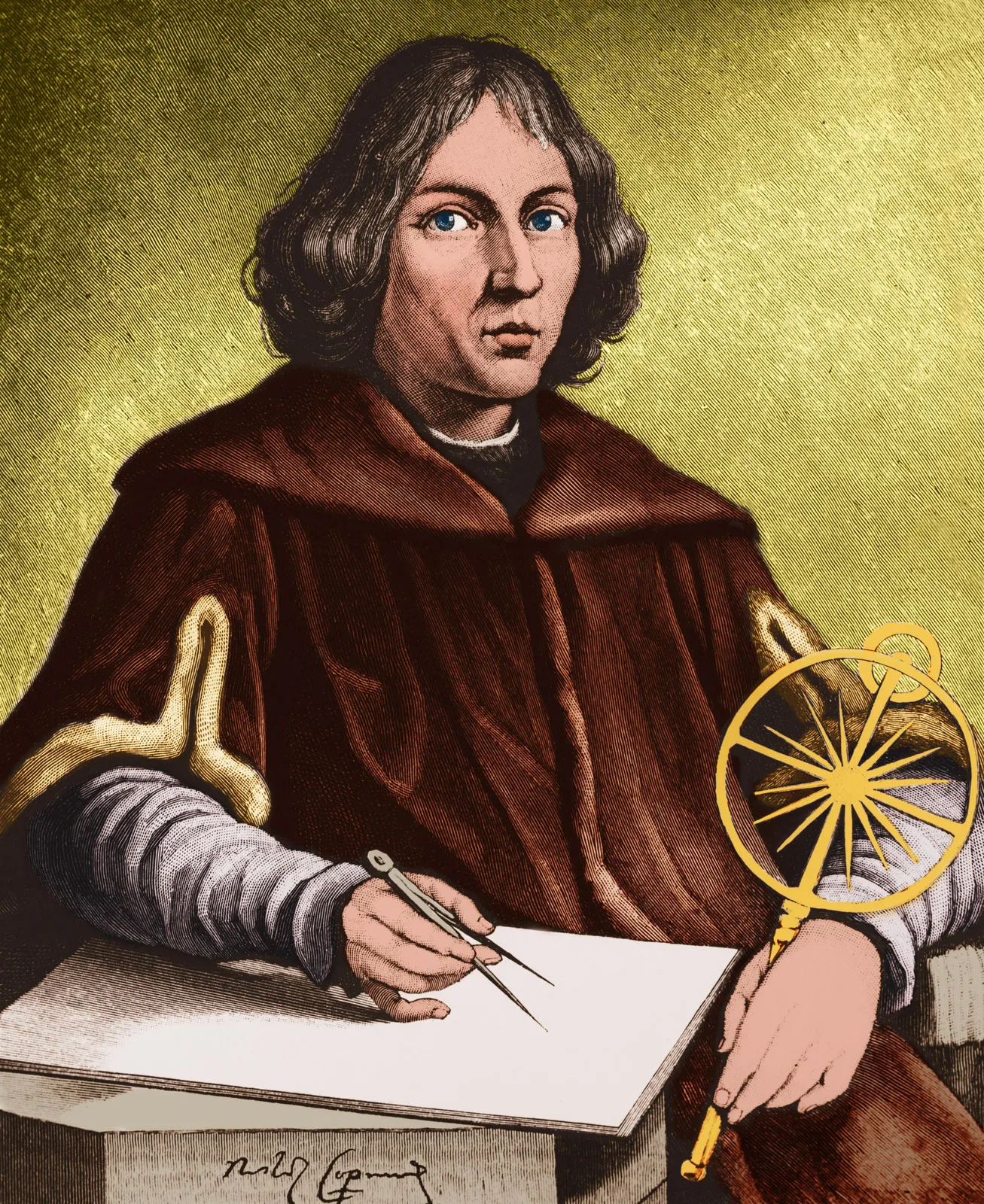
Nicolaus Copernicus
Polish mathematician and scientist who discovered heliocentricity, which explains that the Sun, not the Earth, is the center of the solar system
Models
physical, mathematical, or visual representations of scientific phenomena
Example.
a diagram of the eye
John Dalton
English chemist and physicist who developed the fixed orbital model of the atom using gas phase experiments
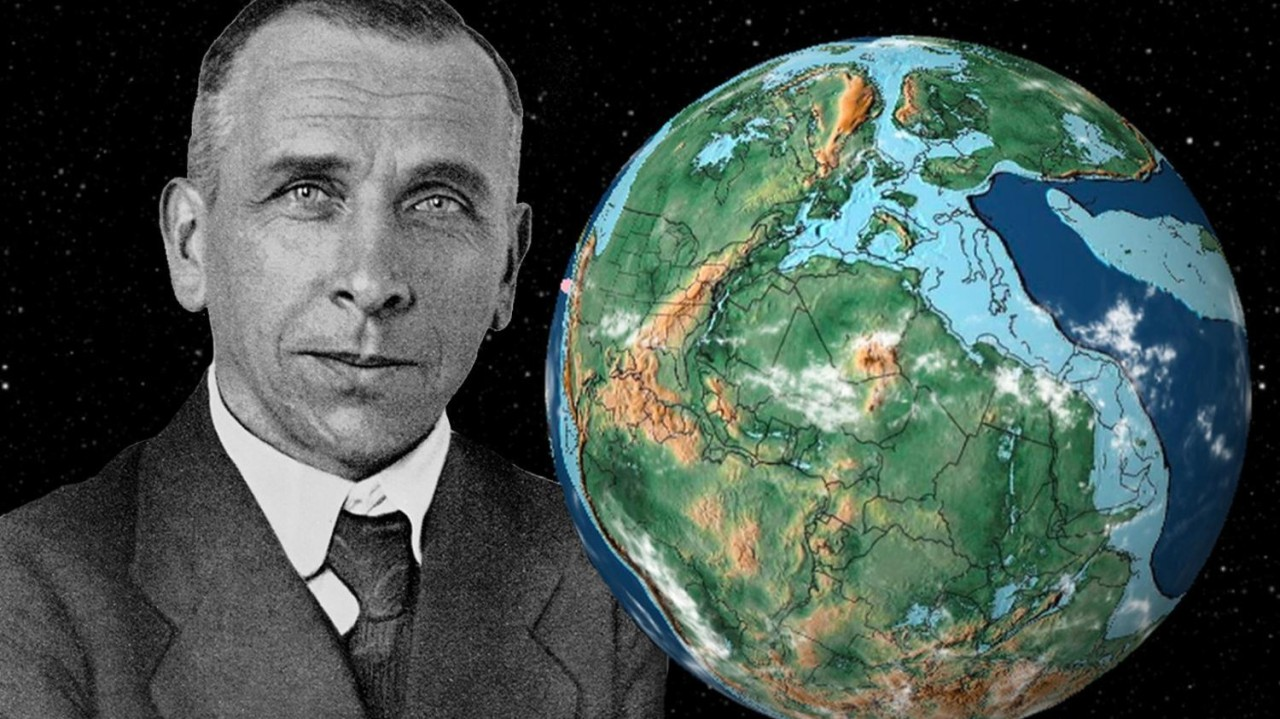
Continental Drift
the movement of continents due to the activity of the tectonic plates beneath them
Stratigraphy
the branch of geology that studies the formation and characteristics of rock strata
Risk Assessment
the process of identifying, evaluating, and prioritizing potential risks and uncertainties that may affect the achievement of objectives, allowing organizations to make informed decisions and implement mitigation strategies to minimize negative impacts
Heliocentricity
the accepted astronomical model that the sun is at the center of our solar system; theory was put forth by Copernicus in 1543 and expanded upon by Galileo in 1632
Marie Curie
Polish-French physicist and chemist who defined radioactivity as a property of atoms (uranium/thorium experiment) and helped discover radium and polonium; wife of Pierre Curie

Shen Kuo
Chinese mathematician and scientist who invented the magnetic compass and defined "true north" as magnetic north
Reclamation
creating new, useable land or returning land to a former use
Example.
reforestation, reclaiming submerged land
Michael Faraday
English scientist who discovered electromagnetic induction
Uncertainty Principle
a fundamental property of nature: it is impossible to exactly determine both the position and momentum of a particle at a given time
Harry Hess
American geologist who discovered seafloor spreading

Harold Urey
American chemist who discovered deuterium, a radioactive molecule of hydrogen, and collaborated on the Urey-Miller abiogenesis experiment showing a possible origin of life on Earth

Wolfgang Pauli
Austrian physicist who discovered the existence of neutrons and developed the Pauli exclusion principle
The Metric System
a standard system of measurement based on powers of 10.
Example.
meters, liters, grams
Francis Crick
English biologist who proposed that the structure of DNA is a double helix (with James Watson and Rosalind Franklin)
Conceptual Models
a representation of a system using diagrams or drawings to explain complex or abstract systems or processes
Example.
a diagram of cellular respiration
Nicolas Steno
Danish scientist who developed stratigraphy, the study of Earth's layers
Galileo Galilei
Italian mathematician and scientist who furthered Copernicus' idea of heliocentricism, discovered Jupiter's moons, and was credited with the scientific method

Daniel Bernoulli
Swiss mathematician and physicist who developed the Bernoulli Principle to explain the relationship between the speed and pressure of a fluid
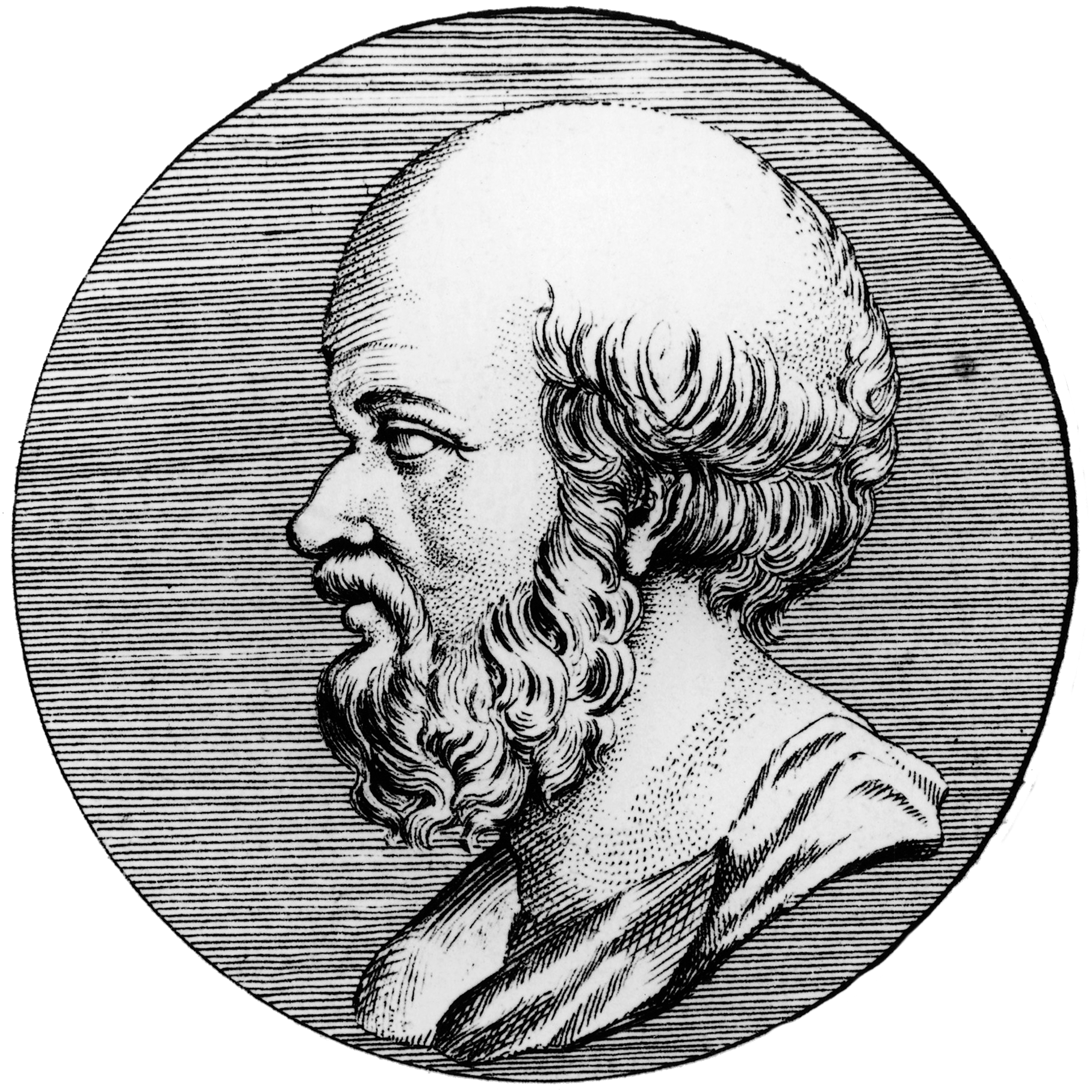
Eratosthenes
Greek mathematician and geographer who founded the science of geography and accurately calculated Earth's size
Radioactivity
when an atom changes the number of protons in the nucleus and releases radiation
Theodor Schwann
German physicist and physiologist who extended cell theory to include animal cells
Stephen Jay Gould
American paleontologist who developed the evolutionary theory of punctuated equilibrium
Christiaan Huygens
Dutch mathematician and physicist who supported the wave nature of light

Physical Models
a smaller or larger replica of an object done to scale
Example.
a physical model of an atom
James Clerk Maxwell
Scottish physicist who developed the theory of electromagnetism; showed that electricity, magnetism, and light are all manifestations of the electric field
Alfred Wegener
German geologist who developed the theory of continental drift
Antonie van Leeuwenhoek
Dutch microbiologist; founded the science of microscopy by describing microscopic organisms
Ernest Rutherford
New Zealand physicist who discovered that nearly all the mass of an atom is in its nucleus and contributed to the Geiger-Marsden gold foil experiments
Dmitri Ivanovsky
Russian biologist who proved the existence of an infectious agent causing disease in tobacco plants using the Chamberland filter-candle
Edwin Hubble
American astronomer who developed Hubble's Law, providing insight into the expanding universe
Mathematical Models
models that use mathematical formulas, variables, and language to refer to relationships and processes in a system
Example.
the formula for gravitational force: F=mg
Isaac Newton
English mathematician and scientist who formulated the Laws of Motion and the Law of Universal Gravitation

Alexander Fleming
Scottish physician and microbiologist who discovered the first antibiotic (penicillin)

Rosalind Franklin
British chemist who used X-ray crystallography to research the DNA molecule's density and helical shape

Pierre Curie
French physicist who helped discover radium and polonium; husband of Marie Curie

James Hutton
Swedish geologist who developed the theory of uniformitarianism, explaining that Earth is continuously being formed

Erwin Schrödinger
Austrian physicist who developed the main equation for quantum physics and proposed the electron cloud model of the atom

Niels Bohr
Danish physicist who developed the quantum model of the atom showing that only certain electron orbitals exist

Non-Renewable Resources
resources which will be depleted faster than they can be replenished
Example.
natural gas, petroleum
James Watson
American biologist who proposed that the structure of DNA is a double helix (with James Watson and Rosalind Franklin)

Renewable Resources
resources which replenish at the same (or faster) rate than the rate at which they are used
Example.
wind energy, solar energy, hydroelectric power
Max Planck
German physicist who discovered the photoelectric effect leading to the principle of quantum mechanics
Inge Lehmann
Danish seismologist and geophysicist who discovered Earth's inner core
Democritus
Greek philosopher who believed that atoms were uniform, incompressible, and indestructible; named the building blocks of matter atomos

Johannes Kepler
German astrologer and mathematician who proposed three laws of planetary motion that describe the orbits of the planets as ellipses

Biomass
renewable resource made from plant and animal matter
Robert Hooke
English scientist who developed Hooke's law for springs (elasticity) and described the expansion of matter when heated
Murray Gell-Mann
American physicist who proposed that matter is made of quarks
John Michell
English philosopher who:
Described the cause of earthquakes
Described earthquakes as waves
Invented the torsion balance to measure the mass of the Earth
Louis Pasteur
French biologist, chemist, and pharmacist known as the father of germ theory; created the first vaccinations for rabies and anthrax, discovered airborne illnesses, disprove the theory of spontaneous generation using the swan neck flask
Rudolf Virchow
German physician and scientist who was the pioneer of modern pathology; proposed that diseases arose from their individual cells
J.J. Thomson
British physicist who conducted cathode-ray experiments to discover the electron and proposed the "plum pudding model of an atom"

Matthias Jakob Schleiden
Term definition.
German botanist; co-founder of cell theory (with Theodor Schwann); proposed that all structural plant parts are made of cells

Stanley Miller
American chemist who discovered that organic amino acids could be made from inorganic molecules; performed the Urey-Miller abiogenesis experiment showing a possible origin of life on Earth (with Harold Urey)
Acid Rain
rain with a lower pH than neutral
corrosive to many substances, including rocks
often caused by pollution
Example.
sulfur dioxide dissolves in the water droplets of clouds to make sulfuric acid
Aristotle
Greek philosopher; created the first taxonomy of organisms by grouping animals with similar characteristics

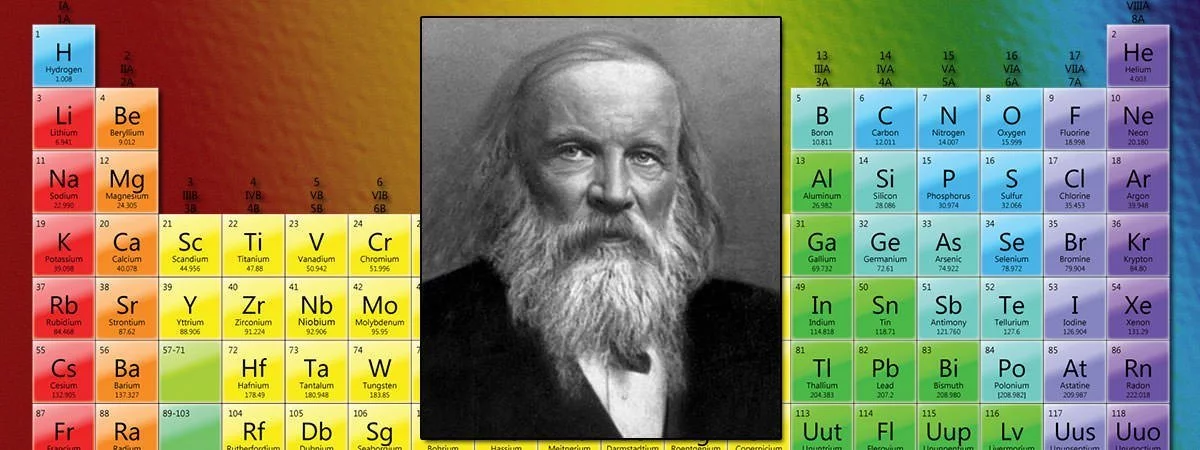
Dmitri Mendeleev
A chemist (1834-1907) who published the first periodic table with elements arranged by mass
Thomas Hunt Morgan
American biologist who advanced the theory of genetics by studying fruit flies

Albert Einstein
German physicist who:
Proposed the equivalence of matter and energy based on the constant speed of light in all reference frames
Developed the theory of general relativity stating that an object's gravity is due to the curvature of space
Proposed the existence and size of atoms using Brownian Motion
Explained the photoelectric effect as due to the quantization of light
