mammology practical 2
 Call Kai
 Learn
Learn Practice Test
 Spaced Repetition
 Match
Match Flashcards
 Knowt Play
1/25

There's no tags or description
Looks like no tags are added yet.
Name | Mastery | Learn | Test | Matching | Spaced | Call with Kai | Chat |
|---|
No analytics yet
Send a link to your students to track their progress
26 Terms

Clade Xenarthra
Order Pilosa
Suborder Vermilingua
Family Cyclopedidae
No teeth!
Skull elongate
Rostrum very long and curves downwards
Incomplete zygomatic arch
Premaxilla is very small
Small jugal

Clade: Euarchonta
Clade Suandatheria
Order Dermoptera
Family Cynocephalide
Pecinate teeth (tooth combs)
Used to groom fur
Patagium: membrane between forelimbs and hindlimbs to fly/glide
Broad flattened cranium
Well developed post-orbital process
Prominent temporal ridge
Upper incisors of left and right sides separated by diastema
⅔, 1/1, 2/2, 3/3, =34
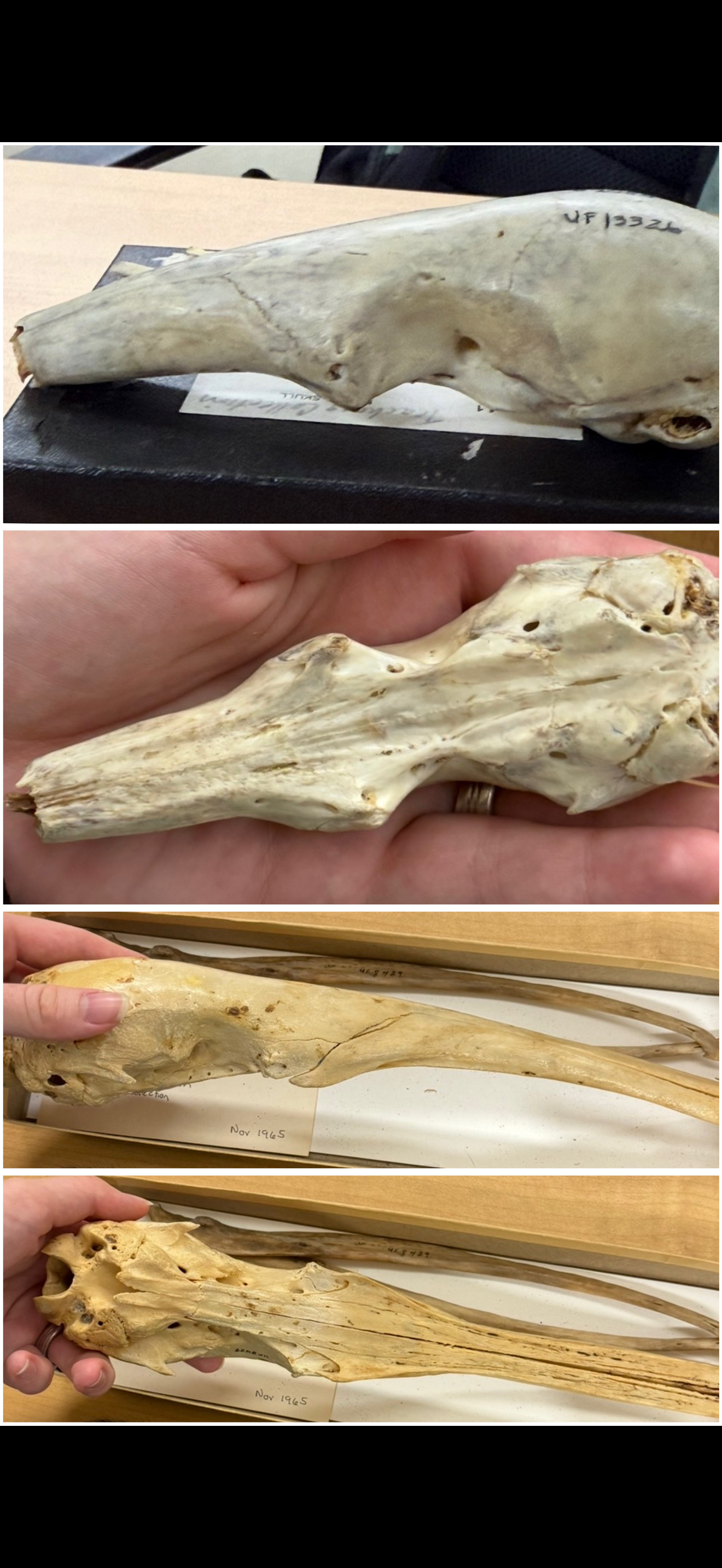
Clade Xenarthra
Order Pilosa
Suborder Vermilingua
Family Myremecophagidae
No teeth!
Skull elongate
Rostrum very long and curves downwards
Incomplete zygomatic arch
Premaxilla is very small
Small jugal

Clade: Xenarthra
Order: Pilosa
Suborder: Folivora
Family: Bradypodidae
Tail is very small
Skull block with blunt snout
Forelimbs longer than hindlimbs
Incomplete zygomatic arch
Small premaxilla
Homodont cheek teeth
Shaggy fur, shorter and more feathery than Choloepodidae
3 toes with claws on forefeet
1st pair of cheek teeth not caniniform
Angular process enlarged, projecting posteroventrally

Clade: Xenarthra
Order: Pilosa
Suborder: Folivora
Family: Choloepodidae
Tail is very small
Skull block with blunt snout
Forelimbs longer than hindlimbs
Incomplete zygomatic arch
Small premaxilla
Homodont cheek teeth
Long shaggy fur
2 toes with claws on forefeet
1st pair of cheek teeth are caniniform
Angular process small and directed posteriorly

Clade: Xenarthra
Order: Cingulata
Family: Chlamyphoridae
Body covered with keratin scutes overlying bony plates
Skull elongated: rostrum flattened and elongate
Complete zygomatic arch
Cheek teeth homodont, subcylindrical, molars and premolars are indistinguishables
slightly stouter rostrum and shorter diastema (teeth go closer to end)
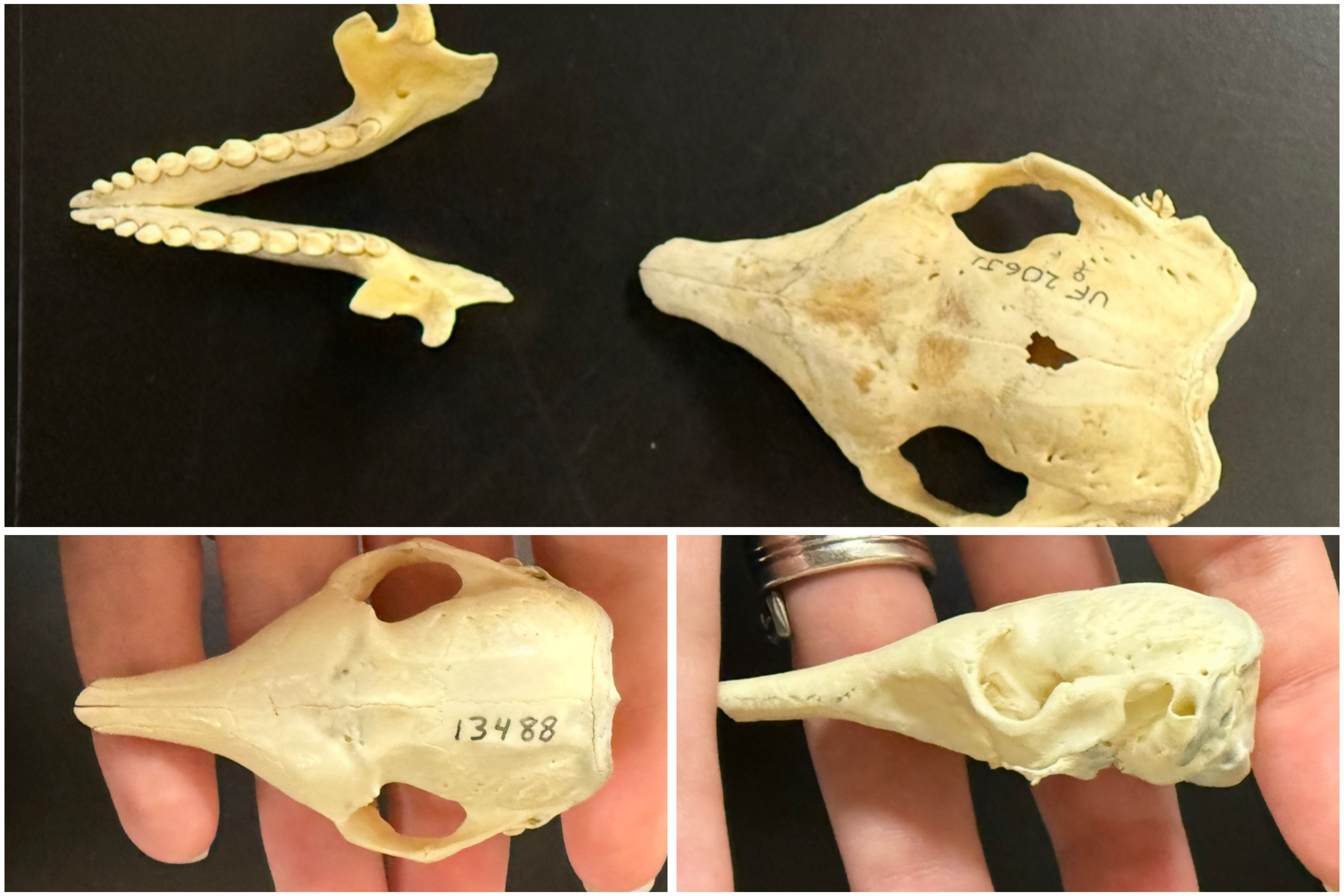
Clade: Xenarthra
Order: Cingulata
Family: Chlamyphoridae
Body covered with keratin scutes overlying bony plates
Skull elongated: rostrum flattened and elongate
Complete zygomatic arch
Cheek teeth homodont, subcylindrical, molars and premolars are indistinguishables
slightly stouter rostrum and shorter diastema (teeth go closer to end)

Clade: Xenarthra
Order: Cingulata
Family: Chlamyphoridae
Body covered with keratin scutes overlying bony plates
Skull elongated: rostrum flattened and elongate
Complete zygomatic arch
Cheek teeth homodont, subcylindrical, molars and premolars are indistinguishables
slightly stouter rostrum and shorter diastema (teeth go closer to end)

Clade: Xenarthra
Order: Cingulata
Family: Dasypodidae
Species: Dasypus mexicanus
Body covered with keratin scutes overlying bony plates
Skull elongated: rostrum flattened and elongate
Complete zygomatic arch
Cheek teeth homodont, subcylindrical, molars and premolars are indistinguishables

Boreoeutheria
Order: Pholidota
Family: manidae
pangolin
No teeth (Edentulous)
Skull conical, lacking crests and ridges
Large nasal
No jugal or interparietal bone

Clade: Eurchonta
Order: Primates
Suborder: Haplorrhini
parvorder: Catarrhini
Family: Cercopithecoidea
Ischial callosities present
Auditory bulla extending laterally as a bony tube
Long rostrum
2/2, 1/1, 2/2, 3/3 =32

Clade: Eurchonta
Order: Primates
Suborder: Haplorrhini
parvorder: Catarrhini
Family: Cercopithecoidea
Includes species: Macaca mulatta
Ischial callosities present
Auditory bulla extending laterally as a bony tube
Long rostrum
2/2, 1/1, 2/2, 3/3 =32

Clade: Eurchonta
Order: Primates
Suborder: Haplorrhini
parvorder: Catarrhini
Family: Hylobatidae
Lack sexual dimorphism in great apes
No tail
Brachiation (locomotion of swinging, using typically only forelimbs)
Skull with large orbits with protruding rims
Wide interorbital distance
No sagittal crest
Auditory bulla extends laterally as bony tube
2/2, 1/1, 2/2, 3/3 =32

Clade: Eurchonta
Order: Primates
Suborder: Haplorrhini
Parvorder: Catarrhini
Family: Hominidae
Large braincase
Sagittal crest often prominent
Auditory bulla extends laterally as tube
Well developed canines except in humans
2/2, 1/1, 2/2, 3/3 =32

Clade: Eurchonta
Order: Primates
Suborder: Haplorrhini
Parvorder: Catarrhini
Family: Hominidae
Species: homo sapien
Large braincase
Sagittal crest often prominent
Auditory bulla extends laterally as tube
Well developed canines except in humans
2/2, 1/1, 2/2, 3/3 =32

Clade: Eurchonta
Order: Primates
Suborder: Haplorrhini
Parvorder: Platyrrhini
Family: Pitheciidae
HUGE mandible as well but round
Long skulls
Canines short
Prognathus snout (short af)
Nasal bones enlarged
2/2, 1/1, 3/3, 3/3, =36

Clade: Eurchonta
Order: Primates
Suborder: Haplorrhini
Parvorder: Platyrrhini
Family: Cebidae
Smallest of simian monkeys
Orbits very large
Molar tritubercular
Only two molars above and below
Large premolars and quadrate molars; occlusal surface with low cusps or sharp cusps
2/2, 1/1, 3/3, 2-3/2-3, =32-36

Clade: Eurchonta
Order: Primates
Suborder: Haplorrhini
Parvorder: Platyrrhini
Family: Cebidae
Smallest of simian monkeys
Orbits very large
Molar tritubercular
Only two molars above and below
Large premolars and quadrate molars; occlusal surface with low cusps or sharp cusps
2/2, 1/1, 3/3, 2-3/2-3, =32-36

Clade: Eurchonta
Order: Primates
Suborder: Haplorrhini
Parvorder: Platyrrhini
Family: Atelidae
Arboreal
Prehensile tails
Brachiation
HUGE ASS HYROID BONES
Skull with small braincase
Molars with labial shearing crests
Mandible large and deep
Molar bunodont and brachydont
2/2, 1/1, 3/3, 3/3, =36

Clade: Eurchonta
Order: primates
Suborder: strepsirrhini
Family: Galagidae
Sub-saharan africa
Ectotympanic ring fused to pretrosal part of bulla
Upper molars quadritubercular with enlarged hypocone separated from trigon on distinct shelf
2nd digit on forefoot reduced
Skull with long rostrum
Braincaise globular without strong temporal ridge
Postorbital bar not very broad
2/2, 1/1, 3/3, 3/3, =36

Clade: Eurchonta
Order: primates
Suborder: strepsirrhini
Family: Lemuridae
Post-orbital bar
Long rostrum
Tooth comb
Bulla overgrows tympanic ring
Uppers molars with 3 primary cusps but secondary lingual cusplets providing generalized quadrate shape
Rounded braincase
Enlarged upper incisors, unequal size, median diastema separates
2/2, 1/0, 2/2, 3/3, =30

Clade: Eurchonta
Clade: Suandatheria
Order: Scandentia
Family: Tupaiidae
Auditory bulla NOT enlarged
No palatal perforations
Post orbital process large, contacting zygomatic arch to form complete post orbital bar
Zygomatic arch perforate
Molars with 3 principle cusps, 4th cusp is very small
Occlusal surface of upper molars with weakly developed W-shaped ectoloph
⅔, 1/1, 3/3, 3/3, =38

Clade: Eurchonta
order: Primates
Surborder: haplorrhini
Family: tarsiidae
Enlarged medial incisors
Bigger eyes than brain
Elongated tarsals
Short af rostrum
Prominent refugees around MASSIVE orbits
Upper and lower incisors well developed and unequal in size
Molar tritubercular
Really sharp teeth tbh
2/1, 1/1, 3/3, 3/3, =34

Clade: Eurchonta
order: Primates
Surborder: haplorrhini
Family: Lorisidae
Ectotympanic ring fused to pretrosal part of bulla
Upper molars quadritubercular with enlarged hypocone separated from trigon on distinct shelf
2nd digit on forefoot reduced
Rostrum short
Braincase rounded with well defined temporal ridges
Postorbital bar very broad
External auditory meatus contacts zygomatic part of squamosal
2/2, 1/1, 3/3, 3/3, =36
Strepsirrhini vs Suborder Haplorrhini
Haplorhini:
Short rostrum
Plate separating orbits from temporal lobe
simple nostrils, philtrum pretty much absent: nasolacrimal duct short and oriented vertically
Braincase relatively large and rounded
Eyes face forward
Foramen magnum directed ventrally
Strepsirhini
Relatively long rostrum
Post-orbital bar
Temporal fossa
No plate-postorbital bar
Tooth comb present
slit like nostrils directed laterally
Platyrrhini vs catarrhini (parvorders)
Platyrrhini: new world monkeys
3 premolars above and below
Nostrils directed laterally
Prehensile tail
Catarrhini
2 premolars above and below
Nostrils close together and directed forward and downward, not laterally
No prehensile tail