Physics review
 Call Kai
 Learn
 Practice Test
 Spaced Repetition
 Match
 Flashcards
 Knowt Play
1/87

There's no tags or description
Looks like no tags are added yet.
88 Terms
Displacement
change in position between 2 time intervals
Change in displacement= final - initial
has magnitude
arrow= vector
sign = direction
is time a vector
no
Scalar
just that # value like money
vector
has magnitude (speed=length) and direction,
Velocity Vector
rate of change of the position
BOLD= VECTOR
v= Δr/Δt
Acceleration vector
rate of change of velocity
a = Δv/Δt
Ball thrown straight up
no matter what acceleration is always pointing down no matter what v looks like
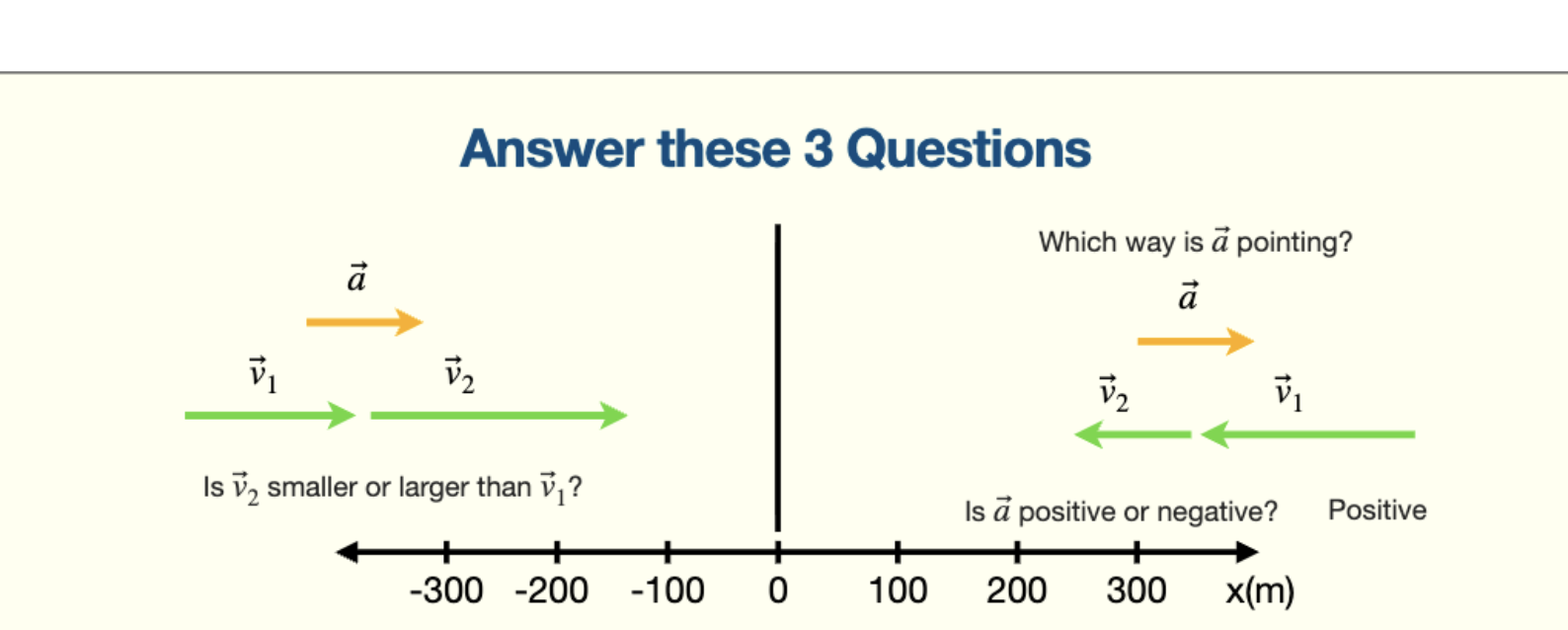
Since velocity is going to the right and getting longer its speeding up so a is the same sign as velocity
since velocity is pointing left and slowing down a is the opposite sign bc its slowing
Finding position from velocity
MUST INCLUDE xi

after finding vector/ force components how do you calculate Magnitude
add both x and y coordinates of all vectors together
eg
Rx = Ax + Bx
Ry = Ay + By
then using the final Rx and Ry find magnitude
SQRT(Rx2 + Ry2 )
after finding final total x and y components how do you find the angle of the resulting vector
tan(X)= Ry/Rx
X= tan-1(Ry/Rx)
Kinematic equations
STUDY OF HOW THINGS MOVE
MAKE SURE TO USE THE SAME UNITS ONLY (m)
Acceleration:
ax(t)= ax
ay(t)=ay
they’re constants
Velocity:
(vx)f = vx,i + axΔt
(vy)f = vy,i + ayΔt
linear
postion
xf = xi + vx,i Δt + ½ax(Δt)²
yf = yi + vy,i Δt + ½ay(Δt)²
quadratic
vf2 = vi2 +2aΔx (CAN ALSO BE Δy!!!!!!!JUST CHANGE IN Y AXIS)
(vx)f = (vx)i
what does it mean when a= constant
position = parabola
velocity = linear
accel= flat line
What does it mean when a=0
position: linear
velocity: flat line
accel: 0
Free fall
all objects in free fall accel down at the sa,e rate
caveat: this is only true if air resistance is very small
all objects in free fall acceleration
g = -9.8 m/s2
tips for kinematic equations
if there are 2 unknowns you must use 2 different equations to solve
define coord system
list all known
determine what to solve
what happens to vertica acceleration if I throw a ball horizontally
nothing
the ball will fall at the same rate even when thrown horizontally
vertical acceleration is unaffected by horizontal motion
perpendicular motions are
independent of each other
to calculate whats happening, first in one direction then the other
for projectile motion questions what does ax and ay equal to
ax = 0
ay = -9.8m/s²
How to find component velocity
(vx)i = v0cosB
(vy)i = v0sinB
Projectile motion concept, lets say I throw a rock down and one horizontally what is their accel
the same
record the time and you can find the height
Force
pushing/pulling action
Newton’s first law
An object w/no forces on it and at rest, will stay at rest. An object with no forces on it that is moving will continue moving in a straight line at a constant speed
force is NOT required to maintain motion (often get it wrong bc normally friction slows things down)
resistance to change is called inertia
Newton's second law
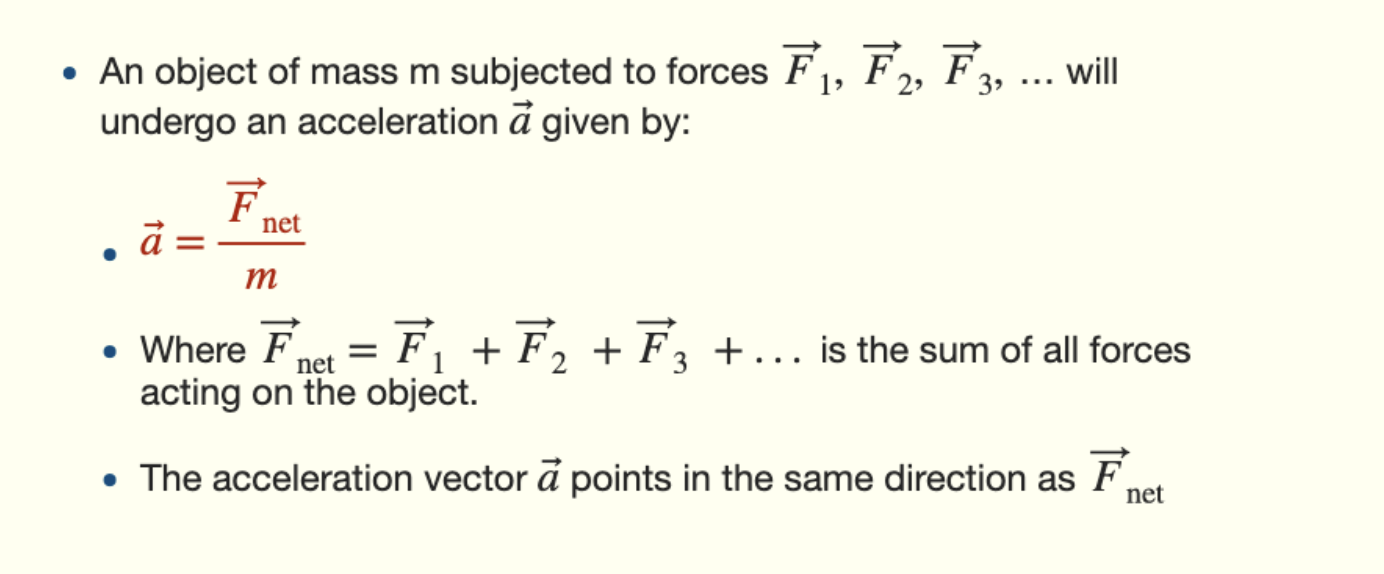
units of force

name the forces
Long range forces:
gravity: w
electro magnetic:(dw abt this for now)
spring: Fsp
Tension: T
friction force: f, fk, fs
Drag: D
Thrust: Fthrust
normal: n
gravity/weight

spring force

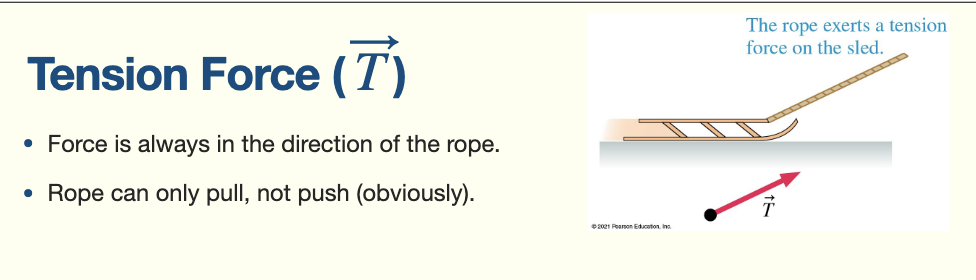
tension force
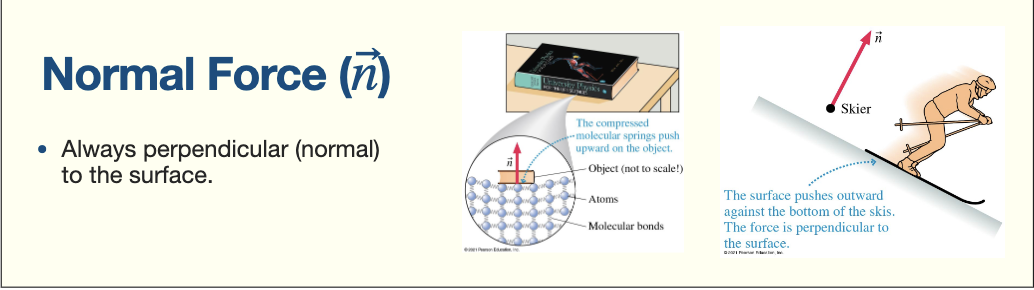
Normal force
Friction force

Drag force

Thrust force

electromagnetic forces

Combining forces
tip to tail

how to find the acceleration of f net

How to solve free body diagram questions


whats the forces acting on this


Mechanical equilibrium

vector addition summary

what are the steps
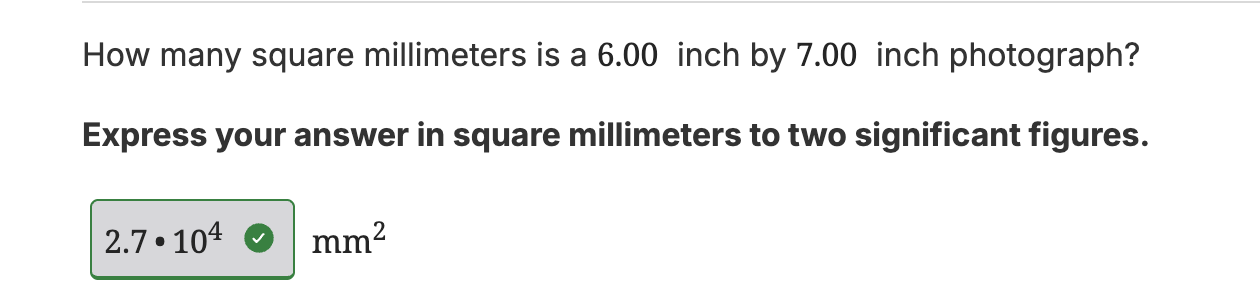
6in x 7in = 42in²
next convert all units to be the same: 1in =25.4mm → (1in)² = (25.4mm)²
now multiply the two values together: 42in² x 645.16mm²/1in²
27096.72→2.7×10²

WHICH WAY ACCEL GOING


If Sue walks home, what is her displacement if the cinema is the origin? Assume the positive direction is to the right.
Express your answer in miles.
-2,
this is because even though the cinema is the origin that doesn’t mean her current position changes
xi= -3.2
xf= -5.2
-5.2-(-3.2) = -2
how do you find velocity(aka average velocity) from just the length and time
v= Δl/Δt

how do you convert the miles to time
miles/mph
Interpreting position-versus-time graphs


What is the rocket doing between
t = 100s and t = 400s?
ONLY WHEN ITS CHANGING SIGNS IS IT GOING DOWN THE OPPOSITE WAY


What height in km does the rocket reach before falling back to earth?
Express your answer in kilometers.
300, BECAUSE ITS THE INTEGRAL

DONT FORGET TO ADD THE xi
it changes direction after crossing the x-axis


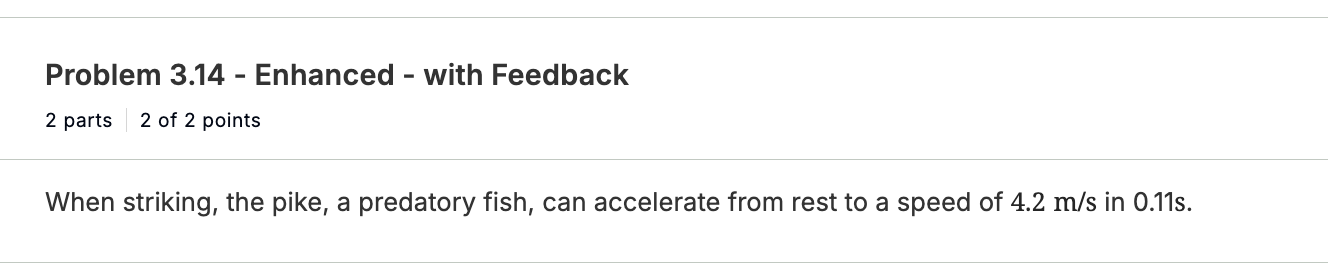
How far does the pike move during this strike?
Express your answer in meters.
because this question brings up velocity, acceleration, and time we know this is kinematics
to find position use kinematic equation
xf = xi + vx,i Δt + ½ax(Δt)²
=0.23m


what are the steps to solve this
convert cm to m
use vf2=vi2+2aΔy
vf EQUALS 0 BECAUSE IT STOPS AT THE HIGHEST POINT ITS THE TURNING POINT MAXIMUM AND MINIMUM
GREATEST HIGH MEANS
velocity vf= 0

first split the time in sec in half to find the max
A tennis ball is struck horizontally from a height of 1 m. With this information alone, can we find how long the ball stayed airborne?
YES
with no drag, horizontal velocity =
ax = 0
vertical displacement equation
g IS POSITIVE

Horizontal Velocity


what equations do u use
vertical displacement, and horizontal velocity
TO FIND DISTANCE USING SPEED WHAT DO YOU DO
MULTIPLY TIME WITH THE SPEED

just use the vert displacement, bc its asking for how long it takes the ball to hit the floor dont think abt how its on the table, just from table to floor

part B of the last question, what formula do you use
the horizontal velocity one
When your car accelerates away from a stop sign, you feel like you're being pushed back into your seat.
INERTIA IS NOT A FORCE


Force formula
F=ma
mass= kg
f= N
a= m/s²
Tennis balls experience a large drag force. A tennis ball is hit so that it goes up and then comes back straight down. The direction of the drag force is
Down and then up.
A person gives a box a shove so that it slides up a ramp, then reverses its motion and slides down.
The direction of the force of friction is
Down the ramp and then up the ramp.

since force mass and accel given its F=ma
use it twice, 1 to initially find F then to find a using F


MAKE SURE ITS IN Kg


why is it incorrect
because there is no forward force applied to the ball, the ball is rolling freely on the table, forward motion is maintained by INERTIA and NOT a force

there is no force vector to the right as it does not explicitly state contact with the club, what is maintaining the motion is INERTIA NOT FORCE
drag is OPPOSITE of the motion
An ascending elevator, hanging from a cable, is coming to a stop.
Weight, tension

use tangent
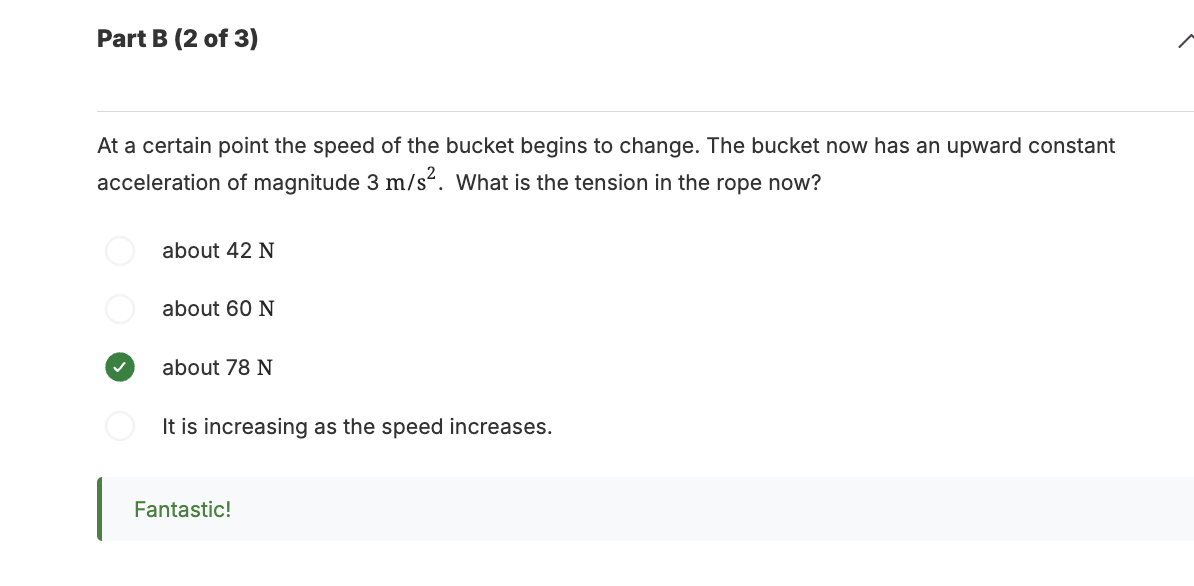
Tension formula
T= mg
mass= kg
gravity +

use tension formula for 1
the use F=ma for the next and add the additional tension to the og


WHAT IS vi
0, because at the top it hasnt moved yet vf is the one that has velocity

what equations should u use
use x position first, finds time a=0
use y position, a= -9.8

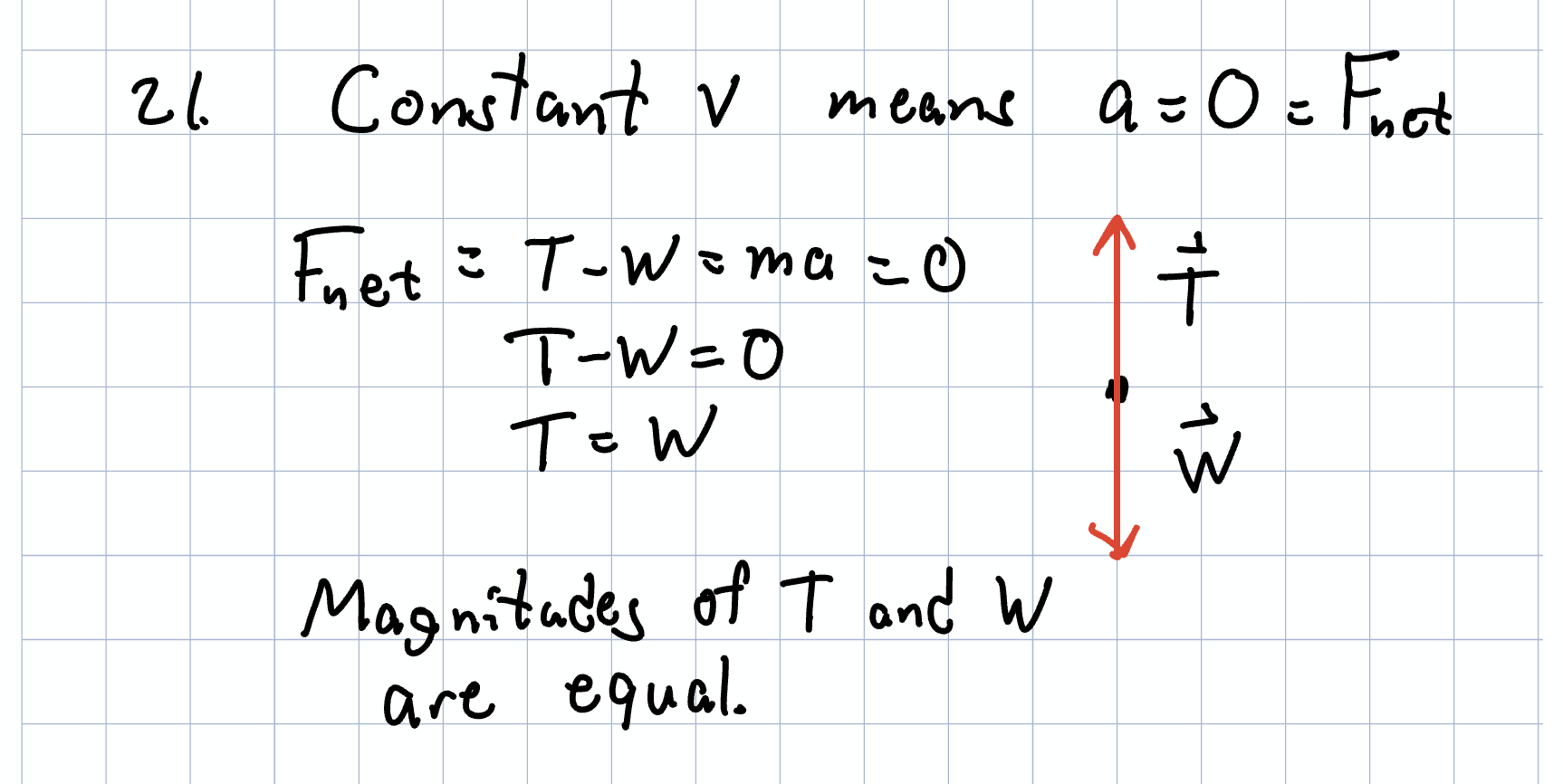
a, because its pushed at CONSTANT SPEED
therefore, a=0, Fnet=0 and all forces are equal on eachother

whats vy,i
HORIZ VELOCITY IRRLEVANT
EITHER USE DISPLACEMENT FORMULA
OR REMEMBER FOR THESE Qs vy,i IS ALWAYS = 0

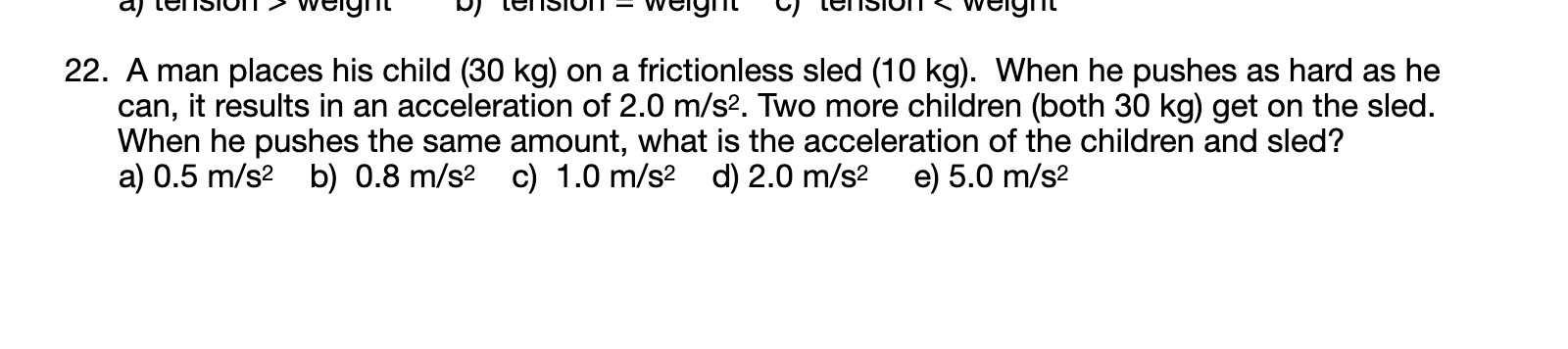
by the end what are the weights of everything added up
3 children + 1 sled= 100kg