Principles of GI tract surgery 1, 2 & 3
 Call Kai
 Learn
 Practice Test
 Spaced Repetition
 Match
 Flashcards
 Knowt Play
1/58

There's no tags or description
Looks like no tags are added yet.
59 Terms
Recall Halsted's principles of surgery and how you can apply them in GI tract surgery
Gentle tissue handling
Meticulous haemostasis
Preservation of blood supply
Strict asepsis
Minimal tension
Accurate tissue apposition
Obliteration of dead space
How can we apply gentle tissue handling in the GI tract?
Sufficient incision size
Use hands but avoid excessive handling
Keep tissues moist
Stay sutures
Use scalpel for initial incision (extend with scalpel/ metzenbaum)
Liver and pancreas esp fragile
What manouvre is being shown here?
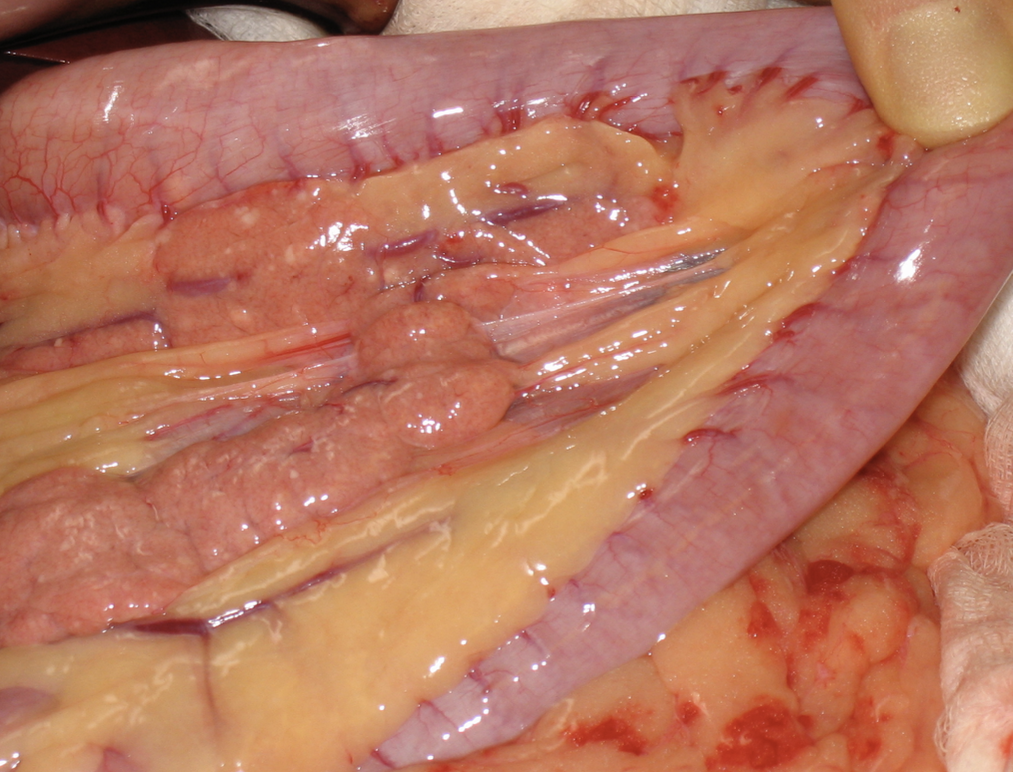
Duodenal dam manouvres
Exposes right abdomen (right kidney, adrenal gland, ovarian pedicle)
Can do the same on the other side with colon
What is this instrument?
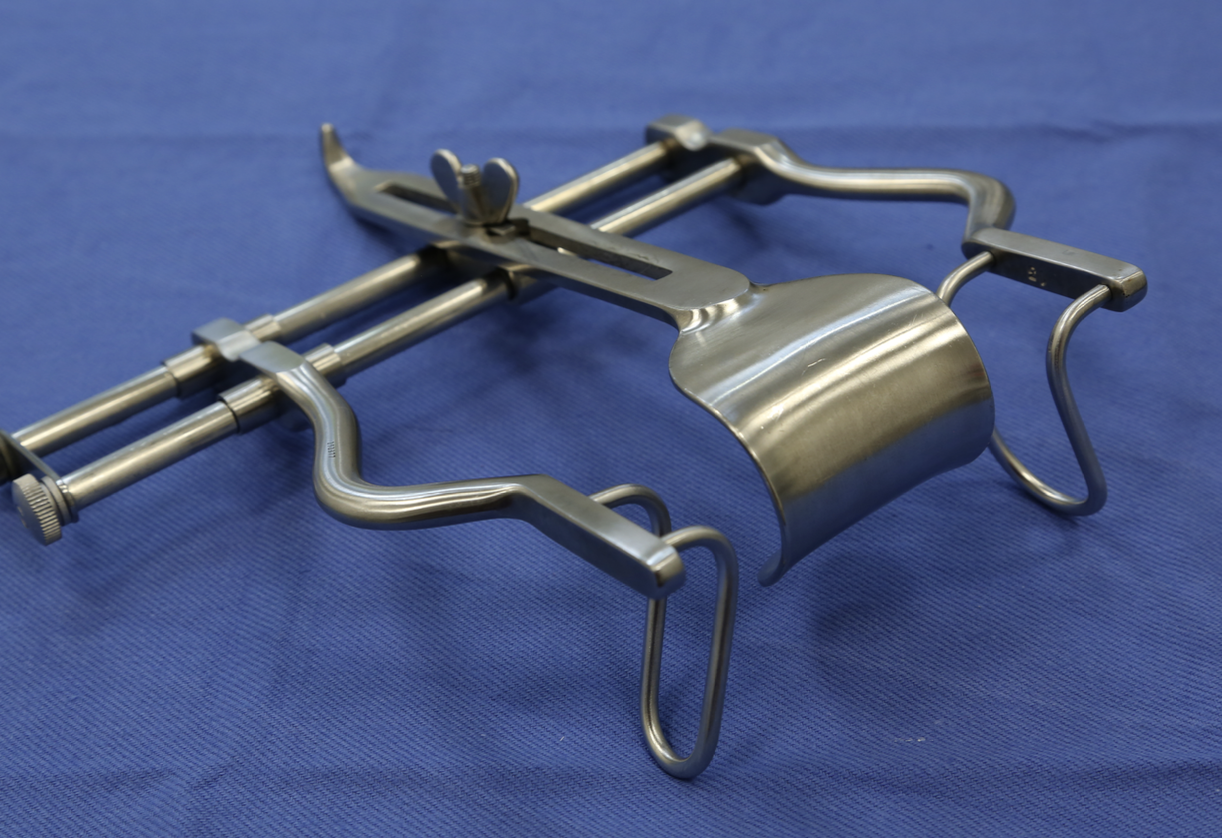
Balfour retractors
Gossettt the same without central blade
What is this?
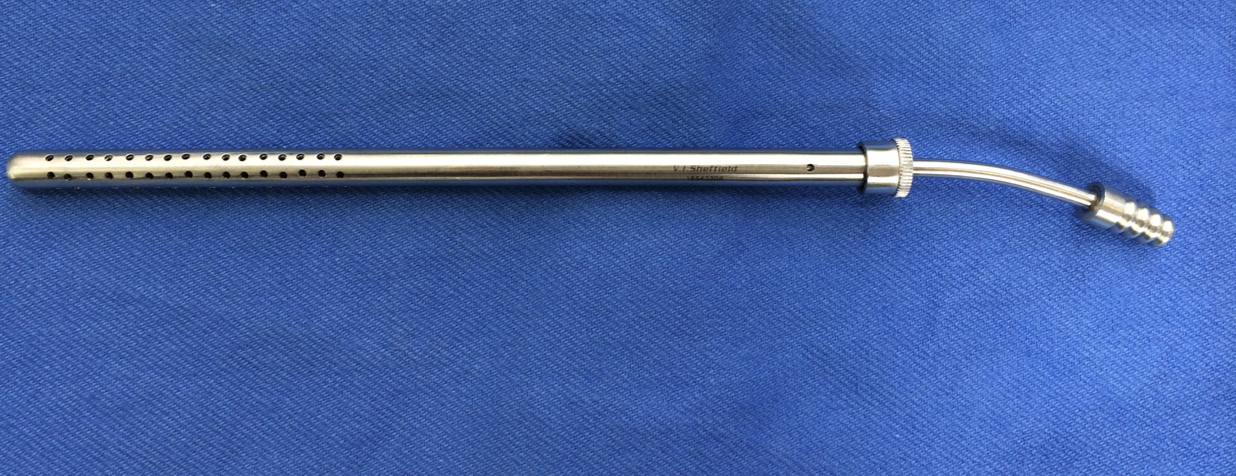
Poole suction tip (one of the best for GI surgery)
What forceps are these?
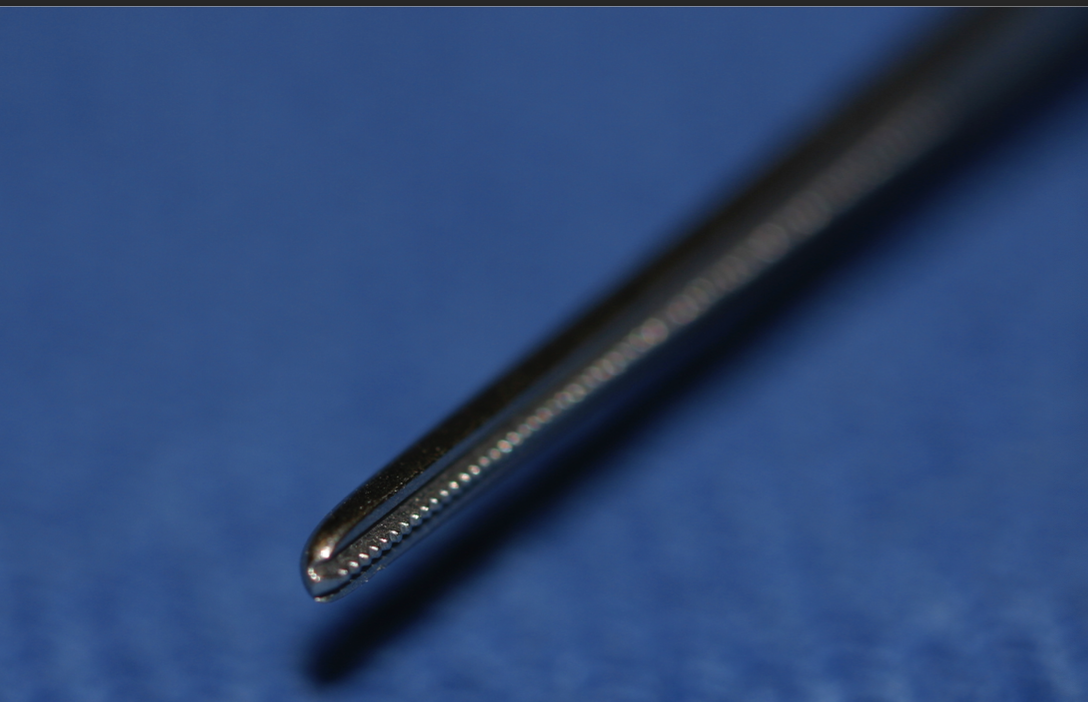
Debakey forceps
Good for gentle tissue handling in GI tract
How can you occlude a gut lumen if you have no assistant?
Doyen bowel forceps or Allis tissue forceps padded with swabs
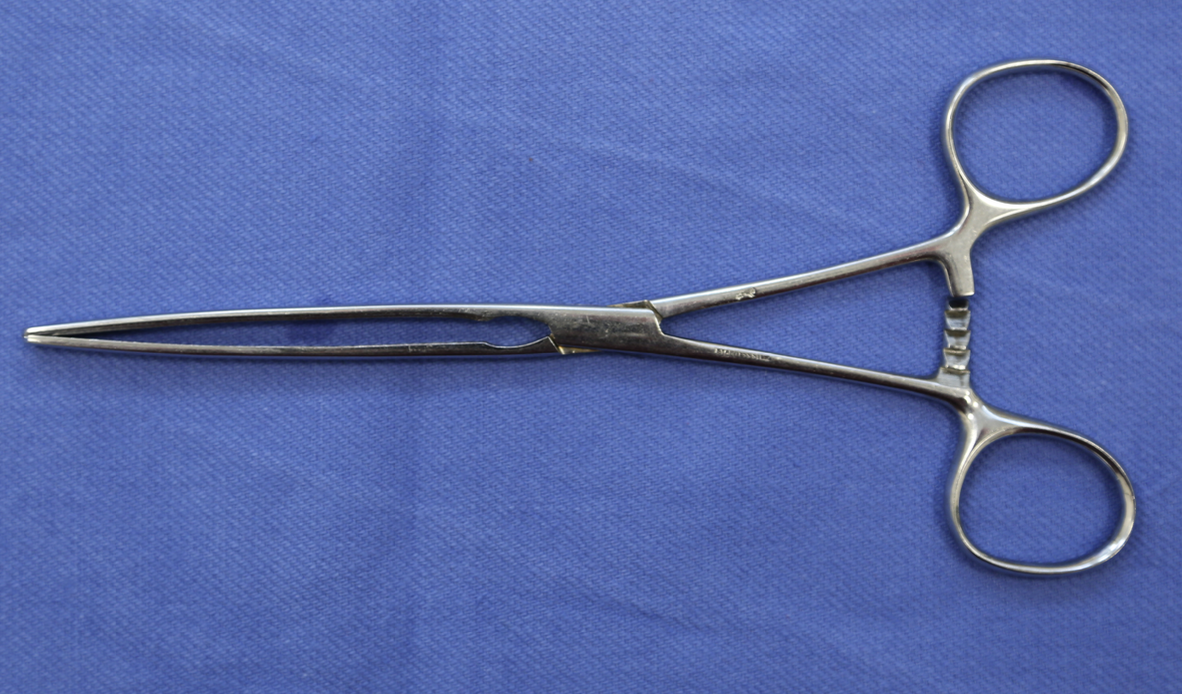
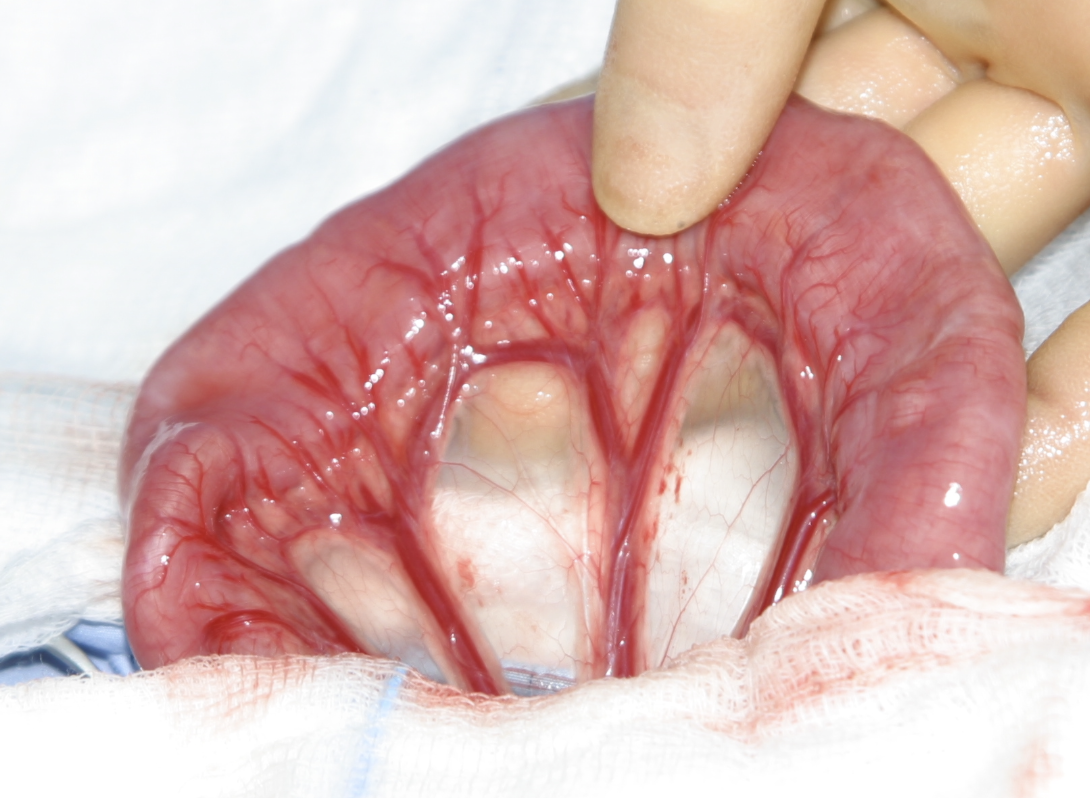
Where should you incise in the intestine to ensure meticulous haemostasis?
Least vascular part
What part of the stomach should you incise for meticulous heamostasis?
Halfway between greater and lesser curvatures of stomach
If removing part of stomach, ligate major vessels supplying that area
What is the least vascular part of the small intestine?
Antimesenteric border
Except ileum so go 2/3 of the way from mesenteric to antimesenteric border of ileum
If you are going to incise intestine what should you ensure you do?
Ligate vessels
What is the pringle manoeuvre?
Temporary occlusion of hepatic blood flow (up to 15 mins)
Put pressure through epiploic forman on hepatic artery and portal vein
What is the guillotine method? What method should you use if you're working further down the liver lobe?
Method used to remove a part of liver lobe (for biopsy; can use for pancreas as well)
Finger fracture technique
Why do you need to take care with electrocautery in the pancreas?
Excessive use can cause pancreatitis
Which of these would be the correct place to incise to remove gut?
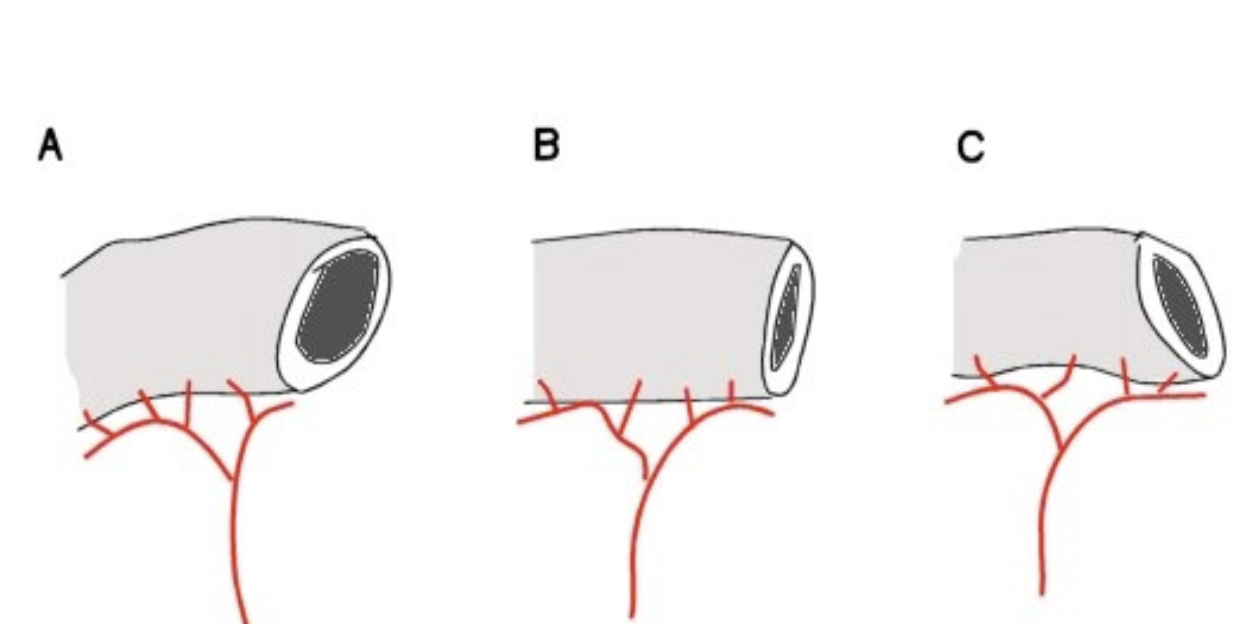
Incising at approx 30° to the transverse ensures adequate blood supply to the antimesenteric border and increases the luminal diameter at the anastomosis
A= bad, as the antimesenteric edge of the incision is further away from the remaining vascular supply than the mesenteric border
B= better as they are equidistant but
C= best (with the incision at approximately 30° to the transverse)
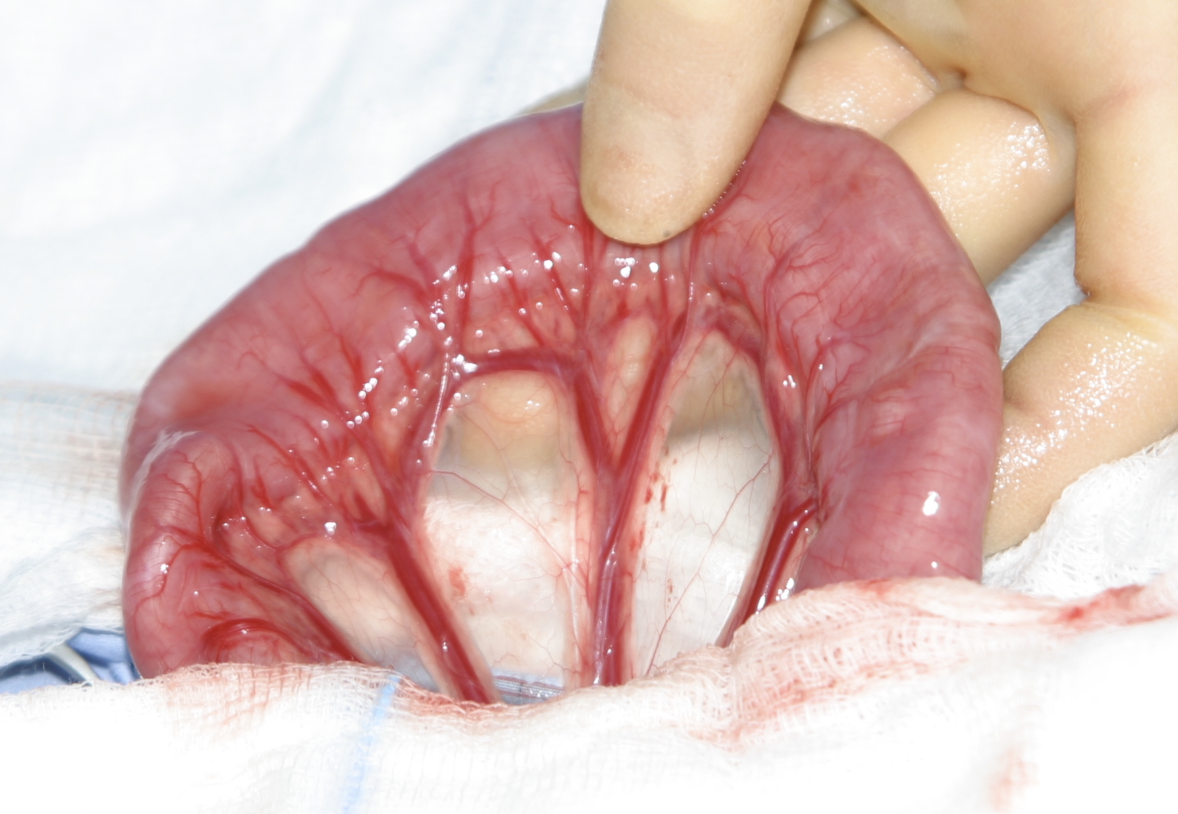
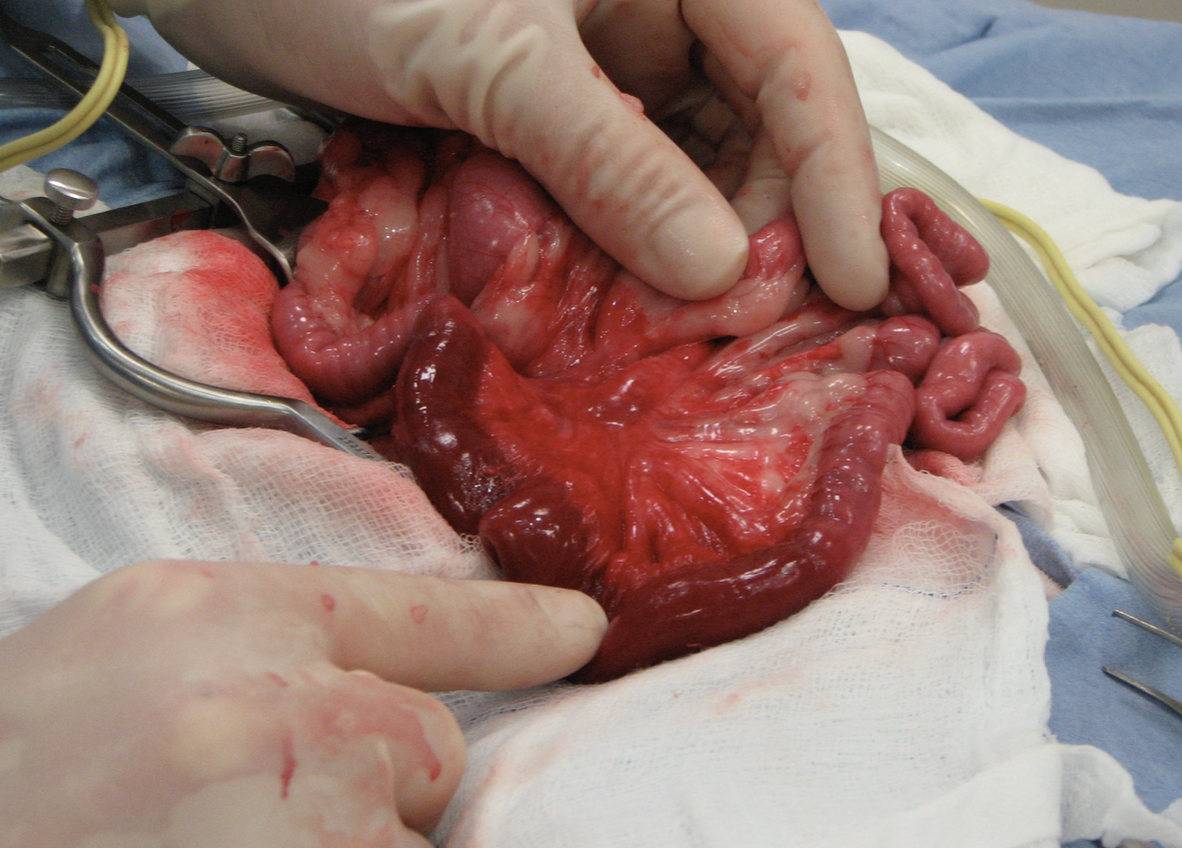
How do you assess intestinal viability?
Colour
Presence of of arterial pulses
Ongoing peristalsis
Viable:
Non viable:
What are the features of oesopahgeal blood supply? How do you preserve this?
Segmental blood supply
Rich submucosal plexus
Preserve by:
Avoid excessive cautery
Gentle tissue handling
Careful suture placement
Label the blood supply? What is the sigfnifance of this?
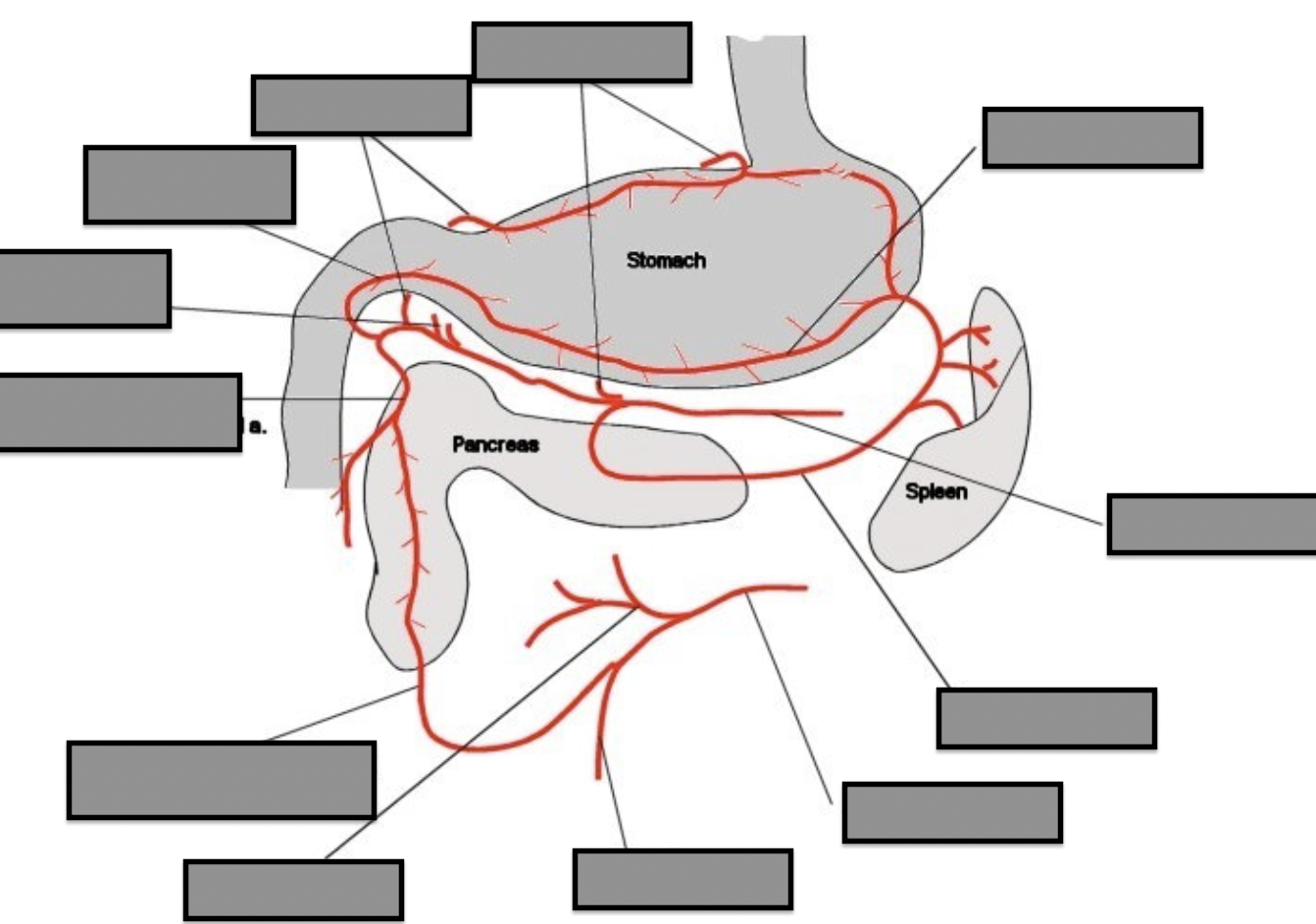
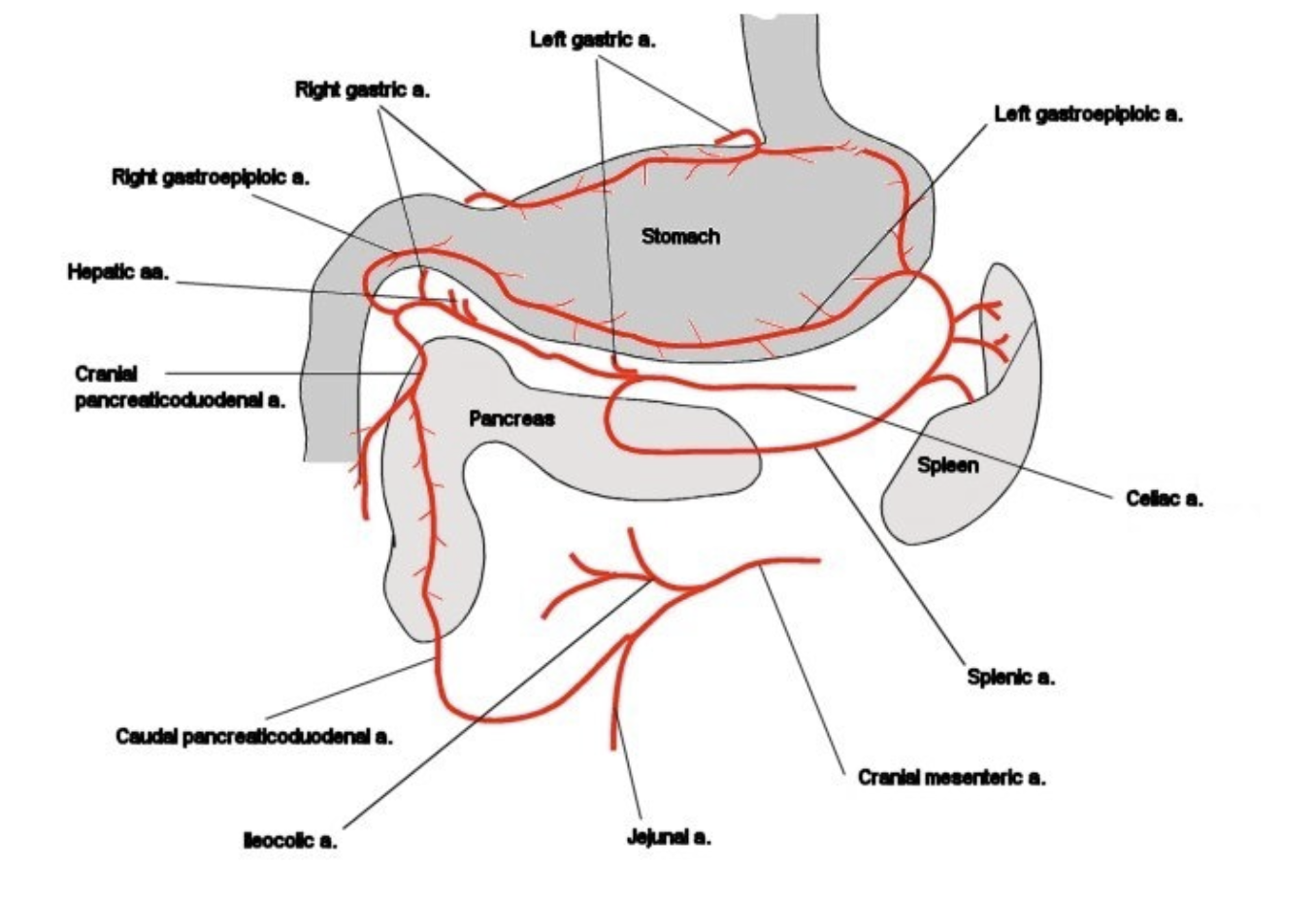
Careful placement is needed as to not to ligate a vessel that branches into several others so you don't compromise blood flow
Which organs make strict asepsis particualrly important in the intestine?
Contaminated gut lumen
Milk contents away from incision site, then occlude
Population of clostridia in liver
What can you do to ensure strict asepsis in the GI tract?
Stay sutures
Discard contaminated instruments and change gloves before closure
Lavage abdo before closure (1-3L warm saline) (NO antibac or disinfectant)
What are the features needed for prophlactic AB for them to work?
Present in tissue when contamination occurs
IV before site
Active against contaminants found in surgical site (Staphs and E. coli most common)
Continue for up to 24 hours post op
What are some good choices for prophylactic AB for GI surgery? What should you give if working on liver or biliary tract?
Clavulanate-amoxicillin for general prophylaxis
Metronidazole for anaerobes
Amoxicillin and cefazolin actively excreted in bile so would be good choices for that
What are the two major exceptions for tension not being a problem in intestinal surgery?
Oesophagus (anastomoses difficult bc relatively immobile)
Colon during subtotal colectomy (prox colon sometimes not mobile enough to allow colocolic anatomoses so would convert to subtotal colectomy with ileocolic anastomoses)
What are the two main methods of making intestinal incision to allow accurate apposition?
Longitudinal incision, longitudinal closure
Longitudinal incision, transverse closure (in line with long axis)
NB: avoid transverse incisions
What is the procedure of choice for accurate tissue apposition in an oesophagectomy and enteroctemy?
End to end appositional anastomosis
Why does the oesophagus heal more poorly?
Incomplete serosal covering
Poor vascularity
Tension and motion
What are the features of the suture material you would use in the GI tract?
1.5 to 2 metric
Up to 3 metric in stomach
Monofilament absorbable
PDS
Polyglyconate (Maxon)
Avoid multifilament
Wicking
Act as nidus for bacterial growth
NB: NEVER use cat gut
What layer is very important to be incorporated in the suture?
Submucosa
Strongest layer
Accurate alignment needed for adequate healing
What suture pattern do you use in the GI tract?
Simple interrupted or continous
Preserve blood supply
Maintain luminal diameter
Minimal adhesions
Why may a continuous pattern be better than interrupted?
Less mucosal eversion
Less adhesions
Better submucosal apposition
List some practical steps can you take to minimise the risk of postoperative infection if you’re removing a foreign body from the jejunum
Exteriorise and pack incision site
Incise distal to foreign body as gut wall will be empty so less likely to contaminate
Secure closure with monofilament
Check for leakage after closure
Lavage abdo before closure
Give prophylactic AB
Change instrument before abdo closure
What suture pattern do you use for the oesophagus?
Single or 2 layers closure
Deep layer: mucosa and submucosa with knots in the lumen
Superficial layer in the muscularis with knots on the serosal surface
What suture pattern do you use for the stomach?
2 layer closure
Simple continuous
Continuous inverting Cushing or Lembert
Alternatively, 2 layers of Cushing or Lembert
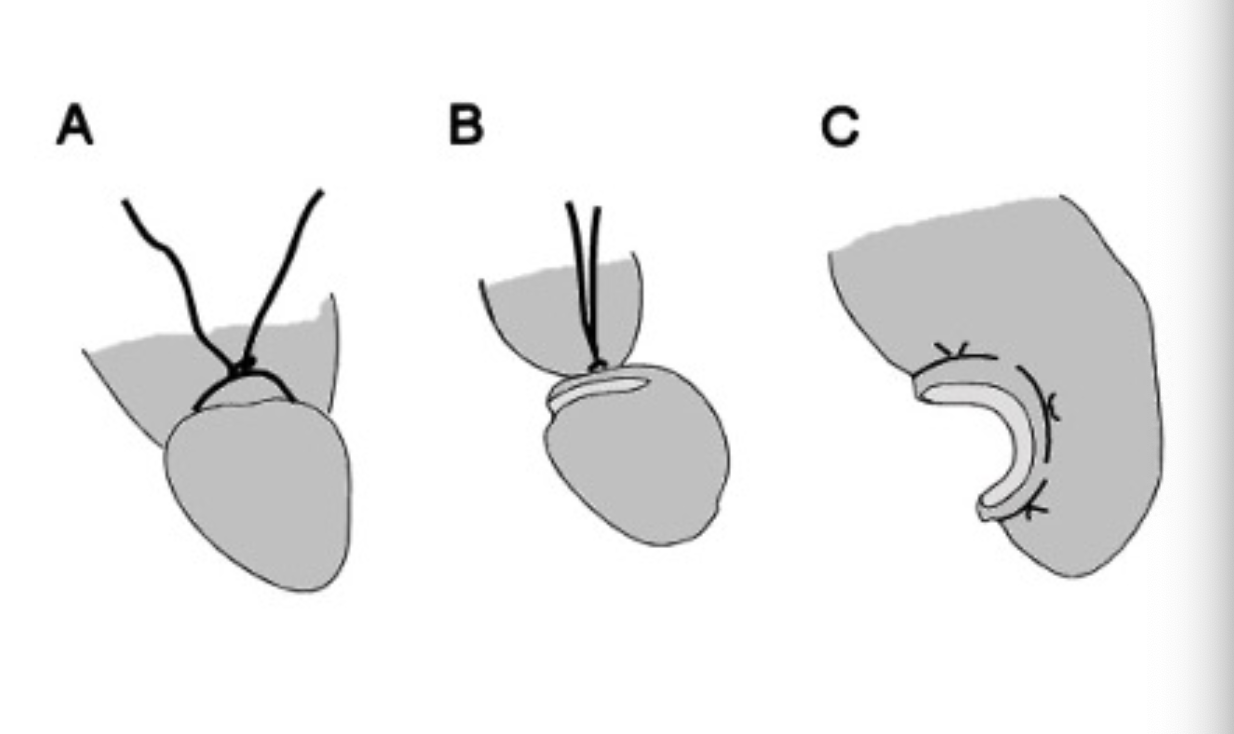
What is this showing?
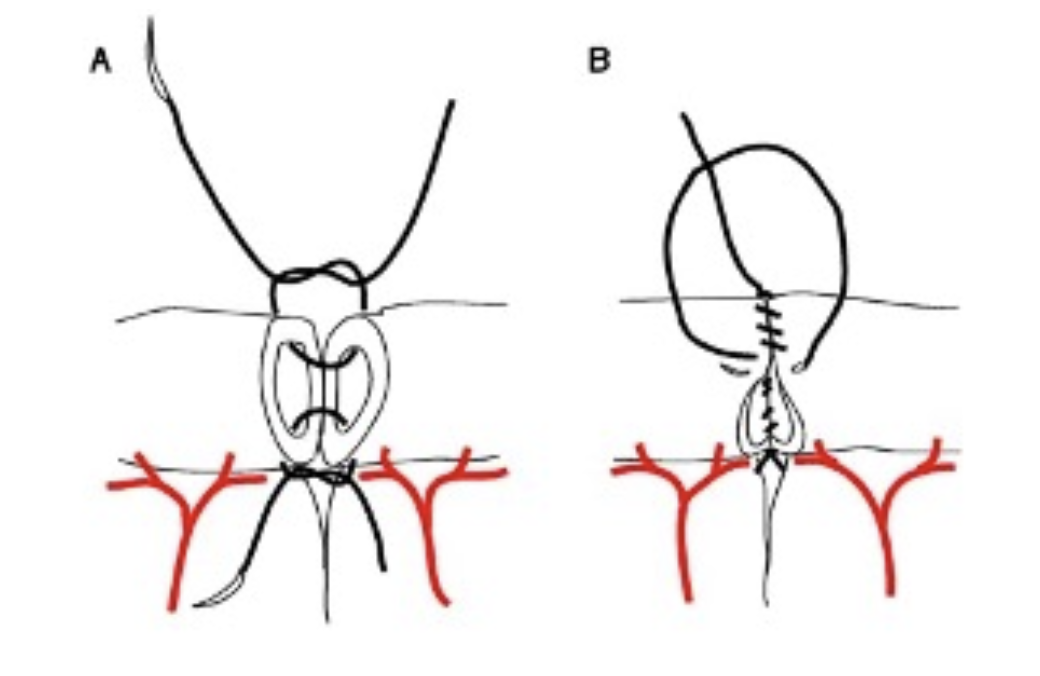
Suture half circumference intestine at the time in order to avoid creating an accidental purse string suture
NB bites should be 3-4mm from the cut edge of the intestine and 3mm apart
What suture pattern in reccommended in colon?
Simple interrupted
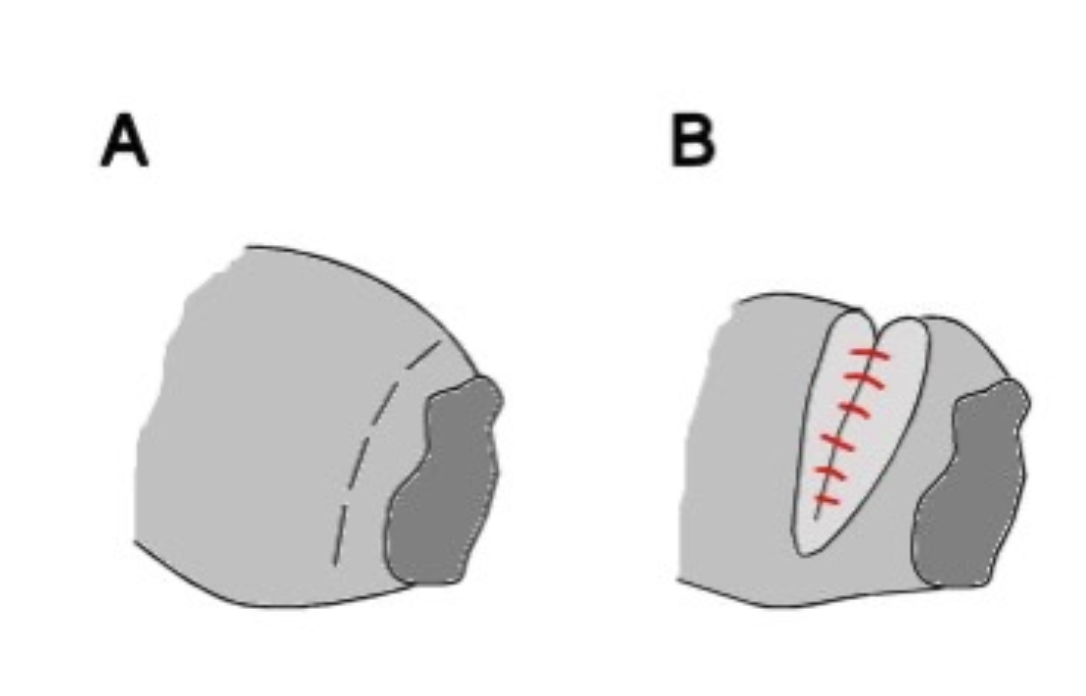
How do you cope with luminal disparity in intestinal closure?
Minor disparity: spacing sutures further apart on the larger side.
Moderate disparity: transect the smaller segment of bowel at a greater angle
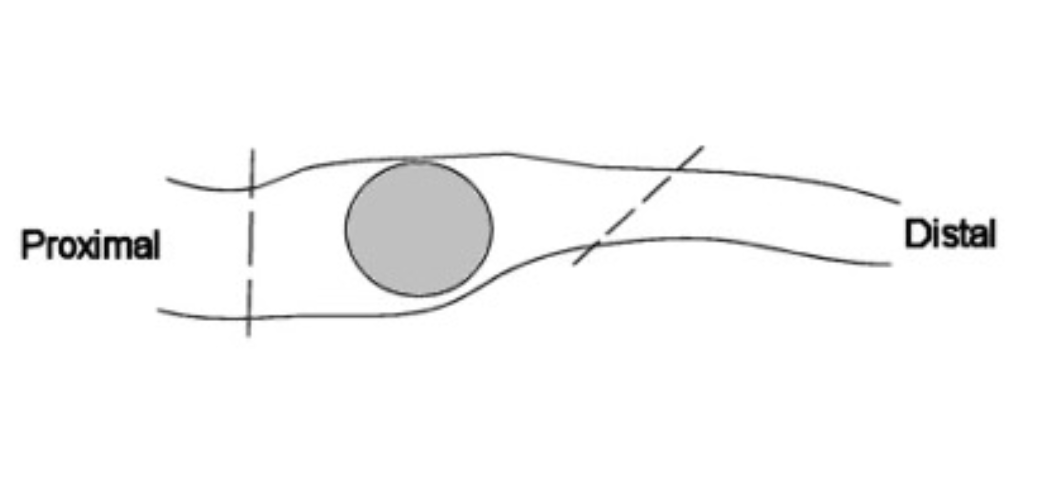
Major disparity: incise small incision along the antimesenteric border to increase the diameter of the lumen
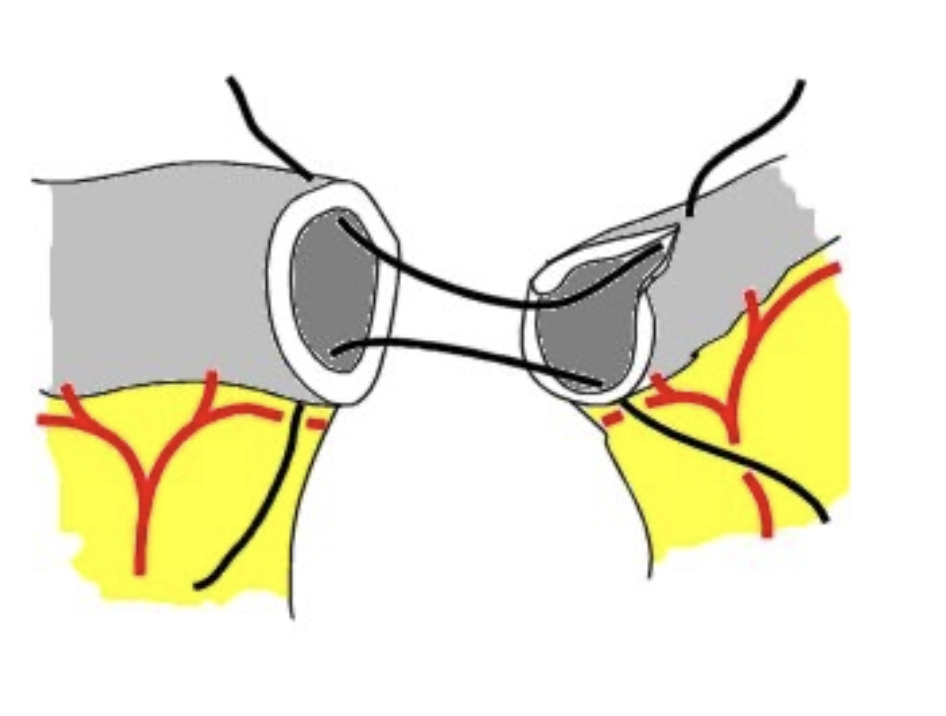
If the luminal diamaters are grossly unequal and cannot use above techiques what should you do?
End to side anastomosis
Oversew end of distal segment
Suture end of proximal segment to antimesenteric border of distal segment
NB- rare to have to do this
How do you ensure obliteration of dead space in the abdomen?
(Not big problem in abdo)
Suction lavage fluid
Always suture mesentery if have made hole in it
How can you utilise the omentum for healing?
Wrap omentum around piece of intestine you have incised
Rich vascular and lymphatic supply
What technique is being shown here?
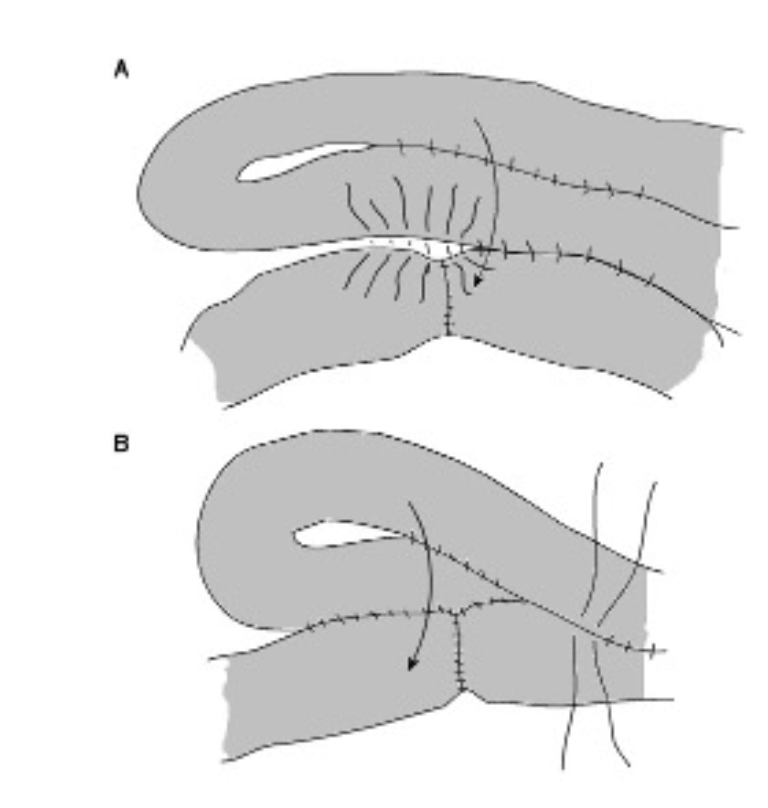
Serosal patch
If have to leave a section inside but worried about viability can use patch of viable serosa
What should you ensure with fluid therapy for a GI tract surgery case
Ensure fluid deficits and electrolyte balances corrected before surgery
Appropriate fluids given intra op
What are the different classifications of peritonitis?
Local or generalised
Primary (rare) or Secondary
Secondary can be chemical (due to irritants) or septic
What are the consequences of peritonitis?
Hypovolaemia
Metabolic acidosis due to reduced tissue perfusion
Electrolyte imbalances
Endotoxic shock
Death
What are the clinical signs of peritonitis?
Depression
Anorexia
Vomiting
Abd pain and distension (praying position)
Ileus
Pyrexia
Shock
How can you diagnose peritonitis?
Radiography - contrast reduced
Haematology - neutrophilia and left shift
Serum biochem- azotaemia, hypoglycaemia
Abdo paracentesis- degenerate neutrophils, free and/or intracellular bacteria
Compare lactate and glucose to serum
How is peritonitis treated?
Fluid therapy
Broad-spectrum antibacterials
Correct primary cause
Exploratory coeliotomy
Copious peritoneal lavage
Drainage (rare and referral)
What is an adhesion? What types of adhesions can you get? How do you prevent them?
Deposition of fibrin (Rare in SA)
Restrictive or non restrictive
Prevent by good technique
When may short bowel syndrome occur?
RARE
After removal of >80% of small intestine (not enough intestine left to
Medical management
Prognosis poor
What is ileus?
Inadequate peristalsis of whole GIT leading to functional obstruction
Due to vagosympathetic reflex
Whole gut becomes distended and gas or fluid filled
How is ileus treated?
Correct underlying disease
Supportive therapy
Fluid, metoclopramide
List 2-3 specific things you can do during your daily clinical examination to monitor your patients for postoperative peritonitis
Check for abdo pain by palpation (remember cats often don't show this)
Ballotte the abdo for fluid thrill on opposite side
Weigh them, measure abdo circumference
How do you approach the oesophagus surgically?
For oesophagus to level of 2nd rib: ventral cervical midline
For further down: right intercostal thoracotomy at level of lesion
What location do you perform a coeliotomy for an abdominal approach?
5-10cm cranial to the xiphoid to 5-10cm caudal to the pubis
10-15cm on each side of the ventral midline
Depends on where the problem is
For male dog parapreputial incision
How should you perform an incision for coeliotomy?
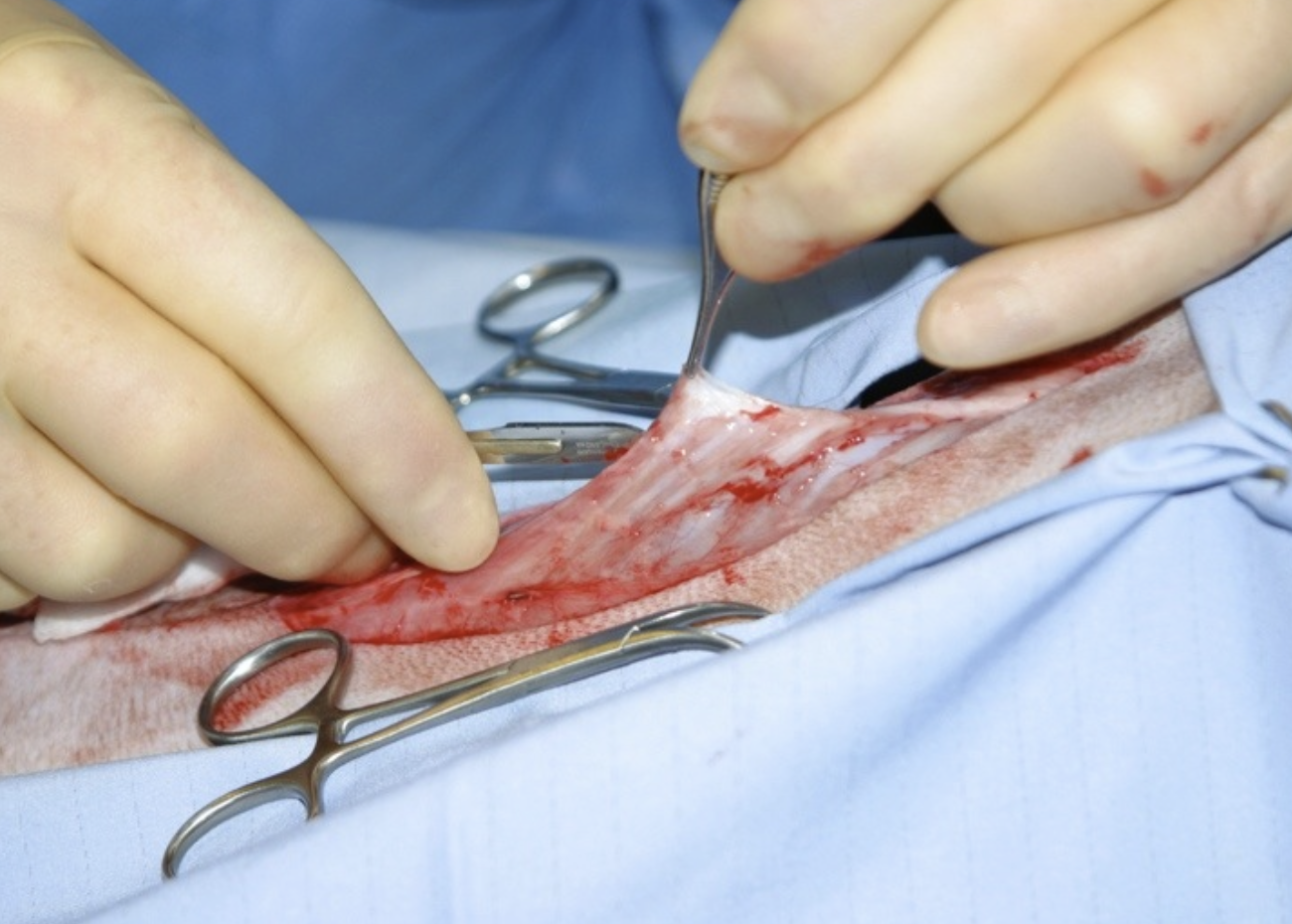
Skin and subcut then stab incision through linea alba (horizontal position and blade away from patient)
Mayo scissors to cut further along
What sometimes restricts exposure of the cranial abdomen in a coelitomy?
Falciform ligament
If necessary, remove it by avulsing it from the abdominal wall, cutting it away with scissors or using electrocautery to cut it away from the wall then ligate
How is a ventral midline coeliotomy closed?
Close linea alba
Single layer of simple continuous in external sheath of rectus abdominis (must incorporate this)
5-10mm from edge and 3-12mm apart
What should you ensure when making an incision for a laparotomy (flank incision)?
Incise muscle layers parallel to fibres
What approaches can you use for the terminal colon, rectum, anus?
Ventral approach
Pelvic osteotomy/ pubic symphysiotomy)
Anal approach (evert with stay sutures)
Rectal pull through
Dorsal 'inverted U' approach
Lateral approach
If you had a patient with a benign distal colonic / proximal rectal mass just inside the cranial end of the pelvis, what surgical approach would you use to access the affected intestine? Why?
Ventral midline coeliotomy
Benign mass so only requires local excision (not large margins)
Allows full-thickness resection
Can usually retract that section of the intestine cranially and access via the abdomen
Avoids need to cut pelvis