BIO 208L Lab Exam 2
 Call Kai
 Learn
 Practice Test
 Spaced Repetition
 Match
 Flashcards
 Knowt Play
1/233

There's no tags or description
Looks like no tags are added yet.
234 Terms
lacrimal bone

ethmoid bone
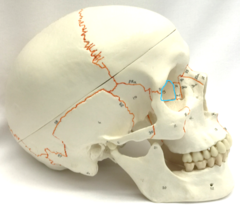
nasal bone

sphenoid bone
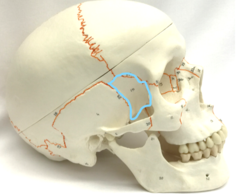
temporal bone

mastoid process

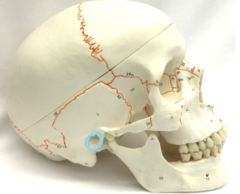
external auditory canal
name this hole.
frontal bone

parietal bone
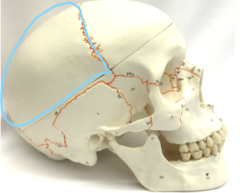
zygomatic bone

maxilla

nasal conchae

mandible

orbit
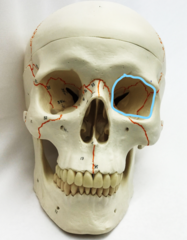
superior orbital fissure

inferior orbital fissure

optic foramen

occipital bone

lambdoidal suture

sagittal suture
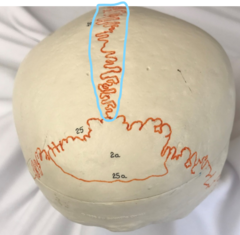
coronal suture

squamosal suture

foramen lacerum
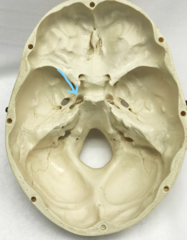
foramen ovale

foramen spinosum

foramen magnum
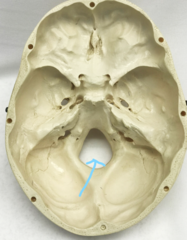
jugular foramen

foramen magnum

foramen ovale

carotid canal

jugular foramen

foramen spinosum

foramen lacerum
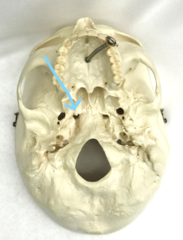
Occipital Condyles

mental foramen
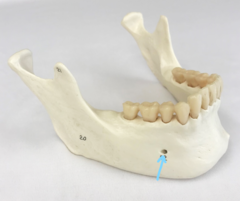
alveolar border

coronoid process

mandibular condyle

mandibular notch

angle of mandible

body
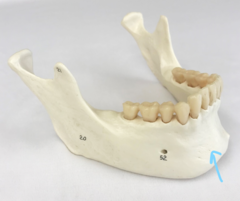
ramus
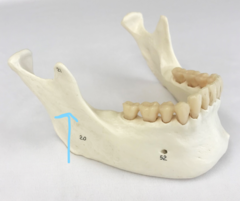
body

pedicle

transverse process

spinous process

lamina

vertebral foramen
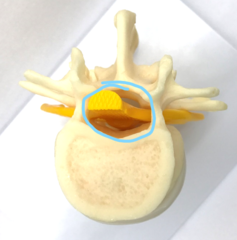
intervertebral disc

intervertebral foramen

transverse foramen
*only on cervical vertebrae*

cervical vertebra

thoracic vertebra
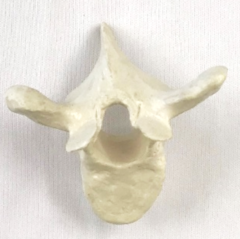
lumbar vertebra

spinous process

lamina

vertebral foramen

transverse process

body

pedicle

by looking at the body. the lumbar vertebra has a larger body than the cervical because it has to hold more weight.
by looking at the cervical vertebra which is the only one that has a transverse foramen.
how can you know the difference between cervical, thoracic, and lumbar vertebrae?
atlas C1

axis C2

dens
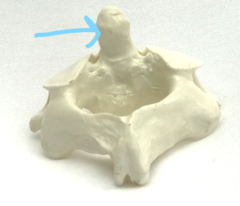
cervical

thoracic

lumbar
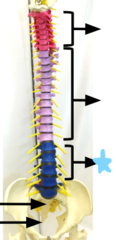
sacrum

coccyx

cervical curvature

thoracic curvature
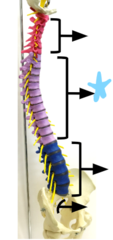
lumbar curvature

sacral curvature

sternum

true ribs
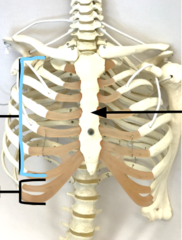
false ribs

true ribs are connected directly to cartilage. false ribs are connected indirectly by cartilage.
what is the difference between true and false ribs?
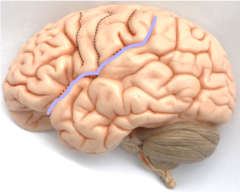
frontal lobe

parietal lobe

occipital lobe

temporal lobe

lateral fissure

postcentral sulcus

postcentral gyrus

central sulcus

precentral gyrus

precentral sulcus

lateral fissure
postcentral sulcus

postcentral gyrus

central sulcus

precentral gyrus

precentral sulcus

thalamus

hypothalamus

corpus callosum

midbrain
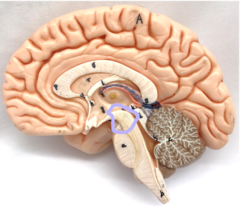
pons

medulla oblongata
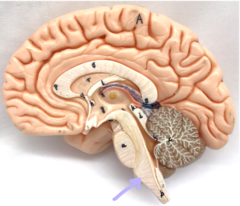
cerebellum
