Monopoly
 Call Kai
 Learn
Learn Practice Test
 Spaced Repetition
 Match
Match Flashcards
 Knowt Play
1/15

There's no tags or description
Looks like no tags are added yet.
Name | Mastery | Learn | Test | Matching | Spaced | Call with Kai | Chat |
|---|
No analytics yet
Send a link to your students to track their progress
16 Terms
characteristics (3)
one producer
price maker
high barriers to entry
what are some examples of high barriers to entry (4)
economies of scale
BRAND LOYALTY
legal barriers
ownership of key resources
short run can make what profits
normal abnormal losses
normal profit diagram

abnormal profits

losses diagram
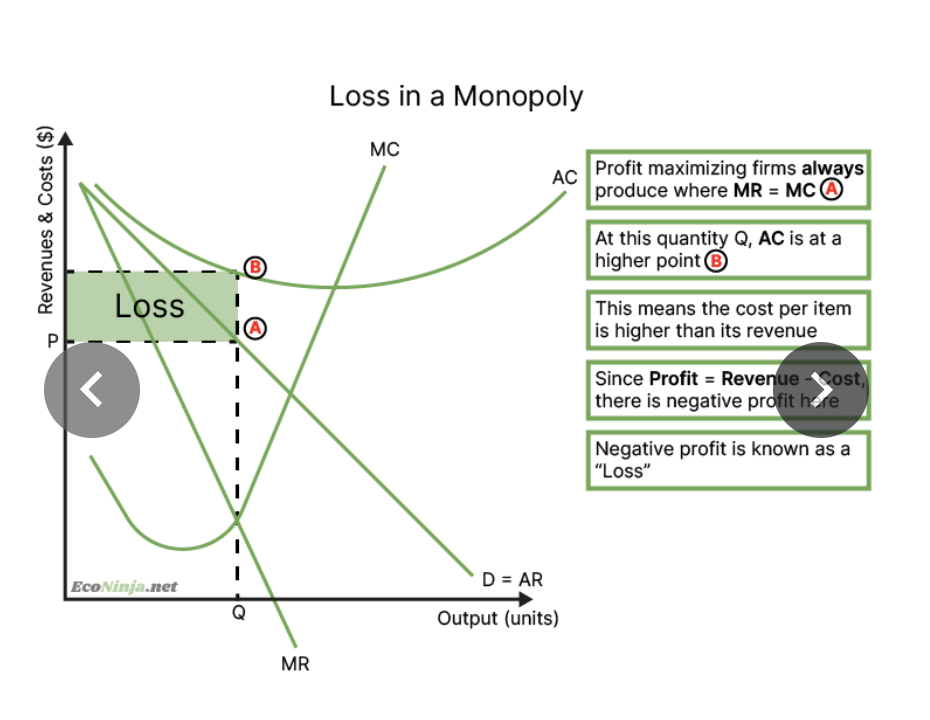
where is revenue max point
MR = 0
where is profit max point
MC=MR, but also can make losses. will continue stay open bc variable costs are covered or losses are less than fixed costs amount
long run can earn what profits and why
abnormal, bc high barriers to entry
natural monopoly characteristics (3)
ONE firm can produce CHEAPER (lower costs) than other multiple firms through 2. ECONOMIES OF SCALE which creates 3. BARRIER OF ENTRY bc new entrants dont think can sell at a price that is competitive because cannot get near minimum efficient scale (mes)
natural monopoly diagram + explanation

has low ac bc high economies of scale and low marginal costs
how to regulate natural monopolies (2)
nationalization (buy firms but lack incentive)
price setting at MC or AC
advantages of monopoly (2)
economies of scale
profits for R+D
disadvantages of monopoly
allocative inefficiency see DWL
technical inefficiency
higher price lower output —> consumer surplus less
monopoly diagram dwl where explain

Because they are profit maximizing, they produce where MR = MC
However, the social optimum is where MC = AR
In other words, the monopoly produces less than what's required so prices remain high
This means there will be a higher price and lower quantity than what is optimal
what is monopoly diagram demand curve shape and why
steep and downwards slope bc firm=entire industry