NE101 Lec 15: Audition
 Call Kai
 Learn
 Practice Test
 Spaced Repetition
 Match
 Flashcards
 Knowt Play
1/60

Earn XP
Description and Tags
Covers sound waves, ear anatomy, and auditory transduction.
61 Terms
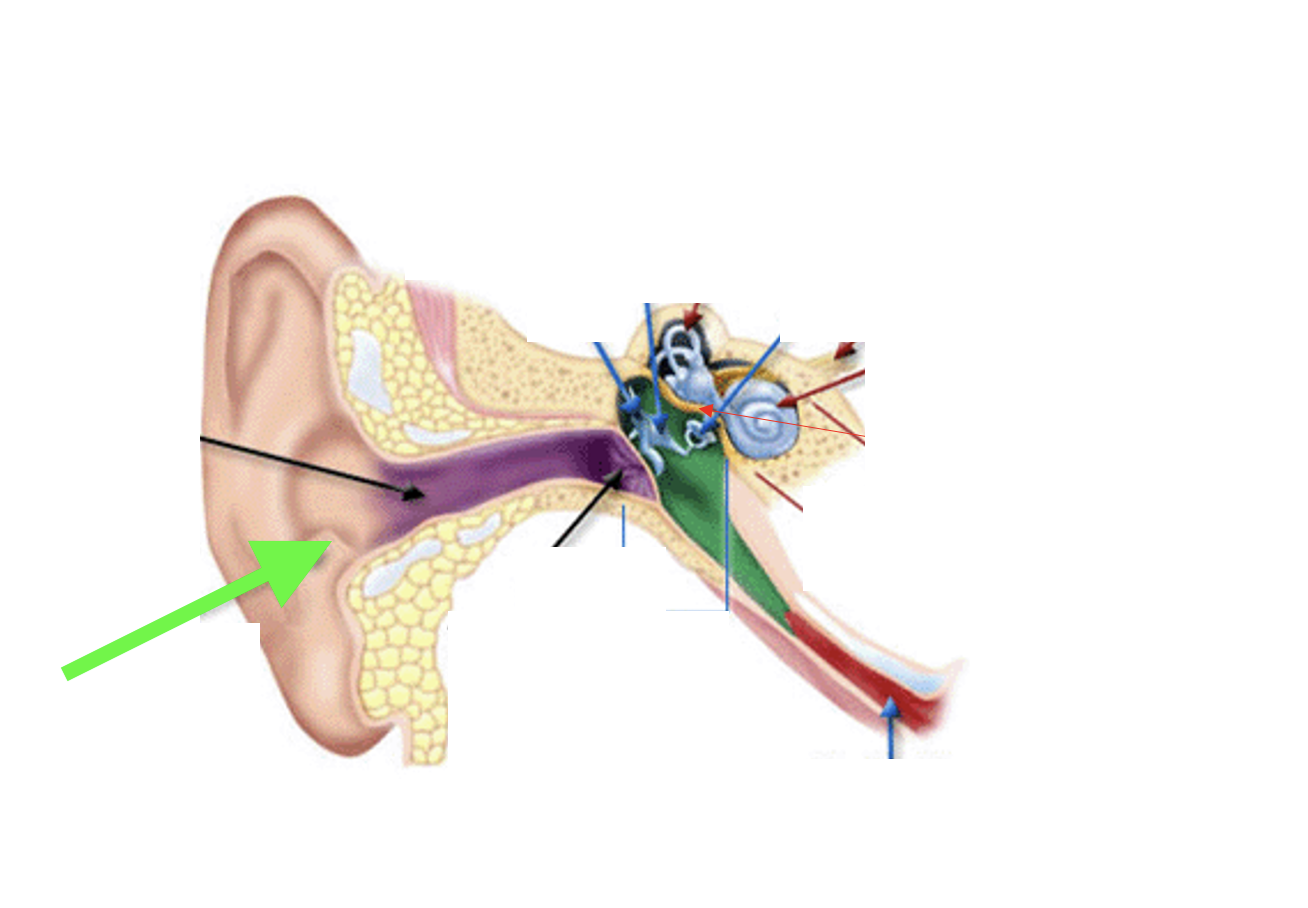
what is this part of the ear?
auricle
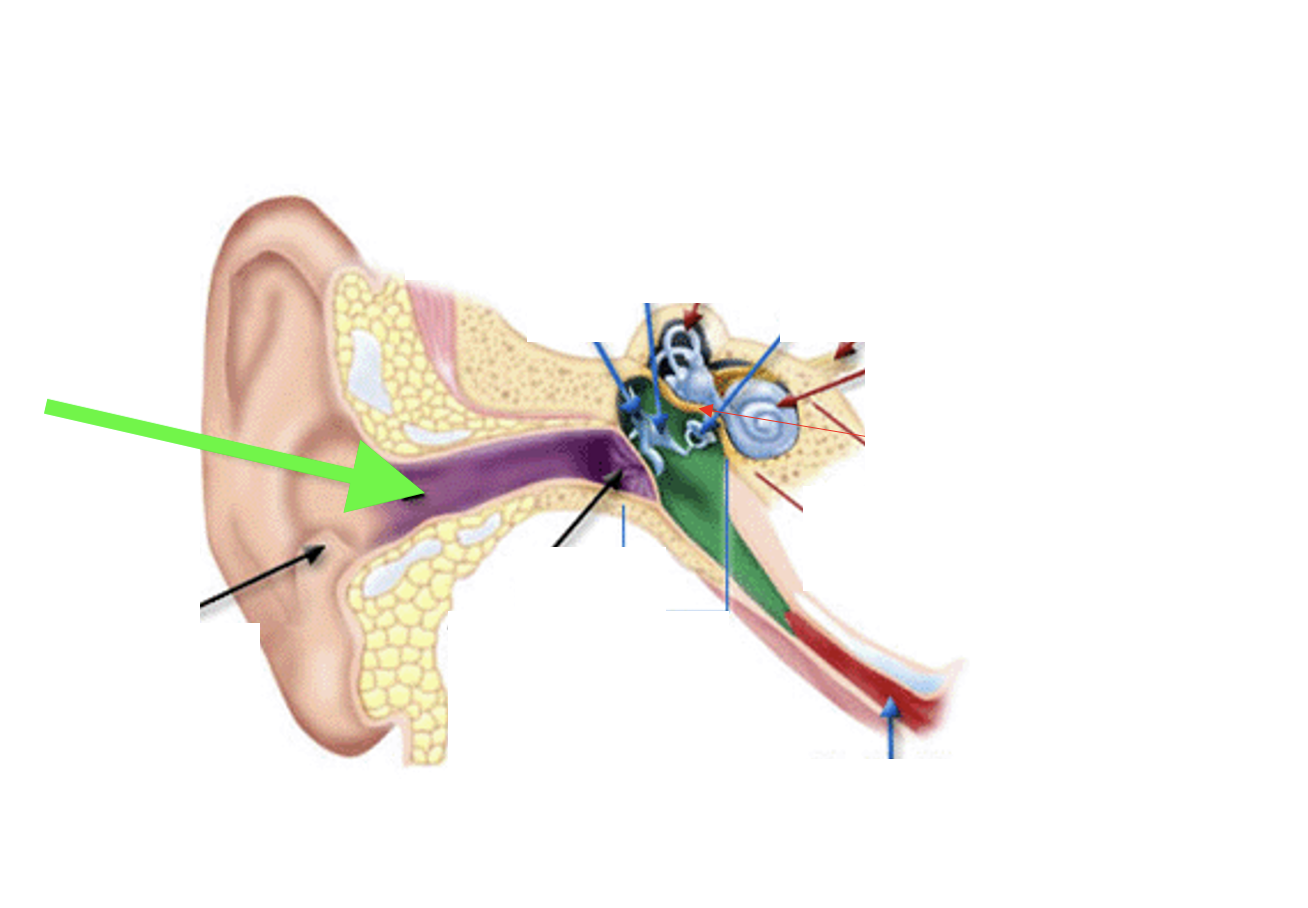
what is this part of the ear?
ear canal
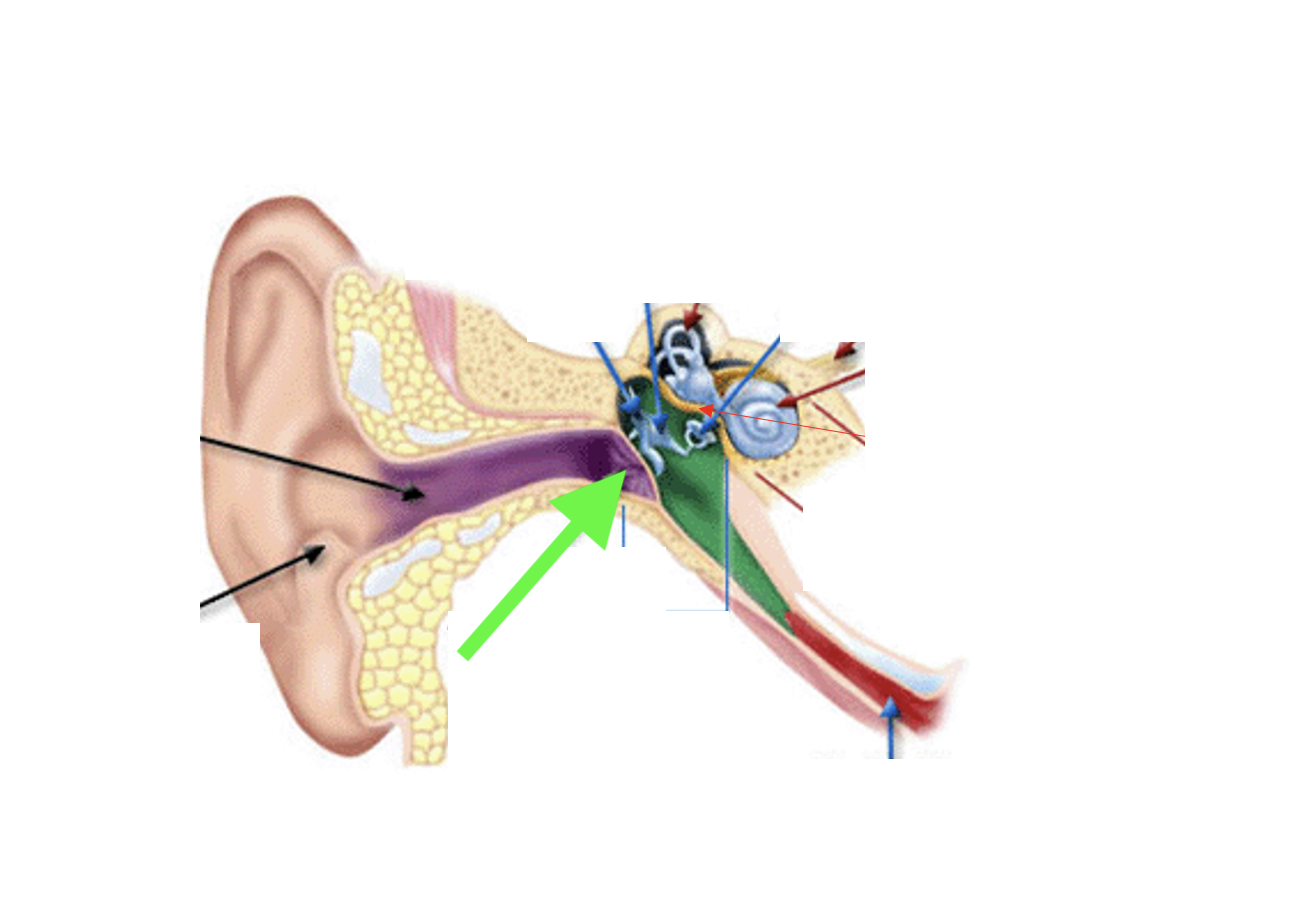
what is this part of the ear?
eardrum
what are the three ossicle bones?
malleus incus stapes
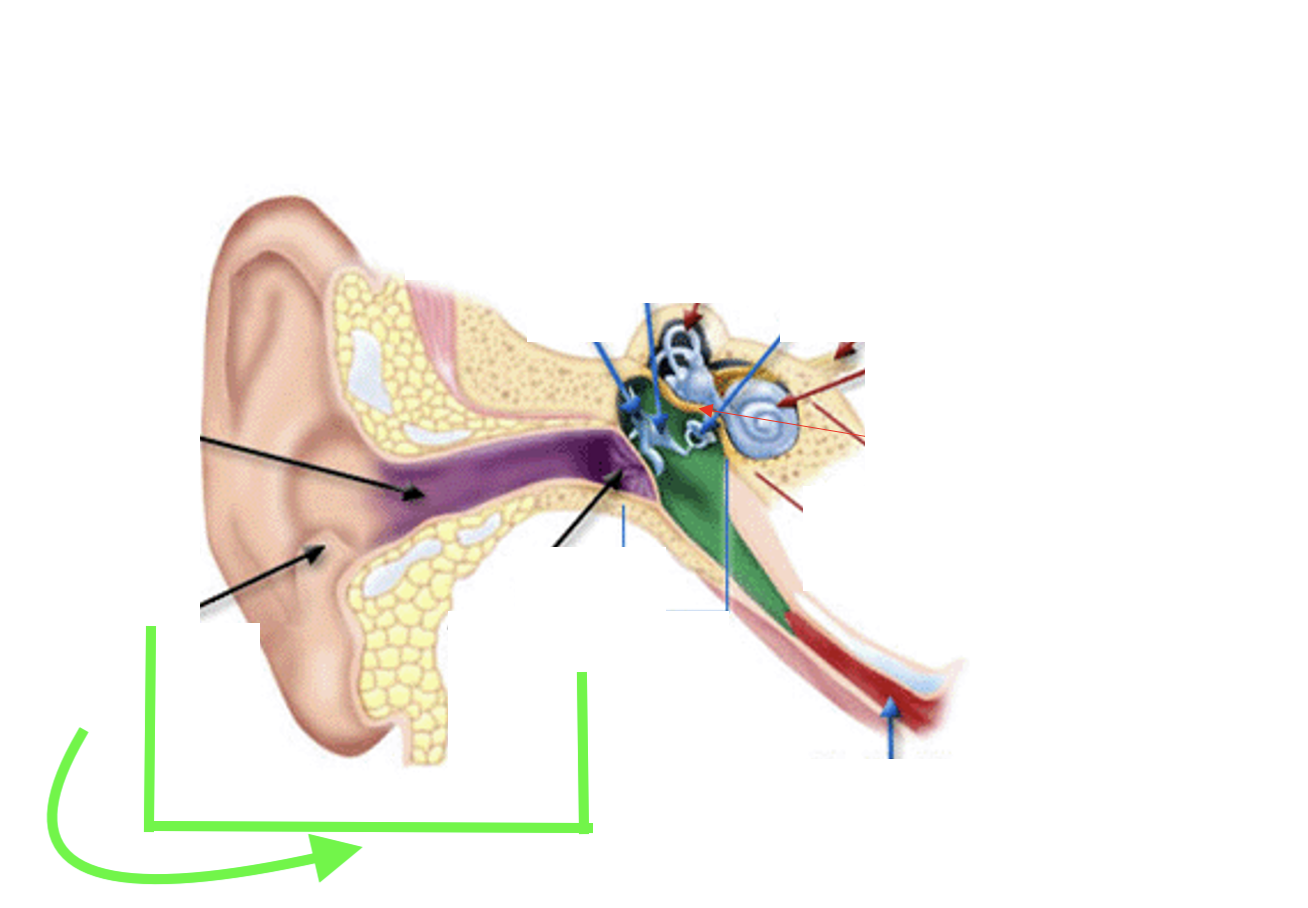
what is this part of the ear?
outer ear
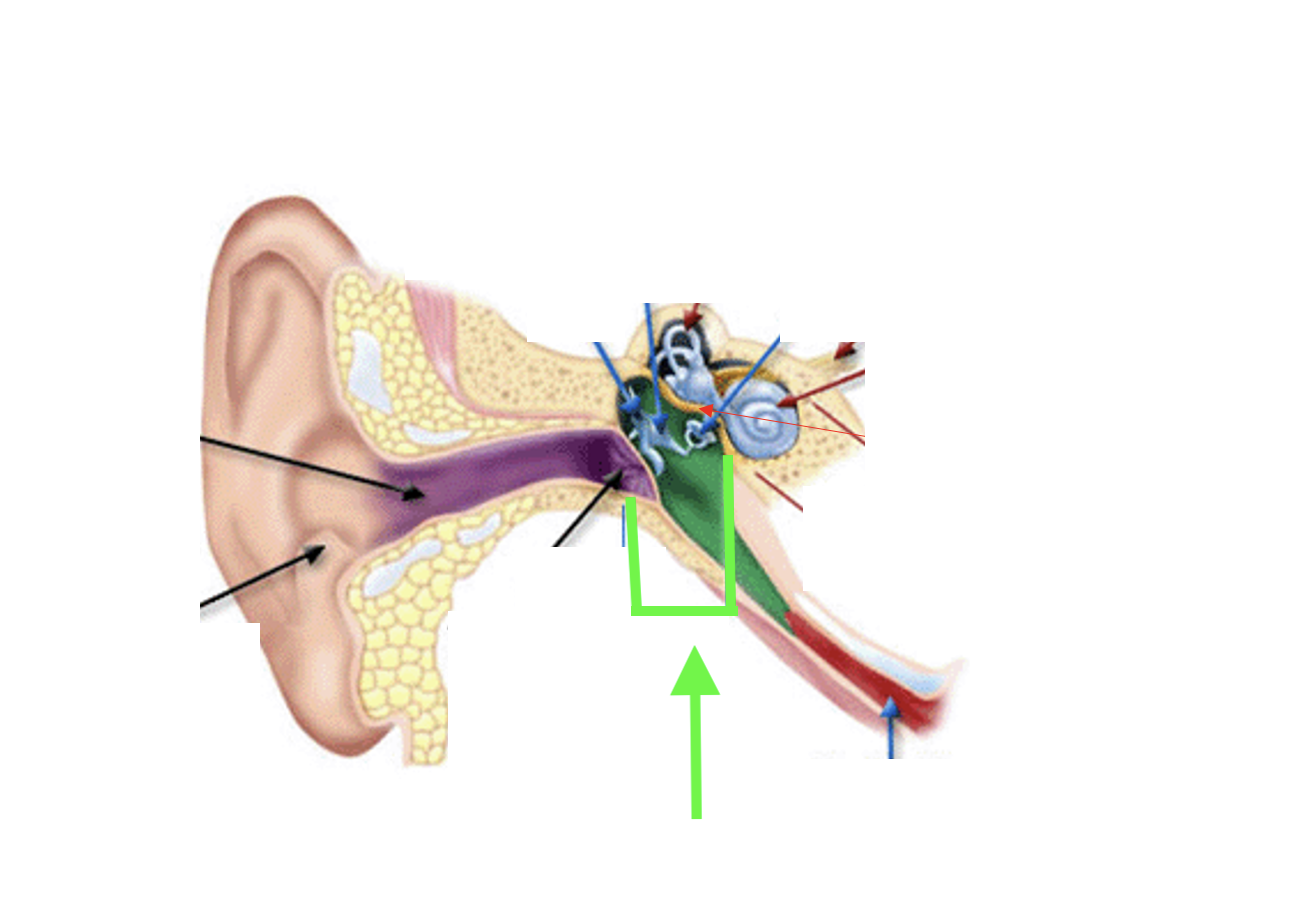
what is this part of the ear?
middle ear
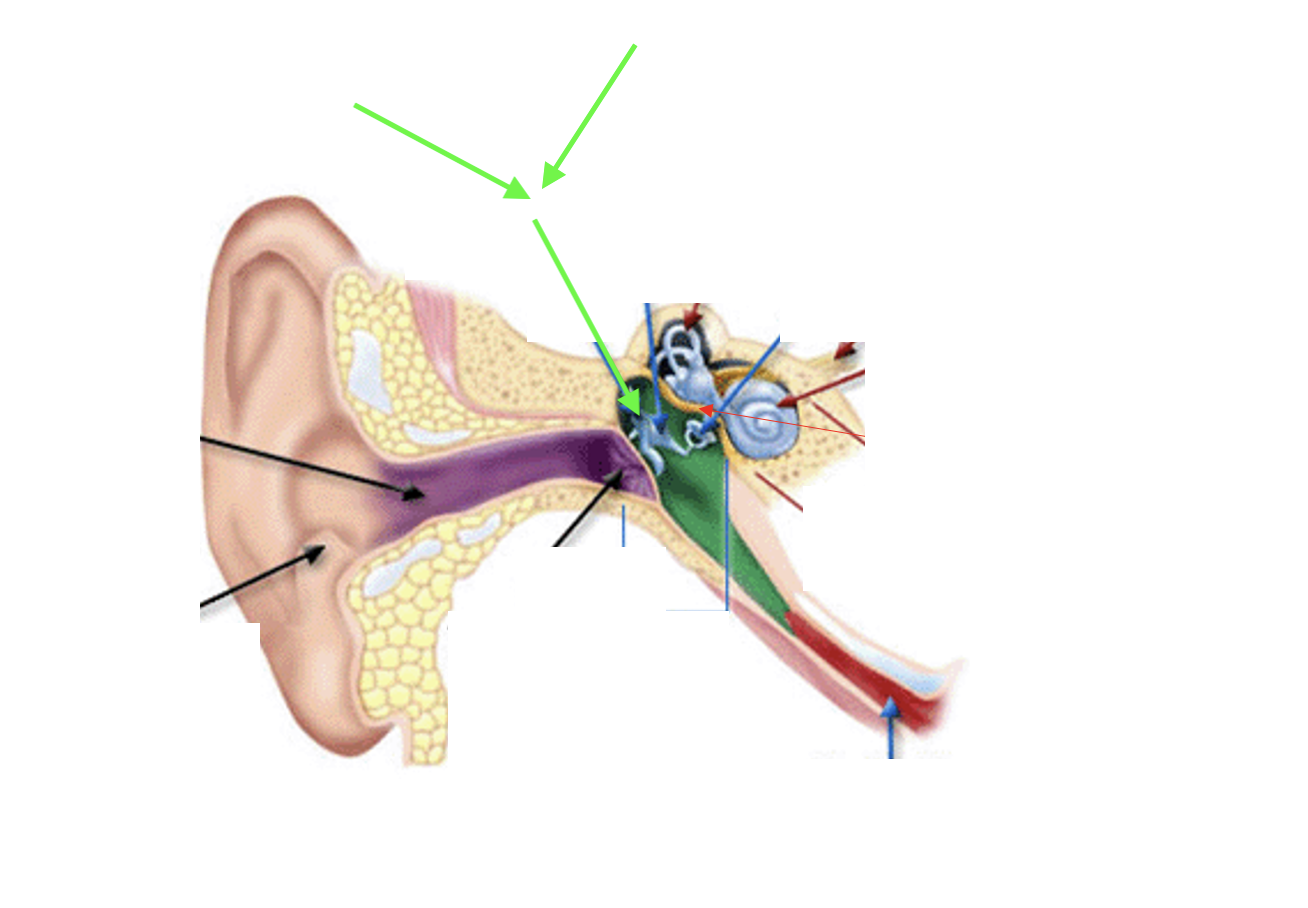
what is this part of the ear?
malleus
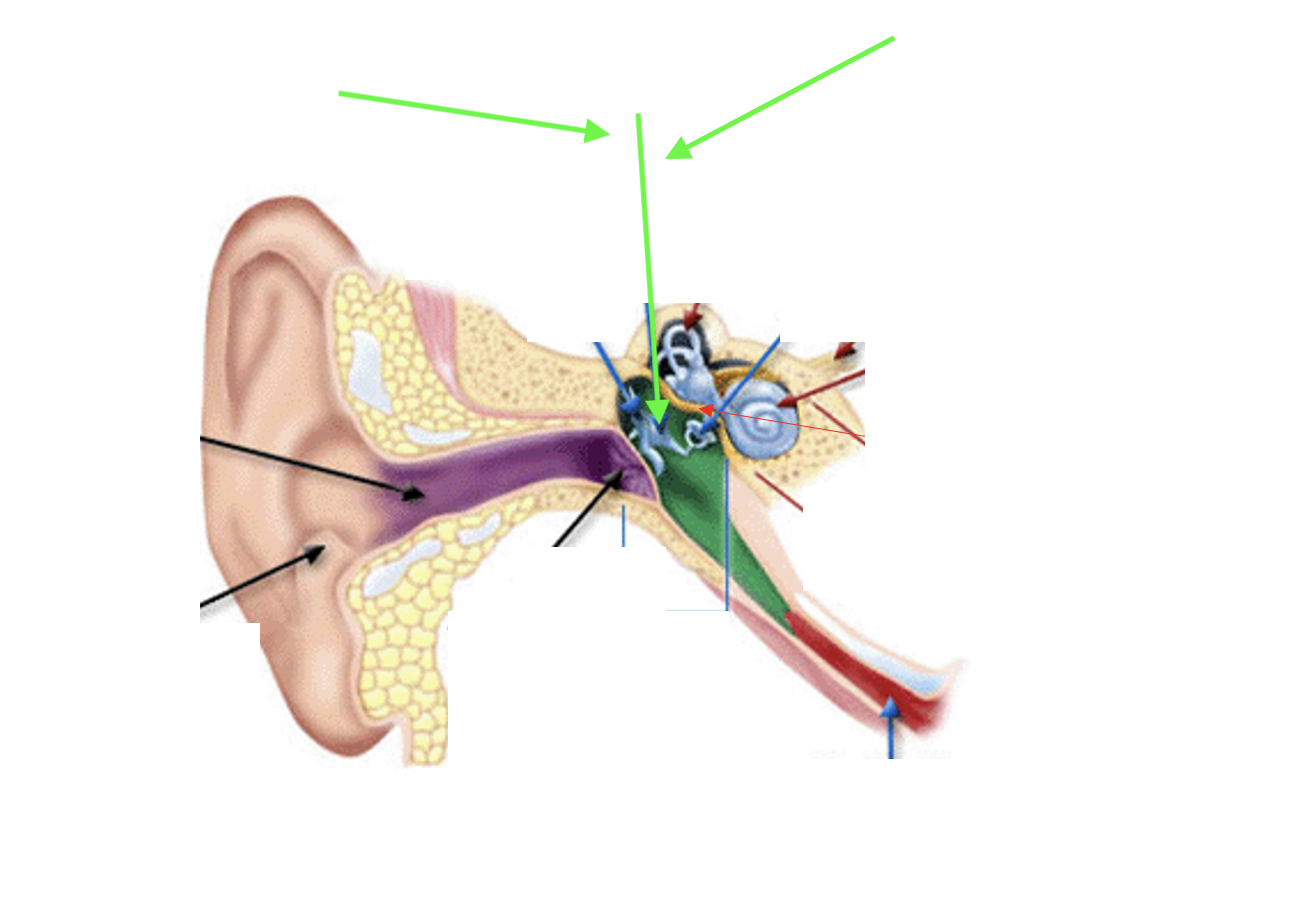
what is this part of the ear?
incus
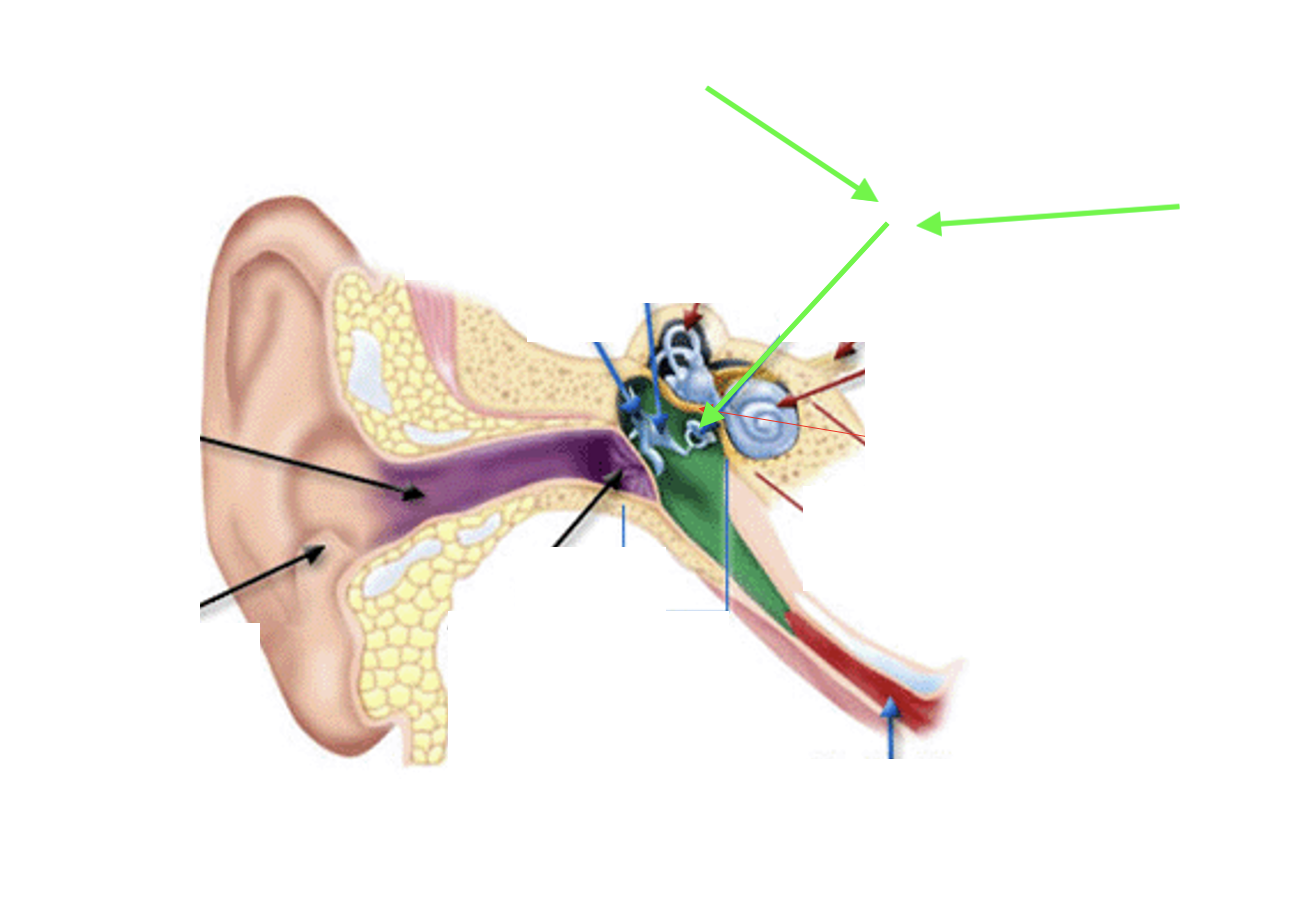
what is this part of the ear?
stapes
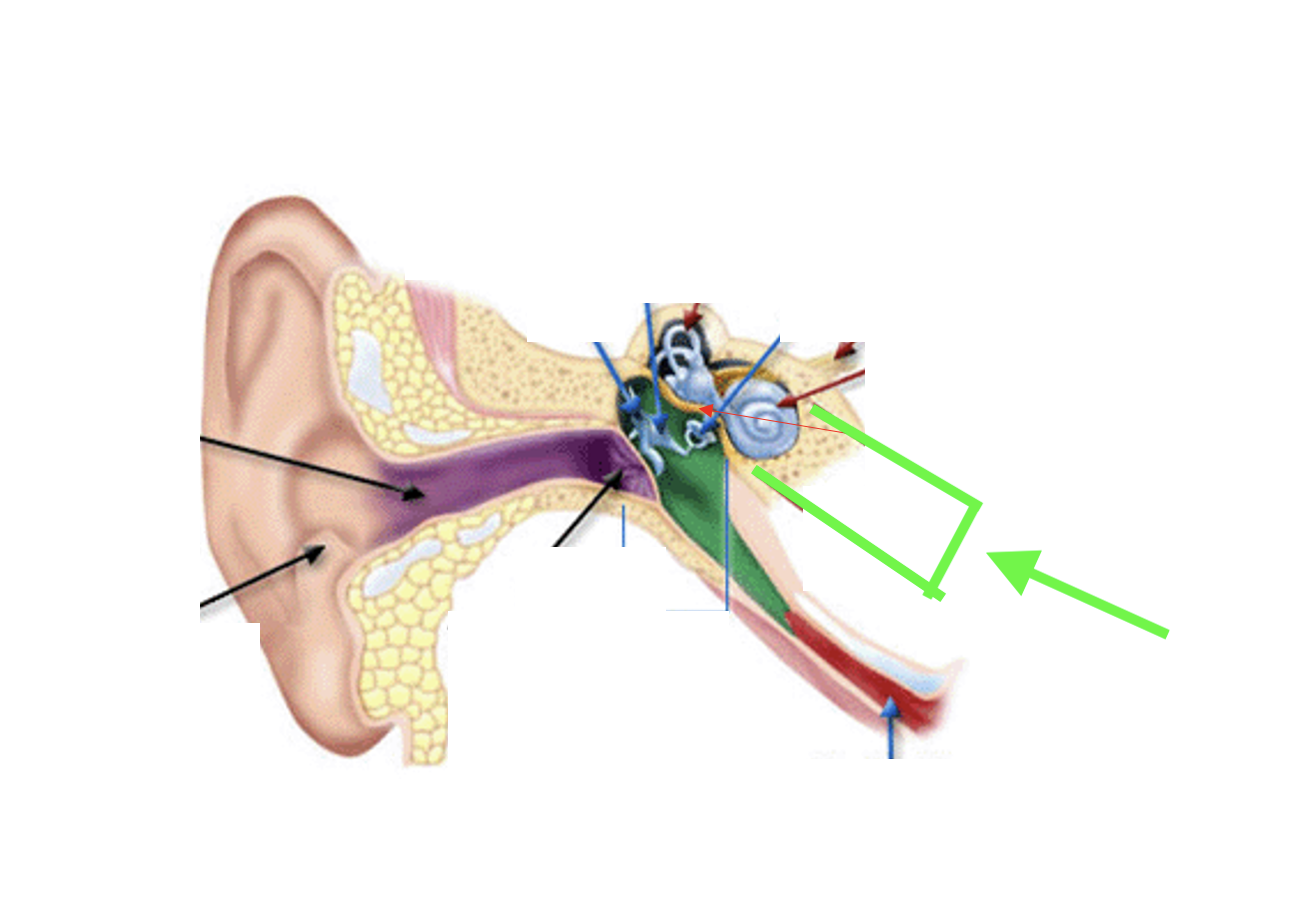
what is this part of the ear?
inner ear
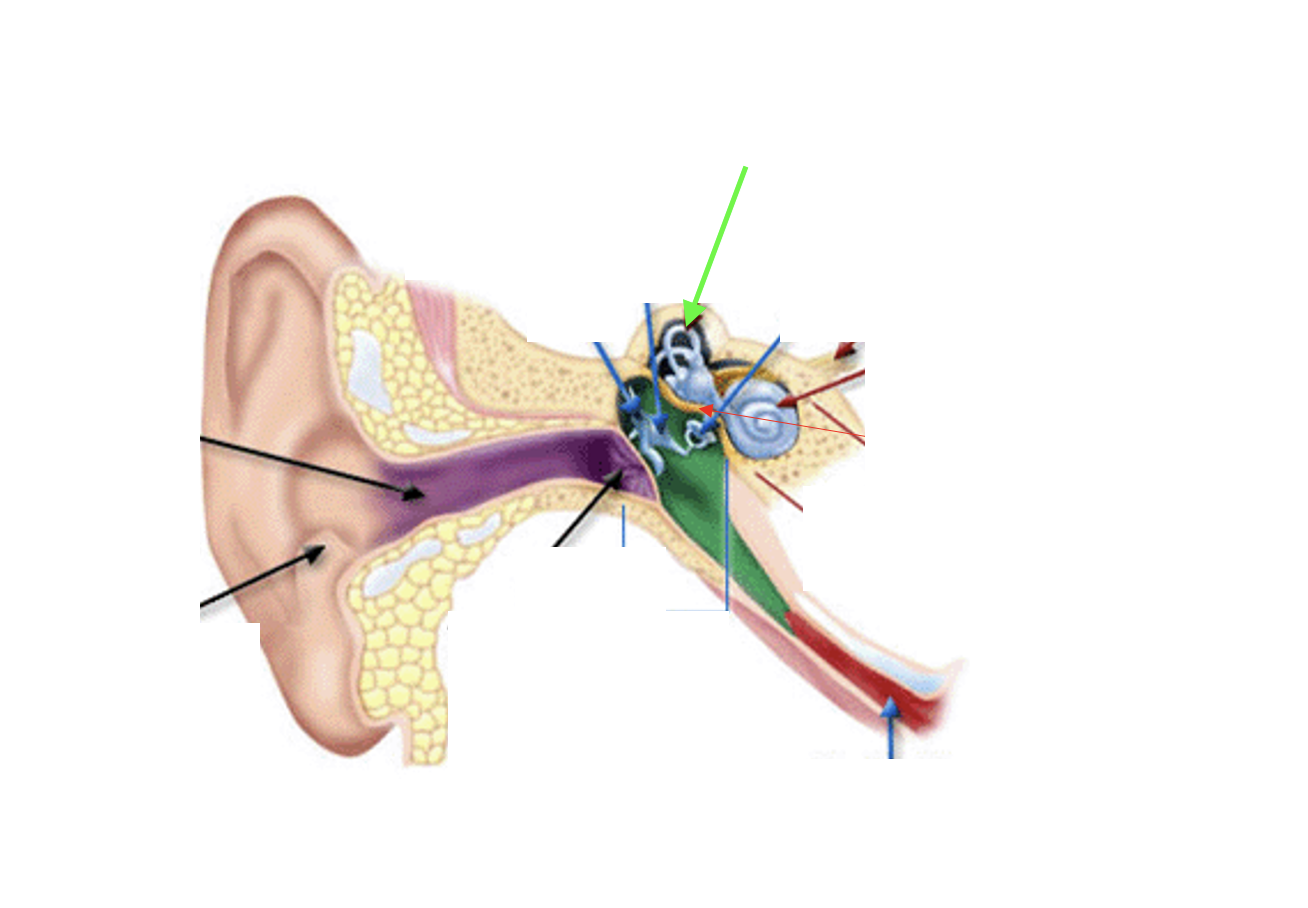
what is this part of the ear?
vestibular organs
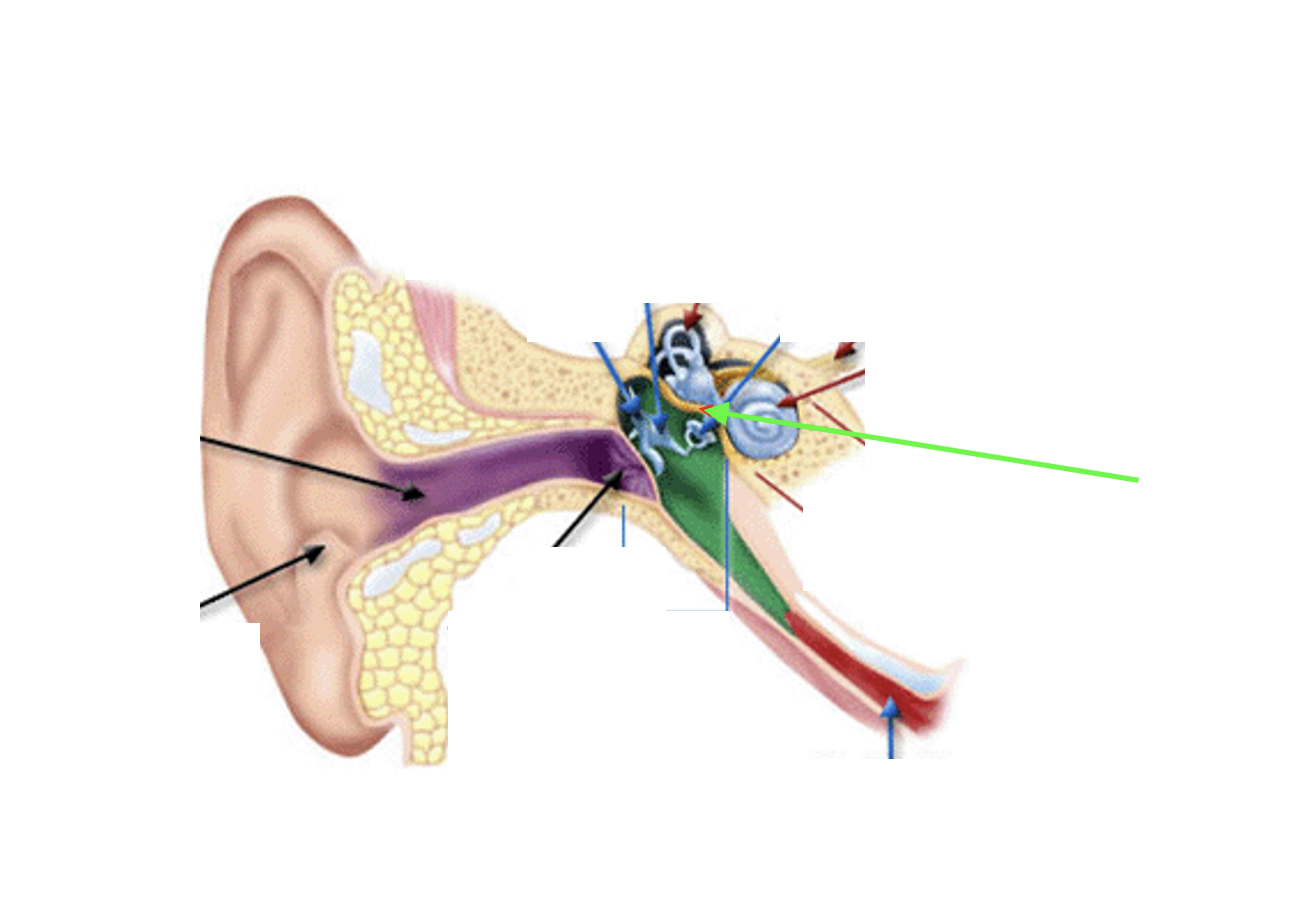
what is this part of the ear?
oval window
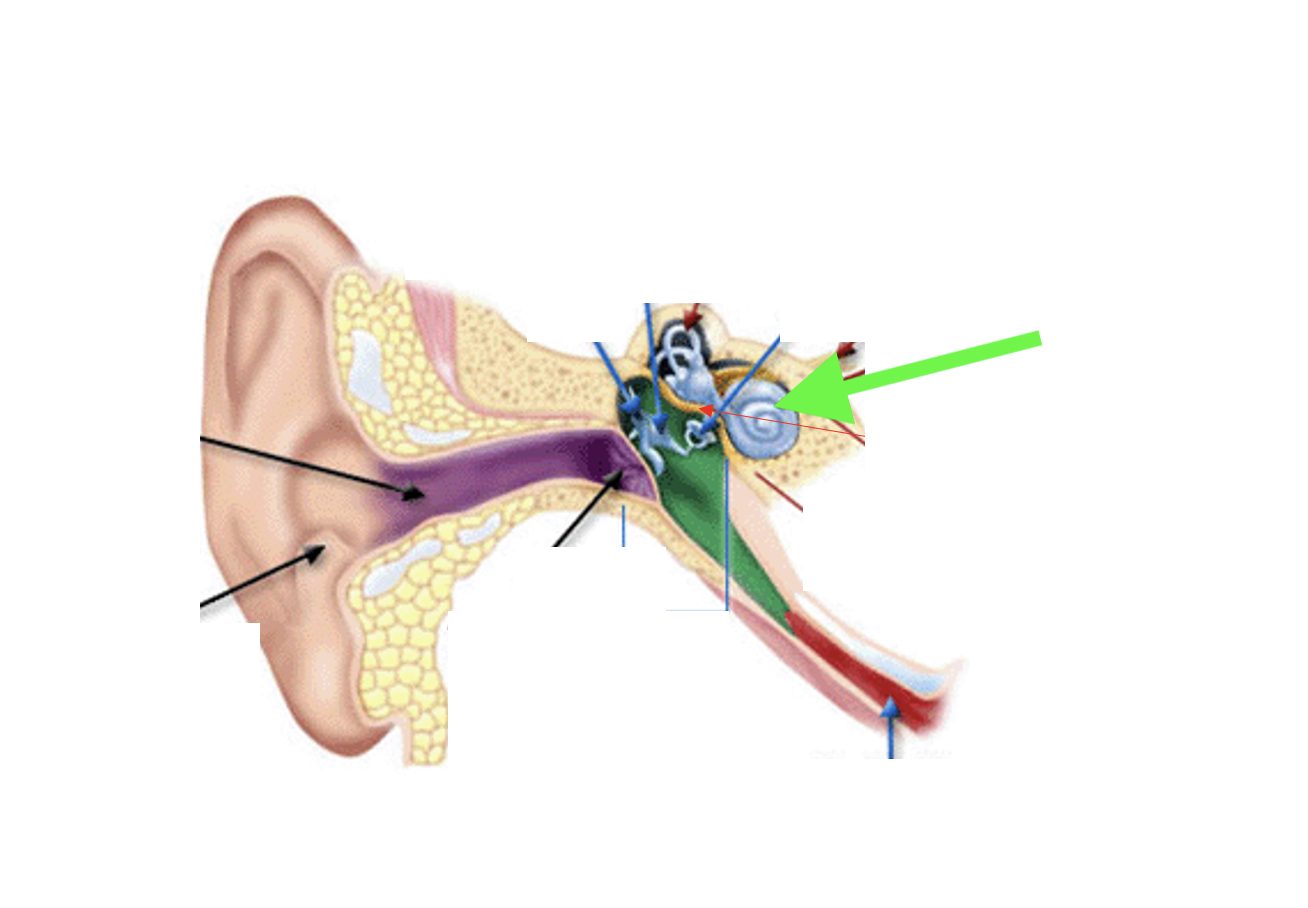
what is this part of the ear?
cochlea
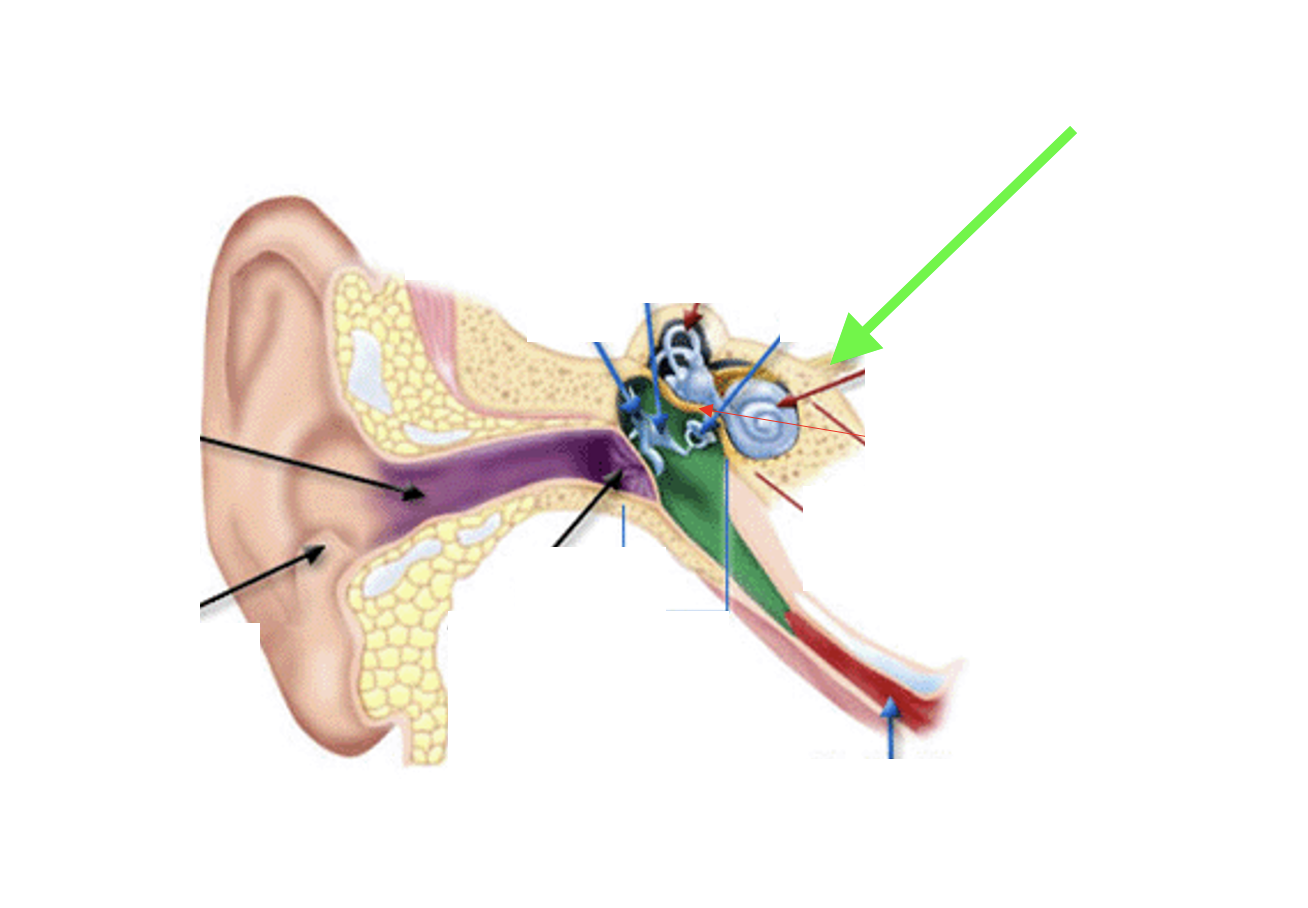
what is this part of the ear?
auditory nerve
what are the parts of the ear important for?
transducing sound into neural signals
Sound is composed of rhythmic variations in ________ pressure.
air
Sound creates waves of ________ and ________ that we perceive as sound.
compression, rarefaction
All sound waves propagate at the same speed in air, about ________ mph.
761
Frequency (1/wavelength) determines ________, while amplitude (in decibels) determines ________.
pitch, loudness
Human hearing range is approximately ________ to ________ Hz.
20, 20,000
Sounds below 20 Hz are called ________.
infrasonic
Sounds above 20 kHz are called ________.
ultrasonic
Sound waves enter the ear through the ________ and travel down the ear canal.
outer ear
The ________ vibrates, moving the _____.
eardrum, ossicles
The ossicles move the membrane on the ________ .
oval window
Movement of fluid in the ________ causes sound transduction.
cochlea
Sound signals leave the ear through the ________ nerve.
auditory
Vibrations of the eardrum are amplified at the oval window due to the ________ action of the ossicles.
lever
The surface area of the eardrum is ________ than that of the oval window.
larger
The ________ tube connects the middle ear to the nose and mouth, preventing pressure buildup.
eustachian
A blocked Eustachian tube can cause pressure buildup, making the eardrum ________ and causing pain.
bulge
The ________ contains the auditory receptor neurons.
organ of corti
The ________ is part of the Organ of Corti and is filled with fluid.
scala media
The ________ membrane receives signals from cochlear fluid.
basilar
Movement of the ________ on the oval window creates waves in cochlear fluid.
stapes
The waves in the cochlear fluid are translated into movements of the ________ .
basilar membrane
High frequencies move the ________ base of the basilar membrane.
narrow and stiff
Low frequencies move the ________ and ________ region.
wide and floppy
___ cells are attached to the ________ membrane and auditory neurons.
hair, tectorial
Movement of the basilar membrane bends the ________ on hair cells.
stereocilia
Bending of stereocilia opens ________ gated potassium channels.
mechanically
Potassium flows ________ the cell, causing ________.
into, depolarization
Hair cells release ________ onto auditory nerve fibers.
neurotransmitters
The potassium equilibrium potential in the cochlea is around ________ mV due to different concentration gradients.
0
________ is caused by loss of auditory nerve neurons or hair cells.
nerve deafness
Nerve deafness can result from ________, ________, or ________.
loud sounds, toxins, tumors
Cochlear implants can directly stimulate ________ nerve fibers after hair cell loss.
auditory
The auditory pathway: auditory nerve → ________ → cranial nerve ________ → cochlear nuclei → ________ → MGN → primary auditory cortex.
brainstem/medulla, VII, superior olive
The MGN (medial geniculate nucleus) is located in the ________.
thalamus
The primary auditory cortex is located in the ________ lobe.
temporal
Each auditory neuron has a preferred or ________ frequency to which it responds best.
optimal
Tonotopy refers to ________ mapping of auditory neurons.
frequency
In the cochlea, neurons are organized according to the ________ .
basilar membrane
Neurons responding to similar frequencies are located ________ each other.
near
In the horizontal plane, sound reaches one ear slightly ________ than the other.
later
The ____ of the ear helps localize sound in the vertical plane.
shape
The ________ detects time differences between ears.
medial superior olive
MSO neurons detect coincident arrivals of action potentials from each ear using ________ detecting neurons.
coincidence
Sound intensity is ________ to one ear than the other, helping identify sound direction.
higher
Interaural level differences work best for ________ frequencies.
high
Interaural time differences work best for ________ frequencies.
low