Equine Med 12 - Antibiotic Tutorial
 Call Kai
 Learn
Learn Practice Test
 Spaced Repetition
 Match
Match Flashcards
 Knowt Play
1/19

There's no tags or description
Looks like no tags are added yet.
Name | Mastery | Learn | Test | Matching | Spaced | Call with Kai | Chat |
|---|
No analytics yet
Send a link to your students to track their progress
20 Terms
Antimicrobial vs antibiotics
Antimicrobial:
- Refers to all agents that kills or inhibits the growth of microorganisms, but causes little or no damage to the host
- Bacteria = antibacterial Viruses = antiviral Fungi = antifungal Protozoa = antiprotozoal
Antibiotics:
Refers to a low molecular substance produced by a microorganism, that at a low concentration inhibits or kills other microorganisms
- do not not synthetic or semisynthetic antimicrobials ie TMS/quinolones
Hence all antibiotics are antimicrobials, but not all antimicrobials are antibiotics
What to take away from this tut:
Routes of admin
Duration of action
Spectrum of activity
List very broad and intermediately broad spectrum ABs
*all the non mentioned = narrow*
Very broad spectrum = All bacteria
- Carbapenems
- Chloramphenicol
- 3rd gens flouroquinolones
Intermediately broad
- 2nd and 3rd gen cephalosporins
- Tetracyclines
- Ampicillins and 1st gen cephalosporins

Time vs Concentration dependent
Timing
- need correct dose frequency achieve MIC
Concentration
- need specific doses to get MIC
- timing less important becasue they have prolonged post-antibiotc effects
- can be every 24 hours compared to q8 as some time dependent may be

Example of time dependent vs conc dependent abs
time dependent
- beta lactams
- pencillincs
- macrolides
conc dependent
- aminoglyhcoses
- tms
an example of an antibiotic that undergoing ion-trapping and what is it?
macrlodies (erythromycin) - reach high intracellular concentrations ('trapped') due to pH changes across the cell membrane

Getting the bug to the drug is refered to as?
Getting the drug to kill the bug
Getting the bug to the drug --> pharmacokinetics
Getting the drug to kill the bug --> pharmacodynamics
Considerations when prescribing anitbiotics re PK and PD
Confirmed bacterial infection?
Confirmed species? or will you use wide spectrum?
Location of infection
- behind lipid barriers?
- in non perfused fluids? (joint, cornea)
Local env factors
- anaerobic
- pH
Dosing regimen
- frequency
- route
Patient considerations
- age
- colitis?
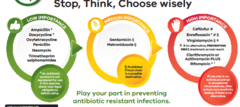
Black listed, human importance
Flouroquinolones
3rd and 4th gen cephalosporins
Chloramphemicol
Imipenem
Vancomycin
can be used but must be based off culture with limited systemic exposure ie try regional
Prohibited fo food chainr?
Gentamycin
Metronidazole
Abs commonly used in equine med
Penicillins
- ampicilin
Tetracyclins
- doxy
- oxytet
Aminoglycisdes
- neomycin
- gentamicin
TMS
Corneal Stromal Abscess (likely mixed infections)
• Neomycin, Polymyxin B, Bacitracin (Tricin) or Chloramphenicol
Chloramphenicol because its lipid soluble
12h old septic foal (likely e coli)
- • Procaine penicillin + gentamicin or • Ceftiofur sodium
PenGen because ceftiofur is tier 3
Arytenoid Chondritis (likely strep)
• Trimethoprim Sulfamethoxazole or • Doxycycline + Rifampin
Considerations --> cartialge have poor blood supply so need long duration abs
TMS - due to doxy having potential to cause colitis dt oral administration.
Case 4 - 6m old foal with pneumonia • Clarithromycin + Rifampin or • Oxytetracycline
Clarithromycin and rifampin because their ion trapped
Case 5 -
- Wound Cellulitis
• Penicillin + Gentamicin + Metronidazole
OR Enrofloxacin + Rifampin
Mixed bacterial infection inc streps. Enro is tier 3 and not effective against streps.
PEN GEN TMS
redo me

Penicillins
- drug class
- MoA
- lipid or water soluble
- cidal or static
- time or concentration
- spectrum
- side effects
- duration of action
Beta lactams
Punch hole in cell walls
Water
Cidal
Time
Gram positive aerobes
Newer generations ie ampicillins and cephalosporins also have gram negative aerobic activity
Side effects
- anaphylaxis
- hiarrhoea
- cardiac arrthmias
DoA
- 6-12 hours
Gentamycin
- drug class
- MoA
- lipid or water soluble
- cidal or static
- time or concentration
- spectrum
- side effects
- duration of action
Aminoglycoside
Protein synthesis inhibition
Water
Cidal
Concentration dependent
Gram negative aerobes
NM blockage
Acute tubular necrosis
DoA: 24 hours
TMS
- drug class
- MoA
- lipid or water soluble
- cidal or static
- time or concentration
- spectrum
- side effects
- duration of action
Sulfonamide
Inhibits folic acid synthesis
Lipid
Cidal
Conc
Broad spectrum
Diarrhoea, fatal cardiac arrythmias if concurrent use, chronic anaemia
DoA: 12 hours