Topics 2.1-2.2 African Explorers and Departure Zones in Africa/Slave Trade
 Call Kai
 Learn
Learn Practice Test
 Spaced Repetition
 Match
Match Flashcards
1/19

There's no tags or description
Looks like no tags are added yet.
Name | Mastery | Learn | Test | Matching | Spaced | Call with Kai | Chat |
|---|

20 Terms
Phyllis Wheatley
The first Black woman to become a poet of note in the United States

Solomon Northup
Kidnapped into slavery while on a visit to Washington at the age of 33; Twelve Years a Slave

Charleston, SC
North America's largest Transatlantic Slave Trade port of entry

Final passage
The journey from the port of disembarkation in the Americas to the plantation or other destination where they would be put to work

Commodification
Process of converting human, social or cultural value into market value
La Amistad (1839)
The ship Africans seized killing the captain and the cook, before ordering the crew to sail to Africa. Seized off Long Island.

Middle Passage
The forced voyage of enslaved Africans across the Atlantic Ocean to the New World. It was one leg of the triangular trade

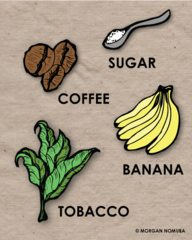
Cash Crops
Commodity grown and sold
Slave ships were called
Means by which nearly 12.5 million enslaved Africans were transported from Africa to the Americas between 1500 and 1866 as part of the transatlantic slave trade

Esteban (Estevanico)
Moroccan slave who, along with an expedition of Spanish explorers, traveled from Florida along the Gulf of Mexico into the southwestern United States. He was one of the first European to reach some areas of the southwestern United States.

Frances Ellen Watkins Harper
American author, orator, and social reformer who was notable for her poetry, speeches, and essays on abolitionism, temperance, and woman suffrage

Igbo People
People living chiefly in southeastern Nigeria who speak a language of the Benue-Congo branch of the Niger-Congo language family

Yoruba People
One of the three largest ethnic groups of Nigeria, concentrated in the southwestern part of that country. Much smaller, scattered groups live in Benin and northern Togo.

Wolof
An Atlantic language of the Niger-Congo language family genetically related to Fula and Serer.

Deracination
To pull up by the roots; uproot; extirpate; eradicate; to isolate or alienate (a person) from a native or customary culture or environment

Sengbe Pieh/Joseph Cinque
A rice farmer kidnapped from modern Sierra Leone by slave traders and then was sent to Havana and was purchased and boarded La Amistad

Slave Narratives
An account of the life, or a major portion of the life, of a fugitive or former slave, either written or orally related by the slave personally

Ladinos
Free and enslaved Africans familiar with Iberian culture; some of the first Africans in the Americas

Juan Garrido
A free African conquistador who found Florida with Ponce de Leon looking for treasure. Later, he was a member of the Hernan Cortes' expedition that invaded Mexico and seizes he Aztec capital at Tenochtitlan (1519).

Atlantic Creoles
People of African and European descent from the 16th and 17th centuries whose mixed cultural identities were formed before the consolidation of rigid plantation systems. They were often multilingual, familiar with both European and African languages and customs.
