CKD
 Call Kai
 Learn
 Practice Test
 Spaced Repetition
 Match
 Flashcards
 Knowt Play
1/23

There's no tags or description
Looks like no tags are added yet.
24 Terms
Define CKD
≥3 months of kidney damage (albuminuria, structural abnormalities) or decreased kidney function (eGFR <60).


Normal GFR=___. Kidney Failure GFR=___.
Normal= 125ml/min. Kidney failure=<15ml/min

Most common causes of CKD in US
Diabetes (≈45%), HTN/vascular (≈28%), glomerular diseases, cystic disease.

Define albuminuria categories
Normal <30 mg/day. Micro= 30-300mg/day. Macro= >300mg/day

Mechanism of CKD progression
Nephron loss → hyperfiltration → glomerular HTN → proteinuria → inflammation → fibrosis → GFR decline.
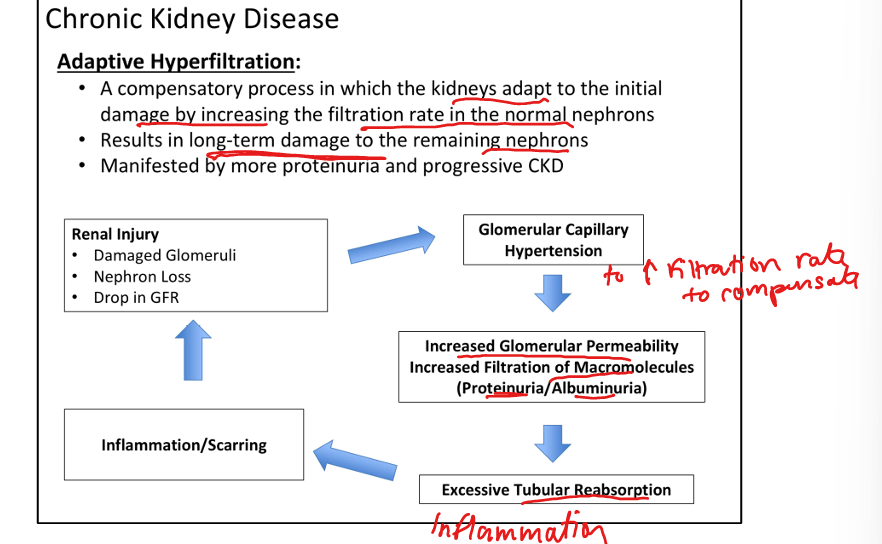
How proteinuria worsens CKD
Tubular protein overload → cytokines, macrophages, ROS → interstitial fibrosis → nephron loss.

Role of ACEI/ARB in CKD
↓ intraglomerular pressure + ↓ proteinuria → slows CKD progression.
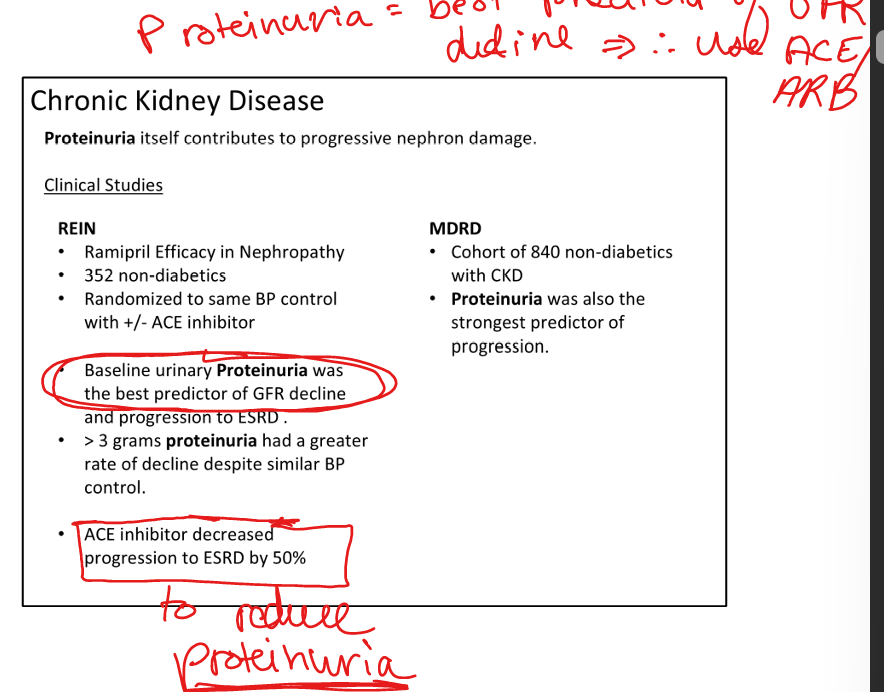
Best predictor of GFR decline? Tx?
Proteinuria(>3.5g/day). Tx with ACE/ARBs


Risk factors for CKD progression
Proteinuria, HTN, DM, PKD, African ancestry(APOL1 gene), male sex, obesity, smoking, high phosphate, acidosis.

Why CVD is common in CKD? What is Leading Cause of death in CVD?
HTN, dyslipidemia, inflammation, vascular calcification, anemia → leading cause of death.


Cause of anemia in CKD
↓ EPO production (due to damaged nephrons>production comes from PT), iron deficiency, inflammation, shortened RBC survival(esp dialysis pts), platelet dysfunction(uremic).


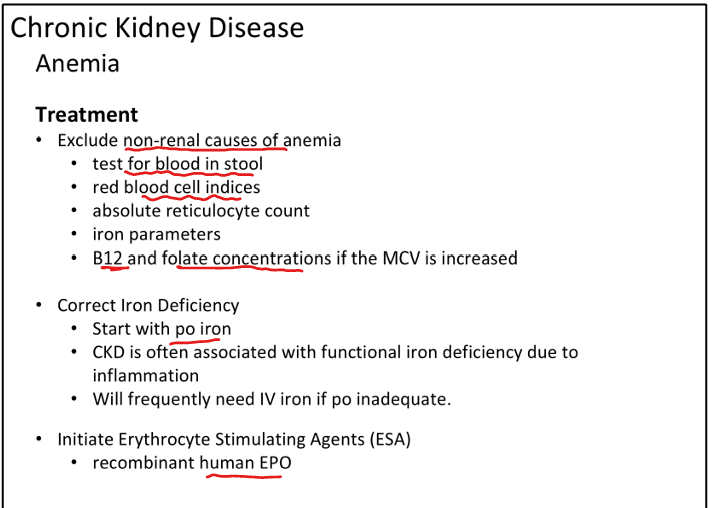
Treatment of anemia in CKD
Correct iron deficiency → consider Erythrocyte Stimulating Agent(ESA) if Hgb <10

Pathophysiology of secondary hyperparathyroidism
Decreased GFR→Phosphate retention → ↑FGF23(to remove phosphate) → ↓1,25D(FGF suppresses it) → hypocalcemia → ↑PTH(to maintain nromal calcium level). »Eventually low Ca and high Phosphate

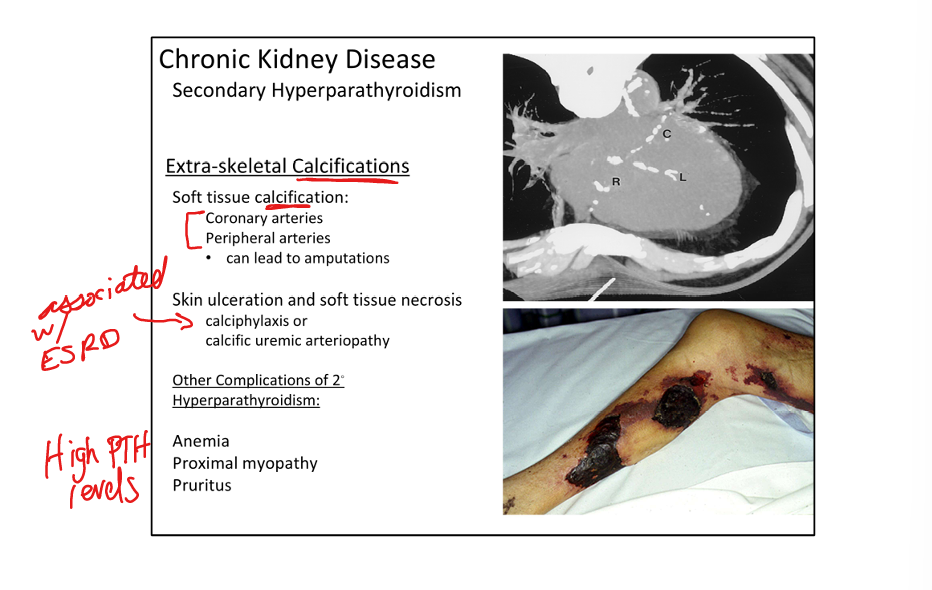
Complications of secondary hyperparathyroidism
Renal osteodystrophy(Ca pulled from bones), fractures(Ca pulled from bones), vascular/soft tissue calcification(Ca deposits in vessels), pruritus, myopathy.

Treatment of secondary hyperparathyroidism
Control phosphate (diet + binders), correct Vit D deficiency, active Vit D analogs, calcimimetics(mimics Ca to dec PTH), parathyroidectomy if refractory.

Cause of metabolic acidosis in CKD
↓ acid excretion → H+ retention → serum bicarbonate 12–20.

Consequences of metabolic acidosis in CKD
Bone resorption, muscle catabolism, worsened CKD progression.
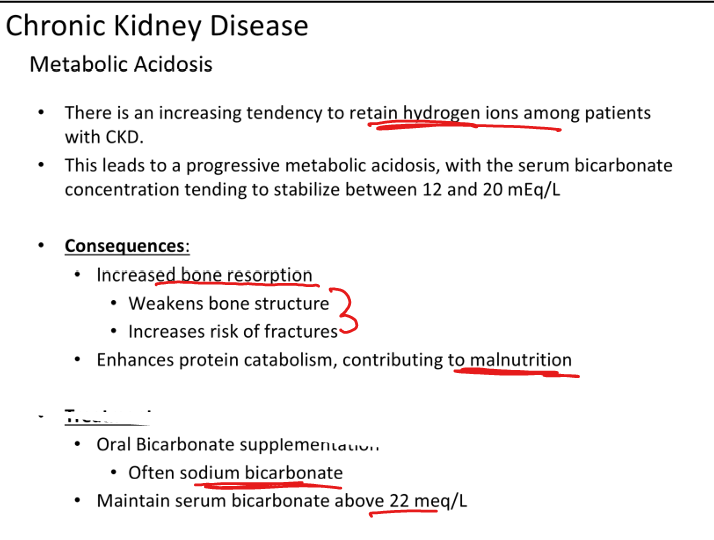
Treatment of metabolic acidosis in CKD
Oral bicarbonate to maintain HCO₃⁻ >22.

Define uremia
Clinical syndrome from retained toxins in advanced CKD (fatigue, nausea, pruritus, neuropathy, pericarditis, sallow skin, peripheral neuropathy).

Symptoms of uremia
Fatigue, anorexia, dysgeusia, pruritus, nausea, neuropathy, restless legs, cognitive changes.

Signs of uremia
Asterixis, pericarditis, platelet dysfunction, sallow skin, malnutrition.

Treatment of uremia
Dialysis or transplant — only definitive therapy.

Mainstays of CKD management
Control BP, reduce proteinuria, treat anemia, manage phosphate/PTH, correct acidosis, statins, glycemic control, lifestyle.

Primary Vs Secondary Hyperparathyroidism
Primary= due to overactive Parathyroid, normal to low Phosphate, High calcium
Secondary= due to renal compensation mechanism, High Phosphate (due to low GFR), low calcium
