P7
 Call Kai
 Learn
 Practice Test
 Spaced Repetition
 Match
 Flashcards
 Knowt Play
1/19

Earn XP
Description and Tags
Energy stores
20 Terms
the forms of energy (8)
“most kids hate learning GCE energy names”
magnetic
kinetic
heat (thermal)
light
gravitational potential energy
chemical
elastic potential
electric
nuclear
3 examples of chemical energy
fuel
food
batteries
law of conservation of energy
energy cannot be created nor destroyed, only transferred from 1 form to another
how to analyze a situation using energy
choose 2 points in a process
identify which stores have more/less energy in said process
work out type of transfer between the stores
example of energy analysis
start: stationary, lots of fuel
transfer: engine exerts a constant force
end: moving car, less fuel
how to draw energy boxes
due to law of conservation, both boxes will add up to a full box before & after
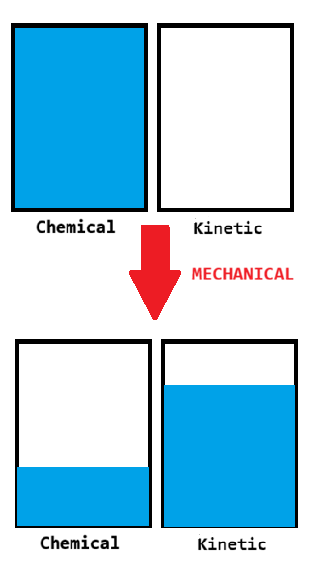
4 ways of energy transfer
My Elderly Happy Parrot Helen Reads
mechanically
electrically
heating by particles
heating by radiation
equation for power
energy / time = power
power = energy * time
convert to kJ for big units, then power = kw // time = hours
tariff
cost of 1 kwh (kilowatt hour)
energy bill cost = tariff * kilowatt
prefix
letter before a unit to change the size, making the # more comprehensible
enlarging prefixes
Kids Must Go To Parties
kilo(k) = 103
mega(M) = 106
giga(G) = 109
tera(T) = 10
shrinking prefixes
Patty’s Nine Mini Mice Can Dance
Pico(p) = 10-12
Nano(n) = 10-9
Micro(µ) = 10-6
Milli(m) = 10-3
Centi (c) = 10-2
Deci (d) = 10-1
change in temp from energy and specific heat capacity
change in temp = energy / (mass * SHC)
efficiency equation
efficiency = useful power output / total output
efficiency = repped in decimal form
if asked to express in %, * 100
sankey diagram
summarizes all energy transfers taking place in a process
width of the arrow shows amount of energy transferred
scale must be consistent, length unimportant
labelled sankey diagram

rate of cooling
rate energy is dissipated
depends on wall thickness & thermal conductivity of material
higher temp diff between 2 sides of wall = faster rate
thermal conductivity
how quickly energy transfers through it by heating
high conductivity = energy transfers quick
low conductivity = slow = insulator
graph of thick/thin wall celsius over time
thicker wall = longer as energy goes through more layers = higher distance
thus rate of temp decrease is slower

graph of low/high thermal conductivity
the graph is identical! (except from the subject)
high thermal conductivity = faster cooldown than that of low thermal conductivity
