EXAM 1 Cumulative
 Call Kai
 Learn
 Practice Test
 Spaced Repetition
 Match
 Flashcards
 Knowt Play
1/39

There's no tags or description
Looks like no tags are added yet.
40 Terms
Chapter 2 — General Assessment & Physical Parameters
BP
numbers
measurements
measurement errors
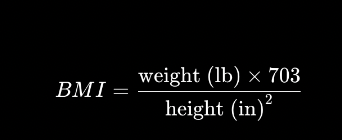
BMI
formula
numbers
risk
Vital Signs
HR
RR
Measure
General Assessment & ECA?
Blood Pressure
Numbers
Classification | Systolic | Diastolic |
|---|---|---|
Normal | Below 120 | AND below 80 |
Elevated | 120–129 | AND below 80 |
Stage 1 HTN | 130–139 | OR 80–89 |
Stage 2 HTN | ≥140 | OR ≥90 |
Blood Pressure
Measurement
BP #
First Korotkoff sound = SBP.
Sound disappears = DBP.
Deflating
No sound → sound → no sound as cuff deflates.
Deflation = 2–3 mmHg/sec.
Person taking BP
Cuff bladder covers ≥80% of arm.
Record manual BP in even numbers.
Average ≥2 readings separated by 2 minutes.
Patient
Rest 5 minutes.
No caffeine, nicotine, exercise within 30 minutes.
Arm at heart level, feet flat, back supported.
Blood Pressure
Measurement Errors
Error | Effect |
|---|---|
Cuff too small | Falsely HIGH |
Cuff too large | Falsely LOW |
Arm below heart | Falsely HIGH |
Arm above heart | Falsely LOW |
Unsupported back/legs dangling | Falsely HIGH |
BMI
formula
BMI = kg/m²
BMI
numbers
BMI | Category |
|---|---|
Below 18.5 | Underweight |
18.5–24.9 | Healthy |
25–29.9 | Overweight |
30–34.9 | Obesity I |
35–39.9 | Obesity II |
≥40 | Obesity III |
BMI
risk
Waist risk: men >40 inches, women >35 inches.
BMI can misclassify highly muscular patients.
Vital Signs
HR
Finding | Memorize |
|---|---|
Normal HR | 60–100 bpm |
Bradycardia | Below 60 |
Tachycardia | Above 100 |
Vital Signs
RR
Normal RR | 12–20/min |
Bradypnea | Below 12
|
Tachypnea | Above 20 |
Normal pulse strength | 2+ |
Vital Signs
Measure?
Regular rate = count 30 sec ×2.
Irregular = count 60 sec.
General Assessment & Exam
General Assessment
Alert/oriented ×3 = person, place, time.
Cyanosis = blue, poor oxygenation.
Pallor = pale.
Jaundice = yellow, liver-related.
Dysarthria = difficulty articulating words.
Aphasia = difficulty with language.
Uneven smile = possible stroke/Bell's palsy.
Exam - IPPA
Inspection = LOOK (most used by pharmacists).
Palpation = FEEL.
Percussion = TAP.
Auscultation = LISTEN.
Chapter 3 — Pain & Musculoskeletal
Pain Origin
Pain Classification
Pain Assessment
Musculoskeletal Disorders
Osteoporosis
RA vs. OA
Other Conditions
Objective Assessment
Pain Origin
Type | Clue |
|---|---|
Neuropathic | Burning, tingling, numbness |
Somatic | Superficial tissue |
Visceral | Internal organs |
Allodynia: normally painless stimulus causes pain.
Hyperalgesia: exaggerated response to painful stimulus.
Pain Classification
Type | Clue |
|---|---|
Acute | Short-term, may cause increased BP/HR |
Chronic | Persistent/recurrent, physical signs may be absent |
Pain Assessment
⭐⭐⭐ PQRST
Letter | Meaning |
|---|---|
P | Palliative/precipitating factors |
Q | Quality |
R | Region/radiation |
S | Severity |
T | Temporal relationship |
Pain is subjective → patient report is the primary assessment.
Numeric pain scale: 0 = no pain; 10 = worst imaginable.
Musculoskeletal Disorders
Osteoporosis
DEXA = measures bone mineral density; More negative T-score = lower bone density.
T-score | Classification |
|---|---|
≥−1 | Normal |
between −1 and −2.5 | Osteopenia |
≤−2.5 | Osteoporosis |
Three osteoporosis diagnostic/treatment criteria (A patient needs to meet ONE of these criteria, not all three:)
Nontraumatic hip/spine fracture.
T-score ≤−2.5.
Osteopenia AND FRAX hip risk ≥3% OR major fracture risk ≥20%.
🚨 MEMORIZE: FRAX = 3% HIP / 20% MAJOR.
FRAX estimates 10-year fracture risk.
Common risk factors: postmenopause, older age, chronic steroids, smoking.
Musculoskeletal Disorders
RA vs. OA
RA | OA |
|---|---|
Autoimmune inflammation | Cartilage deterioration |
Morning stiffness >1 hour | Morning stiffness <30 min |
Multiple small joints | Weight-bearing joints |
Symmetric, generally | Often asymmetric |
Swan-neck/boutonnière | Heberden/Bouchard nodules |
RF may be positive | Crepitus |
Musculoskeletal Disorders
Other Conditions
Condition | Key clue |
|---|---|
Carpal tunnel | Median nerve, first 3½ digits, Phalen/Tinel |
Gout | Sudden severe pain in one red/swollen joint |
Bursitis | Inflamed bursa
|
Tendinitis | Inflamed tendon
|
TMJ | Jaw pain + clicking/popping |
Strain | Muscle/tendon injury |
Sprain | Ligament injury |
Musculoskeletal Disorders
Objective Assessment
ROM: abduction = away; adduction = toward.
Muscle strength 5/5 = normal.
CRP/ESR = inflammation markers; RF = associated with RA.
ADLs = activities of daily living.
Chapter 4 — Cardiovascular & Peripheral Vascular
Cardiovascular Risk
Hypertensive Crisis
Dyslipidemia
PREVENT Calculator
Coronary / Heart Conditions
Ischemic Heart Disease (IHD)
Acute Coronary Syndrome (ACS)
Heart Failure (HF)
Arrhythmias
Valvular Disease
Vascular Conditions
Peripheral Artery Disease (PAD)
VTE → DVT / PE
Cardiovascular Risk
Hypertensive Crisis
BP ≥180/110 in slides.
Markedly elevated BP = NO acute target-organ damage.
Hypertensive emergency = YES acute target-organ damage.
Cardiovascular Risk
Dyslipidemia
High LDL/TG and low HDL = adverse lipid profile.
Cardiovascular Risk
PREVENT Calculator
Risk | Category |
|---|---|
0–<3% | Low |
3–<5% | Borderline |
5–<10% | Intermediate |
≥10% | High |
Coronary / Heart Conditions
Ischemic Heart Disease (IHD) vs. Acute Coronary Syndrome (ACS)
1. Ischemic Heart Disease (IHD)
IHD = CAD = CHD (same disease) - Chronic coronary plaque/narrowing
Stable angina → Exertion, relieved by rest/nitro
Prinzmetal angina → Coronary artery spasm, often at rest
2. Acute Coronary Syndrome (ACS) - Sudden coronary event
Unstable angina → Pain at rest/worsening
NSTEMI → Heart attack without ST elevation
STEMI → Heart attack with ST elevation
ACS Symptoms
Chest → Crushing/pressure-like pain.
Spreads → Arm, jaw, back.
Sick → SOB, sweating, nausea/vomiting.
Diagnostic Tests
IHD → stress test; positive result may lead to angiogram.
ACS → ECG + cardiac enzymes (troponin, CK-MB).
Coronary / Heart Conditions
Heart Failure
Recognize these findings:
Orthopnea = SOB lying flat.
PND = waking up suddenly with SOB.
Bilateral pitting edema.
JVD/HJR = fluid overload.
Crackles and S3 gallop.
ECHO = primary diagnostic test.
EF | Classification |
|---|---|
≤40% | HFrEF |
≥50% | HFpEF |
NYHA classes
I = No activity limitation.
II = Symptoms with moderate activity.
III = Symptoms with ADLs.
IV = Symptoms at rest.
🚨 Lab numbers: Your professor said to know BNP/pro-BNP numbers. This is one change from my previous cram sheet.
BNP >100 pg/mL → warrants HF evaluation.
NT-proBNP thresholds on slides:
Under 50 years: >450.
50–75 years: >900.
Over 75 years: >1800.
I'd memorize BNP 100 first, then review the three proBNP age thresholds.
Coronary / Heart Conditions
Arrhythmias
Irregular heart rate/rhythm.
Palpitations, dizziness, syncope.
ECG/Holter monitor.
Coronary / Heart Conditions
Valvular Disease
Stenosis = valve has difficulty opening.
Regurgitation = valve doesn't close properly.
Murmur = characteristic finding.
ECHO = diagnostic test.
Vascular Conditions
Peripheral Artery Disease (PAD)
Intermittent claudication = leg pain with walking, relieved by rest.
Critical limb ischemia = severe ischemia with pain at rest.
Weak peripheral pulse, cool skin, hair loss, poor capillary refill.
ABI = ankle SBP / brachial SBP
ABI | Meaning |
|---|---|
1.0–1.29 | Normal |
0.91–0.99 | Borderline |
≤0.90 | PAD |
Below 0.40 | Severe |
Vascular Conditions
DVT vs. PE
DVT | PE |
|---|---|
Usually unilateral swelling | Sudden SOB/dyspnea |
Leg pain + warmth | Chest pain/tightness |
May have redness | May have tachycardia/tachypnea |
Duplex ultrasound | Spiral CT or V/Q scan |
VTE = DVT + PE.
D-dimer = clot-related blood test used in evaluation.
Warfarin → INR monitoring.
HF swelling usually bilateral; DVT usually unilateral.
Chapter 1 — Patient Assessment Process, Health & Medication Histories, SOAP Notes, TBL
Patient Assessment Process
Patient Care Process
Pharmacist's Role
Health & Medication Histories
Subjective vs. Objective
QuEST — Self-Care Assessment
MAC
Health History Components
SCHOLAR — HPI
SOAP Notes
SOAP
Medication Therapy Problems
TBL
Patient Assessment Process
Patient Care Process
Step | Meaning |
|---|---|
Collect | GET information |
Assess | THINK / identify problems |
Plan | PICK treatment |
Implement | DO |
Follow-up | CHECK |
Throughout: Collaborate + Communicate + Document.
Center: Person-Centered Care.
Patient Assessment Process
Pharmacist's Role
Ensure medication therapy is:
Safe
Effective
Indicated
Convenient
Economical
Main goal: Identify, resolve, and prevent medication-therapy problems.
Health & Medication Histories
Subjective vs. Objective
Subjective - Patient/caregiver TELLS you
PMH → Subjective for THIS CLASS, even when documented in the chart.
Objective - Measured, observed, or verified
Health & Medication Histories
Patient says they miss doses →
Fill history shows late refills →
Patient says they miss doses → Subjective.
Fill history shows late refills → Objective.
Health & Medication Histories
QuEST — Self-Care Assessment
Letter | Meaning |
|---|---|
Q | Quickly and accurately assess patient |
E | Establish appropriate self-care candidate |
S | Suggest appropriate self-care strategies |
T | Talk with patient |
Health & Medication Histories
Health History Components
CC = Chief Complaint → Patient's main concern, in their own words.
HPI = History of Present Illness → SCHOLAR.
PMH = Past Medical History → Current/past conditions.
Family Hx = Parents, siblings, children.
Social Hx = Alcohol, smoking, drugs, diet, exercise.
ROS = Review of Systems → Other patient-reported symptoms.
Pertinent negative = Important symptom the patient denies.
Health & Medication Histories
SCHOLAR — HPI
Letter | Meaning |
|---|---|
S | Symptoms |
C | Characteristics |
H | History |
O | Onset |
L | Location |
A | Aggravating factors |
R | Remitting factors |
Characteristics = Bulk of SCHOLAR, according to your professor.
SCHOLAR information belongs in HPI.
Health & Medication Histories
MAC
M = Medications (Rx, OTC, supplements).
A = Allergies.
C = Conditions.
Medication history should also cover -
indication, dose, schedule, duration,
effectiveness, adverse reactions, and adherence.
SOAP Notes
Section | Meaning |
|---|---|
S — Subjective | Patient/caregiver reports |
O — Objective | Measurable/observable data |
A — Assessment |
|
P — Plan |
|
SOAP
Medication Therapy Problems
INDICATION
Unnecessary medication therapy
Needs additional medication therapy
EFFECTIVENESS
Ineffective medication
Dosage too low
Needs additional monitoring
SAFETY
Adverse medication event
Dosage too high
Needs additional monitoring
ADHERENCE
Adherence/non-adherence
Cost