NRSG3320 EXAM 2 COMBINED FLASHCARDS
 Call Kai
 Learn
 Practice Test
 Spaced Repetition
 Match
 Flashcards
 Knowt Play
1/199

There's no tags or description
Looks like no tags are added yet.
200 Terms
type 1 diabetes
autoimmune destruction of beta cells, little/no insulin → needed for life
usually <30y/o, sudden wt loss, acute risk of DKA
type 2 diabetes
insulin resistance plus impaired secretion, enough insulin to block ketones (DKA uncommon)
usually >45y/o, develops gradually, acute risk of HHS
certified diabetes care and education specialist
aka CDCES, nurse/dietitian certified in diabetes education
A1C
lab value that reflects avg glucose over ~past 3 mo.
normal is <5.7%, goal for many diabetics is <7%
ketones
show up in urine if body breaks down fat for energy instead of glucose
T1DM check urine ketones if glucose >240 2x in a row or when ill, notify provider if elevated, could mean diabetic ketoacidosis
continuous glucose monitor
aka CGM, sensor that measures glucose of interstitial fluid in real time
goal for diabetics is 70-180 mg/dL, more time in normal range than not
(CGM reads interstitial fluid not blood, so fingerstick is needed if sudden change)
insulin types

insulin safety
rapid acting → pt eats w/in 5-15mins of injection
regular → give 15-30mins before meal
mixing → draw up regular (clear) before NPH (cloudy), but long-acting is NEVER MIXED w/ other insulins
too much insulin given → check glucose first, then monitor through peak, give carbs only if low, report once pt is safe
C. "A dietitian will help me build a meal plan around the foods I like."
A nurse is teaching a patient newly diagnosed with type 2 diabetes about
meal planning. Which statement indicates understanding?
A. "I need to stop eating all carbohydrates."
B. "I only need a dietitian if my A1C goes up."
C. "A dietitian will help me build a meal plan around the foods I like."
D. "A meal plan means eating the same meals every day."
B. Draw up the regular (clear) insulin first
A nurse is preparing regular and NPH insulin in one syringe. Which action is
correct?
A. Draw up the NPH (cloudy) insulin first
B. Draw up the regular (clear) insulin first
C. Substitute glargine for the NPH so both can be mixed
D. Mix the two insulins in the NPH vial before drawing up
hypoglycemia
blood glucose level <70mg/dL
causes → too much insulin/oral agent, too little food, extra activity, alcohol, sulfonylureas
early signs → sweating, shaking, fast HR, hunger
later signs → confusion, slurred speech, unusual behavior, seizures
hypoglycemia treatment
if alert/able to swallow → 15g fast-acting carb (4oz juice/soda, 304 glucose tablets, 1tbsp sugar/honey), recheck in 15min, repeat if still <70
if can’t swallow but has IV access → D50W per protocol, recheck per protocol
if can’t swallow and no IV access → glucagon SC/IM/intranasal, turn to side, food once alert
DKA vs. HHS

hyperglycemic crisis nursing care
rehydrate rapidly, NS first, then ½ NS (watch older adults for fluid overload/HF)
continuous IV regular insulin, hourly blood glucose
K and ECG q2-4hrs early in treatment (give K once urine flows, even if level is normal)
monitor blood/urine ketones until acidosis resolves
A. Add dextrose to IV fluids and continue insulin
A patient in DKA on IV insulin now has glucose of 240 mg/dL, and the acidosis has not resolved. Which prescription should the nurse anticipate?
A. Add dextrose to IV fluids and continue insulin
B. Stop the insulin infusion
C. Switch to subcutaneous insulin now
D. Give 15 g of carbohydrate by mouth
D. Give IV dextrose 50% per protocol
A hospitalized patient with diabetes is difficult to arouse. Fingerstick glucose is 42 mg/dL, and a saline lock is in place. Which action should the nurse take first?
A. Give 4 oz of orange juice
B. Recheck the glucose in 15 minutes
C. Give the scheduled breakfast insulin
D. Give IV dextrose 50% per protocol
diabetic neuropathy
nerve damage caused by long-term high blood sugar and high blood fat levels associated with diabetes, affects up to 50% to 70% of people with the condition
**LOSS OF PROTECTIVE SENSATION → injuries can go unnoticed
starts in toes/fingers, spreads in stocking-glove pattern, tingling/burning, often worse at night, then numbness
diabetic foot care teaching
inspect tops, sides, soles daily; use mirror or family help
wash in warm water tested w/ thermometer/elbow, never soak
dry between toes, lotion on tops and soles only
clean cotton socks daily, shoes/socks at all times
trim nails straight across, see podiatrist for calluses and thick nails
no heating pads
break in new shoes slowly
call provider if cut/blister/sore doesn’t begin to heal after 1 day!!
older adults & diabetes
~25% of adults >65 have diabetes
higher risk of falls, polypharmacy, depression, cognitive impairment
lows are dangerous → slower drug clearance, skipped meals, living alone
A1C <8% may suit some older adults
HHS more common → watch for fluid overload during treatment
pens help w/ vision/dexterity limits
B. A prefilled insulin pen
An older adult with type 2 diabetes and low vision is being discharged on basal insulin. Which option best supports safe self-administration?
A. Vials and syringes drawn up each day
B. A prefilled insulin pen
C. A neighbor draws up a week of syringes
D. A standard-display glucose meter
C. Loss of protective sensation
During a foot exam, a patient with type 2 diabetes cannot feel the monofilament at three sites on the sole. How should the nurse interpret this finding?
A. An expected finding with aging
B. A sign of arterial insufficiency
C. Loss of protective sensation
D. An early sign of infection
hypopituitarism
undersecretion of one or more hormones from pituitary gland (if all anterior hormones → PANhypopituitarism)
causes → tumor, trauma, vascular lesion, head/neck radiation
thyroid, adrenal cortex, gonads will atrophy w/o tropic hormones (causing wt loss, hypoglycemia, hypometabolism, amenorrhea, hair loss)
treatment is to replace missing hormones
**total pituitary loss leads to COMA and DEATH if missing hormones are not replaced
acromegaly
chronic/dysregulated hypersecretion of growth hormone (most commonly from a benign anterior pituitary tumor) that causes abnormal excess growth in hands, feet, jaw, nose, brow bridge
diagnosis → visual field testing, CT, MRI, serum hormone levels
treatment → transsphenoidal hypophysectomy, radiation, medications
care after hypophysectomy
HOB elevated → at home, 30° for at least 2wks
no nose blowing (for at least 1mo.), sneezing, hard coughing, straws, bending, straining
check nasal packing for blood/CSF, packing out 3-4 days
check visual acuity and fields → falling vision suggests hematoma
watch for DI → I&O, urine specific gravity, Na, daily wt
oral care q4h → no toothbrushing until incision heals
**salty taste or postnasal drip can be CSF leaking → REPORT IMMEDIATELY
diabetes insipidus
aka DI, ADH deficiency
high UOP (>250mL/hr), low urine specific gravity (1.001-1.005), low urine osmolality, high serum osmolality, high serum Na (dehydration), intense thirst (for cold water)
treatment → desmopressin, fluid replacement
syndrome of inappropriate ADH
aka SIADH, excess ADH
concentrated urine (water retained), high urine specific gravity (>1.012), low serum osmolality, low serum Na (dilutional, no edema), confusion/lethargy as Na falls
treatment → fluid restriction, correct the cause
diabetes insipidus management
goals → replace ADH, replace fluids, treat underlying cause
desmopressin (PO, intranasal) → drug of choice for central DI
nephrogenic DI → thiazides, mild salt depletion, prostaglandin inhibitors
monitor v/s, I&O, signs of dehyration
fluid deprivation test → stop for tachycardia, excess wt loss
SIADH causes
lung cancer, pneumonia, head injury, brain surgery/tumor
higher risk → older adults, SSRIs, mechanical ventilation
B. "I will keep the head of my bed raised for at least 2 weeks."
A nurse is reviewing discharge teaching with a patient after transsphenoidal hypophysectomy. Which statement indicates understanding?
A. "I can brush my teeth as usual tonight."
B. "I will keep the head of my bed raised for at least 2 weeks."
C. "I can drink through a straw once I get home."
D. "I can blow my nose gently after a few days."
C. Fluid restriction
A patient with SIADH has a serum sodium of 128 mEq/L and mild headache. Which prescription should the nurse anticipate?
A. 0.45% sodium chloride IV at 125 mL/h
B. D5W IV bolus
C. Fluid restriction
D. Encourage 3 L of oral fluids daily
hypothyroidism
too little thyroid hormone, most commonly caused by Hashimoto’s disease
TSH high, free T4 low, fatigue, wt gain, cold intolerance, slow pulse, constipation, dry skin
emergency → myxedema coma
hyperthyroidism
too much thyroid hormone, most commonly caused by Graves disease
TSH low, free T4 high, heat intolerance, wt loss, more appetite, fast pulse, tremor, nervousness, diarrhea
emergency → thyroid storm
levothyroxine
drug of choice in hypothyroidism
start low, increase slowly → usual start 12.5 mcg, dose titrated to TSH
take every morning on an empty stomach w/ full glass of water, continued for life even after symptoms improve
hypothyroidism nursing care
sedatives, opioids, anesthetics have prolonged effects
teach → keep taking meds even after symptoms improve
teach when to seek care and importance of nutrition
older adults → fatigue, aches, confusion often blamed on aging
myxedema coma
life-threatening, severe hypothyroidism emergency → mortality 20-50%
often follows stopping thyroid meds, or infection/sedatives/cold
key signs → confusion, low body temp
support breathing, give fluids cautiously
hyperthyroidism medications
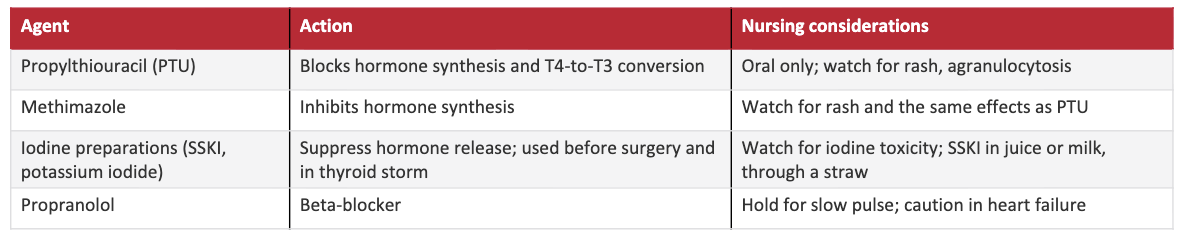
radioactive iodine
most common treatment for Graves, one dose works 80-90%
pregnancy test 48hrs before, avoid conception for at least 6mo., no shared bed/utensils, no close contact w/ children, hypothyroidism often follows (needs lifelong monitoring)
fever, sore throat, mouth ulcers → stop drug and call provider
hyperthyroidism nursing care
monitor HR/rhythm, temp; watch for HF
high-calorie, high-protein foods → record wt/intake (avoid coffee, tea, cola, seasoned foods, alcohol)
keep environment cool, quiet, calm
eye protection for exophthalmos → artificial tears
reassure family → irritability comes from disorder and will improve w/ treatment
thyroid storm
abrupt/severe hyperthyroidism, almost always fatal if untreated, fever >101.3°F, HR >130bpm, delirium, psychosis, somnolence, coma
triggers → infection, surgery, DKA, stopping antithyroid drugs, rough palpation
treatment → propranolol, PTU, methimazole, iodine, hydrocortisone, oxygen
cooling blanket, cool/quiet room, continuous cardiac monitoring
**use acetaminophen for fever → salicylates worsen hypermetabolism!!
thyroidectomy
indications → thyroid cancer, large goiters, hyperthyroidism when drugs not an option
surgery once thyroid fxn is normal (4-6wks), antithyroid drug until signs resolve, propranolol to slow the heart
stop aspirin and other drugs that prolong clotting several wks before
high-calorie diet high in carbs and protein
avoid tea, coffee, cola, other stimulants; ensure good night’s sleep
post-operative thyroidectomy care
airway first → glottic edema, hematoma, laryngeal nerve injury
check dressing front/sides/back of neck for bleeding, P/fullness at incision means possible hematoma
semi-fowler position → support the head, avoid tension on sutures
watch for tetany → tingling of mouth/fingers, Chvostek/Trousseau signs need to be reported at once and treated w/ IV calcium gluconate
**keep tracheostomy set at bedside → call surgeon at first sign of distress
B. "My grandson can nap on my lap."
A nurse is reviewing home safety with a patient after radioactive iodine treatment. Which statement requires follow-up?
A. "I will sleep in a separate bed than my husband."
B. "My grandson can nap on my lap."
C. "I will use my own dishes and utensils."
D. "I can go for a walk outside with my pregnant daughter."
D. "Take it first thing in the morning on an empty stomach with a full glass of water."
A nurse is teaching a patient who has a new prescription for levothyroxine. Which instruction should the nurse include?
A. "Take it with your evening meal."
B. "Skip a dose on days you feel well."
C. "Expect to take it for about 6 months."
D. "Take it first thing in the morning on an empty stomach with a full glass of water."
calcium regulation
>99% of body Ca in bone/teeth, normal total serum Ca 8.5-10.5mg/dL
low Ca triggers PTH from parathyroids (releases bone ca, raises gut/kidney absorption), high Ca triggers calcitonin from thyroid (slows Ca release from bone, lowering serum Ca)
hypocalcemia
serum Ca <8.5mg/dL
causes → hypoparathyroidism, pancreatitis, vit. D deficiency, massive citrated transfusion
neuromuscular → tingling, tetany, hyperactive reflexes, seizures
other → laryngospasm, bronchospasm, diarrhea, low BP
ECG → prolonged QT
hypercalcemia
serum calcium >10.5mg/dL
causes → hyperparathyroidism, malignancy, prolonged immobility, thiazides
neuromuscular → weakness, hypoactive reflexes, lethargy
other → constipation, polyuria, bone pain, kidney stones
ECG → shortened QT, heart blocks
hyperparathyroidism
PTH excess → bone decalcification, Ca kidney stones
most common in females and >50 → many have no symptoms (fatigue, weakness, constipation, mood ∆)
treatment → parathyroidectomy (often minimally invasive and outpatient), fluids >2L daily, avoid thiazides, encourage walking
hypercalcemia management
IV NS → dilutes Ca and increases its excretion
stop Ca-containing fluids, meds, food
calcitonin IM/intranasal, bisphosphonates slow bone resorption
treat cause → parathyroidectomy, cancer treatment
crisis (Ca >13mg/dL) → rapid IV saline plus calcitonin, target UOP 100-150mL/hr, watch for fluid overload
encourage walking and 3-4 quarts fluid daily, add fiber
hypoparathyroidism
PTH deficiency → Ca low, P high
most common cause is parathyroid removal during surgery
goal → serum Ca 9-10 mg/dL
chronic → oral Ca, calcitriol, thiazide, phosphate binders after meals
diet high in Ca, low in P (limit milk, milk products, egg yolk, spinach)
hypocalcemia and tetany
Latent: numbness, tingling of fingers, toes, around the mouth
Overt: carpopedal spasm, laryngospasm, bronchospasm, seizures
Chvostek: tap the facial nerve; mouth, nose, and eye twitch
Trousseau: inflate a BP cuff above systolic; hand and wrist spasm
Prolonged QT; risk of torsades de pointes
Highest risk: first 24 to 48 hours after neck surgery
B. Hypocalcemia
While taking the blood pressure of a patient with acute pancreatitis, the nurse notes the patient's hand and wrist go into spasm as the cuff inflates. Which imbalance does this finding suggest?
A. Hypokalemia
B. Hypocalcemia
C. Hypercalcemia
D. Hypernatremia
Addison Disease
aka too little cortisol, most often autoimmune (or stopping steroids), HOTN, hypoglycemia, low Na, high K, wt loss, weakness, hyperpigmentation
emergency → Addisonian crisis
Cushing Syndrome
aka too much cortisol, most often corticosteroid meds, HTN, hyperglycemia, Na retention, low K, moon face, buffalo hump, striae, thin skin, infection risk, muscle wasting, osteoporosis
Addisonian crisis
life-threatening emergency in Addison disease
severe HOTN, signs of shock, cyanosis, fever, N/V/D, abd pain, confusion
triggers → infection, cold, overexertion, emotional stress, low salt intake
treatment → IV hydrocortisone, then 3-4L NS or D5W, recumbent position w/ legs elevated, vasopressors if HOTN persists, monitor vitals/glucose/Na/K
Addison disease nursing care
orthostatic v/s → systolic drop of >20mmHg signals fluid loss
monitor daily wt, skin turgor, glucose, Na, K
lifelong hydrocortisone or prednisone, plus fludrocortisone (take w/ meals or antacids)
extra salt for V/D, heavy sweating
stress can trigger crisis → dose may need adjusting (if vomiting use emergency injection and seek care)
cushing syndrome medical management
diagnosis → 2 of 3 abnormal tests (serum cortisol, 24hr urine cortisol, dexamethasone suppression
cortisol normally peaks in morning and falls at night (in Cushing it stays high all day)
pituitary tumor → transsphenoidal hypophysectomy
adrenal tumor → adrenalectomy
medication-induced → taper to lowest dose, alternate-day dosing
after surgery, adrenal insufficiency may appear in 12-48hrs
cushing syndrome nursing care
• Prevent falls and fractures; assist weak patients when walking (Osteoporosis and muscle wasting raise fracture risk)
• Assess for subtle infection: cortisol masks inflammation
• Protect fragile skin; reposition often
• Diet high in protein, calcium, vitamin D; low sodium and calories
• Monitor BP, glucose, weight, potassium (Low potassium risks arrhythmias: cardiac monitoring and replacement)
corticosteroids
meds used for inflammation, autoimmune disease, allergy, transplant, adrenal insufficiency
give daily dose between 7-8am to match natural cortisol rhythm, alternate-day dosing reduces adrenal suppression in long-term use, taper gradually never stop abruptly
corticosteroid side effects

C. Assist the patient when walking and keep pathways clear
A patient with Cushing syndrome is weak and has osteoporosis. Which intervention should the nurse include in the plan of care?
A. Encourage a high-sodium diet
B. Limit calcium and vitamin D intake
C. Assist the patient when walking and keep pathways clear
D. Keep the patient on bed rest
A. A patient 24 hours after adrenalectomy for Cushing syndrome with BP 84/50 and new weakness
A nurse receives report on four patients. Which patient should the nurse see first?
A. A patient 24 hours after adrenalectomy for Cushing syndrome with BP 84/50 and new weakness
B. A patient with Cushing syndrome who reports trouble sleeping
C. A patient with Addison disease asking how much salt to eat before a hike
D. A patient taking prednisone with a glucose of 168 mg/dL
osteoarthritis
noninflammatory, degenerative joint disease where articular cartilage breaks down and the bone beneath it thickens narrowing the joint space and forming osteophytes (bone spurs)
(most common joint disease, limited to the affected joints → no systemic signs)
osteoarthritis risk factors
older age, female sex, obesity, prior joint injury, muscle weakness, genetic predisposition, occupational/sports joint stress
manifestations of osteoarthritis
pain worsens with activity and eases w/ rest, onset over years, morning stiffness lasts <30min, weight-bearing joints most affected (hips, knees, cervical/lumbar spine), Heberden (distal)/Bouchard (proximal) nodes in the hands, enlarged joints, decreased ROM, crepitus
diagnosis of osteoarthritis
x-ray → narrowed joint space, osteophytes, dense subchondral bone
labs and joint fluid rule out other causes (ex: RA)
management of osteoarthritis
exercise and weight loss, OT/PT, acetaminophen first than NSAIDs w/ caution or topical/injected agents
arthroplasty
surgery that replaces damaged joint surfaces w/ metal/synthetic parts for severe pain or lost fxn from OA, RA, trauma, AVN
total hip arthroplasty
arthroplasty type w/ a posterior approach → causes dislocation risk w/ flexion, adduction, internal rotation
needs hip precautions → no hip flexion past 90°, never cross legs, abduction pillow/wedge, turn to unaffected side only, raised toilet seat, high chair w/ armrests
total hip arthroplasty postop care
ambulate w/ walker/crutches w/in day of surgery
PT/OT early
neurovascular checks → compare w/ preop findings
VTE → compression devices, ankle pumps q30 min, anticoagulants
monitor drain output, report excessive/foul-smelling drainage
infection → strict hand hygiene, antibiotics 60min before incision
mobility/assistive devices
crutches → partial or NWB, weight on hands never axillae, tripod stance for stability
walker → most stable of the 3, pick-up for poor balance, rolling if unable to lift, never pull up to stand on it
cane → held opposite affected leg, advance w/ affected leg, takes load off wt-bearing joints
total knee arthroplasty
surgery for severe pain/disability unrelieved by nonsurgical care
D. compare sensation, movement, color, and pulses w/ preop findings
A client is 1 day postop after a total knee arthroplasty and says, “My foot on that side feels numb.” Which action should the nurse take first?
A. loosen the compression bandage
B. reposition the leg in neutral alignment
C. notify surgeon of new numbness
D. compare sensation, movement, color, and pulses w/ preop findings
A. help the client turn to the unaffected side w/ the abduction pillow in place
Which task can the nurse delegate to assistive personnel for a client 2 days after a total hip arthroplasty?
A. help the client turn to the unaffected side w/ the abduction pillow in place
B. teach the client hip precautions
C. assess pulses and sensation in the operative leg
D. evaluate the amount of wound drainage
osteoporosis pathophysiology
osteoclast resorption outpaces osteoblast formation → bone mass drops and becomes porous/brittle/fragile
common sites → thoracic/lumbar spine, hip, wrist
osteoporosis risk factors
menopause, aromatase inhibitors, small frame, low calcium/vit. D intake, inactive lifestyle, current tobacco use, 3+ alcoholic drinks/day, corticosteroids >3mo., low BMI, family h/x, adult fractures, diabetes, rheumatoid disease
osteoporosis diagnosis/screening
DEXA scan measures bone mineral density at spine and hip (screen all females >65 or postmenopausal >50 w/ RF)
FRAX estimates fracture risk from BMD and history
calcium sources
dairy, fortified juice, cereal, tofu, canned salmon/sardines w/ bones, kale, broccoli
osteoporosis medications
bisphosphonates (alendronate, risedronate, ibandronate, zoledronic acid)
denusomab, raloxifene, romosozumab, teriparatide
**alendronate must be taken in morning w/ empty stomach, 250mL water, sitting upright and remaining upright for >30min
osteoporotic fracture nursing care
back pain → brief bed rest, knee flexion, local heat, back rubs
move trunk as unit, avoid twisting
constipation → fiber, fluids, prescribed stool softeners
prevent falls → home hazard review, balance exercise
teach calcium, vit. D, medication regimen
osteoporotic fracture priority nursing diagnoses
acute pain from fracture and spasm
risk for constipation
risk for more fractures
lack of knowledge
osteomalacia
inadequate bone mineralization from low activated vit. D
signs → bone pain, tenderness, bowed legs, kyphosis, waddling gait
pathologic fractures → distal radius, proximal femur
labs → low Ca/P, elevated ALP
osteomalacia causes
fat malabsorption (celiac disease, bowel resection), kidney/liver disease, poor intake, little sunlight, long-term anticonvulsants
Paget’s disease of the bone
localized rapid bone turnover → disorganized mosaic bone (dense on x-ray but structurally weak)
often affects skull, femur, tibia, pelvis, vertebrae
deep/aching pain (worse w/ wt-bearing), tenderness.warmth over bone, bowed legs, hearing loss
treatment → NSAIDs, bisphosphonates, walking aids, shoe lifts
osteomyelitis
bone infection → inflammation, necrosis, new bone formation (more than 50% from S. aureus or MRSA)
osteomyelitis types
bloodborne → sudden onset, chills, high fever, rapid pulse
local → swollen, warm, very tender, constant/pulsating pain
chronic → non-healing ulcer w/ sinus that drains pus (diabetic foot ulcers larger than 2cm is highly suspicious for osteomyelitis)
osteomyelitis diagnosis/treatment
early x-ray only shows soft tissue edema → bone changes in 2-3 wks
MRI/bone scan can give earlier diagnosis
acute → leukocytosis, elevated ESR
cultures are often negative → antibiotics may start before results (IV antibiotics 6-12 weeks)
surgical debridement needed if chronic
sequestrum
dead bone inside an abscess → can’t drain so must be removed for bone to heal
osteomyelitis nursing care
splint, handle gently, elevate to reduce swelling, restrict wt-bearing to protect weakened bone, gentle ROM of joints above/below, ADLs w/in limits, watch IV site for superinfection, watch for candidasis/loose stools, report new painful/warm sites or sudden temp rise
septic arthritis
joint infection from blood, trauma, injection, surgery
highest risk → >80y/o, diabetes, RA, joint replacement, IV drug use
warm/painful/swollen joint, less ROM (~50% are knees), chills, fever, leukocytosis (sometimes)
aspirate/culture, prompt IB abx, drain, splint 203 days
delay risks joint destruction/sepsis, mortality nears 50% in high-risk cases
B. a client with a new hot, swollen knee, temp 101.8°F, who had knee injection last week
A nurse receives report on 4 clients. Which client should the nurse assess first?
A. a client with osteoarthritis who reports 20min of morning knee stiffness
B. a client with a new hot, swollen knee, temp 101.8°F, who had knee injection last week
C. a client on day 10 of IV antibiotics for osteomyelitis, temp 98.8°F
D. a client with osteoporosis who asks when to take alendronate
older adults and musculoskeletal health
falls → environmental hazards, diminished senses, meds
home → remove scatter rugs, clutter; add lights, rails, grab bars
calcium, vit. D, 15-30min of sun daily
after THA → analgesia is harder w/ cognitive impairment or comorbidities
infection may present w/o fever
degenerative/metabolic pain
worse w/ activity or wt-bearing (OA, Paget)
nonpharmacologic measures first
treating disease eases pain (bisphosphonates in Paget)
evaluate by fxn → walking, ADLs, exercise
infectious/postoperative pain
often severe, constant/pulsating in osteomyelitis
immobilize, elevate, give analgesics as prescribed
assess pain before surgery to plan postop control
new/worsening pain is red flag (dislocation, infection
types of soft tissue injury
contusion → blunt-force bruising (most resolve in 1-2wks)
strain → muscle/tendon overstretch, 1st-3rd degree
sprain → ligament injury from twisting, grade I-III
dislocation → joint surfaces out of alignment, orthopedic emergency
PRICE for soft tissue injury
Protection → sling, brace, splint, taping, compression bandage
Rest → prevent further injury, promote healing
Ice → ice for first 24-48h, 15-20min at a time
Compression → elastic bandage limits bleeding/edema
Elevation → at/just above heart level controls swelling
fracture classifications
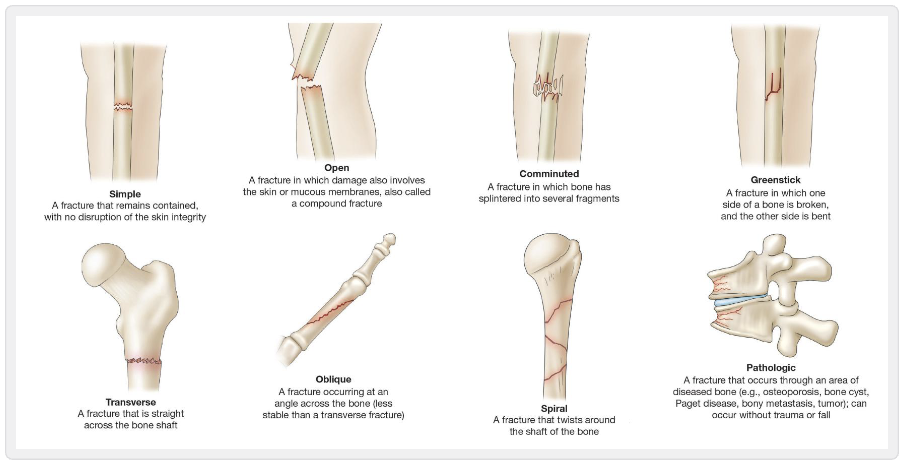
clinical manifestations of fractures
pain/function → continuous pain until immobilized, spasm w/in 30min worsens pain, loss of fxn, false motion
deformity/shortening → angulation/rotation vs. other limb, shortening from compression/overlap
crepitus/swelling → grating of bone fragments on palpation, edema/ecchymosis may take hrs to appear
fracture emergency management
immobilize before moving → splint joints above/below
leg → bandage to other leg
arm → bind to chest or use sling
check neurovascular status distal to injury and before/after splinting
open fracture → cover w/ sterile dressing
in ED → remove clothing from uninjured side first
fracture reduction/fixation
reduction restores alignment → done early before healing begins
closed reduction → manipulation/traction, then cast/splint
ORIF (open reduction internal fixation) → surgery w/ pins, screws, plates, rods, nails
elevate, ice as prescribed, monitor neurovascular status
isometric/muscle-setting exercises, ADLs, gradual activity