Entrepreneurship (URE 4 midterm)
 Call Kai
 Learn
 Practice Test
 Spaced Repetition
 Match
 Flashcards
 Knowt Play
1/40

There's no tags or description
Looks like no tags are added yet.
41 Terms
What is entrepreneurship?
The process of identifying opportunities and creating value under uncertainty
What is the core idea of entrepreneurship?
Creating value
What does an entrepreneur do?
>Identify opportunities
>May innovate or adapt
>Operates under uncertainty
>Mobilizes resources
What does a business owner do?
>Owns / operates a business
>May use an established model
>May prioritize stability
>Manages ongoing operations
>Defined primarily by ownership
Characteristics Of The Entrepreneurial Mindset
>Adaptability
>Taking risks
>Creativity
>Value creation
Which sequence best represents entrepreneurial thinking?
Think → Test → Learn → Adapt
What is the entrepreneurial sequence?
Problem → Need → Opportunity → Target customer → Idea
What is a problem?
A meaningful gap between a customer's current situation and a desired situation.
Difference between the problem and the need
The problem describes the difficulty
The need describes what must improve for the customer
Different types of need
>Direct need: can be clearly expressed
>Latent need: is unclear
>Unmet need: alternative doesn’t satisfy the need
What is an entrepreneurial opportunity?
It’s when a meaningful customer need creates potential for new or improved value creation
Problem + Need + Customer + Value Potential → Opportunity to explore
What is Target Customer Identification?
Process of defining the specific group of customers whose needs and characteristics make them the most relevant group for the entrepreneurial opportunity
What is Target Customer Segmentation?
Customer Segmentation is the process of dividing a broad market into distinct groups of customers who share similar characteristics, needs, or behaviors
Deference between market, segment, target market & target customer
>Market: broad group of potential customers with a common need or interest
>Segment: sub-group with similar characteristics, needs or behaviors
>Target market: market or segments the startup chooses to serve
>Target customer: specific type of person or organization for whom value is created
What are B2C segmentation variables?
>Demographic
>Geographic
>Psychographic
>Behavioral
What is B2B segmentation variables?
>Industry/sector
>Company size
>Location
>Business stage
>Need/use case
>Buying behaviour
How to build a startup?/what’s the cycle of a startup
Idea → Build → Product → Measure → Data → Learn
Types of mapping
>Mind map
>Infographics
>Concept map
>Brainstorming
What is mind map?
>Visual tool
>Non-linear approach
>Investigate and record
>Triggers quick word association

What is the importance of mind mapping?
>Aid thinking
>Create visual overview
>Develop questions
>Reveal patterns, themes, and links between ideas
>Generate search keywords for researching
What is infographic?
Visual representation of data using information, visual, and technology literacies
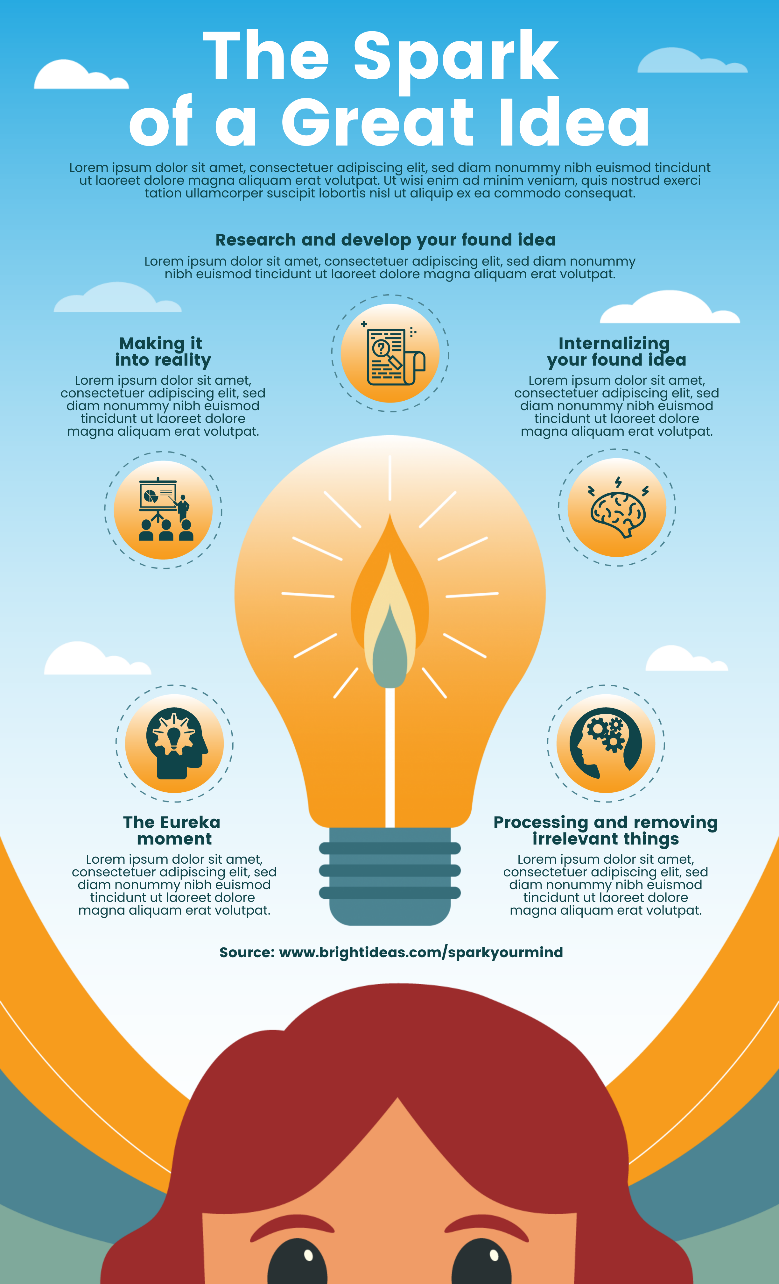
Types of infographics
>List based
>Comparison
>Visual article
>Interactive
>Data visualisation
>Timeline
>Visual resume
What is concept mapping?
Shows concepts and ideas and the relationships among them

Types of concept mapping
>Spider mapping
>Hierarchy mapping
>Flowchart mapping
>System mapping
>Organic mapping
What is brainstorming?
>Method used to generate ideas to solve clearly defined problems
>Producing a group of ideas and draw links between them to find potential solutions
Types of brainstorming
>Star bursting
>Brain writing
>Figuring storming
>Online brainstorming
>Rapid ideation
>Round robin
When do we use brainstorming types? part 1
>Star Bursting: when you want to explore all aspects of a project by asking questions (Who, What, When, Where, Why, and How)
>Brain Writing: when everyone should have time to think and write down ideas individually before sharing them with the group
>Figure Storming: when the group needs a fresh perspective by imagining how another person would approach a problem
>Online Brainstorming: when team members are working remotely and need to share ideas through online platforms
>Rapid Ideation: when you need to generate many ideas in a short amount of time without judging or filtering them
>Round Robin: when everyone in the group needs an equal opportunity to share ideas, taking turns one by one
More brainstorming types :)
>Six Thinking Hats
>Fishbone Diagram
>Brain Writing
>Post-It Notes
>SCAMPER
>SWOT Analysis
When do we use brainstorming types? part 2
>Six Thinking Hats: Used when a team needs to examine a problem or idea from different perspectives, such as facts, emotions, risks, benefits, and creativity.
>Fishbone Diagram: Used to identify the root causes of a problem by organizing possible causes into categories, such as people, process, technology, and context.
>Brain Writing: Used when team members write down their ideas individually and pass them around so others can build on them. It helps generate more ideas and encourages everyone's participation.
>Post-it Notes: Used to quickly write, organize, and group ideas visually. It is especially useful when working with a team and identifying connections between ideas.
>SWOT: Used to identify and analyze a project's strengths, weaknesses, opportunities and threats.
>SCAMPER: Used to improve an existing product or idea or generate alternatives by applying seven actions:
S – Substitute: Replace something.
C – Combine: Bring two things together.
A – Adapt: Adjust an existing idea.
M – Modify: Change or improve something.
P – Put to another use: Find a different purpose.
E – Eliminate: Remove unnecessary elements.
R – Reverse: Change the order or approach.
What is the primary product of a startup and what are its characteristics?
MVP (Minimum Viable Product)
>Useable
>Payable
>Updated
What is DFV?
>Desirability: degree of being wanted or worth having
>Feasibility: quality of being practical, or capable of being achieved
>Viability: ability to grow, succeed and be sustained over time
What is SWOT analysis?
>Strategic planning tool used to analyze an organization and its internal and external environment.
>Used to evaluate an organization's position and develop effective strategies.
S – Strengths: Internal advantages.
W – Weaknesses: Internal disadvantages.
O – Opportunities: External factors that can benefit the organization.
T – Threats: External factors that can harm the organization
What are the different ways to collect data?
>Survey
>Questionnaire
>Group discussion
>Reviews
>Interviews
>Co-hort analysis
Types of questionnaire
>Open ended format: Open-ended questions: Allow people to freely express their opinions and feelings without predetermined answers
>Closed ended format: Provide multiple answer options for respondents to choose from. They are useful for statistical analysis and calculating percentages
Steps for designing a questionnaire
Write a study protocol.
Plan how to analyze the results.
List the information needed.
Design the questionnaire sections.
Write the questions.
Arrange the questions in order.
Complete the questionnaire.
Check the questions' content and style.
Conduct a pilot study (test it on a small group).
Refine and improve the questionnaire
What is a Business Model Canvas?
>Strategic management tool that helps visualize and design a business model
>Breaks down your business into nine essential components, providing a clear, visual overview of how your company creates, delivers, and captures value
Purpose and benefits of the Business Model Canvas
Helps simplify business planning, identify strengths, weaknesses, and opportunities, encourage teamwork and creativity, and keep all business activities aligned with strategic goals
What is included in a Business Model Canvas?
>Customer Segments: Define who your ideal customers are
>Value Proposition: Identify what makes your product or service unique
>Channels: Specify how you’ll reach your customers
>Customer Relationships: Describe how you’ll interact with them
>Revenue Streams: List how you generate income
>Key Resources: Detail the essential assets for your operation
>Key Activities: Mention the most important tasks to deliver your value proposition
>Key Partners: Indicate with whom you collaborate to achieve your goals
>Cost Structure: List the necessary costs to operate
What is a pivot?
>Change in a business's strategy, product, or business model based on customer feedback or market needs, to improve its chances of success
>Making a structured change to a core hypothesis, such as segment, channel or revenue model
Pivot, persevere or iterate?
>Preserve: continue the strategic direction when the core hypotheses have credible support
> Iterate: improve execution or features without changing the underlying strategy
>Pivot: make a structured change to a core hypothesis, such as segment, channel or revenue model
>Stop/Reframe: abandon a direction when evidence and constraints no longer justify continued investment
>Document the rationale: a pivot is not an arbitrary redesign
Pivot types
CUSTOMER / VALUE
>Customer segment pivot
>Customer need pivot
>Value proposition / solution pivot
>Channel pivot
MODEL / DELIVERY
>Revenue model pivot
>Platform or technology pivot
>Business architecture pivot
>Growth engine pivot