Basic Electronics Parts
 Call Kai
 Learn
 Practice Test
 Spaced Repetition
 Match
 Flashcards
 Knowt Play
1/51

There's no tags or description
Looks like no tags are added yet.
52 Terms
What is this part?
Breadboard

What are these parts?
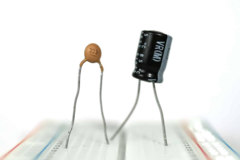
Capacitors
What is this part?
Transistor

What are these parts?
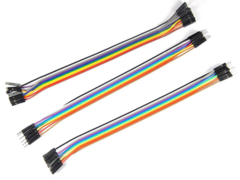
Jumper Wires
What is this Part?
Photoresistor

What is this part?
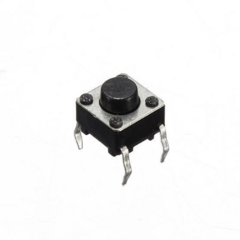
Push Button Switch
What are these parts?
Resistors

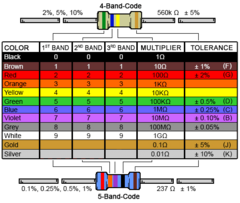
Why do these have different stripes on them?
The stripes tell you how much resistance they provide
What is this part? (Which has a spinning metal shaft when connected to power)
DC Motor

What do you call a organized box containing pre-shaped wires of different lengths and colors?
Jumper Wire Kit

What is this flat screen component used to show written messages or numbers?
LCD Display

What is this part?
LED (Light Emitting Diode)
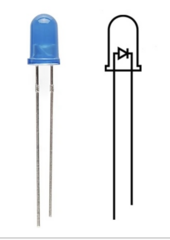
How does this part work?
A Light Emitting Diode (LED) is a specific type of diode that gives off light when current is run through it. Typically long wire coming out of the diode is the Anode side. A
A diode is a semiconductor which allows for a current flowing in only one way. For a diode to work the Anode side (+) has to be hooked up to the positive + pole of the electric power and the cathode side (-) has to be hooked up to the negative side of the electric power source.

What are these parts?
Potentiometers

What is this part?
Servo Motor

What is this part (and related equipment)?
Soldering Iron

What is this part (chose best answer)?
RGB LED

What is these Parts?
Bread Board Power Supply Module & 9V Battery Connector

What is this part?
Thermistor

What does NTC mean?
Negative Temperature Coefficient
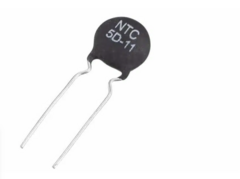
What is this? Describe how it works
An NTC thermistor is a thermal resistor whose electrical resistance decreases non-linearly as the temperature increases.
How it works: When it is cold, its resistance is high (blocking current). As it heats up, its resistance drops rapidly, allowing a microcontroller to read the change in voltage and calculate the exact temperature.
What part is this?
Tilt Switch (some times called a ball switch)

How does this work?
A ball tilt sensor is typically made up of a metal tube with a little metal ball that rolls around in it. One end of the cavity has two conductive elements (poles). The sensor is designed in such a way that a sufficient level of tilt allows the ball to roll, making or breaking an electrical connection.
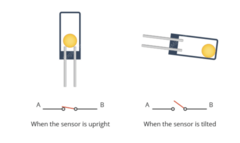
What part is this
Ultrasonic Range Finder

How does this work?
An ultrasonic range finder works by emitting a high-frequency sound wave and measuring the time it takes for the echo to bounce back from an object, using the same basic principle of echolocation used by bats.

What are these parts?
IR Receiver & Remote

What part is this?
Joystick Module
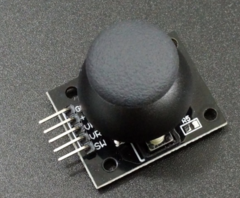
What part is this?
DHT11 Sensor
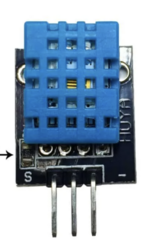
What does this do?
A DHT11 sensor measures temperature and relative humidity and converts those physical readings into a digital signal

What is the difference between an Active Buzzer and a Passive Buzzer
An active buzzer has a built-in oscillator so it can produce sound with only a DC power supply. Active buzzers have a fixed tone
A passive buzzer does not have a built-in oscillator, so it needs an AC audio signal to produce sound. Passive Buzzers can make different tones, and play sequences of notes.
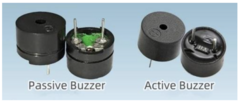
What is this part?
Active Buzzer

What is this part?
Passive Buzzer

How do you tell the difference between an Active and Passive Buzzer
The one with a green circuit board is a passive buzzer, and the one without a circuit board and sealed with black glue is an active buzzer. The height of the active buzzer is 9mm, while the height of the passive buzzer is 8mm.

What is this part?
7 segment display

What is this Part
LCD1602 Display (Liquid Crystal Display Module)

What does this part do?
The LCD1602 is a popular, low-cost character liquid crystal display module capable of showing 16 characters per line across 2 rows (32 characters total).
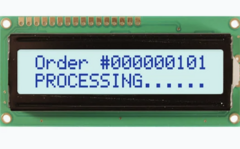
What does "1602" mean?
"16" means 16 characters per line
"02" means that it has 2 rows (so 32 characters total)

What part is this?
Servo Motor

How does this motor differ from a DC motor?
A DC motor provides continuous 360-degree rotation at a certain RPM when powered, while a Servo Motor uses an internal feedback loop to move to and hold the motor at a specific angle (typically limited to angles between 0 and 180 degrees).

What is this part?
DC Motor

What are these parts
Stepper Motor and Stepper Motor Controller Board
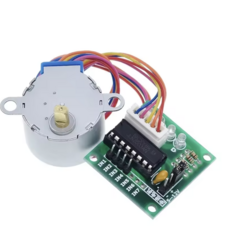
What is a "step" for a Stepper Motor?
Unlike standard DC motors that spin continuously when voltage is applied, a stepper motor divides a full 360° rotation into a precise number of equal steps.
Step Angle and Resolution: Most standard stepper motors are designed with 200 steps per revolution, which means each full step rotates the shaft by 1.8° (360° ÷ 200 = 1.8°). Other common step angles include 0.9° (400 steps per revolution) or larger steps like 7.5°.
Every time the motor driver sends a digital pulse of electricity to the motor's internal coils, the rotor aligns with the new magnetic field and advances by exactly one step. Counting the pulses allows you to track or control the exact position of the shaft without needing a position sensor.
Stepper motors are used, for example, in 3D printers to precisely control the movement of the extruder.

What is this Part?
Relay

What does this part do?
A relay acts as an electrically operated switch that uses a small, low-power control signal to turn a larger, high-power circuit on or off.
A relay allows a tiny current (like from a microcontrollers, sensor, or dashboard switch) to manage heavy loads like car headlights, fuel pumps, large motors, or heating elements.
A relay keeps the low-voltage control side physically and electrically separate from the high-voltage load side, protecting sensitive electronics from spikes or damage.

What is this part?
Transistor
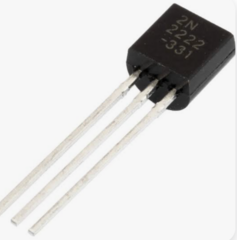
How does this part work?
A transistor acts as a switch to turn electrical current on or off, or as an amplifier to boost weak electrical signals in a circuit.
Most transistors have three connection pins.
A small current or voltage applied to the control pin (called the base or gate) controls a much larger current flowing through the main terminals.
By sending a small signal to turn the transistor fully "on" or "off," it controls larger components like motors, lights, or speakers without any moving parts.
Modern consumer CPUs typically contain billions of transistors, ranging from roughly 20 billion to over 184 billion.

What is this part?
A Diode
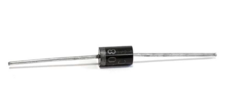
What does this part do?
A diode is a component that lets current flow in one direction and blocks it from flowing in the other direction. It has two pins; anode and cathode.
A standard diode can be used for a range of things, from creating sound effects to power supplies.
Sound Effects Clipping: For example, By placing two diodes in parallel in opposite directions, you can get a clipping effect which creates an overdrive sound effect, often used in guitar pedals.
Diodes are also used for converting power from AC to DC

What is this Part?
74HC595 Shift Register ("Shift Register")

What does this part do, what problem does it solve for the Arduino?
The 74HC595 (Shift Register) is an 8-bit integrated circuit that can be used to expand the number of digital output pins on a microcontroller (like an Arduino).
How It Works
Pin Saver: Instead of using 8 separate microcontroller pins to control 8 outputs, the 74HC595 lets you control all 8 outputs using only 3 microcontroller lines: Data (DS), Shift Clock (SHCP), and Storage/Latch Clock (STCP).
Shifting Data: Data bits (1s and 0s) are sent into the chip one bit at a time (serially) on each pulse of a shift clock.
Latching: Once all 8 bits are lined up inside the shift register's memory bank, a pulse to the latch clock copies them all at once to the 8 parallel output pins (Q0-Q7),
Daisy-Chaining: The chip includes a serial output pin (Q7'), allowing you to chain multiple 74HC595 chips together end-to-end to drive 16, 24, or more outputs while still using only 3 control pins from your microcontroller.

What part is this?
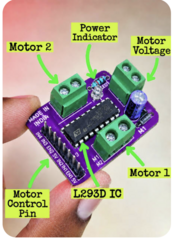
L293D IC (Motor Driver Circuit for 2 Motors)

What does this part do?
L293D (Motor Driver Circuit) is a popular 16-pin, motor driver circuit designed to control the speed and direction of DC motors and stepper motors.
Without a motor driver control circuit, a DC motor will spin in only one direction and at one speed. The L293D, will allow the motor to change directions (Using an "H bridge circuit") and it will operate at different speeds (by using the technique of "Pulse Width Modulation" (PWM).
(We do more to learn about H Bridges and PWM in later lessons)