AE - Values

0.0(0)
Studied by 0 people
call kaiCall Kai
learnLearn
examPractice Test
spaced repetitionSpaced Repetition
heart puzzleMatch
flashcardsFlashcards
GameKnowt Play
Card Sorting

1/36

encourage image

There's no tags or description

Looks like no tags are added yet.

37 Terms

1
New cards

Basic EKG values

  • x-axis:

    • small box = .04sec

    • big box = .20sec

  • y-axis:

    • small box = .10mV

    • big box = .50mV

  • PR interval

    • 0.12-0.20sec

  • QRS interval

    • 0.06-0.12sec

  • HR = 300 / # of large squares


<ul><li><p>x-axis:</p><ul><li><p>small box = .04sec</p></li><li><p>big box = .20sec</p></li></ul></li><li><p>y-axis:</p><ul><li><p>small box = .10mV</p></li><li><p>big box = .50mV</p></li></ul></li><li><p>PR interval</p><ul><li><p>0.12-0.20sec</p></li></ul></li><li><p>QRS interval</p><ul><li><p>0.06-0.12sec</p></li></ul></li><li><p><span style="background-color: transparent;"><strong>HR = 300 / # of large squares</strong></span></p></li></ul><p></p>
2
New cards

EKG rhythm rates

NSR

  • Rate: 60 - 100 bpm

  • PR Interval: 0.12 – 0.20 seconds

  • QRS: < 0.12 seconds


Sinus Tachycardia (ST)

  • Rate: >100 bpm

  • PR Interval: 0.12 – 0.20 seconds

  • QRS: < 0.12 seconds


Sinus Bradycardia (SB)

  • Rate: <60 bpm

  • PR Interval: 0.12 – 0.20 seconds

  • QRS: < 0.12 seconds


Premature Atrial Complexes (PACs)

  • PR Interval: 0.12 – 0.20 seconds, or prolonged

  • QRS: < 0.10 sec, but may be wide or absent


Atrial Fibrillation (AF or Afib)

  • Rate: Atrial rate: > 400–600 bpm, ventricular rate can be slow or fast

  • QRS: < 0.10 sec, but may be widened if an interventricular conduction delay exists


Atrial Flutter (AF)

  • Rate: atrial rate 250-450 bpm, ventricular rate will usually not exceed 180 bpm

  • PR Interval: Not measurable

  • QRS: < 0.10 sec, but may be buried if flutter waves are buried in QRS complex


Premature Ventricular Complexes (PVCs)

  • Rate: Usually normal range but depends on underlying rhythm

  • QRS: > 0.12 sec


Ventricular Tachycardia (VT or Vtach)

  • Rate: 101 – 250 bpm

  • QRS: > 0.12 sec


First Degree AV Block

  • Rate: Usually within normal range but depends on underlying rhythm

  • PR Interval: >0.20 sec

  • QRS: < 0.10 sec


Second Degree AV Block (Mobitz Type I) - Wenckeback

  • PR Interval: Lengthens with each cycle until a P wave appears without a QRS complex

  • QRS: < 0.10 sec, “dropped QRS”


Second Degree AV Block (Mobitz Type II)

  • PR Interval: Within normal limits or slightly prolonged but constant for the conducted beat

  • QRS: < 0.10 sec, periodically absent after P wave


Left Bundle Branch Block (LBBB)

  • QRS: > 0.12 seconds


<p>NSR</p><ul><li><p><span style="background-color: transparent;"><strong>Rate</strong>: 60 - 100 bpm</span></p></li><li><p><span style="background-color: transparent;"><strong>PR Interval</strong>: 0.12 – 0.20 seconds </span></p></li><li><p><span style="background-color: transparent;"><strong>QRS</strong>: &lt; 0.12 seconds</span></p></li></ul><p></p><p><span style="background-color: transparent;">Sinus Tachycardia (ST)</span></p><ul><li><p><span style="background-color: transparent;"><strong>Rate</strong>: &gt;100 bpm</span></p></li><li><p><span style="background-color: transparent;"><strong>PR Interval</strong>: 0.12 – 0.20 seconds </span></p></li><li><p><span style="background-color: transparent;"><strong>QRS</strong>: &lt; 0.12 seconds</span></p></li></ul><p></p><p>Sinus Bradycardia (SB)</p><ul><li><p><strong>Rate</strong>: &lt;60 bpm</p></li><li><p><span style="background-color: transparent;"><strong>PR Interval</strong>: 0.12 – 0.20 seconds </span></p></li><li><p><span style="background-color: transparent;"><strong>QRS</strong>: &lt; 0.12 seconds</span></p></li></ul><p></p><p>Premature Atrial Complexes (PACs)</p><ul><li><p><span style="background-color: transparent;"><strong>PR</strong> <strong>Interval</strong>: 0.12 – 0.20 seconds, or prolonged</span></p></li><li><p><span style="background-color: transparent;"><strong>QRS</strong>: &lt; 0.10 sec, but may be wide or absent</span></p></li></ul><p></p><p><span style="background-color: transparent;">Atrial Fibrillation (AF or Afib)</span></p><ul><li><p><span style="background-color: transparent;"><strong>Rate</strong>: Atrial rate: &gt; 400–600 bpm, ventricular rate can be slow or fast</span></p></li><li><p><span style="background-color: transparent;"><strong>QRS</strong>: &lt; 0.10 sec, but may be widened if an interventricular conduction delay exists</span></p></li></ul><p></p><p><span style="background-color: transparent;">Atrial Flutter (AF)</span></p><ul><li><p><span style="background-color: transparent;"><strong>Rate</strong>: atrial rate 250-450 bpm, ventricular rate will usually not exceed 180 bpm</span></p></li><li><p><span style="background-color: transparent;"><strong>PR</strong> <strong>Interval</strong>: Not measurable</span></p></li><li><p><span style="background-color: transparent;"><strong>QRS</strong>: &lt; 0.10 sec, but may be buried if flutter waves are buried in QRS complex</span></p></li></ul><p></p><p><span style="background-color: transparent;">Premature Ventricular Complexes (PVCs)</span></p><ul><li><p><span style="background-color: transparent;"><strong>Rate</strong>: Usually normal range but depends on underlying rhythm</span></p></li><li><p><span style="background-color: transparent;"><strong>QRS</strong>: &gt; 0.12 sec</span></p></li></ul><p></p><p><span style="background-color: transparent;">Ventricular Tachycardia (VT or Vtach)</span></p><ul><li><p><span style="background-color: transparent;"><strong>Rate</strong>: 101 – 250 bpm</span></p></li><li><p><span style="background-color: transparent;"><strong>QRS</strong>: &gt; 0.12 sec</span></p></li></ul><p></p><p><span style="background-color: transparent;">First Degree AV Block</span></p><ul><li><p><span style="background-color: transparent;"><strong>Rate</strong>: Usually within normal range but depends on underlying rhythm</span></p></li><li><p><span style="background-color: transparent;"><strong>PR</strong> <strong>Interval</strong>: &gt;0.20 sec</span></p></li><li><p><span style="background-color: transparent;"><strong>QRS</strong>: <u>&lt;</u> 0.10 sec</span></p></li></ul><p></p><p><span style="background-color: transparent;">Second Degree AV Block (Mobitz Type I) - Wenckeback</span></p><ul><li><p><span style="background-color: transparent;"><strong>PR</strong> <strong>Interval</strong>: <em>Lengthens with each cycle until a P wave appears without a QRS complex</em></span></p></li><li><p><span style="background-color: transparent;"><strong>QRS</strong>: <u>&lt;</u> 0.10 sec, “<em>dropped QRS</em>”</span></p></li></ul><p></p><p><span style="background-color: transparent;">Second Degree AV Block (Mobitz Type II)</span></p><ul><li><p><span style="background-color: transparent;"><strong>PR</strong> <strong>Interval</strong>: Within normal limits or <em>slightly prolonged but constant for the conducted beat</em></span></p></li><li><p><span style="background-color: transparent;"><strong>QRS</strong>: <u>&lt;</u> 0.10 sec, <em>periodically absent after P wave</em></span></p></li></ul><p></p><p><span style="background-color: transparent;">Left Bundle Branch Block (LBBB)</span></p><ul><li><p><span style="background-color: transparent;"><strong>QRS</strong>: &gt; 0.12 seconds</span></p></li></ul><p></p>
3
New cards

O2 values

right heart = 75%

left heart = 95-98%

4
New cards

Cardiac cycle

Phase Rapid Filling (Inflow)

  • 70-80% of all blood that fills ventricles (first ⅓ of diastole)


Phase Atrial Systole

  • adds 20-30% of the blood volume to ventricles


<p>Phase Rapid Filling (Inflow) </p><ul><li><p>70-80% of all blood that fills ventricles (first ⅓ of diastole)</p></li></ul><p></p><p>Phase Atrial Systole</p><ul><li><p>adds 20-30% of the blood volume to ventricles</p></li></ul><p></p>
5
New cards

Rates (bpm)

knowt flashcard image
6
New cards

Blood composition

  • Plasma 55% 

  • White blood cells & platelets 4% 

  • Red blood cells 41% 


7
New cards

Pulse pressure

40 mmHg

8
New cards

Stroke volume

70-110 ml

9
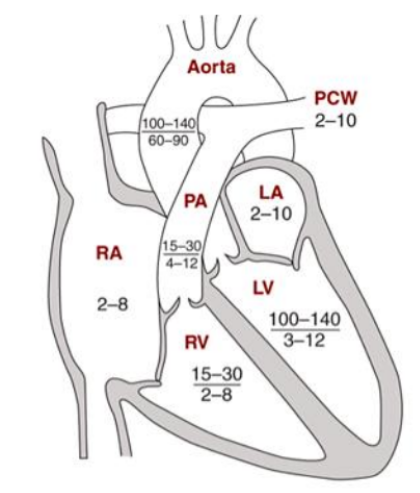
New cards

Pressure gradients

knowt flashcard image
10
New cards

Bernoulli's Equation

∆P = 4V2 


V1 < V2

P1 > P2
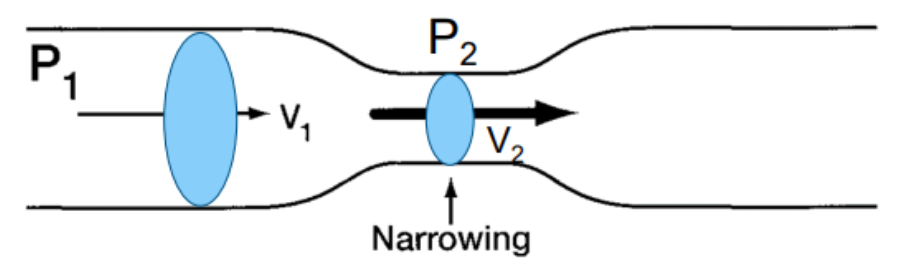
<p><span style="background-color: transparent;">∆P = 4V<sup>2&nbsp;</sup></span></p><p></p><p>V1 &lt; V2 </p><p>P1 &gt; P2</p>
11
New cards

Cardiac output

  • COL/min = HR x SV / 1000

  • 4-6 L/min


12
New cards

Cardiac index

  • CI = CO / BSA

  • CI = SV x HR / BSA

  • 2.6 - 4.2 L/min/m2


13
New cards

Poiseuille’s Equation

Q = ∆P x r

<p><span style="background-color: transparent;">Q = ∆P x r</span></p>
14
New cards

Reynold’s Number

>2000 = turbulent flow

15
New cards

Frame rates

2D = >30

Color = >18

16
New cards

Color scale

50-70 cm/sec

<p>50-70 cm/sec</p>
17
New cards

Nyquist Limit

= ½ PRF

<p>= ½ PRF</p>
18
New cards

Sample volume

  • Valves: 1-2 mm

  • Vessels: 3-4 mm

  • TDI: 5 mm


19
New cards

TDI

  • measures TV & MV annulus during systole

    • e’ = early diastolic annular velocity

  • a’ = annular velocity during atrial contraction

  • s’ = systolic annular velocity


<ul><li><p>measures TV &amp; MV annulus during systole </p><ul><li><p><span style="background-color: transparent;"><strong>e’ </strong>= early diastolic annular velocity</span></p></li></ul></li><li><p><span style="background-color: transparent;"><strong>a’</strong> = annular velocity during atrial contraction</span></p></li><li><p><span style="background-color: transparent;"><strong>s’</strong> = systolic annular velocity</span></p></li></ul><p></p>
20
New cards

PW location

5-10 mm (.5 - 1 cm) from valve 

21
New cards

Sweep speed

100

22
New cards

PLAX measurements (diastole)

knowt flashcard image
23
New cards

PLAX measurements (systole)

knowt flashcard image
24
New cards

PLAX - AV measurements

knowt flashcard image
25
New cards

RVOT measurement

knowt flashcard image
26
New cards

A4C & A2C - LV measurements

LV

  • Should be less than 10% difference in lengths between 4C & 2C

<p>LV</p><ul><li><p>Should be less than 10% difference in lengths between 4C &amp; 2C</p></li></ul><p></p>
27
New cards

A4C & A2C - LA measurements

LA

  • Should be less than 5mm difference in lengths between 4C & 2C


<p>LA</p><ul><li><p><span style="background-color: transparent;">Should be less than <u>5mm</u> difference in lengths between 4C &amp; 2C</span></p></li></ul><p></p>
28
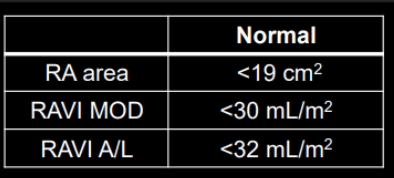
New cards

A4C RA measurements

knowt flashcard image
29
New cards

A4C RV measurements

< 4.1cm

<p>&lt; 4.1cm</p>
30
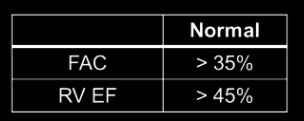
New cards

A4C RV measurements (FAC)

knowt flashcard image
31
New cards

Subcostal measurements


<p></p>
32
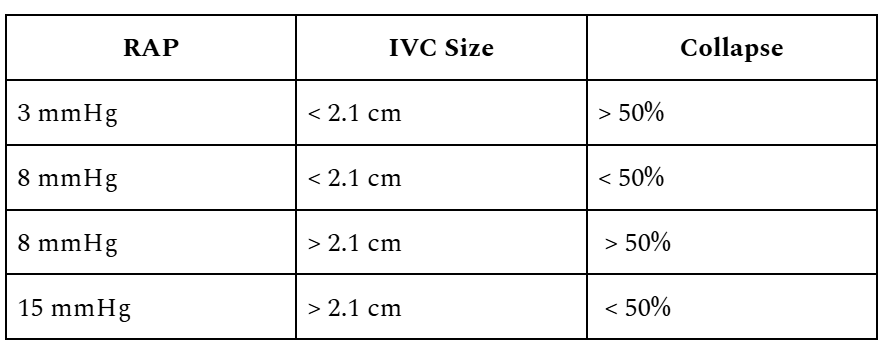
New cards

RAP


<p></p>
33
New cards

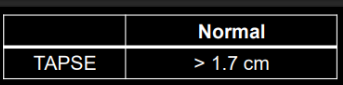
TAPSE

knowt flashcard image
34
New cards

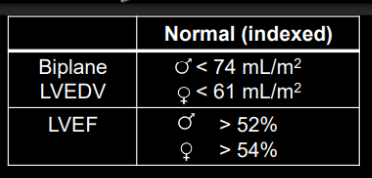
EF

knowt flashcard image
35
New cards

LV mass equation

LV mass = 1.04 [(IVSd + LVPWd + LVIDd)3] x 0.8 + 0.6

36
New cards

Wall segments & CAs

knowt flashcard image
37
New cards

Wall motion

knowt flashcard image