Bio 2260k Test 4 Reading Quiz Review
 Call Kai
 Learn
 Practice Test
 Spaced Repetition
 Match
 Flashcards
 Knowt Play
1/50

There's no tags or description
Looks like no tags are added yet.
51 Terms
A genomic island that increases the virulence of a microorganism, especially in interacting with a host, is called a ______
pathogenicity island
The ability of different strains of bacteria to acquire new genes outside of the mechanism of cell division is called what?
horizontal gene transfer

This figure illustrates the synthesis of a
pilus
All of the following are used for microbial attachment EXCEPT________
flagella
Which of the following statements is true about bacterial attachment?
Inhibiting adhesion can make a pathogenic organism nonvirulent
Which of the following is NOT true about type IV pili?
They are found only in Gram-positive bacteria
Biofilms are clinically relevant because
bacteria in biofilms are more resistant to antimicrobial drugs
Facultative intracellular pathogens
can live either inside or outside host cells

In this figure, Salmonella is attaching to and invading a(n) ___________ with a structure called ___________
M cell; type III secretion system
Intracellular pathogens use the following mechanisms to survive inside host cells EXCEPT
secreting toxins
All of the following are examples of immune avoidance EXCEPT
toxin production
Exotoxins are made and released by
both Gram-positive and Gram-negative bacteria
Exotoxins target all of the following EXCEPT________
DNA synthesis
A type III secretion system closely resembles a ______
syringe
Which of the following is TRUE regarding type IV secretion systems?
Type IV systems move proteins directly out of the bacterial cytoplasm
Which of the following is NOT a reason why we need a new, annual influenza vaccine?
toxin production
HIV binds which receptor on the host cell?
CD4
HPV is a common DNA virus that infects skin cells, causing them to divide excessively. The result is a ________
wart
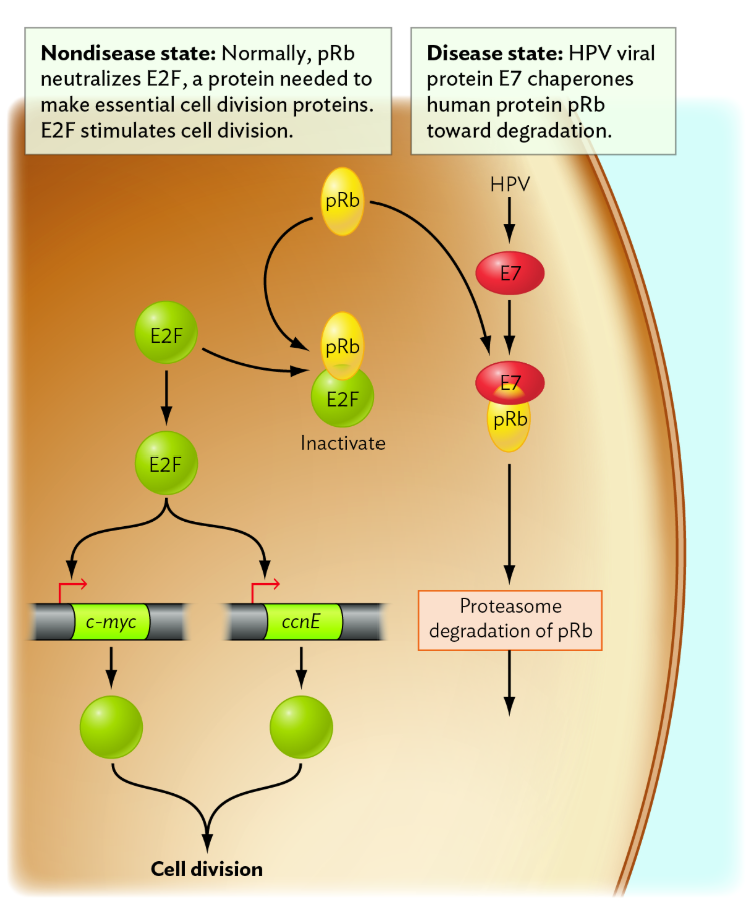
The outcome of the pathway shown is
uncontrolled cell division
Latent herpes virus DNA produces microRNAs. The purpose of these microRNAs is to
interfere with host cell apoptosis

The disease-causing organism in this image is an example of a
protozoan
All of the following are methods protozoans use to avoid the host immune response EXCEPT
toxin production
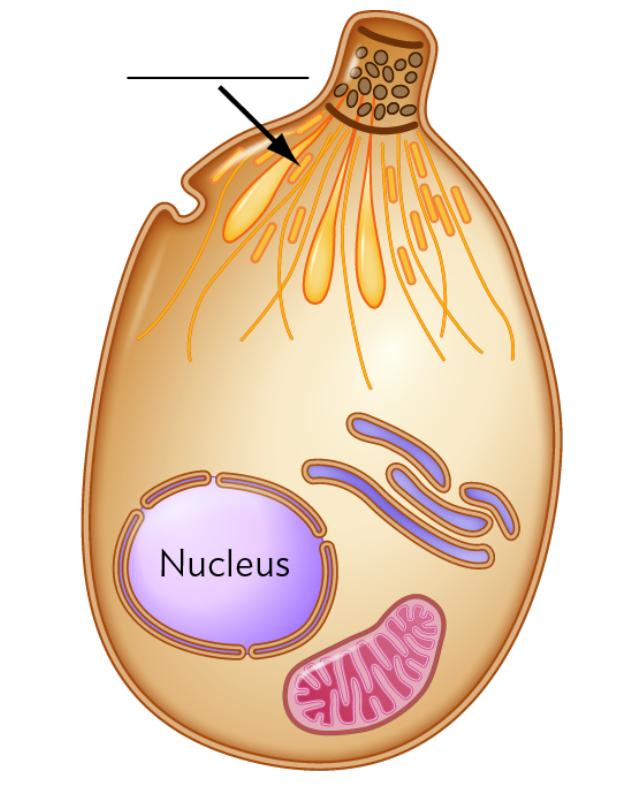
The structure indicated on this figure of Toxoplasma is used for
attachment onto a host cell
The protozoan Toxoplasma uses which of the following mechanisms to gain access to host cells?
actin-myosin motor
Protozoan antigenic variation causes the host’s immune system to continually make
antibodies
Thermally dimorphic fungi at 37oC, human body temperature, grow in a ___________form
Yeast
Innate immunity has all of the following characteristics EXCEPT
its reactions are specific

The two large, purple-stained cells in this image perform what function?
Phagocytosis of microbes
The innate immune system includes
macrophages
Which of the following pairs of organs are both considered primary lymphoid organs?
bone marrow and thymus
Macrophages can also be called
antigen-presenting cells
Lysozyme is an enzyme that
cleaves cell wall peptidoglycan
Resident __________ engulf pathogens and release cytokines, causing _________ to then swarm the infection site.
macrophages; neutrophiles
Specialized macrophages found inside lung tissue are called _____________
alveolar macrophages
All of the following are examples of vasoactive factors EXCEPT _____________
COX inhibitors
Chronic inflammation caused by organisms such as M. tuberculosis happens because
these organisms can avoid or resist host defenses
Opsonization facilitates which immune response?
Phagocytosis
All of the following are the four steps in the process of phagocytosis, summarized. Which of the following is the second step?
formation of phagosome
Antibodies coat the surface of the bacterium, leaving the Fc portions of the antibody exposed to increase phagocytosis in
opsonization
After ingesting a pathogen, lysosomal enzymes produce all of the following EXCEPT
complement
All of the following are outcomes of apoptosis EXCEPT
causing damage to the host
Interferon-gamma is an example of which type of interferon?
Type II
What is the function of granzymes?
They trigger apoptosis of target cells
Which immune cell targets host cells for destruction?
NK cells
All of the following are examples of microbe-associated molecular patterns (MAMPs) that bind to Toll-like receptors (TLRs) EXCEPT
plasma membrane
Which of the following is an example of a pyrogen?
bacterial toxins
Which organ is responsible for the thermoregulation of the body?
hypothalamus
The complement protein cascade is the same for the classical pathway, alternative pathway, and lectin pathway after the point in the cascade where the activation of __________ takes place
C3
The lectin pathway for complement action is initiated by
mannose on the surface of microbes
Some organisms have evolved mechanisms to protect themselves from the effects of complement by binding factor H. One such organism is
Neisseria gonorrhoeae
The C-reactive protein activates _____________
complement