MUS101: Early Euro. / World Music - MIDTERM!
 Call Kai
 Learn
 Practice Test
 Spaced Repetition
 Match
 Flashcards
 Knowt Play
1/68

There's no tags or description
Looks like no tags are added yet.
69 Terms
Instrument Classifications
Chordophones
STRINGS
Symphony Orchestra: violins, viola, cello, guitar, harp, double bass
World: Banjo, Sitar, Molo
Instrument Classifications
Areophones
WINDS
Symphony Orchestra: flute, clarinet/bass clarinet, piccolo, english horn, bassoon - double-reed, oboe - double-reed, alto/tenor/bari saxophone
World: gigantic alphorn (mountain ranges), small clay ocarina (dovelike)
Instrument Classifications
Brass
BRASS
Symphony Orchestra: trombone, french horn, trumpet, tuba, euphonium, coronet, baritone
Instrument Classifications
Membranophones
DRUMS
World: any with animal hides
Instrument Classifications
Idiophones
Symphony Orchestra: trombone, french horn, trumpet, tuba, euphonium, coronet, baritone
World: Wind chimes, bells, gong, scrapers (sometimes) hands clapping, slapping thighs, foot stamping
Minimalism
Small fragments of music repeated over and over through extreme repetition
Musical style of the POST-MODERN PERIOD (1960s to the 1990s) involving very limited materials, constant repetition, and very gradual change
Instruments in Gamelan Music
Gamelan Music (Countries: Java, Bali & Indonesia): Music ensembles involving mostly metal percussion
INSTRUMENTS: Xylophone, Gongs
West African Drumming
African Dance Ensemble (ADE) - York University
Musical Characteristics
Improvisation in the beginning
Transitions through layers
Instruments: Membranophones (improvised), vocals chanting (leader), woodwind (Aerophone), Idiophones (shakers)
Polyrhythms, polyphonic
Describe dancing
Holding wooden bowls/baskets → they start with going in a circle
Polyrhythmic section: dancers also move in different directions
Types of Listening
(1) PASSIVE LISTENING
Background music you listen to while studying, cleaning, etc. (enjoyment-focused)
Types of Listening
(2) ACTIVE LISTENING
Analyzing music as you listen to it (concentrating on something specifically)
Types of Listening
(3) UNCONSCIOUS LISTENING
Background music you hardly notice (like music playing at a store, in an elevator, somewhere you aren’t consciously in control of)
Mbria
Handmade instrument (Zimbabwe)
Animal hides, wood, nuts, gourds & seeds → MBRIA (FINGER PIANO)
Rachet (Noise Maker)
Remember…
Country: Europe (used during WW2)
Group: Percussion / Idiophone
Material: Wood
Pitch: Un-pitched
Oud
Country: Turkey
Group: Chordophone
Material: Wood, metal
Pitch: Pitched

Oral Traditions vs. Written Music
ORAL | WRITTEN |
|
|
Role of Ethnomusicologist
Specialization in the ethnic musical groups
Musicology: specialize in a composer/their music (historian/library type research) → adding ethno = specializing in cultural music
Immerse themselves in the culture (performing, documenting, speaking the language)
Folk Music
Exists in sophisticated societies alongside classical music and continues to be performed in rural areas away from the educated, usually urban, élite
Often several generations old
EX: China to Peru to Wales
Folk Music
Thailand
Dance
Gender roles:
Traditional clothing → men wear the same outfits, women wear the same outfits
Women are dancing as men play the instruments
Instrumentation: Percussion, strings, vocals (usually doesn’t have vocals)
Specific to country (not instruments of orchestra)
Performers don’t have scores (memorized)
Traditional clothing
Music itself:
Repetitive lines (no real “melody”)
Moves through different “themes” → matches dance (fluid) / improvisation is a big thing to
Venue: Built-stage (not a stadium, outside)
Small audience in comparison to big concerts → not aimed to making money
Stage design (curtains, lights)
Folk Music
Brazil
Will be a video on folk music → watching performance: say WHY it’s good example of folk music
Traditional music → performed away from the educated/urban elite (rural areas) [ex: having a built-in stage outside]
Hundreds of years old (generational)
Oral traditions (no physical sheet music)
May include folk dances
West African Music
IS THERE AN ACTUAL MELODY?
TIME: Polyrhythmic (different time signatures) + actual speed classification
TONALITY: Not major OR minor key (say ATONAL)
TEXTURE: No melody… is there texture? (No → you can say it’s polyrhythmic - can say its polyphonic but a different time rhythmically)
Experience music daily (participatory involvement) [Different than our society, where we listen to music in isolation = different experience]
EX
Latin American Music
Rhythm is the foundation (no melodies, just repetitive percussion)
Instruments: Cowbells look different than usual orchestra ones, animal hides & Percussion (unpitched instruments)
Polyrhythm: Overlapping time signatures / more than one rhythm played
Texture: Polyphonic (many layers)
Latin American Music
Samba
EX: SAMBA (BRAZILLIAN)
Western roots
Fusion example: West African + Brazilian
Samba Squad
Cyclical movement: Began with percussion (drums, hand-held mini snare drums, then second movement featured female vocals
Instruments: panderio, shakers, snare drums, drums, whistle
What instrument was used to keep the group together? (WHISTLE)
Dancing
Vocals in Brazillian language: with melody, harmony, but also an improvised spoken-word by leader
Thematic transformations
Polyrhythmic & polyphonic texture
Polyrhythm
Overlapping time signatures / more than one rhythm played
Common in Latin, African music
EX: A shaker played in 2/4, drums played in 4/4
Polyphonic
Music with more than one melody line at the same time
Modern vs. Postmodern Music
MODERN
1912-1950s (shift to atonality - negativity, gruesome work)
The cultural movement that stressed innovation (First 60-70 years of 20th century)
Self-conscious innovation
Artists reacted strongly to the accepted rules of the 19th century
Composers rejected tonality, the harmonic basis of music & adopted radically new harmonic structures
Dissonance
Modern vs. Postmodern Music
MODERN (EXAMPLE)
EX: Arnold Schoenberg’s Pierrot Lunaire from Madonna (1912) → One of the most ground-breaking composers → Well-known for his jarring music in atonality
EX: Debussy, Schoenberg, Stravinsky, Berg & Webern (Schoenberg’s students)
Modern vs. Postmodern Music
POSTMODERN
Mid-1960s
A cultural movement involving a juxtaposition of past and present, popular and refined, Western and non-Western styles
Everything cast into doubt
Literary works struggling for identity
Buildings becoming highly electric
Composers began to address their audience again; borrowing ideas from rock music to appeal to a wider audience, traditional tonality, applying aural context + meaning that Modernists had rejected
Sometimes they use actual piece of metal when performing (unconventional instruments)
Minimalism (a lot of repetition)
Modern vs. Postmodern Music
POSTMODERN (EXAMPLES)
EX: David Lang’s Cheating, Lying, Stealing (1996 - Postmodern era), performed by Bang on a Can
Fusion
Combining elements of genre, style
EX: Blending western instruments for cultural music, Selena Gomez creating Western music (European, North American) with Indian instruments, Kpop, Bridgerton’s ballroom music of pop songs
EX: SAMBA (BRAZILLIAN) → Western roots - Fusion example: West African + Brazilian
Music & Culture (Summary in E-book)
Music is a reflection of the society that creates it: To understand the music of a society, we need to understand something of that society
Understanding music can help us understand the culture that produced it: culture forms the music, music represents culture
Powaqqatsi, 1987
Powaqqatsi = “Life in transition” (goal was to make audiences see other societies in a different context)
2nd film in Qatsi Trilogy (Life in Southern Hemisphere)
Non-narrative - does not have a plot (series of images with music), more of a documentary
Powaqqatsi, 1987
Serra Pelada Open-Pit Mine Scene
Powaqqatsi, 1987
Serra Pelada Open-Pit Mine Scene → Western Instrumentation
Full orchestra (strings, wind, brass, percussion, bass vocals)
5 keyboards (Classic Glass → He always uses keyboards to play with the group)
Powaqqatsi, 1987
Serra Pelada Open-Pit Mine Scene → Non-Western Instrumentation
3 Quenas (wooden bamboo flutes)
Didgeridoo
Tanpura
Hispanic Young People’s Chorus
Powaqqatsi, 1987
Serra Pelada Open-Pit Mine Scene → Analysis
Includes: Layering (begins whistle, then adds layers of different instruments)
Filming technique: slow motion creates contrast with fast tempo
Repetitive patterns (arpeggios - broken chords), cycles, extreme repetition, hypnotic, classic keyboard timbre
Polyphony & polyrhythms (common in Latina American music)
Phillp Glass
Classically trained American composer (studied at Juilliard School of Music - focused on Beethoven & Mozart, studied with a famous composition instructor - Nadia Boulanger)
Phillp Glass
Music in 5ths (1969)
Early work
Where minimalist style is at its max (jarring & repetitive) → which softens as his popularity rose
Notated with repeat dotes on a score
Godfrey Reggio & Phillp Glass
Collaboration between Glass & director Godfrey Regio on Powaqqatsi (1987): travelled to different places to capture cultures (different than how usually directors & composers work)
Ravi Shankar
Ravi Shankar (1939-2012) → Indian Sitar Virtuoso (around Glass’s age - famous in Indian classical world)
Glass met Shankar when he was asked to write the score for the film, Chappaqua - Shankar gave him advice on creating cycles for music and removing “rules” such as bars
Ravi Shankar & Phillip Glass
Shankar’s Influence
Remove bar lines when composing
Create a cycle that can be repeated
Glass applied this to Western training
Minimalism is a cross between Eastern & Western styles (fusion)

World Instruments
Frog Rasp
Country: Vietnam (Southeast Asia)
Group: Percussion / Idiophone
Material: Wooden
Pitch: Un-pitched
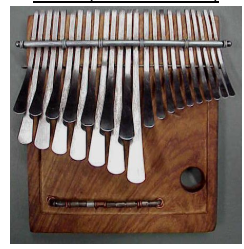
World Instruments
Mbria (Thumb Piano)
Country: Zimbabwe (Africa)
Group: Percussion / Idiophone
Material: Gourd with Metal
Pitch: Pitched

World Instruments
Pandeiro (Tambourine)
Country: Brazil (South America)
Group: Percussion / Idiophone + Membranophone
Material: Animal skin, wood, & metal
Pitch: Un-pitched

World Instruments
Cymbals
Country: Tibet (East Asia)
Group: Percussion / Idiophone
Material: Brass with Leather
Pitch: Pitched

World Instruments
Monkey Drum
Country: Africa
Group: Percussion / Idiophone + Membranophone
Material: Animal Skin with Wood
Pitch: Un-pitched

World Instruments
Maracas
Country: Puerto Rico (Caribbean)
Group: Percussion / Idiophone
Material: Gourd with Wood & Beads/Seeds
Pitch: Un-pitched
World Instruments
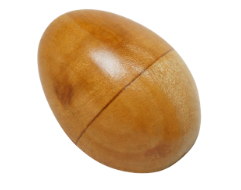
Egg Shaker
Country: South Africa
Group: Percussion / Idiophone
Material: Wood & Beads/Seeds
Pitch: Un-pitched

World Instruments
Mini Xylophone
Country: Africa & Southeast Asia
Group: Percussion / Idiophone
Material: Wood & Metal
Pitch: Pitched
World Instruments
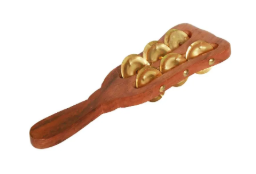
Sistrum
Country: Egypt & Turkey
Group: Percussion / Idiophone
Material: Wood with Metal Discs
Pitch: Un-pitched

World Instruments
Triangular Two-Sided Hand Drum
Country: Peru (South America)
Group: Percussion / Membranophone
Material: Animal Skin & Wood
Pitch: Un-pitched

World Instruments
Rod Juju Shaker
Country: Africa
Group: Percussion / Idiophone
Material: Wood with Nuts
Pitch: Un-pitched
World Instruments
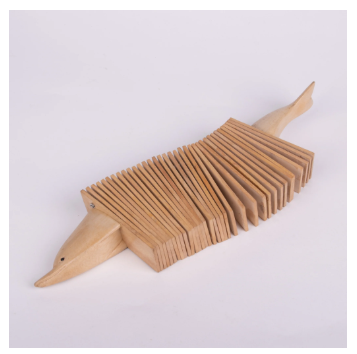
Clacker (Dolphin)
Country: Indonesia (Southeast Asia)
Group: Percussion / Idiophone
Material: Wood
Pitch: Un-pitched

World Instruments
Ratchet (Noise Maker)
Country: Europe (popularized during WW2 to warn about gas-raids)
Group: Percussion / Idiophone
Material: Wood
Pitch: Un-pitched

World Instruments
Slide Whistle
Country: Southeast Asia & Africa
Group: Percussion / Idiophone
Material: Wood
Pitch: Pitched

World Instruments
Tambourine
Country: The Middle East
Group: Percussion / Idiophone
Material: Wood with metal discs
Pitch: Un-pitched

World Instruments
Hand Bells
Country: England
Group: Percussion / Idiophone
Material: Metal
Pitch: Pitched

World Instruments
Mini Damaru Drum
Country: Tibet; Africa
Group: Percussion / Membranophone + Idiophone
Material: Wood, Animal Skin & Rope
Pitch: Un-pitched

World Instruments
Zills (Finger Cymbals)
Country: Turkey
Group: Percussion / Idiophone
Material: Metal & Elastic
Pitch: Pitched

World Instruments
Singing Bowl
Country: Nepal; Tibet
Group: Percussion / Idiophone
Material: Metal & Wood
Pitch: Pitched

World Instruments
Molo (Lute)
Country: Ghana (West Africa)
Group: Strings / Chordophone
Material: Wood with gourd & metal strings
Pitch: Pitched

World Instruments
Cricket Rattle
Country: Africa
Group: Percussion / Idiophone
Material: Wood with Beads/Seeds
Pitch: Un-pitched

World Instruments
Sitar
Country: India
Group: Chordophone
Material: Wood with Strings/Metal
Pitch: Pitched

World Instruments
Quena
Country: South America
Group: Areophone
Material: Bamboo
Pitch: Pitched

World Instruments
Didgeridoo
Country: Australia
Group: Areophone
Material: Wood
Pitch: Pitched
Can’t really produce a melody out of it
Droning: Holding out long tones

World Instruments
Tanpura
Country: India
Group: Chordophone
Material: Wood
Pitch: Pitched
Also can entail droning
Doesn’t have multiple pegs like a sitar (only two at its “head”)
Folk Music vs. Pop Music
FOLK MUSIC | POP MUSIC |
|
|
West African Music
In West Africa, the music is influenced by American country music, soul, reggae, and disco.
African Dance Ensemble (ADE)
Handmade instruments
EX: Jali → Official singer/historian of the Mandinka tribe of West Africa
Mandinka society - based on class system determined by lineage → working-class is obliged to take a job as an artisan, carpenter, metalworker
Jali has the power to determine questions of inheritance / impact someone’s social status (negatively or positively)
Music Analyses (TWO)
Key Aspects / Interpretation
Remember Key Aspects:
| Interpretation:
|