L19: Hormonal control
 Call Kai
 Learn
 Practice Test
 Spaced Repetition
 Match
 Flashcards
 Knowt Play
1/19

There's no tags or description
Looks like no tags are added yet.
20 Terms
Hormonal changes in females
(watch lecture recording)

GnRH(s) characteristics and how it works
Decapeptides present in all vertebrates
3 major types of GnRH (1 in mammals)
Released in a pulsatile manner in the median eminence (hypothalamus into portal system)
Travels via the portal blood system to the anterior pituitary
In the hypothalamus, GnRH neurons receive information about internal and external status; received feedback from testosterone in the male and estretdial7 in the female
GnRH receptor characteristics
G-protein coupled receptors
most species (primates? rodents?, mostly 1 receptor) posses at least 2 types of receptors
GnRH receptor actions and where they’re found
Upon binding, can stimulate both Gαq and Gαs
In the pituitary, leads to the synthesis and release of gonadotropins (LH and FSH)
GnRHRs are also present in other tissues such as ovary, prostate and placenta. GNHR likely not from hypothalamus, but from local source.
LH and FSH composition
Glycoprotein hormones composed of 2 subunits bound by disulfide bonds:
common αSU + specific βSU (LHβ and FSHβ)

LH and FSH in mammal production
produced by the same pituitary cells (gonadotropes). In avian: different cell types
How are LH and FSH regulated
Differential regulation based on GnRH pulse frequency.
βSU is the limiting factor
Control at the gene transcription level
Secreted = stored in vesicles until signal (GnRH) is received
LH receptor characteristics and how it acts
G-protein coupled receptor
Activates Gαs = increase in cAMP
Binds both LH and hCG (placental source of gonadotropin to be covered in lecture on implantation)
FSH receptors and how it acts
G-protein coupled receptor signalling via Gαs (trigger cAMP)
Inhibin and Activin characteristics and how it acts
Glycoproteins composed of 2 subunits
Inhibin produced by Sertoli cells in males and granulosa cells in females
Inhibin inhibits FSH
Activin stimulates FSH
Mainly act in conjunction with GnRH
Gonadal (sex) steroids are derived from
Derived from stepwise conversion of cholesterol
Lipophylic with nuclear (intracellular) receptor
Type of steroid depends on the presence of specific enzyme substrate in the cell

Conversion of pregneolone diagram
Estradiol-17β contains a phenolic A ring (aromatization) which gives its potency (most potent of the natural steroids)

Estradiol-17β characteristics
is a potent steroid
Note that the phenolic “A” ring distinguishes a very potent estrogen from a moderate androgen (testosterone)
Estradiol-17β produces physiologic effect at 1000-fold less amounts than either progesterone or testosterone
Sex steroid receptors characteristic and how they act
NHR = effect on gene transcription (stimulate or inhibit); main action
Recently: non-genomic rapid effects discovered
Since steroids diffuse in virtually any cell of the body and receptors are widely distributed: multiple target organs
What receptor does testosterone use
Androgen receptor
What receptor do estrogens use
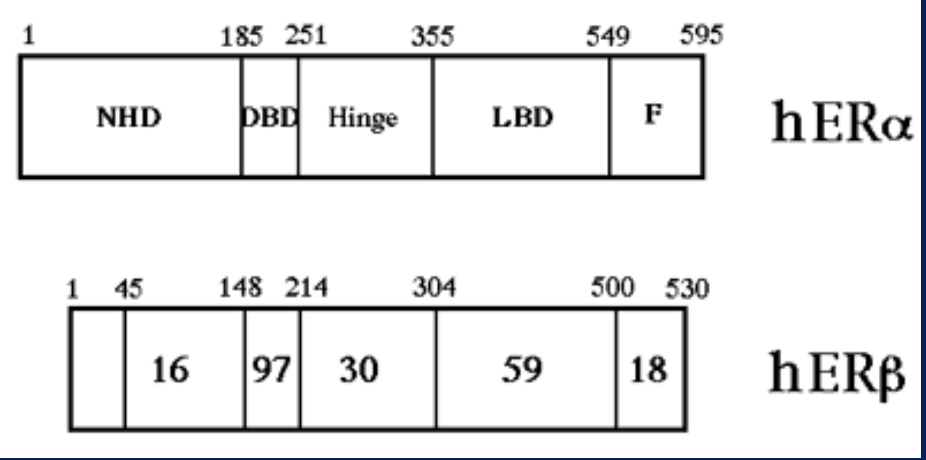
Estrogens have 2 receptor types, ERα and ERβ
Receptors require coactivators/regulatory molecule to mediate their actions on target gene promoters; regulate transcription
Differences between ERα and ERβ
Location/presence (cell type)
ERα stimulates transcription while ERβ inhibits it
Effect of drugs will depend on ability to bind and activate ERα or ERβ
Kisspeptin history and what they discovered
Discovered in early 1999/2000. Originally cloned as an anti-metastasis agent
Over the last 25 years kisspeptins have been intensively studied in their role in regulating puberty and modulating the negative feed back of steroid in males and females.
kisspeptin regulates GnRH, pulse frequency, seasonality
important in regulating tonic vs surge centre
Kisspeptin receptor
GPR54
has been localized in the hypothalamus on GnRH neurons
Why is Kisspeptin the missing link/key link
GnRH neurons do not express ERs but kisspeptine neurons do = missing link