psychology aos 1 sac
 Call Kai
 Learn
 Practice Test
 Spaced Repetition
 Match
 Flashcards
 Knowt Play
1/71

Earn XP
Description and Tags
72 Terms
central nervous system
brain and spinal cord, central pos in the body processing and corrdinating responses to senseory stimuli
intergrates + coordinates all sensory and motor
brain
recieves and processes sensory stimluli from the body + responses, voluntary movements, emotions, concious through
cranial nerves
connects brain directly to various organs + muscles
vagus nerve
connects brain to digestial tract
spinal cord
dense bundle of nevers that carries sensory info from body > brain and motor info brain > body
reflexes
involuntary quick responses for survival
steps for spinal reflexs
sensory stimulus detected by sensory receptors
sensory neurons carry info to spinal cord
interneurons in spinal cord iniate involunatry movement
relayed to motor neurons and message carried to skeletal muscles
muscles peform reflex response
MESSAGE SENT TO THE BRAIN
steps for voluntary movement
hear starting gun via sensory receptors - ears which would send message to brain via sensory neurons
brain processes messages and sends motor messages to spinal cord via interneurons
motor neurons would signal skeletal muscles to peform action
peripheral nervous system
nerves outside CNS, carry messages between CNS, muscles organs + glands, autonomic and somatic
somatic
carries sensory info to the central nervous system and motor info to the body, VOLUNTARY MOVEMENT
autonomic
controls body’s internal environment automatically, CONTROLS SPINAL RELFEXES
sympathetic nervous system
prepares body for threat eg. produces more glucose and fat for energy, increases heart rate INHIBITS SALIVIA, dilation pupils/lungs
parasympathetic nervous system
MAINTAINS HOMEOSTASIS MAIN FUNCTION, calms body after sympathetic, dominates during day-to-day activities
unconcious response
any response of our nervous system that does not require awareness eg sneezing, coughing, spinal reflexes, sweating, bulshing, digestion of food
concious response
any response of our nervous system that requires awareness eg. catching a ball, pouring a cup of water, walking
neuron diagram
dendrites
soma
axon terminal
axon
myelin sheath
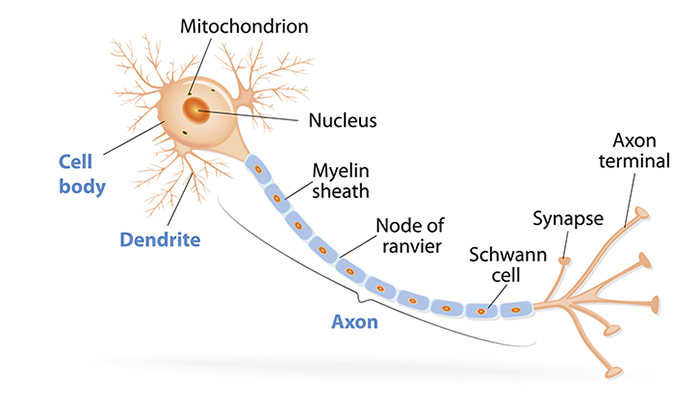
axon terminal - synapse diagram
PRE SYNAPTIC AXON TERMINAL
vesciles that hold neurotransmitters
SYNAPTIC CLEFT - neurostransmitters released from vesciles
POST SYNAPTIC DENDRITES
receptor sites
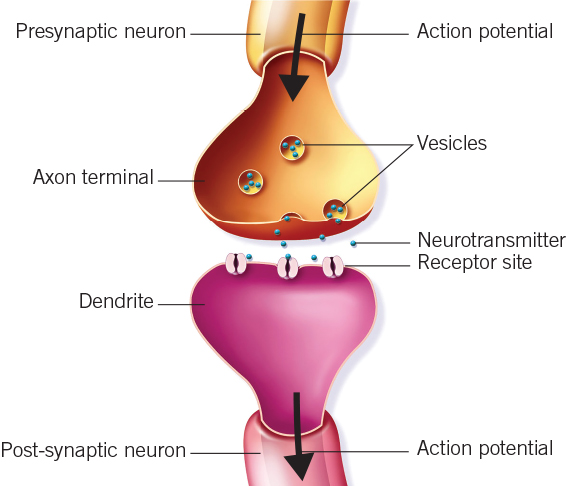
electrochemical process
electrical impulse travels and becomes chemical messsage to pass onto the next neuron, then changes back into electrical to go down the axon.
neurotransmitter
chemical substancce produced by the neuron that is transmitted across the synaptic gap, can have excitatory or inhibitory effect
excitatory neurotransmitters
increases the likelyhood of the post synaptic neuron firing
inhibitory neurotransmitters
decreases the likellyhood of the post synaptic neuron firing
glutamate
primary excitatory neurotransmitter in the CNS, involved in learning and memory
gamma amino butryic acid
primary inhibitory neurotransmitter, assosiated with anxiety, phobias and Parkinson’s disease.
neurotransmitters maintaining homeostasis
neurotransmitters need to be balanced constantly, low levels of eexcitatory neurotransmitters cause delays in learning, memory etc. and high levels cause death, seizures, overstimulation. vice versa.
receptor sites
have to be chemically precise for each neurotransmitter to bind onto
process of neural transmission
neurotransmitters reach PRESYNAPTIC axon terminal
vesicles (store neurotransmitters) release into SYNAPTIC GAP
search for a CHEMICALLY EXACT RECEPTOR SITE in the DENDRITES OF POST SYNAPTIC NEURON
neutransmitters BIND onto receptor site
message passed, depending on excitatory or inhibitory effect, will be more likely to pass
neuromodulators
subclass of neurotransmitters; chemicals released by neurons to alter te efectiveness of transmision
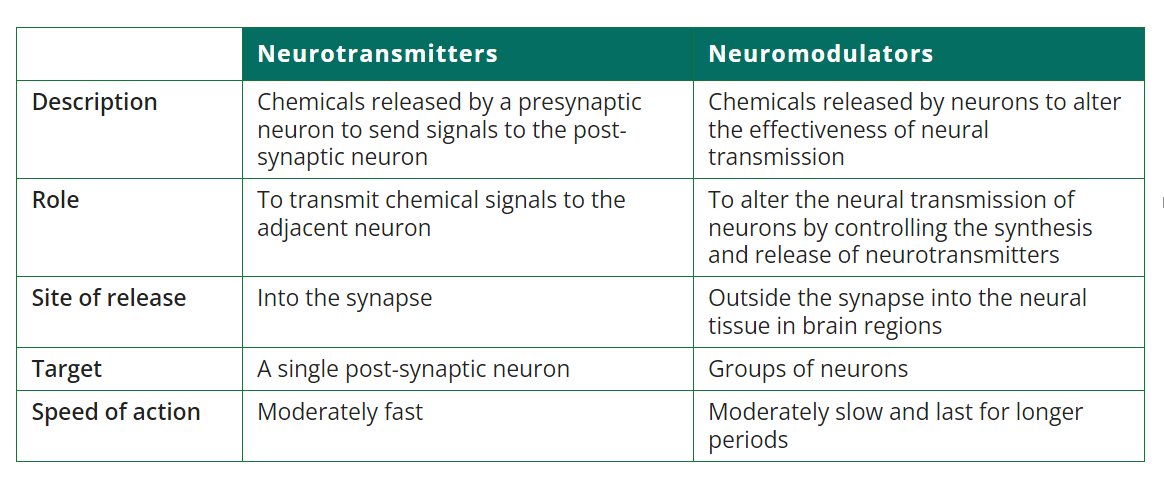
dopamine
(excitatory and inhibitory) released when you do an enjoyable activity, giving feelings of pleasure, strenghtens activity in the brain, reward pathway, increases responsiveness
when looking at timtam, anticipation makes it more likely to release dopamine
dopamine functions
movement, pleasure, attention, mood, cognition, motivation
dopamine in addiction
associated with addiction eg. smoking, drinking, overeating
in response to these brain produces higher lebels of dopamine > motivating one to complete behaviour again
serotonin - neuromodulator / neurotransmitter
inhibitory neurotransmitter that acts as a neuromodulator, affects: moods, sleep, aggression, apetite, emotion, attention
serotonin pathway: brainstem > almost all areas of cerebral cortex
sufficient levels of dopamine
calm, stable, happy mood
low levels of dopamine
effects brains ability to regulate mood, depression and anxiety
reduced sleep pressure, increasing wakefullness
impulsive, cannot delay rewards
difficult to supress anger
neural plasticity
structural changes in the brain that leads learning
synaptic plasticity
the way the synapse changes in resposnse to stimulation from environment
long term potentiation
long lasting strengthening of synaptic connections, enhanced functioning of neural pathway, repeated stimulation = strengthens likelyhood of pathway firing again
long term depression
long lasting decrease in the strength of transmission, from prolonged low level of stimulation, weaking in the synaptic connection, less communication
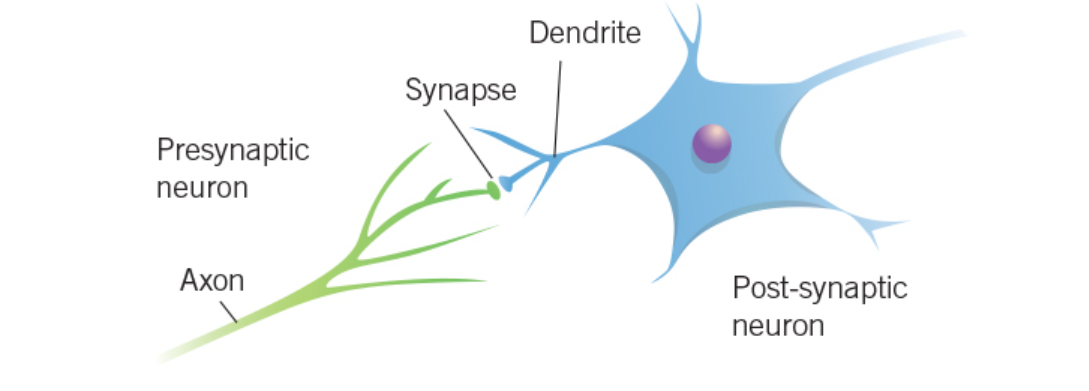
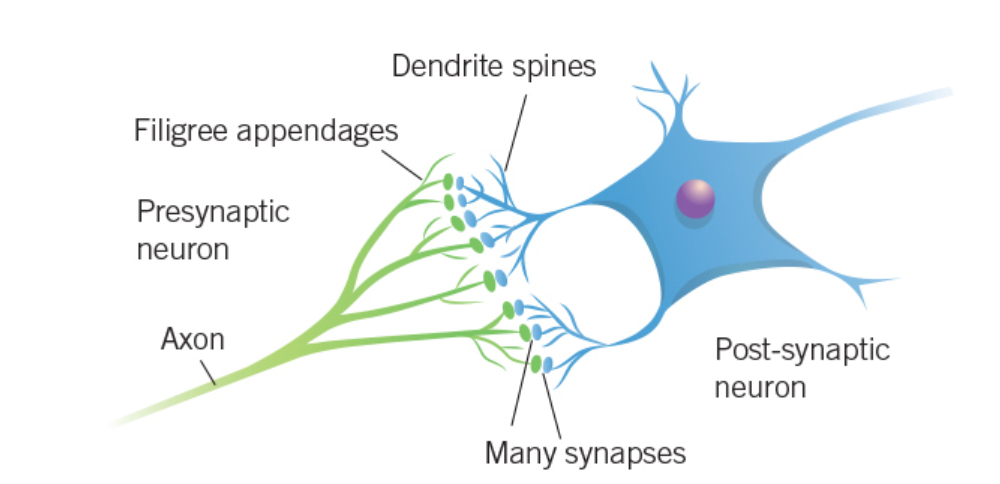
LTP structural changes
growth of mmore receptor sites
growth of dendritic spines on the post synaptic neuron
growth of filigree appendages
synaptogensis - creation of more synapses
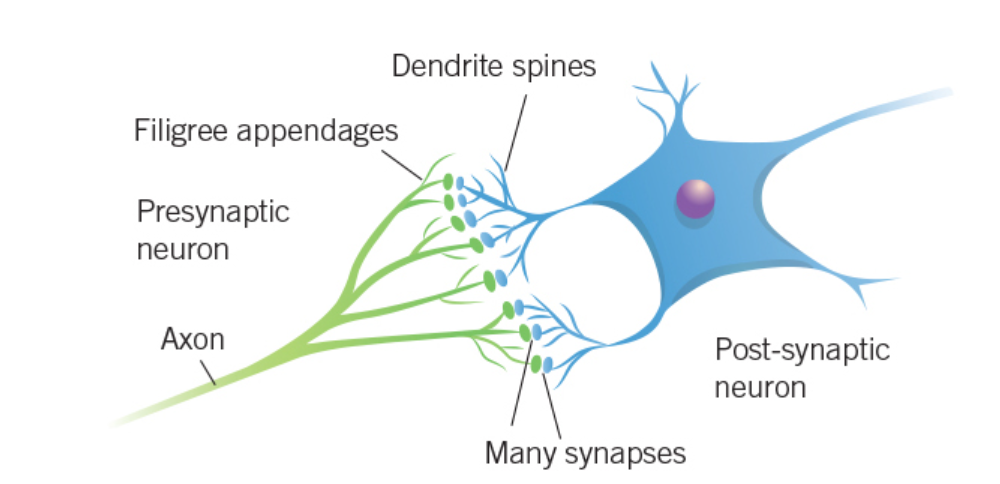
purpose of LTD
pruning and rerouting
pruning
allows us to trim useless or unwanted synaptic connections
rerouting
allows us to adjust or correct our neural pathways in order to peform more efficiently
stress
a state of mental physiological and emotional tension from stressors that are percieved by the individual as the exceeding their ability to cope
stressor
any person, object, situation or event that produces stress
internal stressor
cause of stress originates within the individual eg. worry about apperance
external stessor
cause of stress originates from outside the individual eg. homework, breakup
acute stress
intense, sudden arousal, after the stressor is dealt with, body quickly returns to homeostasis
chronic stress
an increased arousal level that persists over a long time eg. ongoing relationship problems, more harmful to body as supresses the nervous system and can increase chances of heart and digestive problems
fight flight freeze
automatic biological response to a percieved stressor
flight - escaping stressor
fight - dealing with stressor directly
freezw - immobilizing the body through minimising movement an or vocal sounds to avoid detection
cortisol
in times of long term stress, when the stressor persists and the body continues to percieves stress, cortisol (stress hormone) is released from adrenal glands
high levels can be detrimental, supresses immune system
gut brain axis
interaction between the gut microbiota and the central nervous system
refers to connection that exists between CNS and enteric nervous system
bidirectional communication
communication in both ways
(PSYCHOLOGICAL): gut > brain
(PHYSICAL): brain > gut
vagus nerve
one of the biggest nerves connected to the CNS
ENS
large nerwork of neurons embedded in gut tissues
gut microbiota
digests food, involved in the production of neurotransmitters
positive gut microbiota
optimal is different for everyone, able to cope with stress
negative gut microbiota
heart faliure, immune system , mood disorders, cognitive issues (memory)
hans selye general adaption syndrome (gas)
three stage physiological resposnse to stress that occurs regardless of stressor encountered
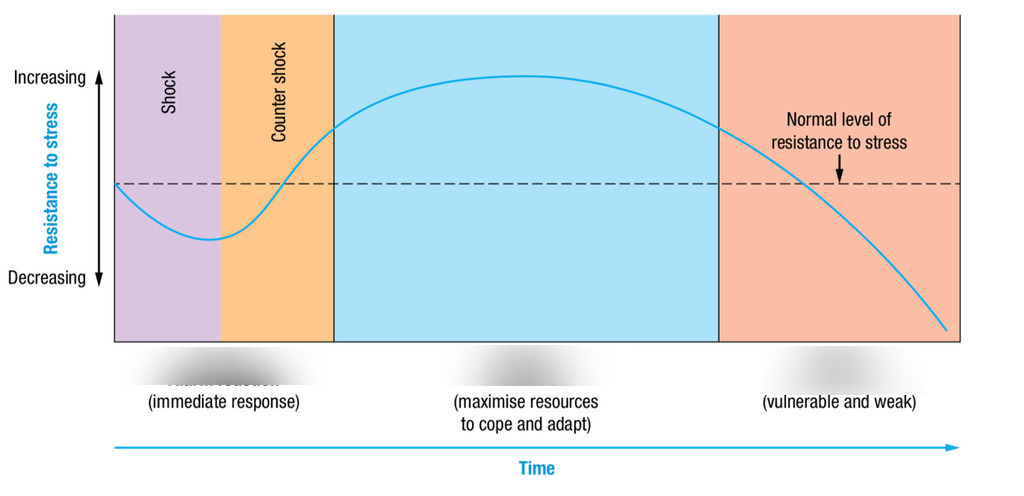
1 alarm (immediate)
shock: bodilys ability to deal with stressor falls below normal levels, body reacts as if its injured
countershock: body rebounds, symbpathetic nervous system initiating fight flight freeze
2 resistance (maximise resources to cope)
cortisol enters body to cope with stressor, body resistance rises, cortisol gives energy to repair from shock, process that dont strenghten resistence are paused eg. menstruation, sex drive
3 exaustion (weakness)
body cannot sustain resistance, extreme fatigue, body’s resources deplete, illness mental and physical
richard lazarus and susan folkman transactional model of stress
propeses that stress involved an encounter between an individual and their external environment
stress response depends on
individuals apprasial (interpretaion) of stressor
individuals judgement on ability to cope with stressor
primary appraisal
evaluating significant of situation and deciding wherer its positive/benign, irrelevant or stressful and if its harm/loss threat or challenge
if we decide the situation is stressful, then we engange in apprasial to decide:
harm/loss - how much damage has occured?
threat - involed concern of harm/loss in future
challenge - involves potential for personal growth from situation
secondary apprasial
evaluating coping options and resources to deal with stressful situation, coping options can be internal or external
IF INDIVIDUAL PERCIEVES THAT THEY DO NOT HAVE RESOURCES AVALIABLE THEN!!! THEY EXPERIENCE STRESS
coping
process of changing ones thinking and behavioural effeorts to manage a situation
context specific effectiveness
coping stratagies have context specific effectiveness when theres a match between the coping strategy and situation eg. creating study timetable for exams
coping flexibility
being able to effetively adjust ones coping strategies according to the demands of different situations
includes
recognising multiple coping approaches
selecting coping strategies that match the situation
recognising when a coping strategy is ineffective
implementing new coping strategies when needed
approach coping strategies
good for long term stress, involves efforts to directly deal with a stressor
eg. someone getting fired from a job > finding a new one
avoidance coping strategies
involve efforts that avoid a stressor and indirectly dealing with it
eg. someone who lost a job not telling anyone and acting as if they havent lost their job
physical activity as a coping strategy
improves physical and mental health, allows for better confrontation of stressors (feeling of wellbeing and strength)
how exersice helps stress
uses up cortisol so body can return to homeostasis, increases efficiency of cardiovascular system, releases beta-endorphins which relieve pain and provide a sense of wellbeing