Lab 1 Exam
 Call Kai
 Learn
Learn Practice Test
 Spaced Repetition
 Match
Match Flashcards
 Knowt Play
1/78

There's no tags or description
Looks like no tags are added yet.
Name | Mastery | Learn | Test | Matching | Spaced | Call with Kai | Chat |
|---|
No analytics yet
Send a link to your students to track their progress
79 Terms
What are the 6 Steps to the Scientific Method?
Observation, Ask questions, Hypotheses and Prediction, experimentation, presenting and analyzing, and interpreting
What Makes a good question?
A good question are focused and testable
What are the 5 parts to a good hypotheses
1) Consistent with existing observations and known info 2) made before the experiment 3) statement of the outcome 4) result can be accepted or rejected 5) rejected results can still provide valuable information
Supported hypotheses will lead to __
Predictions
For an experiment what 2 setup groups do you need? What are they?
1) Experimental Group: Contains the independent Variables
2) Controlled group: Does not receive treatment
Both are used to test for the dependent variable and each should contain standarize variables
What’s the difference between independent and dependent Variable?
Independent: The variable that the researcher changes or controls to see if it causes an effect.
Dependent: The variable that the researcher measures or observes to see if it is affected by the independent variable.
What makes a confident experiment results?
Repeatability and sample size
What should a “table” contain ( 5 things) ( Where are independent and dependent variables located)
Title, columns and rows, independent variables in the column, units of measurements within the rows labeled, and ata
What should a “graph'“ Contain? ( where is Independent and dependent variables located)
Numbered title describing the graph, independent variables on the X axis and dependent variables on the Y, labeled axes with appropriate names and units, use different symbols with a key if needed
When to use a bar graph vs Line Graph?
A bar graph is use for different categories while a line graph is one category but is continuous showing data over time.
Why do we interpret the data?
To relate the results to the hypothesis and see if we either accept or reject the hypotheses
Does the US follow the Metrix system or British imperial system,?
British Imperial System
For the Metrix system, what is the unit of measure for volume, length, mass/weight, and temperature
Volume = Liters (L) | Length = meters (M) | Mass/weight = Grams (g)| Temperature = Celsius (C)
Prefix unit table from biggest to smallest
Kilo, hecto, deca, UNIT, deci, centi, mili, micro
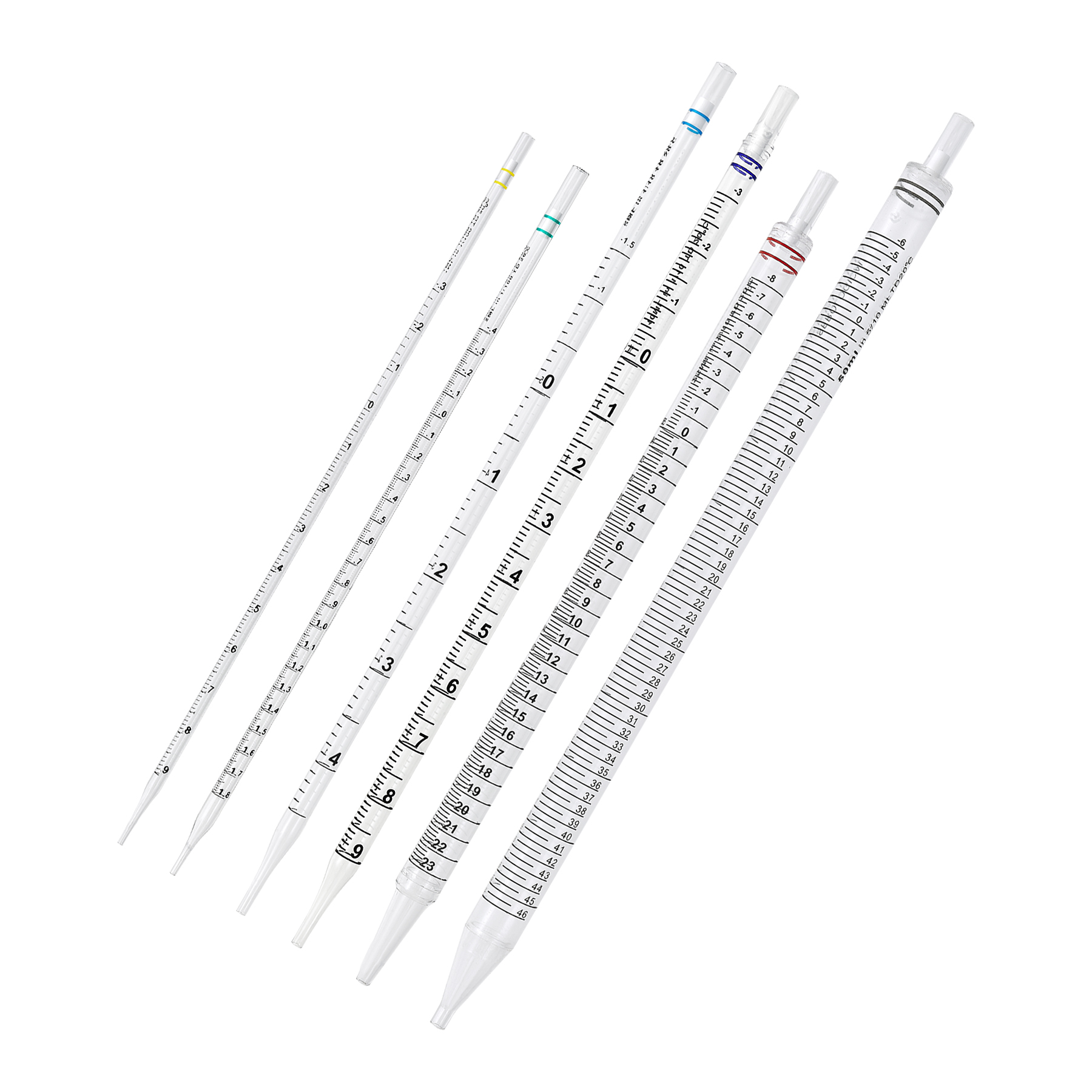
What is this? What does it measure?
Serological Pipette: measure and transfers liquids for small units of 10 mL or less ( VOLUME)

What is this?
Manual pipette pump which helps control by a wheel where it will draw in or dispense liquids

What is this? Function?
Transfer pipette: plastic bulb to suck in or dispense
For a 5mL pipette, how much is each tic mark?
Each tic mark will be 0.1. Since 1/10 = 0.1
For a 1 mL pipette, how much is each tick mark?
Each tic mark willl be 0.01 because 0.1/10
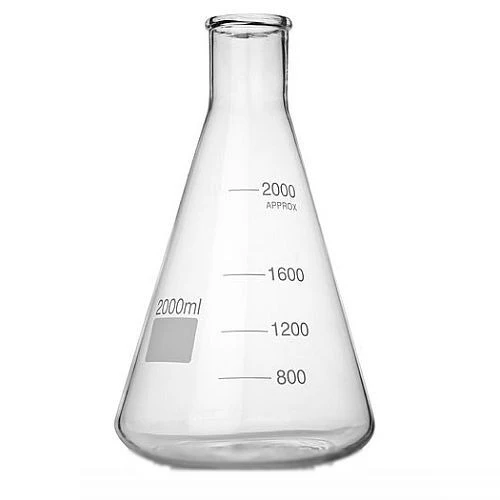
What is this?
Erlenmeyer flask

What is this?
Beaker

What is this?
Graduated Cylinder
What is mass?
Quantity of matter of an object
What do we use to measure mass?
Digital Scale or the Triple Beam Balance
What do we use to measure length?
Ruler and meter stick?
How many cm in 1M? How many mm in 1 CM?
100 cm in 1 M | 10 mm in 1 cm
What are macromolecules and the 4 types?
Macromolecules are organic molecules produced by the cell and consist of carbohydrates, lipids, proteins, and nucleic acids
Carbohydrates functions?
An energy source and store energy
Lipids Function?
Forms the plasma membrane and stores excess energy
Proteins Function?
Forms structural elements of cells & catalytic molecules called enzymes ( chemical reaction causing)
Nucleic Acids Functions?
stores genetic information and directs synthesis of proteins
Ninhydrin
Protein | Monomer - Amino Acid | MSG - “Monosodium glutamate “
Biurets
Protein | Polymers - Polypeptide | Albumin
Benedicts Reagent
Carbohydrates | Monomer - Monosaccharides | Glucose
Lugol’s Iodine
Carbohydrate: Polymer: Polysaccharide | Glycogen/starch
What test are used to detect Carbohydrates?
Benedicts regeants and Lugol’s Iodine
What test are used to detect proteins?
Ninhydrin and biurets
System used by the US and two additional countries for weights and measure
British Imperial System
Metrix unit of temperature
Celsius
Unit of measure for liquids.
Liter
Standing container that i used to carefully measure volumes of liquids. often has a plastic base with a narrow glass tube with many lines.
Graduated Cylinder
Measurement unit for weight.
Gram
Base unit for the measurement of length in the Metrix system
Meter
small tubes used to transfer fluids with an added plastic pump. Tubes are rigid plastic and do not bend. Often have a cotton in one end.
Serological pipette
small tubes with built in plastic bulb used to move small milliliters volumes of fluids. Tube bulb is soft plastic, as is the entire small tube.
Transfer pipette
Tool used to measure the weight of an object by moving weights along gradations along three bars.
Triple beam balance
System of weights and measures used in most of the world. system of measure used in science
Metrix system
Cone shaped container for fluids, with a wide base and narrow bottleneck
Erlenmeyer flask
plastic attachment with a wheel and plinger used to aspirate or dispense fluids from serological pipettes
Pipette pump
A solution used to detect the presence of polypeptides
Biruets
A chain of monomers linked by covalent bonds
Polymers
Chain of monosaccharides
polysaccharides
Turns purple when added to amino acids
ninhydrin
A polypeptide found in blood, egg white, and milk
Albumin
A monosaccharide produced by plants
Glucose
An amino acid that is also used as a food flabor enhancer since it triggers the “umami” taste
MSG / monosodium glutamate
class of macromolecules that are important for structural fibers in cells, present in monomer and polymer forms
Protein
Monomer of proteins
Amino Acids
Polysaccharide produced by plants. Appears white in water
Starch
Name for the polymer form of protein
Polypeptide
General name for single subunits of macromolecules
Monomer
Macromolecule class that includes glucose and starch
carbohydrates
aturns orange or green if boiled with monosaccharide
Benedict
Chemical that can be used to detect polysaccharides
Lugols iodine
This part has a small lever that moves left and right to increase or decrease contrast. As a result it also affects brightness by changin the amount of light hitting the sample.
Iris Diaphragm
Focuses light onto the specimen from from below the stage. Can be adjusted with a knob
Condenser
Moves the stage up and down quickly. Should be used only when the 4X objective is in place
Coarse focus knob
Holds the objective lenses and is the control for adjusting total magnification
Revolving nose piece
What part of the microscope should be held when moving it
Arm & Base
Increase or decrease light amount of electricity to the light bulb
Voltage regulator
The eyepieces you look through to see the image, provides a fixed 10X magnification
Ocular Lenses
Circular area you can see when looking at a specimen through the oculars
Field of view
where you place a slide for viewing
stage
moves the sample left or right, up or down in the field of view
X & Y controls
Color of the 4X objective
Red
Color of the 10X objective
Yellow
Color of the 40x objective
Blue
Magnifies the sample but can be switched between weaker or stronger powers to increase total magnification
Depth of field