bi203-- cell communication: chemical messengers and receptors
 Call Kai
 Learn
Learn Practice Test
 Spaced Repetition
 Match
Match Flashcards
 Knowt Play
1/19

There's no tags or description
Looks like no tags are added yet.
Name | Mastery | Learn | Test | Matching | Spaced | Call with Kai | Chat |
|---|
No analytics yet
Send a link to your students to track their progress
20 Terms
why is cell communication important
coordination of their diverse activities to maintain homeostasis
to control growth and development of the animal as a whole
mechanisms of intercellular communication
Direct: through gap junctions— cells exchange chemicals through connections between cytoplasm
indirect: through chemical messengers— messenger must bind to a matching receptor and stimulate a response
direct communication: gap junctions
formed by plasma membrane proteins (connexins) that form structures (connexons) that form channels for ions and small molecules
movement of small molecules through gap junctions metabolically couple the cells and causes of organs to act as a unit

indirect cell communication: chemical messengers
most common through intercellular chemical messengers
chemical messengers (ligands) synthesised by specialised cells to serve designated purpose
once in extracellular fluid these signalling agents act on other cells
ligands must bind with receptors on the target cell that are specific to that ligand
receptors are typically integral proteins in the plasma membrane
given cell may have a few million receptors
different cell types have distinct combos of receptors, allowing them to react individually to various regulatory extracellular chemical messengers
chemical messengers: functional classification
paracrine: cell secretes chemical which can bind to receptor on neighbouring cell triggering a response e.g. histamine secreted for inflammation
autocrine: cell secretes chemical which can bind on its own membrane and stimulates a response— critical in cancer activation and providing self sustaining growth signals to tumours
neurotransmitter: released from neurons through axons and act on neighbouring cells e.g. serotonin (not only a neurotransmitter “same key, different lock”)
hormone: long range chemical messengers that are specifically secreted into circulation by endocrine glands, carried in circulation to target cells e.g. insulin is secreted by pancreas

signal transduction (ST)
chemical messengers usually dont trigger change sin target cells directly— trigger biochemical chain of events in cell called signal transduction
reception: cell receives signal
transduction: pathway of several steps with each molecule in the pathway bringing about a change in the next step
response: pathway triggers cellular response
chemical messengers must bind to receptors
cellular receptors for chemical messengers
membrane bound/ intracellular
specific for chemical messengers
multiple receptors on each cell
responsiveness regulated by up or down regulation of cellular receptor
e.g. cell A has matching receptor for chemical messenger so only one that responds
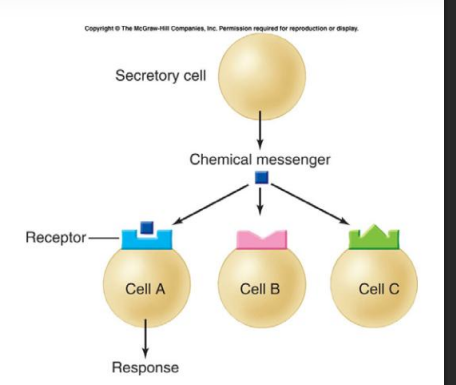
outcomes of receptor binding by chemical messengers
extracellular chemical messengers not usually trigger changes in target cells directly
some cant even enter target cells
most messengers issue orders by binding with specific receptors— triggers signal transduction
two types of chemical messengers
lipid soluble (lipophilic): bind to intracellular receptors (e.g. steroid hormones)
lipophobic (poorly soluble in lipid): bind to cell surface receptors inducing conformational change which in turn activate signal transduction pathways
lipid soluble messengers—e.g. oestrogen
cross lipid membrane and bind to intracellular receptors
mechanism
free lipid soluble messenger diffuses from blood through interstitial fluid and through lipid bilayer of the plasma membrane
if cell is target cell and has appropriate receptors the messenger will bind to form a receptor messenger complex- -act as transcription factors
DNA transcribed producing mRNA which is translated into protein (enzymes)
new proteins alter cells activity and cause responses typical of that messenger

lipophobic messengers
not lipid soluble therefore cannot diffuse through membrane lipid bilayer
instead bind to receptors on the surface of the plasma membrane
receptors are integral proteins of the plasma membrane
binding of the messenger to the receptor acts as first messenger
first messenger causes conformational changes in the receptor that activate signal transduction pathways, that ultimately bring about a cellular response
how do lipophobic chemical messengers (first messenger) bring cellular effects?
cant cross plasma membrane
bind to receptors in plasma membrane to exert their effects
brings about the desired intracellular response by only three general mechanisms:
by opening or closing specific channels in the membrane to regulate the movement of particular ions into or out of the cell
by activating an enzyme that phosphorylates a cell protein
by transferring the signal to an intracellular chemical messenger (second messenger) which in turn triggers a series of biochemical events within the cell
classification of plasma membrane receptors
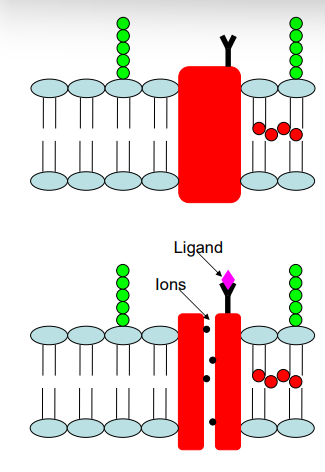
ion channel receptors: plasma membrane receptors that open/ close ion channels when bound to specific ligand
receptor than function as enzymes: plasma membrane receptors/ enzymes that are activated once ligand is bound
G protein coupled receptors: plasma membrane receptors that activate GTP binding proteins
receptors functioning as ion channels
some first messengers bind to receptors that open or close gated receptor channels that regulate movement of particular ions across the membrane
receptor are specific for a single ion
activation of the receptor by a first messenger causes conformational change and either opening or closing of the ion channel
ions move from where they are more concentrated to where they are less concentrated
cations will move towards negative areas and anions will move towards positively charged area
e.g. acetylcholine (ligand) released by neurons binds to the acetylcholine receptor on target cells resulting in entry of Na+ down concentration gradient into cell
-what happens when ions flow in and out of cell
changes in plasma membrane potential (Na+,K+)
ions may act as second messengers (e.g. CA2+)
cellular effects of ion movement— changes in plasma membrane potential
all cells maintain a voltage across their plasma membranes
only excitable cells can generate action potentials, the rapid transient changes in membrane potential that spread along the surface of these unique cells
action potentials transmit information within neurons, trigger contractions within muscle cells, and lead to exocytosis in secretory cells
cellular effects of ion movement— effect of increasing intracellular calcium(CA2+)
transient flow of Ca2+ into the cell through opened Ca2+ channels triggers:
an alteration in shape and function of specific intracellular proteins
activates multiple cellular functions such as muscle contractions, release of secretory products from gland cells and cell division
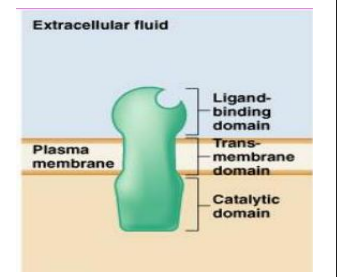
receptors functioning as enzymes
receptors functioning as enzymes have dual role— they bind ligand and have an enzymatic function
contain an enzymatic domain on their intracellular side
majority of enzymatic receptors are protein kinases, which phosphorylate proteins in the target cell
phosphorylated proteins then recruit and activate other intracellular proteins which infiltrate a protein kinase cascade
protein phosphorylation
transfer of a phospahte group from ATP to a protein (on serine, tyrosine or threonine residues (phosphomotifs))
catalysed by protein kinases
phosphorylation regulates protein function and cell signalling by causing conformational changes in phosphorylated protien (activating or inactivating it)
effects of protein kinases are reversed by protein phosphatases

regulation of protein phosphorylation
removal of activating ligand
kinases or substrate proteolysis
phosphatase-dependent dephosphorylation
protein phosphorylation example: tyrosine kinase receptors
hormone insulin exerts effects through tyrosine kinases receptors, amino acid tail has series of tyrosines— in absence of ligands the tyrosine kinase receptors exist as a single polypeptide
part of receptor on cytoplasmic side serves as an enzyme which catalyses the transfer of phosphate groups from ATP to the amino acid tyrosine
process of activation
two signal molecule bind to two nearby tyrosine kinase receptor, causing them to aggregate forming a dimer
formation of dimer activates tyrosine kinase portion of each polypeptide
activated tyrosine kinases phosphorylate the tyrosine residues on the protein
activated receptor protein is now recognised by specific relay proteins
bind to phosphorylated tyrosines and the receptor phosphorylates the relay proteins, activating them
activated relay proteins can then trigger cellular response
one activated tyrosine- kinase dimer can activate over ten different relay proteins, each which triggers a diff response

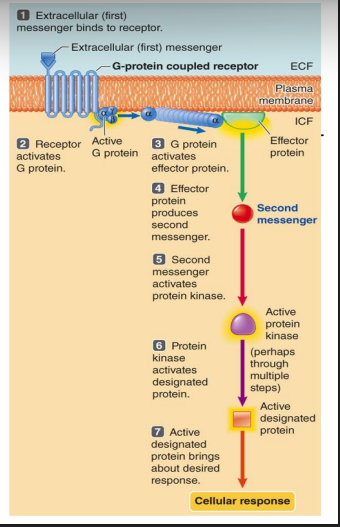
receptors that interact with G proteins (G protein coupled receptors)
largest category of plasma membrane receptors
extracellular ligand binding region and an intracellular region that binds a ‘G protein’
‘G proteins’ bind to guanine nucleotides: GTP active, GDP inactive (think ATP and ADP but G instead of A)
binding of ligand to receptor changes confirmation of receptor which frees the G protein and allows it to interact with effector proteins
effector proteins can be ion channels or enzymes
activated effector protein amplifies the signal from the ligan via second messengers
-2) extra cellular (first messenger) binds to receptor causing confirmational change activating the G protein (GDP→ GTP)
active G protein travels along plasma membrane and activate effector protein
effector protein produces ‘second messenger’
second messenger activates a protein kinase
-7) phosphorylation cascade brings about desired cellular response