Italian Renaissance
 Call Kai
 Learn
Learn Practice Test
 Spaced Repetition
 Match
Match Flashcards
 Knowt Play
1/21

There's no tags or description
Looks like no tags are added yet.
Name | Mastery | Learn | Test | Matching | Spaced | Call with Kai | Chat |
|---|
No analytics yet
Send a link to your students to track their progress
22 Terms
What period, region, and architectural style define the Italian Renaissance?
14th–16th centuries; Florence, Italy. Renaissance architecture emphasized humanism, proportion, symmetry, geometry, and the revival and reinterpretation of ancient Roman architectural forms.
What political conditions encouraged Renaissance architecture in Florence?
Florence was a republic influenced by powerful merchant and banking families. Wealthy patrons commissioned architecture to demonstrate civic pride, social status, economic power, and political influence.
What was the relationship between humanism and Renaissance architecture?
Humanism encouraged the study of ancient Roman architecture and architectural theory, including Vitruvius. Architects revived classical orders, proportions, and geometry while adapting these principles to contemporary buildings.
Who were the Medici, and why were they important architectural patrons?
A powerful Florentine banking family that supported Renaissance architecture to demonstrate wealth, political influence, and social status. Their patronage helped shape Florence's urban and cultural identity.

What is Santa Maria del Fiore, and who designed its famous dome?
Florence Cathedral, whose monumental dome was designed by Filippo Brunelleschi. The dome became a major achievement of Renaissance architectural engineering and an important feature of Florence's skyline.
Why was the Florence Cathedral dome a major engineering challenge?
The cathedral required an exceptionally large dome over an octagonal space. A committee considered competing proposals, and Brunelleschi's innovative double-shell solution enabled the monumental dome.
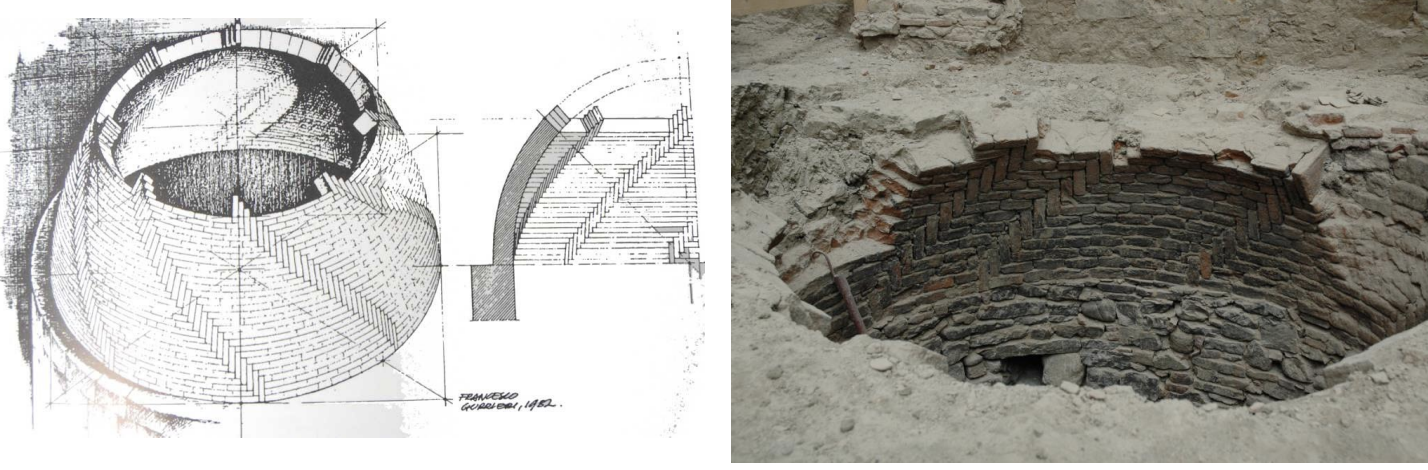
What is the double-shell dome of Florence Cathedral?
Brunelleschi's dome consists of an innovative double-shell structure spanning a large octagonal space. Its construction represents an important achievement in Renaissance engineering and masonry technology.

What classical and earlier architectural references are associated with Brunelleschi's Florence Cathedral dome?
The notes connect the dome to the ambition of achieving a span comparable to the Pantheon and identify Andrea di Bonaiuto and the San Giovanni Baptistery as references.
What is the lantern of Santa Maria del Fiore?
The architectural structure placed at the top of Brunelleschi's dome. It forms the crowning element of the cathedral's monumental roof composition.
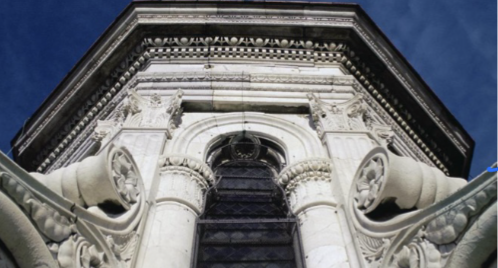
What is Palazzo Vecchio, and who was its architect?
Also called the Prior's Palace; designed by Arnolfo di Cambio. It is a civic palace representing Florence's government and the importance of political and public architecture.

Palazzo Vecchio
What is a biforium window?
A window divided into two openings. The notes identify biforium windows as an architectural feature of Palazzo Vecchio.
What is the Uffizi, and what was its original function?
An administrative office complex in Florence. The word Uffizi means offices. Its architecture organized governmental and administrative functions within the city.
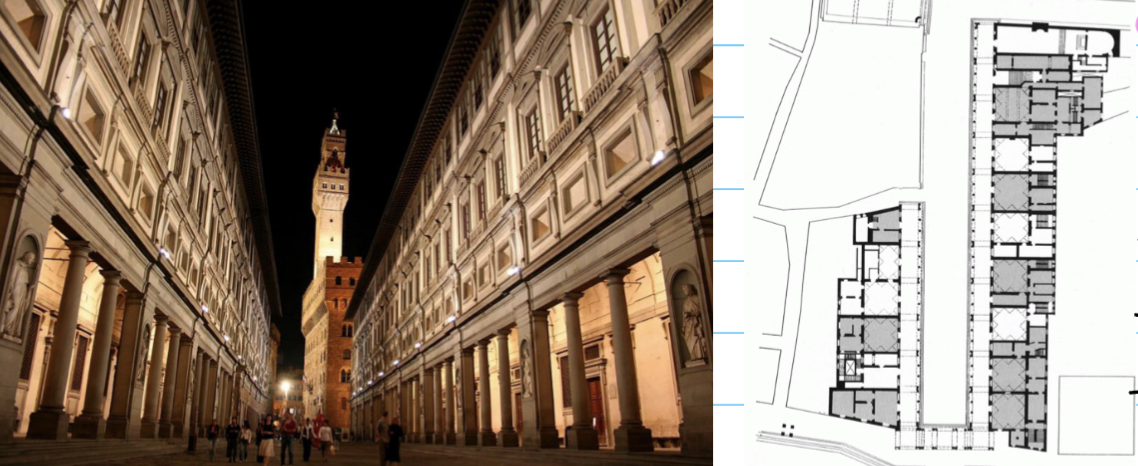
What is a loggia?
A covered, open-sided architectural space. The notes associate the loggia with the Uffizi's architectural organization.
What is the Corridoio Vasariano
It connected buildings across Florence, allowing the duke to move between his residence and administrative offices.

Why did Cosimo I de' Medici commission the Corridoio Vasariano?
He wanted a protected passage connecting his home to his office. The notes associate the corridor with his unpopularity, showing how architecture could facilitate private movement and political security.
What is Palazzo Pitti, and why is it important?
A monumental urban palazzo in Florence. Its scale, stone masonry, and imposing facade demonstrate the growing importance of large palaces in Florentine urban architecture.
Who designed Palazzo Pitti?
The notes identify Filippo Brunelleschi or Luca Fancelli as possible architects and explicitly state that the attribution is uncertain.
Palazzo Pitti

What is rustication in Renaissance architecture?
A masonry treatment using visibly emphasized or roughly finished stone blocks. It creates a powerful and substantial facade, as seen in Palazzo Pitti and Palazzo Medici-Riccardi.
Palazzo Medici-Riccardi
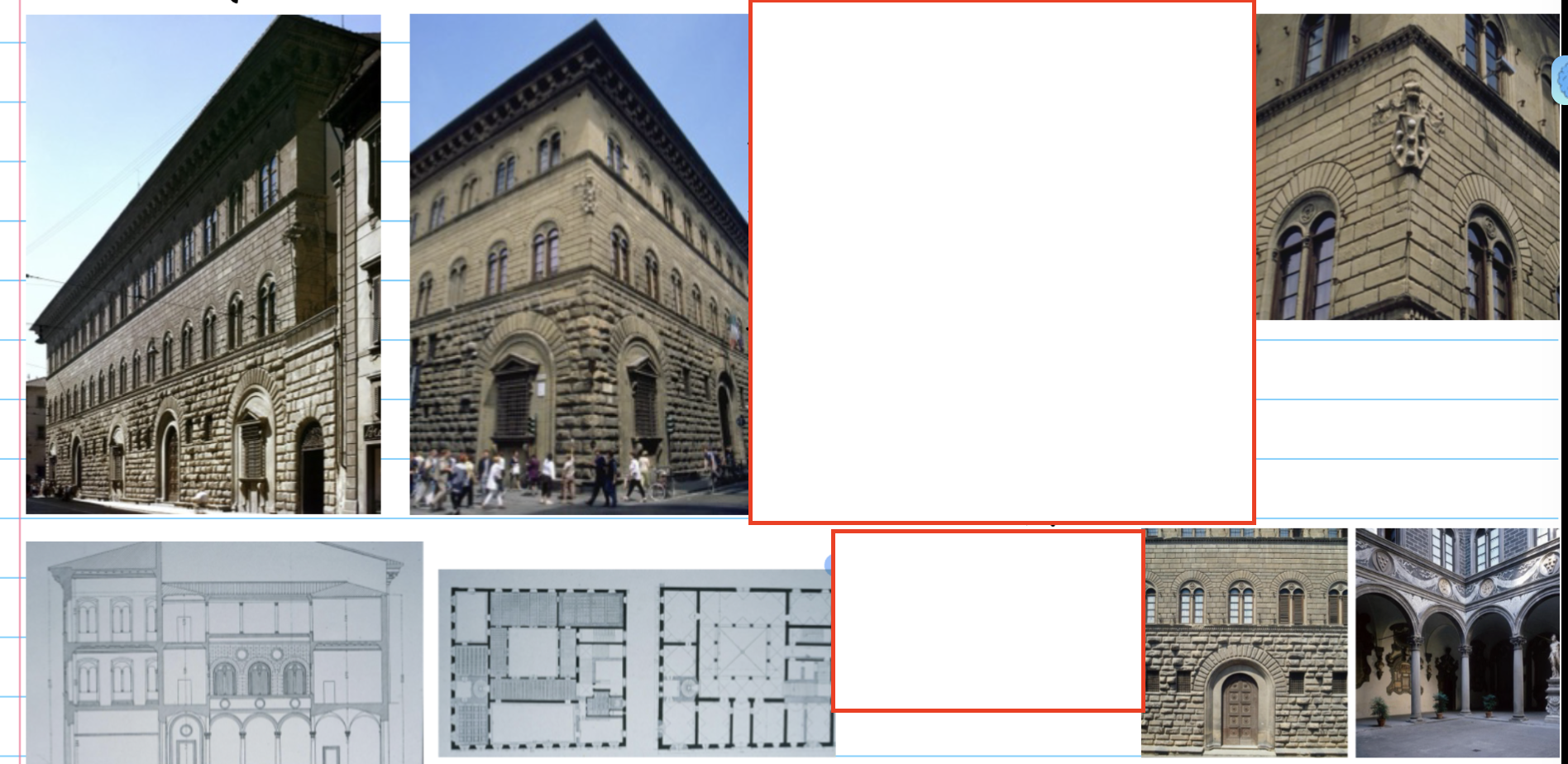
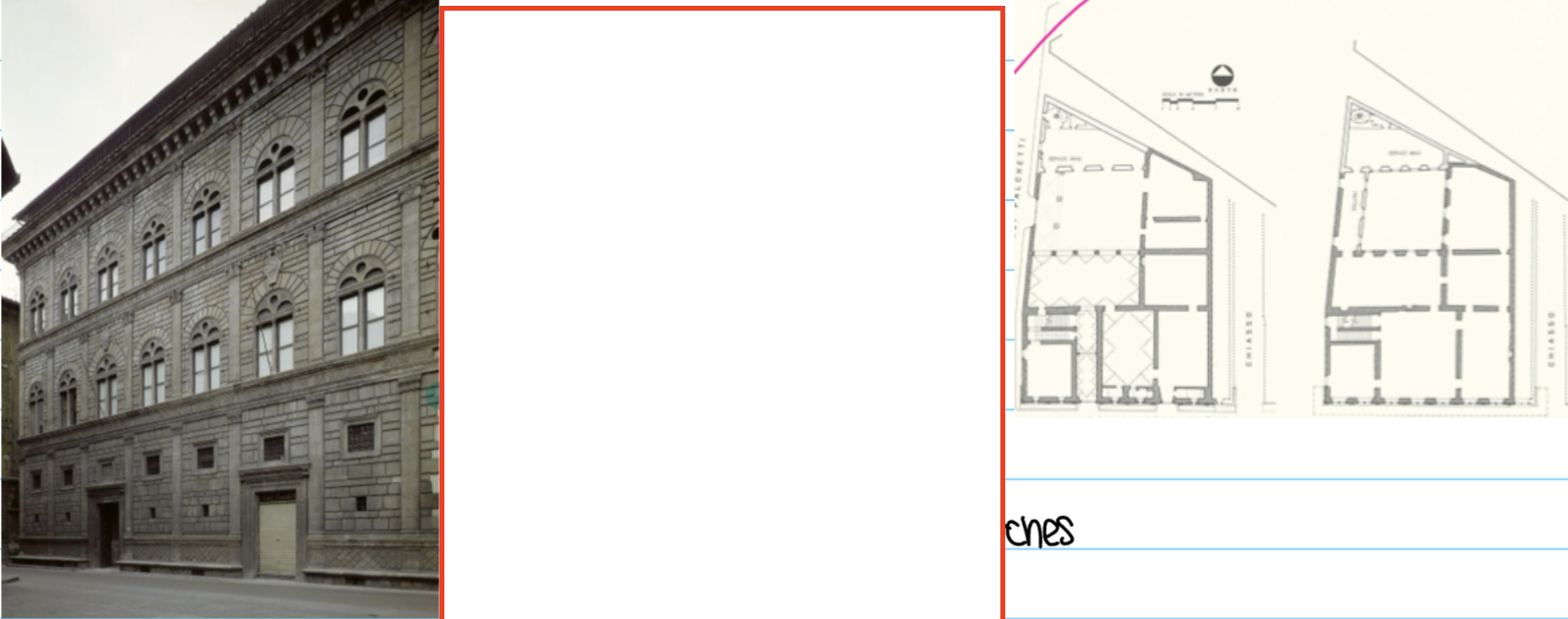
Pallazo Rucellai