bio 1 - chapter 16
 Call Kai
 Learn
 Practice Test
 Spaced Repetition
 Match
 Flashcards
 Knowt Play
1/99

There's no tags or description
Looks like no tags are added yet.
100 Terms
The primary difference between individual nucleated cells in a developing zygote is the ____.
a.
genetic code of each cell
b.
differential expression of housekeeping genes
c.
differential expression of regulated genes
d.
number of chromosomes present in the nucleus
e.
presence or absence of gene regulators
c
Genes expressed in almost all cell types are called ____ genes.
a.
housekeeping
b.
regulated
c.
activator
d.
homeotic
e.
structural
a
In prokaryotes, the genes for metabolic pathways are ____.
a.
always expressed for early steps in the pathway, but generally not expressed for later steps in the pathway
b.
always expressed so the bacteria can respond to rapidly to changing conditions
c.
turned on and off as conditions change
d.
always independently regulated
e.
generally expressed at low levels, but expressed at high levels when conditions warrant
c
The genes in an operon are ____.
a.
each transcribed into individual mRNAs
b.
transcribed into a single mRNA transcript
c.
controlled by separate promoters
d.
transcribed as a single mRNA in prokaryotes, but as individual mRNAs in eukaryotes
e.
located at different chromosomal loci
b
What is the relationship between operons and transcription units?
a.
They are synonymous terms.
b.
An operon consists of a transcription unit plus associated regulatory DNA sequences.
c.
A transcription unit consists of an operon plus associated regulatory DNA sequences.
d.
An operon is composed of multiple transcription units.
e.
A transcription unit is composed of multiple operons.
b
What is the relationship between operators, transcription units, and operons?
a.
Operators consist of transcription units and operons.
b.
Operons consist of transcription units and operators.
c.
Operators consist of multiple transcription units associated with a single operon.
d.
Operons consist of multiple operators associated with a single transcription unit.
e.
Operons consist of multiple transcription units associated with a single operator.
b
If an operon is regulated by ____ control, genes are ____ by a regulatory protein called a ____.
a.
positive; on unless they are switched off; repressor
b.
negative; off unless they are switched on; repressor
c.
negative; on unless they are switched off; repressor
d.
positive; off unless they are switched on; repressor
e.
positive; on unless they are switched off; activator
c
Genes under positive control are ____.
a.
off until they are turned on
b.
always expressed
c.
expressed unless a repressor protein is present
d.
controlled by several promoters to increase transcription
e.
regulated by feedback inhibition
a
Regulatory proteins bind to the ____ of a gene operon.
a.
transcription unit only
b.
promoter only
c.
operator only
d.
transcription unit and promoter
e.
operator and promoter
c
When lactose is present in the medium, RNA polymerase will bind to the ____ of the E. coli lac operon.
a.
lacI gene
b.
operator
c.
promoter
d.
transcription initiation site
e.
first codon of the lacZ gene
c
The E. coli lac operon encodes three genes. These genes ____.
a.
cleave lactose into glucose and galactose, produce transacetylase, and actively transport lactose into the cell
b.
encode an enzyme that cleaves glucose, a transport protein for active transport, and a transacetylase enzyme for solubilizing lactose in the cytosol
c.
encode an enzyme that cleaves lactose, a transport protein for active transport of lactose, and a transacetylase enzyme whose function is unknown
d.
catalyze the synthesis of lactose from glucose and galactose, produce transacetylase, and actively export lactose from the cell
e.
directly interact with the Lac repressor and initiate their own transcription
c
If the lacI repressor gene was permanently silenced by a DNA mutation, what would be the impact on the expression of the lac operon?
a.
The lac operon would only be expressed if glucose was absent.
b.
The lac operon would always be expressed.
c.
There would be no impact on lac operon expression.
d.
The lac operon would only be expressed when lactose was present.
e.
The lac operon would never be expressed.
b
How is lac operon transcription regulated by the presence or absence of lactose?
a.
When lactose is available, the repressor will bind to allolactose instead of blocking RNA polymerase.
b.
When lactose is not available, the repressor will bind to the promoter and block RNA polymerase from binding to the promoter.
c.
When lactose is not available, the repressor will bind to allolactose.
d.
When lactose is available, allolactose is produced and binds to the operator, blocking RNA polymerase.
e.
In the absence of lactose, transcription occurs at a low level resulting in the production of allolactose, which in turn stimulates the cell to take up lactose.
a
. In the lac operon, CAP binding to the CAP site of the promoter ____.
a.
occurs when glucose is present
b.
inhibits RNA polymerase from binding to the promoter
c.
occurs when cAMP is absent
d.
helps the repressor protein bind to the operator
e.
enables RNA polymerase to transcribe the operon’s genes
e
In prokaryotes, high levels of cAMP ____.
a.
are present when glucose levels are high
b.
are present when glucose levels are low
c.
negatively regulate the lac operon
d.
promote CAP production
e.
lead to CAP degradation
b
Transcription of the lac operon is most efficient when ____.
a.
cAMP levels are low
b.
the CAP site of the promoter is not bound to cAMP
c.
glucose is present and lactose is absent
d.
lactose is present and glucose is absent
e.
lactose and glucose are present
d
Where is the trp repressor gene located?
a.
just upstream of the trp operon
b.
on a region of the chromosome distant from the trp operon
c.
adjacent to the lac repressor gene
d.
just downstream of the trp operon
e.
directly adjacent to the promoter region of the trp operon
b
The trp operon is ____ unless tryptophan is ____.
a.
turned on; available in the environment
b.
turned on; bound to the operator
c.
turned off; bound to the repressor
d.
turned off; bound to the promoter
e.
turned on; synthesized by the trp repressor gene
a
The trp operon is an example of a(n) ____ operon where tryptophan acts as a(n) ____.
a.
inducible; inducer
b.
inducible; activator
c.
repressible; corepressor
d.
repressible; repressor
e.
repressible; inducer
c
Gene regulation in both prokaryotes and eukaryotes ____.
a.
involves significant chromatin remodeling
b.
requires transcription and translation to occur in separate cellular compartments
c.
produces differentiated cells
d.
involves transcriptional control
e.
involves alternative splicing
d
In eukaryotes, ____ regulation is the first level at which gene expression is controlled.
a.
transcriptional
b.
translational
c.
posttranscriptional
d.
posttranslational
e.
replicative
a
When histones are rearranged to control gene access, it is called ____.
a.
transcription
b.
chromatin remodeling
c.
DNA condensation
d.
remodeling complex formation
e.
acetylation
b
Acetylation adds a ____ group ____.
a.
CH3CO-; to the cytosine nucleotides of DNA
b.
CH3CH2-; to the DNA of a promoter sequence
c.
CH3CO-; to the histone protecting the transcription unit of a gene
d.
CH3CO-; to the histone protecting the promoter region of a gene
e.
CH3CH2-; to the RNA polymerase that will initiate transcription at the promoter region
d
Removing a nucleosome from DNA to expose a promoter is an example of ____.
a.
induction
b.
dedifferentiation
c.
post-transcriptional regulation
d.
gene silencing
e.
chromatin remodeling
e
Which level of regulation directly determines the rate at which proteins are made?
a.
transcriptional regulation
b.
posttranscriptional regulation
c.
translational regulation
d.
posttranslational regulation
e.
chromatin remodeling regulation
c
How does RNA polymerase II bind to the DNA?
a.
It binds directly to the eukaryotic promoter sequence.
b.
It binds directly to the TATA box.
c.
It binds to transcription factors in the nucleus, and the complex then binds to the promoter.
d.
Transcription factors first bind to the promoter, then recruit RNA polymerase II.
e.
Some transcription factors bind to the promoter while others bind to RNA polymerase II, then the two groups of proteins bind to each other.
d
Other than the proteins that they encode, what is a major difference between cell-specific and housekeeping genes?
a.
Cell-specific genes are expressed only in a single cell type; housekeeping genes are expressed in all cell types.
b.
Cell-specific genes have promoter proximal elements and enhancers; housekeeping genes have only promoter proximal elements.
c.
Cell-specific genes have promoter proximal elements that use cell-specific activators; housekeeping genes use "universal" activators.
d.
Cell-specific genes are only found in certain cell types; housekeeping genes are found in all cell types.
e.
Cell-specific genes have promoter proximal elements that use "universal" activators; housekeeping genes have promoter proximal elements that respond only to specific activators.
c
A bridge is formed between the activators at the enhancer and the proteins at the promoter and promoter proximal region by ____.
a.
hormones
b.
RNA polymerase II
c.
repressors
d.
inducers
e.
coactivators
e
An enhancer is a sequence that increases transcription of a gene ____.
a.
when its orientation is the same as that of the gene it controls
b.
when it is located just downstream of the promoter
c.
when it is located just upstream of the promoter
d.
when it is distant from the gene it controls
e.
independently of its position, orientation, and distance from a promoter
e
In eukaryotic cells, ____.
a.
gene expression is regulated mostly at the level of transcription
b.
all mRNAs tend to remain stable for about the same length of time
c.
mRNA activity is altered through modifications such as phosphorylation
d.
promoters are typically "on" in the absence of regulatory proteins
e.
genes involved in similar processes are clustered together in operons
a
Some transcriptional repressors work by ____.
a.
binding to the same sequence where activators normally bind
b.
binding to and disabling the activator
c.
recruiting histone acetylation enzymes and thus interfering with chromatin remodeling
d.
binding to RNA polymerase II and preventing it from binding to the transcription factor complex
e.
methylating DNA
a
Eukaryotic cells regulate the expression of multiple genes by having ____.
a.
individual activators for individual genes
b.
a few activators that can interact with small subsets of genes
c.
activators that serve as catalysts for further activator protein synthesis
d.
a few activators that work in different combinations to activate different genes
e.
a single activator that undergoes modifications to enable interaction with different promoters
d
Steroid hormones can trigger gene expression in a select number of cells because ____.
a.
only target cells allow the steroid hormone to cross the plasma membrane
b.
nontarget cells have a steroid hormone response element encoded in their DNA
c.
only target cells have the correct receptor in their cytosol to bind to the hormone
d.
nontarget cells lack the genes found in target cells
e.
only target cells have the genes that steroid hormones activate
c
Methylation regulates transcription by ____.
a.
adding a methyl group to cytosine bases of DNA
b.
adding a methyl group to cysteine residues on RNA polymerase II
c.
adding a methyl group to cysteine bases of DNA
d.
adding a methyl group to cytosine residues on RNA polymerase II
e.
interfering with the chromatin remodeling process
a
When a DNA promoter sequence is methylated, ____.
a.
it is permanently silenced because the methyl group can never be removed
b.
it is temporarily silenced because the methyl group can be removed
c.
it is perpetually transcribed because the methyl group can never be removed
d.
it is temporarily transcribed because the methyl group can be removed
e.
the impact on expression depends on the gene being controlled by the promoter
b
Gene silencing ____.
a.
cannot be inherited
b.
occurs when DNA is methylated
c.
occurs due to histone acetylation
d.
is an example of posttranscriptional regulation
e.
occurs only on the X chromosome
b
Long noncoding RNAs ____.
a.
are transcribed by RNA polymerase I rather than by RNA polymerase II
b.
do not have their introns removed
c.
are missing a 5¢ cap and 3¢ poly(A) tail
d.
may regulate the expression of protein-coding genes
e.
encode large proteins
d
Which statement about eukaryotic gene organization and regulation is correct?
a.
There is only one promoter for each gene.
b.
There is only one TSS for each gene.
c.
A gene may have more than one promoter and more than one TSS.
d.
TSSs are highly evolutionarily conserved.
e.
Data shows there are more genes than promoters in the human genome.
c
Changes in pre-mRNA processing and the rate at which mRNAs are degraded are a part of ____.
a.
histone modifications
b.
chromatin remodeling
c.
transcriptional regulation
d.
posttranscriptional regulation
e.
genomic imprinting
d
Variations in pre-mRNA processing, such as in ____, can determine which ____ are made in cells.
a.
alternative splicing; proteins
b.
exon shuffling; proteins
c.
alternative splicing; transcripts
d.
histone modifications; transcripts
e.
genomic imprinting; transcripts
a
One function of the 3' UTR (untranslated region) of mRNA is to ____.
a.
control the half-life of mRNA
b.
bind RNA polymerase to initiate transcription
c.
help activators bind to the enhancer region
d.
base pair with the translated region of the transcript to mark it for degradation
e.
bind ribosomes to initiate translation
a
Micro RNAs (miRNAs) are important in ____.
a.
alternative splicing
b.
transcriptional activation
c.
chromatin remodeling
d.
genomic imprinting
e.
RNA interference (RNAi)
e
Which statement accurately describes the relationship between RNAi, small interfering RNA (siRNA), and miRNA?
a.
They all describe different methods of post-translational gene regulation.
b.
miRNAs are classified into two types: RNAi molecules and siRNAs.
c.
RNAi occurs in two ways: by miRNAs or by siRNAs.
d.
RNAi is accomplished by siRNA and miRNA, but only siRNAs are cleaved by dicer proteins.
e.
miRNAs are transcribed from viruses while siRNAs are transcribed from nuclear DNA; both are types of RNAi.
c
In RNAi, imperfect pairing of miRNA to target mRNA results in ____ while perfect pairing of miRNA to target mRNA causes ____.
a.
blocking transcription of the target mRNA; mRNA degradation
b.
blocking translation of the target mRNA; mRNA degradation
c.
recruitment of siRNA; blocking translation of the target mRNA
d.
mRNA degradation; recruitment of siRNA
e.
blocking transcription of the target mRNA; blocking translation of the target mRNA
b
A small molecule of RNA is transcribed in the nucleus. It is folded, cleaved by dicer protein, and then binds to a target molecule of mRNA. This molecule of RNA must be ____.
a.
miRNA
b.
siRNA
c.
an mRNA that was not properly capped
d.
an mRNA that never received its poly-A tail
e.
a transcript for a repressor protein
a
A gene ____ can be performed using ____.
a.
knockout; miRNA
b.
knockout; siRNA
c.
knockout; RNAi
d.
knockdown; RNAi
e.
knockdown; siRNA but not miRNA
d
Increases in poly(A) tail length result in increased ____.
a.
transcription
b.
translation
c.
protein stability
d.
mRNA degradation
e.
alternative splicing
b
Posttranslational modification includes ____.
a.
cleavage of poly-A tails from mRNA
b.
the binding of miRNAs to mRNA
c.
the chemical modification, processing, and degradation of proteins
d.
chromatin remodeling
e.
splicing of mRNAs
c
Pepsin, a digestive enzyme that degrades proteins in the stomach, is synthesized as pepsinogen and converted to active pepsin in the stomach by the removal of several amino acids. The activation of pepsin is an example of ____.
a.
transcriptional regulation
b.
translational regulation
c.
posttranscriptional regulation
d.
posttranslational regulation
e.
RNAi
d
Why is ubiquitin nicknamed the "doom tag"?
a.
When ubiquitin binds to a target protein, the ubiquitin enzyme degrades the protein.
b.
When ubiquitin binds to a target protein, the complex is sent to the proteasome and degraded.
c.
If a cell is deficient in ubiquitin, the cell will die.
d.
High levels of ubiquitin in a cell cause the cell to destroy vital proteins, leading to premature cell death.
e.
Ubiquitin binds to ribosomes and prevents them from translating proteins necessary for cell survival.
b
Transcription factors that control genes for developmental events are encoded by ____ genes.
a.
Hox
b.
homeotic
c.
master regulator
d.
activator
e.
maternal effect
c
Which process sets the developmental fate of an embryonic cell?
a.
fertilization
b.
meiosis
c.
induction
d.
differentiation
e.
determination
e
A cell that is totipotent ____.
a.
has the potential to become any cell type of the adult
b.
induces nearby cells to follow a certain developmental pathway
c.
will never differentiate
d.
will not undergo determination
e.
has unregulated gene expression
a
Cytoplasmic determinants are ____.
a.
key mRNA and proteins stored in the sperm cytoplasm that direct the early stages of development
b.
key mRNA and proteins stored in the egg cytoplasm that direct the early stages of development
c.
evenly distributed throughout the egg cell
d.
distributed symmetrically to daughter cells
e.
proteins from the egg and sperm cytoplasm that interact to form novel protein complexes in the zygote
b
The anterior-posterior orientation of Drosophila embryos is initially controlled by ____.
a.
maternal effect genes
b.
gap genes
c.
pair rule genes
d.
segment polarity genes
e.
homeotic genes
a
When cells differentiate, they ____.
a.
lose DNA
b.
remain totipotent
c.
express a specific subset of genes
d.
stop growing
e.
gain DNA
c
Hox genes, one class of ____ genes, contain a conserved ____ region to which transcription factors containing a corresponding ____ bind.
a.
maternal effect; homeodomain; homeobox
b.
segmentation; homeobox; homeodomain
c.
segmentation; homeodomain; homeobox
d.
homeobox; homeobox; homeodomain
e.
homeobox; homeodomain; homeobox
d
Experiments with mouse cells indicate that long noncoding RNAs ____.
a.
block cardiac cell development
b.
play a role in cardiac cell differentiation
c.
are not expressed in embryonic stem cells
d.
are only expressed after cardiac cells have differentiated
e.
are transcription factors that promote cardiac cell differentiation
b
Sporadic cancers ____.
a.
may develop when proto-oncogenes mutate to form tumor suppressor genes
b.
may develop when tumor suppressor genes are over-expressed
c.
are caused by benign tumors
d.
are cancers that are not inherited
e.
are less frequent than familial cancers
d
A tumor comprised of cells that invade and disrupt surrounding tissues is called a(n) ____ tumor.
a.
benign
b.
malignant
c.
oncogenic
d.
unsuppressed
e.
familial
b
In a process called ____, cells lose their normal regulatory controls and revert partially or completely to an embryonic developmental state.
a.
metastasis
b.
embryogenesis
c.
induction
d.
determination
e.
dedifferentiation
e
An unmutated version of an oncogene in a normal cell is called a ____.
a.
growth-inhibiting factor gene
b.
driver gene
c.
proto-oncogene
d.
pre-oncogene
e.
tumor suppressor gene
c
Which genes encode proteins that regulate the cell cycle in normal cells?
a.
tumor suppressor genes
b.
proto-oncogenes
c.
oncogenes
d.
tumor suppressor genes and proto-oncogenes
e.
tumor suppressor genes, proto-oncogenes, and oncogenes
d
Many proto-oncogenes encode ____.
a.
growth inhibiting factors
b.
intracellular receptors
c.
tumor suppressor proteins
d.
receptors for growth inhibiting factors
e.
growth factors
e
The role of a tumor suppressor protein in a cell is to ____.
a.
promote cell division of healthy cells
b.
inhibit cell growth and division
c.
promote cell division of abnormal cells
d.
trigger DNA replication in preparation for cell division
e.
serve as a cell receptor for growth factors
b
Oncogenes are ____ to ____.
a.
dominant; proto-oncogenes
b.
recessive; proto-oncogenes
c.
incompletely dominant; proto-oncogenes
d.
dominant; tumor suppressor genes
e.
recessive; tumor suppressor genes
a
When a(n) ____ by mutation, it confers a selective growth advantage to the cell.
a.
tumor suppressor gene is activated
b.
oncogene is inactivated
c.
proto-oncogene is inactivated
d.
tumor suppressor gene is inactivated
e.
apoptosis gene is activated
d
A driver gene ____.
a.
contains a driver mutation that does not affect gene expression
b.
does not have any effect on cancer progression
c.
contains a driver mutation that causes apoptosis in normal cells
d.
contains a driver mutation or is expressed abnormally, conferring a growth advantage to the cell
e.
is the unmutated form of a proto-oncogene
d
p53 is a ____.
a.
transcription factor that turns on expression of cell division inhibiting proteins
b.
protein encoded by an oncogene
c.
protein that promotes entry into the cell cycle when DNA is undamaged
d.
hormone used to treat cancer
e.
growth promoting factor
a
Which statement correctly describes BRCA?
a.
Mutations to BRCA2 appear to be more lethal than mutations to BRCA1.
b.
It is an oncogene associated with breast cancer.
c.
It is a tumor suppressor gene associated with breast cancer.
d.
BRCA mutations are not inherited.
e.
BRCA is a proto-oncogene involved in breast tissue development.
c
RNAi could be used as an anti-viral treatment by ____.
a.
inactivating viral genes or key cell proteins involved in viral infection and spread
b.
increasing immune system response to the virus
c.
binding to receptors on host cells used for viral entry
d.
promoting expression of viral DNA-degrading enzymes
e.
stimulating host cells to produce anti-viral compounds
a
A key difference between eukaryotic and prokaryotic genomes is ____.
a.
the lack of gene expression controls in prokaryotes
b.
the physical arrangement of genes on the chromosome(s)
c.
simultaneous transcription and translation in eukaryotes vs. sequential transcription and translation in prokaryotes
d.
the physical separation of transcription and translation in prokaryotes compared to the lack of separation of these processes in eukaryotes
e.
the regulation of the cell cycle by eukaryotes which is not observed in prokaryotes.
b
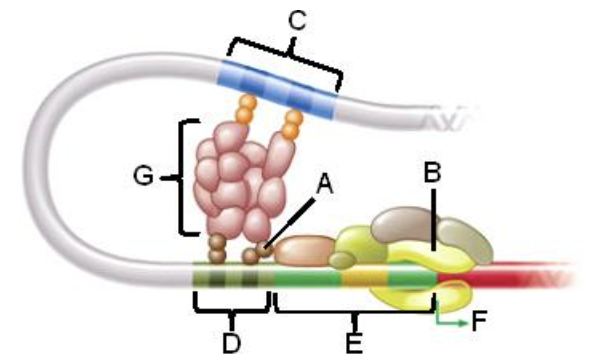
Identify each labeled part of the following illustration of eukaryotic DNA.
a.
a
b.
b
c.
c
d.
d
e.
e
f.
f
g.
g
a - activators

Identify each labeled part of the following illustration of eukaryotic DNA.
a.
a
b.
b
c.
c
d.
d
e.
e
f.
f
g.
g
g - coactivator multiprotein complex

Identify each labeled part of the following illustration of eukaryotic DNA.
a.
a
b.
b
c.
c
d.
d
e.
e
f.
f
g.
g
e - promoter
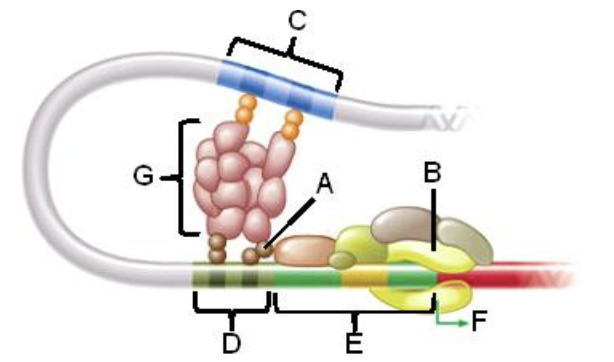
Identify each labeled part of the following illustration of eukaryotic DNA.
a.
a
b.
b
c.
c
d.
d
e.
e
f.
f
g.
g
f - transcription initiation site
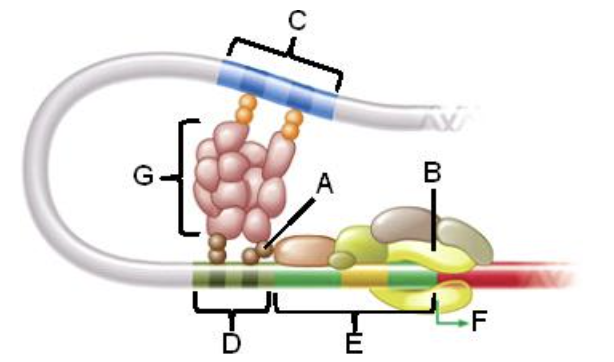
Identify each labeled part of the following illustration of eukaryotic DNA.
a.
a
b.
b
c.
c
d.
d
e.
e
f.
f
g.
g
c - enhancer
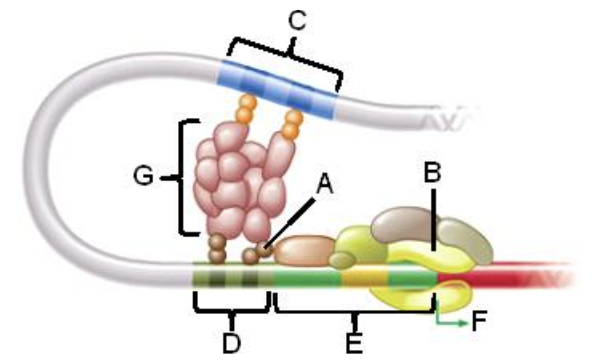
Identify each labeled part of the following illustration of eukaryotic DNA.
a.
a
b.
b
c.
c
d.
d
e.
e
f.
f
g.
g
d - proximal promoter region

Identify each labeled part of the following illustration of eukaryotic DNA.
a.
a
b.
b
c.
c
d.
d
e.
e
f.
f
g.
g
b - RNA polymerase

Identify each labeled part in the following illustration of the lac operon.
a.
a
b.
b
c.
c
d.
d
e.
e
f.
f
g.
g
h.
h
i.
i
j.
j
k.
k
e - lacZ
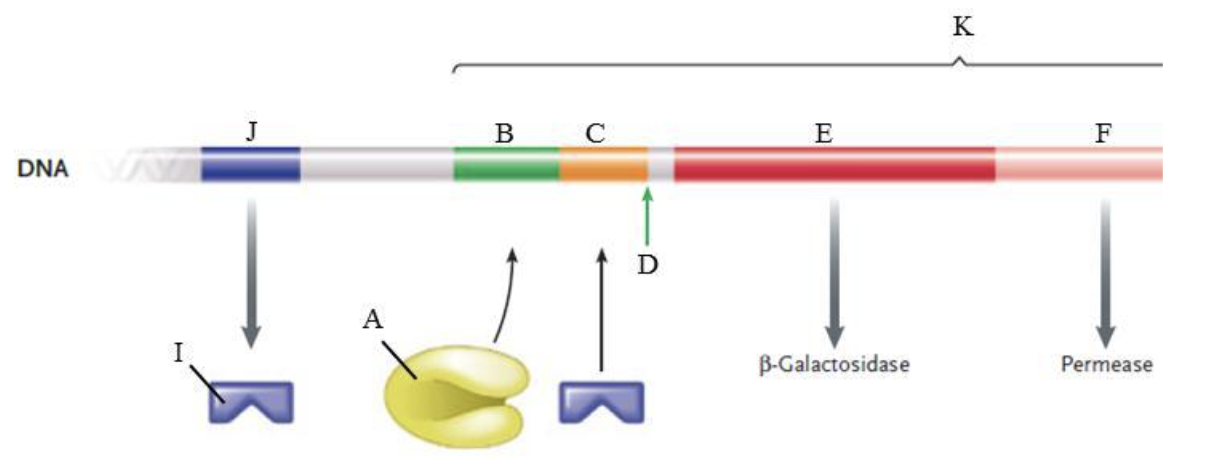
Identify each labeled part in the following illustration of the lac operon.
Figure 16.2 (questions 80-90)
a.
a
b.
b
c.
c
d.
d
e.
e
f.
f
g.
g
h.
h
i.
i
j.
j
k.
k
b - promoter

Identify each labeled part in the following illustration of the lac operon.
Figure 16.2 (questions 80-90)
a.
a
b.
b
c.
c
d.
d
e.
e
f.
f
g.
g
h.
h
i.
i
j.
j
k.
k
f - lacY

Identify each labeled part in the following illustration of the lac operon.
Figure 16.2 (questions 80-90)
a.
a
b.
b
c.
c
d.
d
e.
e
f.
f
g.
g
h.
h
i.
i
j.
j
k.
k
h - transcription termination site
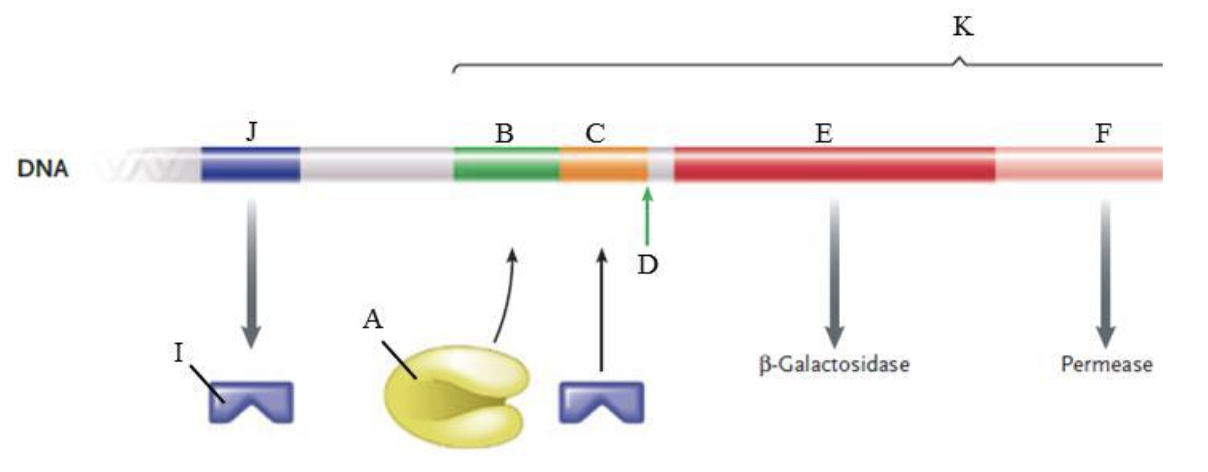
Identify each labeled part in the following illustration of the lac operon.
Figure 16.2 (questions 80-90)
a.
a
b.
b
c.
c
d.
d
e.
e
f.
f
g.
g
h.
h
i.
i
j.
j
k.
k
j - lacI
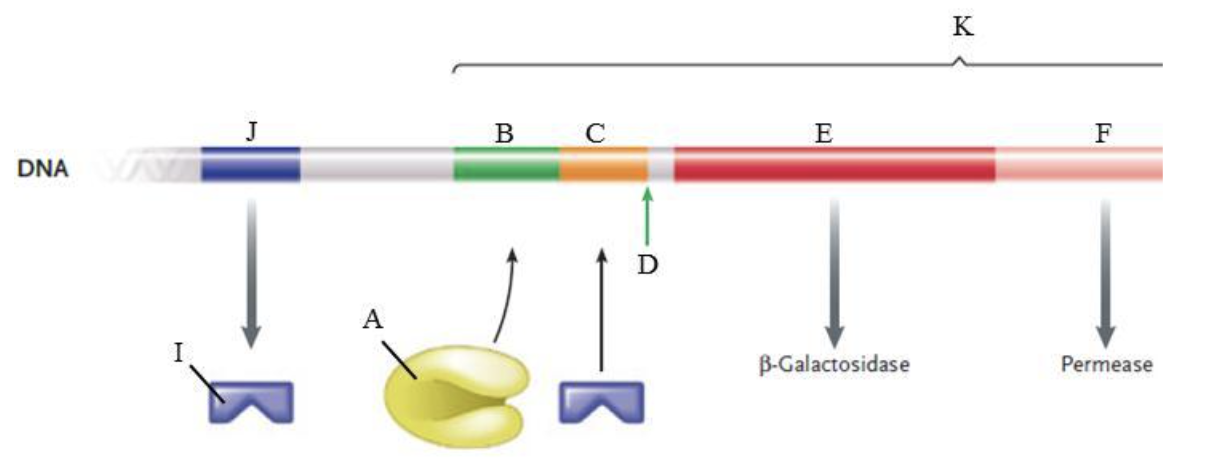
Identify each labeled part in the following illustration of the lac operon.
Figure 16.2 (questions 80-90)
a.
a
b.
b
c.
c
d.
d
e.
e
f.
f
g.
g
h.
h
i.
i
j.
j
k.
k
k - lac operon
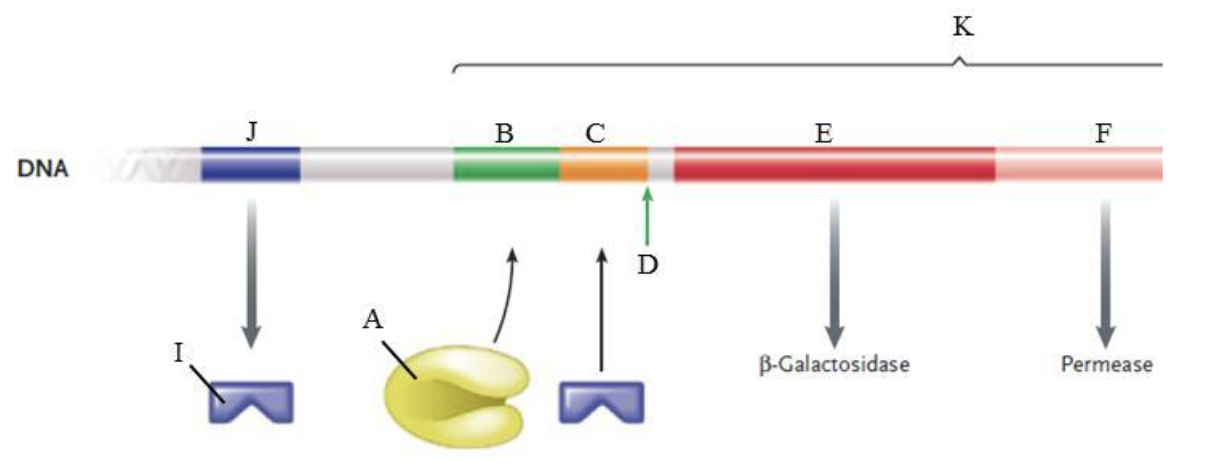
Identify each labeled part in the following illustration of the lac operon.
Figure 16.2 (questions 80-90)
a.
a
b.
b
c.
c
d.
d
e.
e
f.
f
g.
g
h.
h
i.
i
j.
j
k.
k
i - lac repressor

Identify each labeled part in the following illustration of the lac operon.
Figure 16.2 (questions 80-90)
a.
a
b.
b
c.
c
d.
d
e.
e
f.
f
g.
g
h.
h
i.
i
j.
j
k.
k
g - lacA

Identify each labeled part in the following illustration of the lac operon.
Figure 16.2 (questions 80-90)
a.
a
b.
b
c.
c
d.
d
e.
e
f.
f
g.
g
h.
h
i.
i
j.
j
k.
k
c - operator

Identify each labeled part in the following illustration of the lac operon.
Figure 16.2 (questions 80-90)
a.
a
b.
b
c.
c
d.
d
e.
e
f.
f
g.
g
h.
h
i.
i
j.
j
k.
k
a - RNA polymerase

Identify each labeled part in the following illustration of the lac operon.
Figure 16.2 (questions 80-90)
a.
a
b.
b
c.
c
d.
d
e.
e
f.
f
g.
g
h.
h
i.
i
j.
j
k.
k
d - transcription initiation site
Explain the difference between benign and malignant tumors.
In benign tumors, the cells have dedifferentiated into a less specialized state. The cells remain in a single mass and do not invade surrounding tissues. For this reason, they are generally not life-threatening. Malignant tumors, in contrast, are disruptive to the surrounding tissues. Like benign tumors, they are comprised of dedifferentiated cells. Due to the disruptive nature of malignant tumors and their ability to metastasize, they are life-threatening.
Compare DNA methylation to histone acetylation.
DNA methylation and histone acetylation are two types of transcriptional regulation. Histone acetylation is a highly reversible way of granting transcriptional machinery access to a promoter. In histone acetylation, acetyl groups are added to specific amino acids in histone tails to loosen the association of histones with the DNA. DNA methylation silences gene expression by methylating cytosine bases in DNA; a process that is reversible. Both histone acetylation and DNA methylation are epigenetic phenomena that can be preserved from one generation to the next.
Explain the concept of combinatorial gene regulation in eukaryotes.
Gene transcription is activated by the binding of transcription factors to promoters and other regulatory sequences. Different genes require different combinations of transcription factors for their activation, and each transcription factor can be involved in the activation of multiple genes.
Assume that a bacterial cell produces a Lac repressor that is able to bind to the operator sequence of the lac operon but cannot bind allolactose. Explain the effect on transcription of the lac operon is the presence and absence of lactose.
The Lac repressor binds the operator in the absence of lactose to prevent transcription of the lac operon. However, when lactose is present, allolactose normally binds the repressor, removing the repressor from the operator and allowing transcription to occur. In this mutant bacterial cell, the repressor cannot bind allolactose. Therefore, there will be no transcription even in the presence of lactose because the repressor will remain bound to the operator.
Explain how dicer and miRISC are involved in the production and function of miRNAs.
Pre-miRNA exists in a stem-loop structure after it is transcribed. The pre-miRNA is exported to the cytoplasm where dicer removes the loop to produce a short double-stranded RNA molecule. A protein complex binds to the double-stranded RNA, and an enzyme in the complex degrades one of the RNA strands. The miRNA and the complex form the miRNA-induced silencing complex (miRISC). miRNA in the miRISC binds to target mRNAs that have complementary or nearly complementary base sequences in their 3¢ UTRs. If the pairing is imperfect, translation of that mRNA is blocked. If the pairing is perfect, the mRNA is destroyed.
Describe the relationships between induction, determination, and differentiation.
Induction is when a group of cells causes another group of cells to follow a certain developmental pathway. Induction leads to determination, which is the process that establishes a cell’s developmental fate to become a particular cell type. Once a cell is determined, it differentiates to become that particular cell type, establishing a cell-specific pattern.
Many breast cancers are associated with mutations in the BRCA1 gene. Explain the difference between sporadic and familial breast cancer caused by this gene at a molecular level.
In order to develop breast cancer from a mutation in the BRCA1 gene, both copies of the gene must be mutated. In sporadic breast cancer, the cell originally has two normal copies of the gene, but over time, a mutation arises in one copy and then the other. In familial cancer, an individual inherits one normal copy of the gene and one mutant copy. Therefore, a cell only needs to acquire a mutation in the one normal copy of the gene for cancer to develop.
The default state for the lac operon is "off" while the default state for the trp operon is "on". Explain this difference in regulation and the mechanism of control via the repressor proteins.
The lac operon's function is to allow a cell to use lactose as an energy source. Thus, the operon only needs to be expressed when lactose is present in the environment. Consequently, the Lac repressor normally binds to the operator, preventing transcription. However, when lactose is present, allolactose will bind to the repressor, thereby preventing the repressor from binding to the operator. When the repressor is not bound to the operator, RNA polymerase is able to transcribe the lac operon.
The trp operon's function is to allow the bacterial cell to synthesize tryptophan, which is an amino acid used as a building block in protein synthesis. The cell must make tryptophan unless it is available in the environment. Therefore, the trp operon is on unless there is tryptophan available in the environment. When tryptophan is available, it binds to the Trp repressor and activates it, causing the repressor to bind to the operator and inhibit transcription of the operon.
Compare gene regulation in prokaryotes and eukaryotes, and explain the benefits of each regulatory arrangement.
In prokaryotes, the entire organism consists of a single cell. Because prokaryotes do not contain membrane-bound organelles (such as the nucleus), the processes of transcription and translation are not separated. Thus, transcription and translation can occur almost simultaneously, and gene expression can be altered very quickly to respond to changing environmental conditions. Since translation can begin as soon as a transcript begins to be produced, the major form of gene expression control is at the level of transcription. In contrast, in eukaryotic organisms, the regulation is more complicated. Regulation of gene expression in eukaryotes must account for the complexity of eukaryotes: eukaryotic DNA is organized into nucleosomes, eukaryotes produce large numbers and types of cells, and the processes of transcription and translation are separated by the nuclear envelope in eukaryotes. By regulating gene expression at multiple stages (i.e., transcriptional, posttranscriptional, translational, and posttranslational), eukaryotic organisms can coordinate cell division, differentiation, body development, and normal cellular functions.
Compare the functions of maternal effect genes, segmentation genes, and homeotic genes in Drosophila.
Maternal effect genes are expressed in the mother and the transcripts are stored in the egg in patterns that dictate the polarity of the developing embryo (anterior-posterior and dorsal-ventral). Segmentation genes are responsible for subdividing the embryo into particular regions. Homeotic genes specify what each segment will become by regulating the development of structures such as wings, antennae, legs, and eyes on particular segments.