Food Studies Unit 3 AOS 1
 Call Kai
 Learn
 Practice Test
 Spaced Repetition
 Match
 Flashcards
 Knowt Play
1/44

There's no tags or description
Looks like no tags are added yet.
45 Terms
Hunger
the physiological need by the body to eat
appetite
desire to eat
satiety
the feeling of fullness after having an adequate amount of food.
macronutrients
vital energy yielding nutrients that are required in large quantities by the body
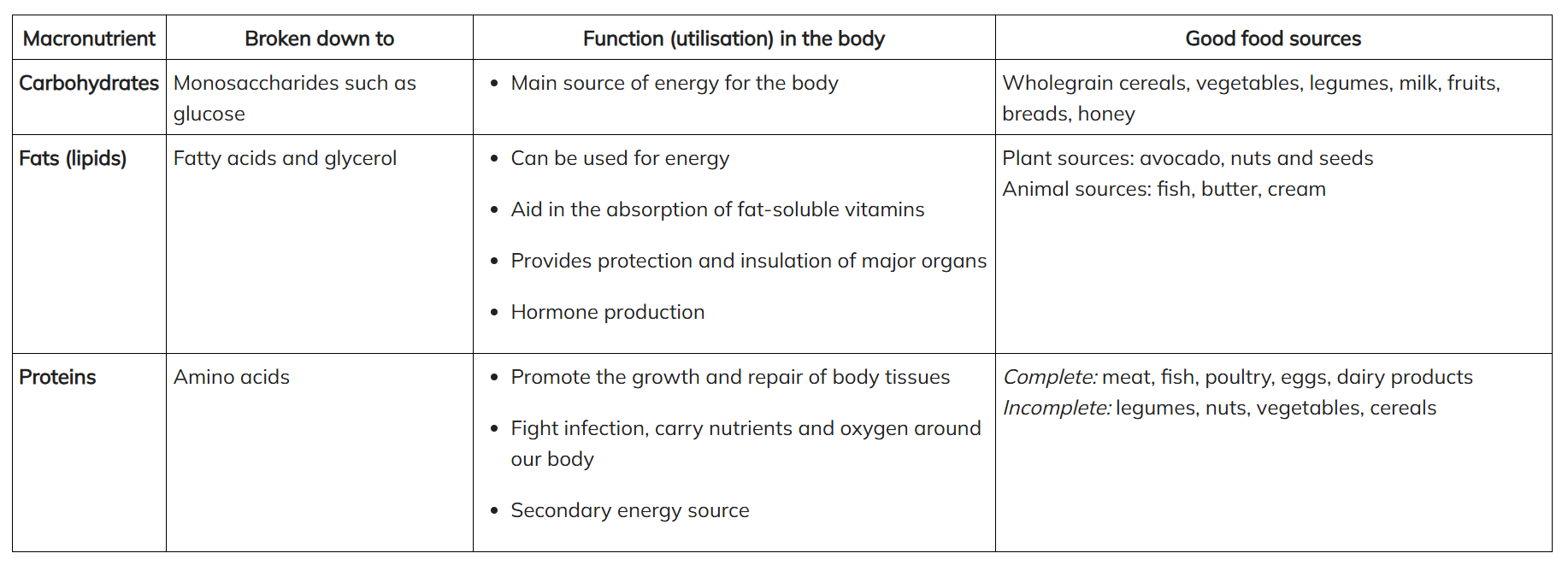
micronutrients
nutriends required by the body in small amounts
how sensory properties of food enhance food appreciation
communicate to our brain enhancing our likes and dislikes for a range of foods. a foods sensory properties are what we enjoy, our appreciation of that food is enhanced.

digestion
is the process of breaking down food into smaller substances
absorption
how the nutrients are absorbed by the digestive system
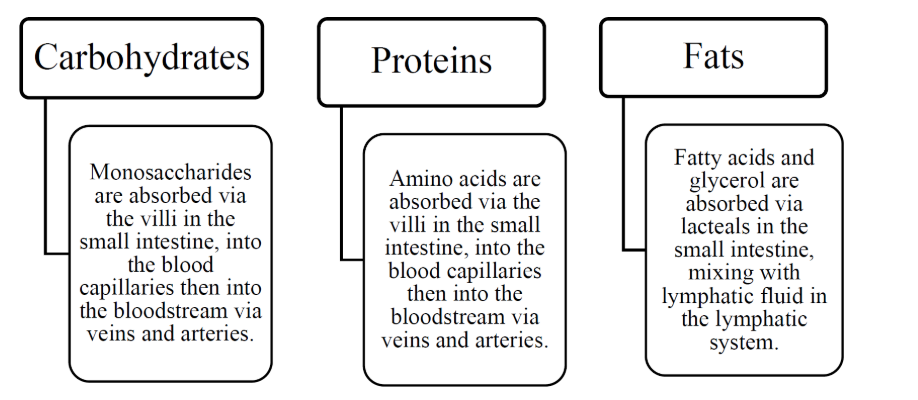
utilisation
how the body uses nutrients
Mechanical digestion
involves physically breaking down food substances into smaller particles to more efficiently to undergo chemical digestion.
mechanical digestion process
actions of tongue and mouth manipulate the food into a bolus which is then pushed into the back of the mouth by the tongue then swallowing occurs
bolus moves to stomach and through the process of peristalsis in which the stomach walls churn the stomach the bolus mixes with gastric juices, the bolus becomes paste known as chyme.
peristalsis continues pushing the chyme through the small and large intestine, with the remaining waste is when gathered in the colon and released thought the anus.
digestive enzymes

enzymatic hydrolysis
Enzymatic hydrolysis refers to the process in which enzymes, with the incorporation of a water molecule, break the chemical bonds that hold macronutrients together.
An example is salivary amylase breaking down starch into simple sugars in the presence of a water molecule.
Chemical digestion
action of enzymes chemically digest food into even smaller molecules that can be absorbed & utilized by the body.
chemical digestion process
polysaccharides are broken down into glucose during the process of enzymatic hydrolysis
salivatory amylase beings the process of breaking down starch into simple sugars with the presence of water.
The gastrointestinal tract

eyes and nose
seeing and smelling food prepares body to digest it.
mouth begins to water
hunger pangs caused by stomach contractions
mouth
Where digestion beings. Biting and chewing starts to break down food. Helps food to form a bolus.
Tongue pushes bolus around the mouth and into the pharynx for swallowing.
Salivary glands moisten bolus and help with swallowing. Release salivary amylase.
oesophagus
Peristalsis (muscle contractions) push bolus into the stomach.
stomach
Peristalsis continues churning the bolus.
Bolus forms a paste known as chyme. Chyme is released into the small intestine.
small intestine
Liver produces bile.
Gall bladder stores and releases bile into the small intestine.
Pancreas releases enzymes pancreatic lipase, pancreatic amylase and protease.
Villi walls absorb nutrients for transport around the body.
large intestine
Peristalsis pushes the chyme through the large intestine and gathers any remaining waste including indigestible fibre.
Carbohydrate digestion
Digestion |
|
carbohydrate absorption
Carbohydrates in the small intestine that have been digested into monosaccharides glucose, fructose and galactose. Glucose, fructose and galactose are absorbed by the villi in the small intestine and transported to the liver.
The Glycaemic Index, or GI, is based on how rapidly the carbohydrate is digested and absorbed into the bloodstream.
carbohydrate utilization
The liver releases glucose into the bloodstream when needed. Glucose not needed is converted to glycogen and stored in the liver. Glucose is used as energy in the body.
Insulin, secreted from the pancreas, helps glucose move from the bloodstream into cells.
protein digestion
Mechanical digestion begins in the mouth where proteins are broken down by chewing and biting.
Chemical digestion begins in the stomach. The stomach releases gastric juice that contains hydrochloric acid and the enzyme pepsin. Hydrochloric acid activates pepsin and begins the denaturing (breakdown) of protein into amino acids. This process is called enzymatic hydrolysis.
Pepsin deactivates in the presence of chyme because it is too acidic. So, in the small intestine, pancreatic protease is released from the pancreas. Pancreatic protease helps to further break down the proteins into amino acids and peptides.
protein absorption
Amino acids move from the small intestine via the villi and into the bloodstream. The bloodstream transports the amino acids to cells in the body as needed.
protein ultilsation
Amino acids are used in the body for growth, repair and maintenance of cells. This can include blood cells, muscle cells, hormones, enzymes, bones, connective tissues.
Amino acids assist in energy production and can be used as a secondary energy source as they can be converted to glucose and used as energy.
Amino acids can be classified as essential and non-essential. Essential amino acids are not made in the body, so it is essential that we consume these in the diet. Non-essential amino acids can be produced in the body.
fats digestion
Mechanical digestion begins in the mouth where fats are broken down by chewing and biting.
Chemical digestion starts with the release of lingual lipase in the saliva, but doesn’t start to work until it reaches the stomach as it needs the stomach acid to activate it.
The activation of lingual lipase in the stomach begins the digestion of fats. Fats are broken down into fatty acids and glycerol.
The liver produces bile and mixes with chyme in the small intestine.
Bile, produced by the liver and stored in the gall bladder, acts as an emulsifier in the small intestine. Fats are broken down into smaller globules providing a larger surface area for digestion by lipases.
fats absorption
Fatty acids and glycerol are absorbed into the villi of the small intestine and mix with lymphatic fluid. They move around the lymphatic system and insoluble fats move to blood circulation, or to the liver and are converted to soluble fats.
fats utilization
Fats insulate and protect vital organs, transport fat-soluble vitamins and can be used as a secondary energy source.
Saturated and unsaturated fats are consumed in the diet.
Saturated fats = bad fats, that are found mainly in animal products such as meat, dairy and butter. Excess consumption is linked to high blood cholesterol levels and heart disease.
Unsaturated fats = (polyunsaturated and monounsaturated) good fats mainly found in plant-based foods such as avocados, nuts and seeds, olive oils, fish. These help to lower cholesterol levels and are linked to good heart health and brain function.
villi
increase the surface area which helps the body to absorb nutrients.
blood vessels that absorb nutrients such as carbohydrates and proteins
lymph vessels absorb fats
fibre
soluble: completely broken down by bacteria in large intestine giving body many health benefits
insoluble: slows glucose absorption from small intestine into bloodstream, therefore feeling of fullness.
gut microbiota
are defined as the many microorganisms that live in the human digestive system.
GBA on physical health
when under stress, the bodies F-F-F response is activated
when activated, digestion slows as the body uses its energy resources on the threat at hand, which increases gut sensitivity
disturbances to gut microbiota has been proven to affect digestion, sleep and immune system
GBA on physical health
A mentally healthy brain enables an individual to positively form opinions, make decisions and use logic.
Mental health is about wellness of the mind rather than illness and is associated with low levels of stress and anxiety, positive self-esteem, and a sense of confidence and optimism.
Probiotics
Probiotics are live microorganisms that include good bacteria and yeast.
When present in our gut, probiotics make it a less inviting place for bad bacteria to survive. Probiotics consumed in the diet help keep the good bacteria in the gut microbiota high.
We can help our gut out by consuming probiotics to enhance the good bacteria present in our bodies.
Key food sources include yoghurt, kimchi, tempeh and kombucha.

prebiotics
Prebiotics are a form of dietary fibre that promote the growth of good bacteria in our gut. A diet rich in pre- and probiotics is beneficial for gut health.
Prebiotics come from carbohydrates, mostly fibre (resistant starch), and are not digested in the small intestine. Instead, they provide fuel to feed the gut’s microbiota.
Good bacteria must be present in your gut’s microbiota to gain the health benefits of prebiotics. When increasing probiotics in the diet, be sure to consume fibre-rich foods full of prebiotics to feed them!

The Australian Dietary Guidelines
To achieve and maintain a healthy weight, be physically active and choose amounts of nutritious food and drinks to meet your energy needs.
Enjoy a wide variety of nutritious foods from these five groups every day
Limit intake of foods containing saturated fat, added salt, added sugars and alcohol.
Encourage, support and promote breastfeeding.
Care for your food; prepare and store it safely.
The principles of research
Credible sources
The Guidelines development was overseen by trustworthy, non-biased independent sources who are experts in their field.
Evidence-based information
The process to create The Australian Dietary Guidelines ensured the information was evidence-based, up to date, reliable and accurate.
Accurate analysis of data
Analysed data was sourced through large-scale systematic literature reviews using high-quality methodology.
The Australian Guide to Healthy Eating
is depicted as a circle that is sectioned into five, representing the five food groups. Each section is a different size, representing the proportion that particular food group should contribute to the everyday diet.
includes spreads, oils and discretionary choices that should be limited to only sometimes and in small amounts.
recommends that people should drink plenty of water.
Prevention of lifestyle diseases

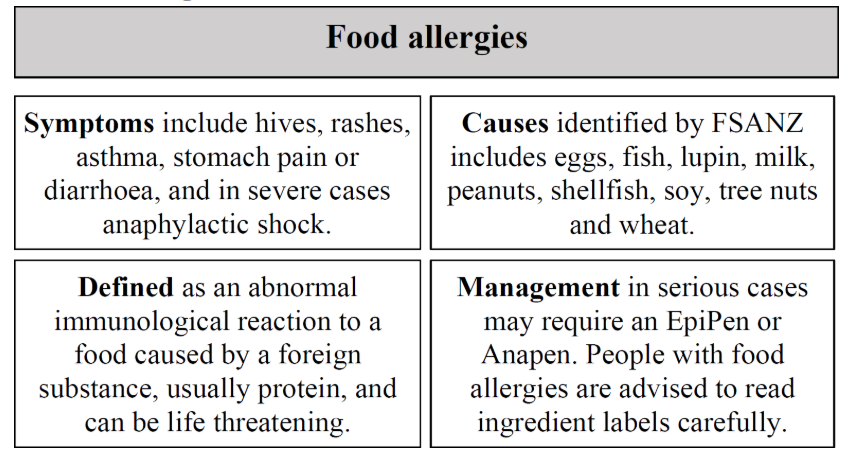
food allergies
food intolerances

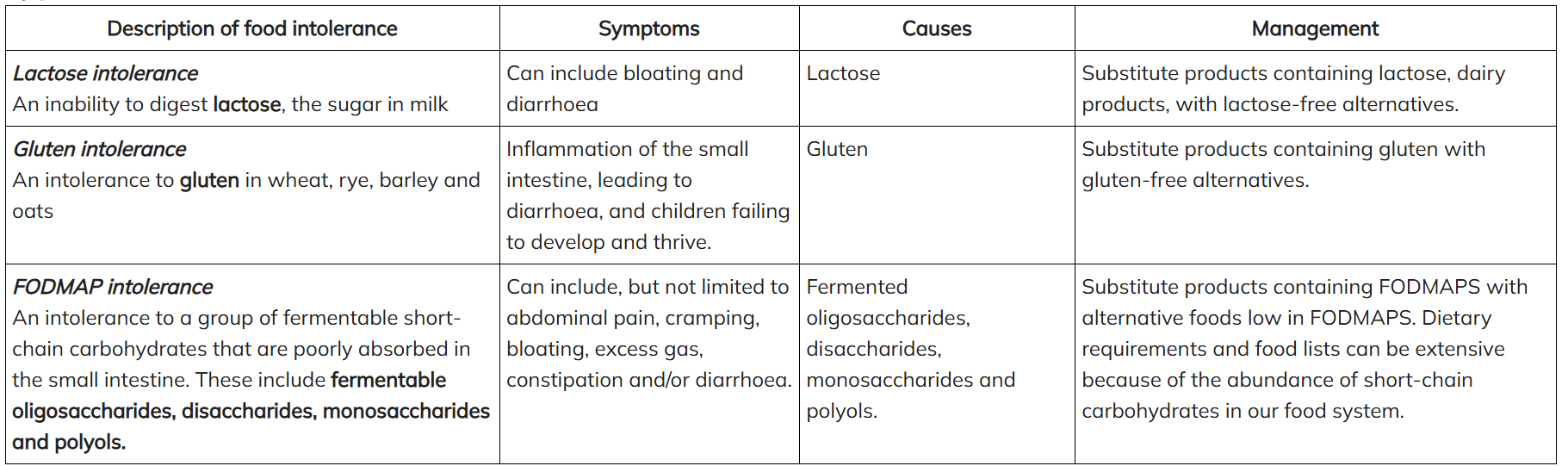
types of intolerances