Flashcards AP Biology Unit 1
 Call Kai
 Learn
 Practice Test
 Spaced Repetition
 Match
 Flashcards
 Knowt Play
1/99

There's no tags or description
Looks like no tags are added yet.
100 Terms
Element
A pure substance made of only one kind of atom

Compound
A substance made up of atoms of two or more different elements joined by chemical bonds

Capillary Action
The movement of a liquid through or along another material against an opposing force, such as gravity.

Chemical Bonds
An attraction between two atoms resulting from a sharing of outer-shell electrons or the presence of opposite charges on the atoms. The bonded atoms gain complete outer electron shells.
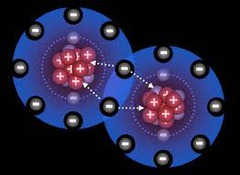
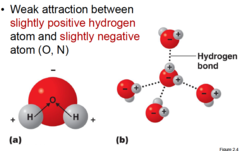
Hydrogen Bonds
Very weak bonds; occurs when a hydrogen atom in one molecule is attracted to the electrostatic atom in another molecule.
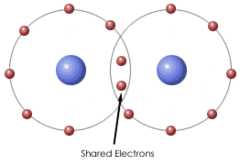
Covalent Bonds
Bonds created by sharing electrons with other atoms.
Ionic Bonds
Formed when one or more electrons are transferred from one atom to another.

Cohesion
Attraction between molecules of the same substance.
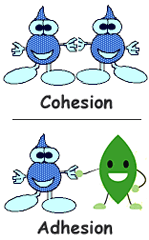
Adhesion
An attraction between molecules of different substances.

Solute
A substance that is dissolved in a solution.

Solution
A homogeneous mixture of two or more substances

Solvent
A liquid substance capable of dissolving other substances.
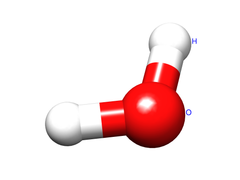
Molecule
A group of atoms bonded together.
Acid pH
A substance that increases the hydrogen ion concentration of a solution.

Base pH
A substance that decreases the hydrogen ion concentration in a solution.

Functional Groups
The components of organic molecules that are most commonly involved in chemical reactions

Organic Compounds
Compounds that contain carbon
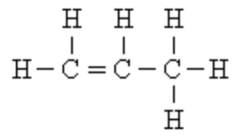
Hydrocarbons
Compounds composed of only carbon and hydrogen

ATP
(adenosine triphosphate) main energy source that cells use for most of their work

Macromolecule
A very large organic molecule composed of many smaller molecules

Dehydration Synthesis (Condensation Reaction)
A chemical reaction in which smaller molecules combine to make bigger ones by removing water (anabolism)

Hydrolysis
Breaking down complex molecules by the chemical addition of water (catabolism)

Diasaccharides
A sugar molecule consisting of two monosaccharides linked by dehydration synthesis. Maltose, Lactose, Sucrose and Fructose.

Monosaccharides
Single sugar molecules - (CHO in a 1:2:1 ratio)
glucose, fructose, galactose
Polysaccharides
Carbohydrates that are made up of more than two monosaccharides

Amino Acids
a simple organic compound containing both a carboxyl (—COOH) and an amino (—NH2) group.

Polypeptide
A polymer (chain) of many amino acids linked together by peptide bonds.

Cellulose
polysaccharide consisting of glucose monomers that reinforces plant-cell walls
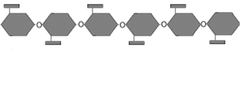
Glycogen
storage form of glucose in liver and muscle

Hydrophobic
Nonpolar molecules that repel water.
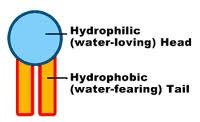
Hydrophilic
molecules that are attracted to water.

Glycocidic Linkage
A covalent bond formed between two monosaccharides by a dehydration reaction.

Starch
A storage polysaccharide in plants consisting entirely of glucose.

Primary Structure
The first level of protein structure; the specific sequence of amino acids making up a polypeptide chain. (peptide bond)

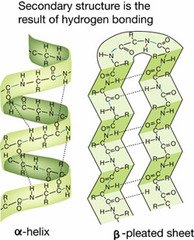
Secondary Structure
The second level of protein structure; the regular local patterns of coils or folds of a polypeptide chain. (hydrogen bond)
Tertiary Structure
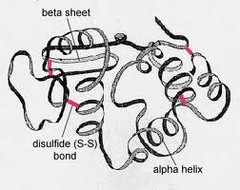
The third level of protein structure; the overall, three-dimensional shape of a polypeptide due to interactions of the R groups of the amino acids making up the chain.
Quaternary Structure
The fourth level of protein structure; the shape resulting from the association of two or more polypeptide subunits.

Lipid
Class of molecules that do not include true polymers.

Fat
A large lipid molecule made from an alcohol called glycerol and three fatty acids; a triglyceride. Most fats function as energy-storage molecules.

Fatty acid
Building Blocks of Lipids

Amino Acid
compound with an amino group on one end and a carboxyl group on the other end. Building block of protein.

Phospholipid
a lipid that contains phosphorus and that is a structural component in cell membranes

Denature
A change in the shape of a protein (such as an enzyme) that can be caused by changes in temperature or pH (among other things).

Protein
An organic compound that is made of one or more chains of amino acids and that is a principal component of all cells

Steroid
lipid molecule with four fused carbon rings

What is the relationship between monomers and polymers?
Monomers build polymers
Polymers are composed of monomers

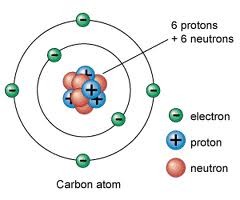
Why is Carbon important?
Found in ALL organic compounds, is a versatile element since it can make 4 bonds
Can create carbon chain or carbon ring structures
What are the main elements found in organic compounds?
C, H, O, N, P, (S)

Carbohydrates include what?
Sugars and polymers of sugars
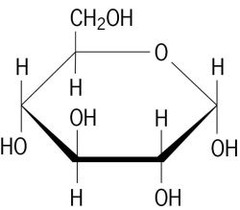
What is the basic structural formula for a carbohydrate?
Basic structural formula = (CH2O)n
Example: Glucose = C6H12O6 = (CH2O)6
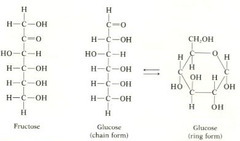
How are carbohydrates made?
Made by monosaccharides joined through glycosidic linkage (creates polysaccharides)

Examples of carbohydrates include
sugars and starches

The names of many carbohydrates tend to end in
-ose

What is the monomer of carbohydrates?
Monosaccharide (Glucose, fructose, galactose)

What is the function of a carbohydrate?
Short Term Energy Source
Plants use starch as an energy-storage polysaccharide
Animals use glycogen as an energy-storage polysaccharide
. Structural Support
Plants have cellulose as a major component of their cell walls
Arthropods have chitin in their exoskeletons and fungi have this in their cell walls.

Lipids are primarily made from
Carbon and hydrogen (hydrocarbons)

Type of fat with no double bonds between carbons, tends to be solids at room temp. and is produced by animals
Saturated fat
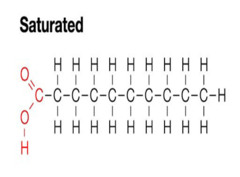
Type of fat with some double bonds between carbon. Creates a kink in the fatty acid chain. Tends to be liquid at room temp. and is produced by plants
Unsaturated Fat

What atoms are found in lipids?
C, H, O

If there was a monomer for lipids what we it be considered as?
Fatty acid chains and glycerol are considered to be the building blocks for lipids

What are the functions of lipids?
1. Long-term Energy Storage
Stores twice as many calories per gram as carbohydrates
2. Protection and Insulation
Protects vital organs
Keeps animals warm
3. Chemical Messengers
Many hormones are lipids
Steroids are made of 4 fused carbon rings
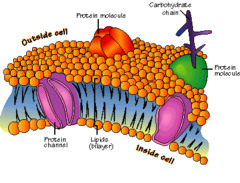
4. Cell Membrane Structure
Phospholipids are a major component of cell membranes.
What is the monomer of Proteins
Amino acids

The primary structure of a protein
Unique sequence in which amino acids are joined together through peptide bonds (chain of amino acids)

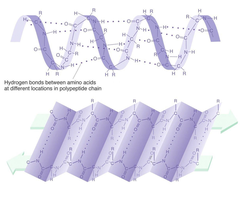
The secondary structure of a protein
Due to TWO different 3-dimensional shapes that result from hydrogen bonding
α-helix - coiled shape
β-pleated sheet - accordion shape
The tertiary structure of a protein
Results in a globular structure due to interactions between R-groups
hydrophobic interactions
hydrogen bonds
van der Waals forces
disulfide bridges

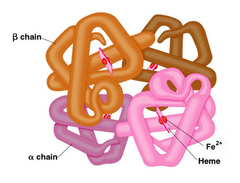
The Quaternary structure of a protein
Not all proteins have this structure!
The association of 2 or more polypeptide chains into one large protein.
Each chain has it's own primary, secondary, and tertiary structure
How can a protein be denatured?
Proteins can be denatured (loss of shape) due to changes in pH, temperature, or extreme salt concentration (salinity).
Causes protein to lose its ability to function!

Carries genetic information that codes for the sequence of amino acids in proteins.
Two major types include DNA and RNA.
ATP is also a nucleic acid used for energy transfer in cells.
Nucleic acids

Contains CHONP and it's monomer is a nucleotide which contains three parts
Nucleic acids

The three parts of a nucleotide include
Three phosphate groups, a pentose sugar, and a nitrogenous base

The function of a nucleic acid is to
Function
Store and transmit genetic information!

The difference between DNA and RNA is
The sugar; DNA is a deoxyribose sugar, RNA is a Ribose sugar

Phosphate group
R-PO4

double helix
The form of native DNA, referring to its two adjacent polynucleotide strands wound into a spiral shape

RNA
A type of nucleic acid consisting of nucleotide monomers with a ribose sugar and the nitrogenous bases adenine (A), cytosine (C), guanine (G), and uracil (U); usually single-stranded; functions in protein synthesis and as the genome of some viruses

DNA
A double-stranded, helical nucleic acid molecule capable of replicating and determining the inherited structure of a cell's proteins

nucleotide
The building block of a nucleic acid, consisting of a five-carbon sugar covalently bonded to a nitrogenous bas and a phosphate group
monosaccharide
The simplest carbohydrate, active alone or serving as a monomer for disaccharides and polysaccharides. Also known as simple sugars, the molecular formulas of monosaccharides are generally some multiple of CH20
fatty acid
a long carbon chain carboxylic acid. fatty acids vary in length and in the number and location of double bonds; three fatty acids linked to a glycerol molecule form fat
steroid
a type of lipid that consists of four carbon rings to which various functional groups are attached
cholesterol
A steroid that forms an essential component of animal cell membranes and acts as a precursor molecule for the synthesis of other biologically important steroids
polysaccharide
A polymer of up to over a thousand monosaccharides, formed by condensation reactions
carbohydrate
A sugar (monosaccharide) or one of its dimers (disaccharides) or polymers (polysaccharides).
Triacylglycerols (triglycerides)
Three fatty acids linked to one glycerol molecule

pyrimidine
one of two types of nitrogenous bases found in nucleotides, characterized by a six-membered ring. Cytosine (C), thymine (T), and uracil (U)

Purine
a nitrogenous base that has a double-ring structure; one of the two general categories of nitrogenous bases found in DNA and RNA; either adenine or guanine

ribose
The sugar component of RNA

chitin
A structural polysaccharide of an amino sugar found in many fungi and in the exoskeletons of all arthropods
peptide bond
the covalent bond between two amino acid units, formed by condensation synthesis

beta pleated sheet
One form of the secondary structure of proteins in which the polypeptide chain folds back and forth, or where two regions of the chain lie parallel to each other and are held together by hydrogen bonds

R groups/side chains
groups that give different amino acids different properties

Monomer
a molecule that can be bonded to other identical molecules to form a polymer.

dimer
a compound whose molecules are composed of two identical monomers

Oligomer
Short chain of monomers that is not long enough to be considered a polymer. Usually a few units connected together.
Polymer
large compound formed from combinations of many monomers

methyl
R-CH3, nonpolar

Amine
R-NH2

Carboxyl
R- COOH (acid)

Phosphate
R- PO4 charge -3

Sulfhydryl
R- SH, polar
