thyroid hormone
 Call Kai
 Learn
 Practice Test
 Spaced Repetition
 Match
 Flashcards
 Knowt Play
1/9

There's no tags or description
Looks like no tags are added yet.
10 Terms
thyroid gland histology
follicle with a single layer of cuboidal epithelial cells, lumen filled with colloid

physiological function of thyroid hormone
growth
metabolism
normal development of CNS
cardiovascular stimulant
normal gonadal function
biochemical actions of thyroid hormone
thermogenesis
carbohydrate metabolism
lipid metabolism
protein metabolism
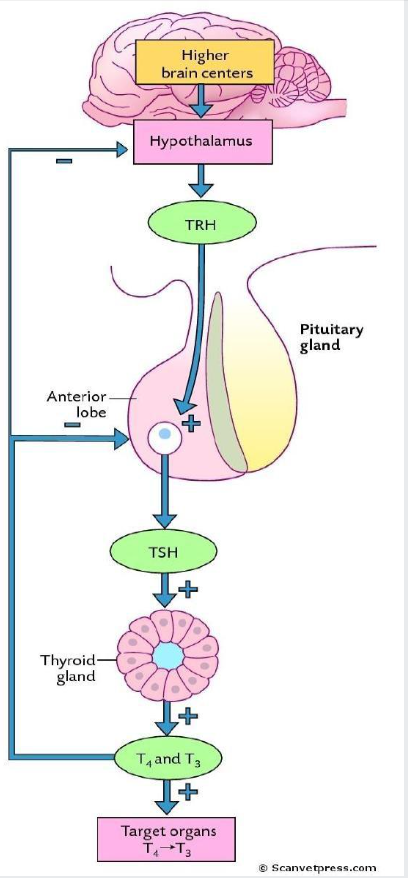
regulation of thyroid hormone
The hypothalamus releases thyrotrophin-releasing hormone (TRH)
TRH stimulates the anterior pituitary to release thyroid-stimulating hormone (TSH).
TSH stimulates the thyroid gland to produce and release thyroxine (T4) and triiodothyronine (T3).
In target tissues, some T4 is converted to biologically active T3.
T3 and T4 exert negative feedback on the hypothalamus and anterior pituitary, reducing TRH and TSH secretion when thyroid hormone levels are in normal range
describe the synthesis of thyroid hormone
Thyroid-stimulating hormone (TSH) from the anterior pituitary acts on follicular cells and stimulates synthesis
Thyroid hormones are synthesised by follicular cells of the thyroid gland, within the follicle’s colloid.
Thyroglobulin is present in the colloid.
Iodine ions are transported from the blood into the colloid
iodine is added to thyroglobulin - process is called iodination.
Iodinated thyroglobulin forms:
Triiodothyronine (T3)
Thyroxine (T4)

describe the release of thyroid hormone
Iodinated thyroglobulin is stored in the colloid within the thyroid follicle
In response to TSH, follicular cells take up iodinated thyroglobulin in vesicles
The vesicles fuse with lysosomes, which break down the thyroglobulin
This releases T3 and T4 from the iodinated thyroglobulin
The hormones pass through the follicular cell into the blood vessel
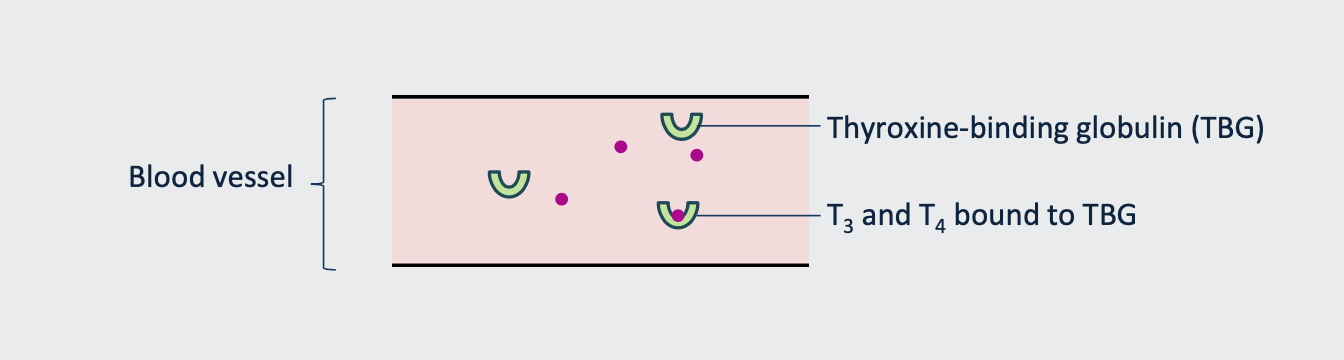
In the blood, T3 and T4 are transported mainly bound to thyroxine-binding globulin (TBG)

circulation and transport of thyroid hormone
after release from the thyroid gland, T3 and T4 enter the bloodstream
they circulate mainly attached to transport proteins (thyroxine binding globulin, albumin and pre-albumin)
T3 is most active form, most T3 is derived from T4 deiodination in peripheral tissues
describe hypothryroidism
suboptimal levels of TH
dysfunction anywhere on the hypothalamus-pituitary-thyroid axis can cause deficiencies
primary - related to thyroid gland itself - causes are lymphocytic thyroiditis, idiopathic atrophy of thyroid gland
secondary - related to the pituitary gland/hypothalamus
plasma TSH is low
clinical signs - decreased appetite but weight gain, bradycardia (slow heart rate as PNS dominant), cold/shiver, skin thickening
describe hyperthyroidism
excessive production of thyroid hormones (T3 and T4)
seen in cats
associated with benign thyroid tumours that increase hormone production
clinical signs - increased appetite but weightloss, increased drinking and urination, stressed/tense, high heart rate, increased body temperature
describe goitre in animals
enlarged thyroid gland (not due to tumour)
euthyroid or hypothyroidism most common
causes: idiopathic, iodine deficiency iodine toxicity, ingestion of goitrogenic plants