Bird Foot Adaptations Flashcards | Quizlet
 Call Kai
 Learn
 Practice Test
 Spaced Repetition
 Match
 Flashcards
 Knowt Play
1/24

There's no tags or description
Looks like no tags are added yet.
25 Terms
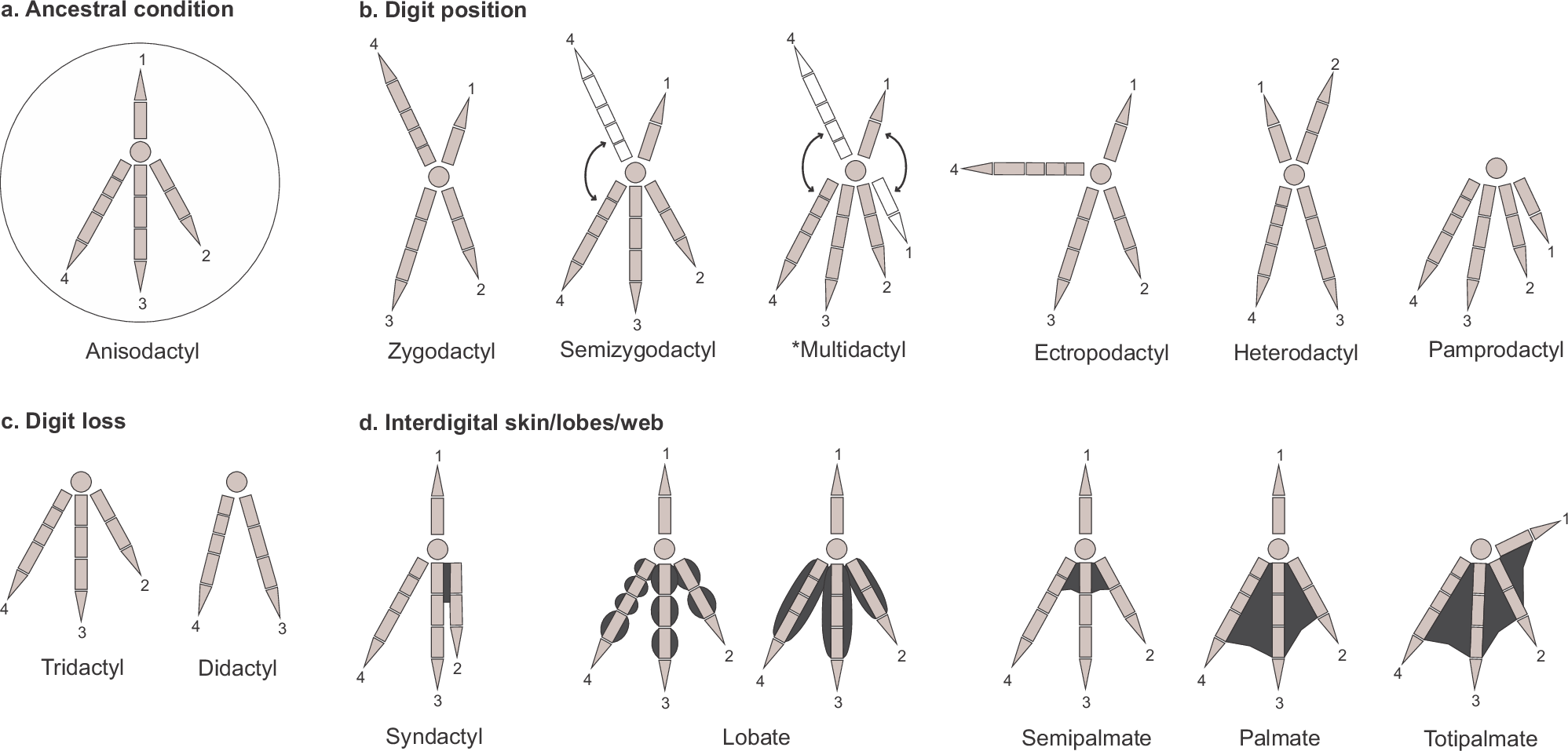
What foot adaptation and function characterize Anatidae (Ducks, geese and swans)?
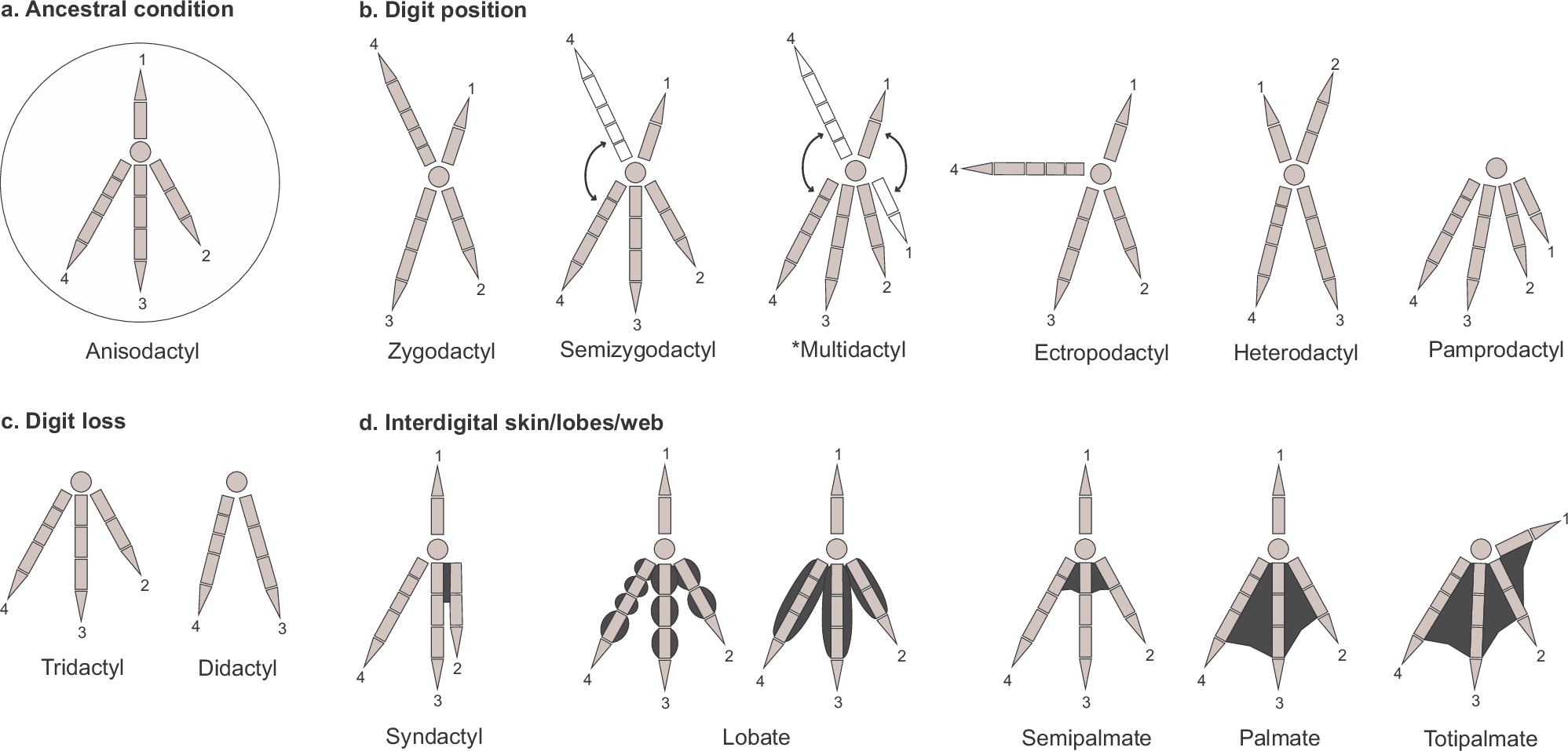
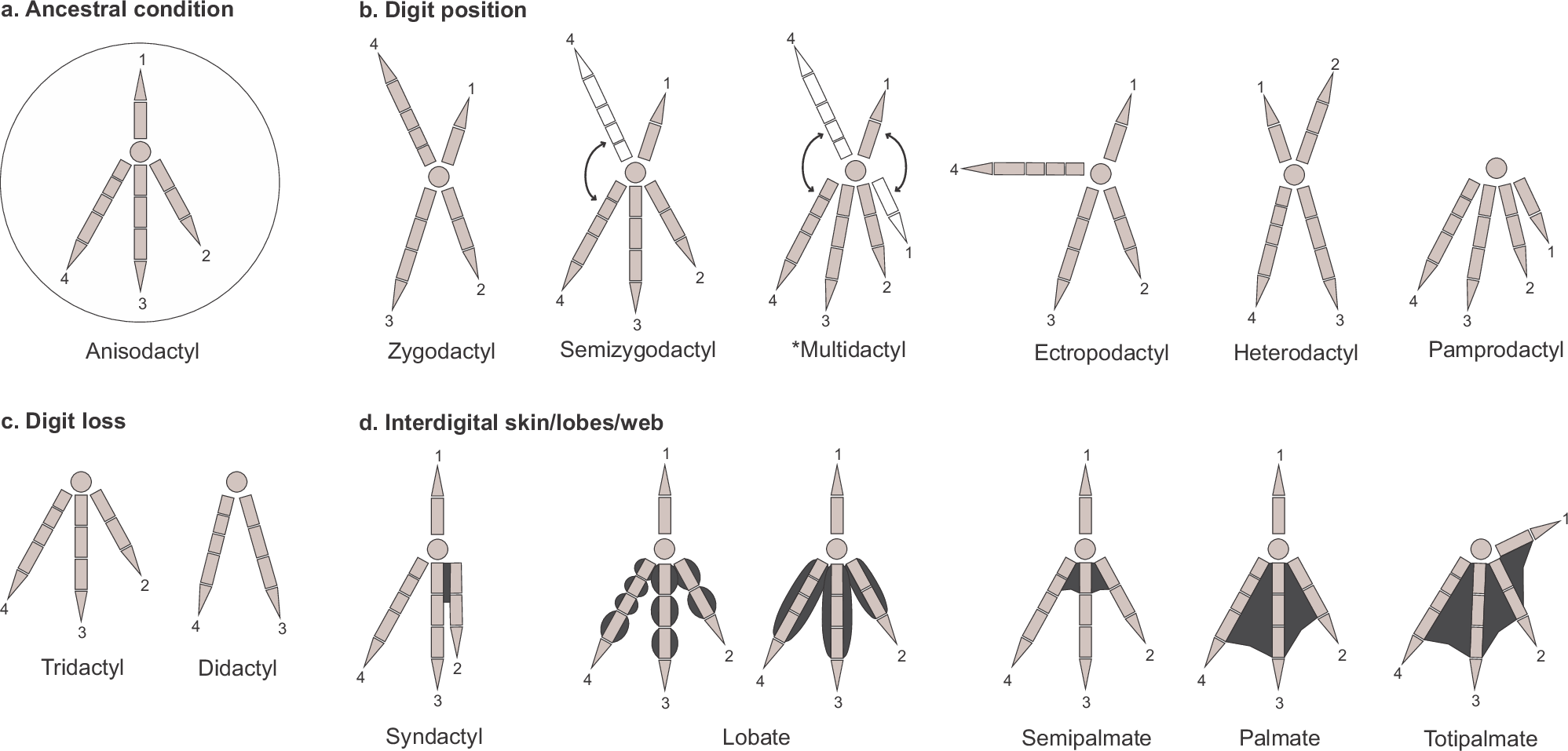
Palmate: Three front toes joined by webbing for swimming.

What foot adaptation and function characterize Podicipedidae (Grebes)?
Lobate: Individual toe lobes provide propulsion through water.

What foot adaptation and function characterize Apodidae (Swifts)?
Pamprodactyl: All four toes can point forward to help cling to vertical surfaces.

What foot adaptation and function characterize Odontophoridae (New World quail)?
Anisodactyl: Provides stability for walking and scratching.
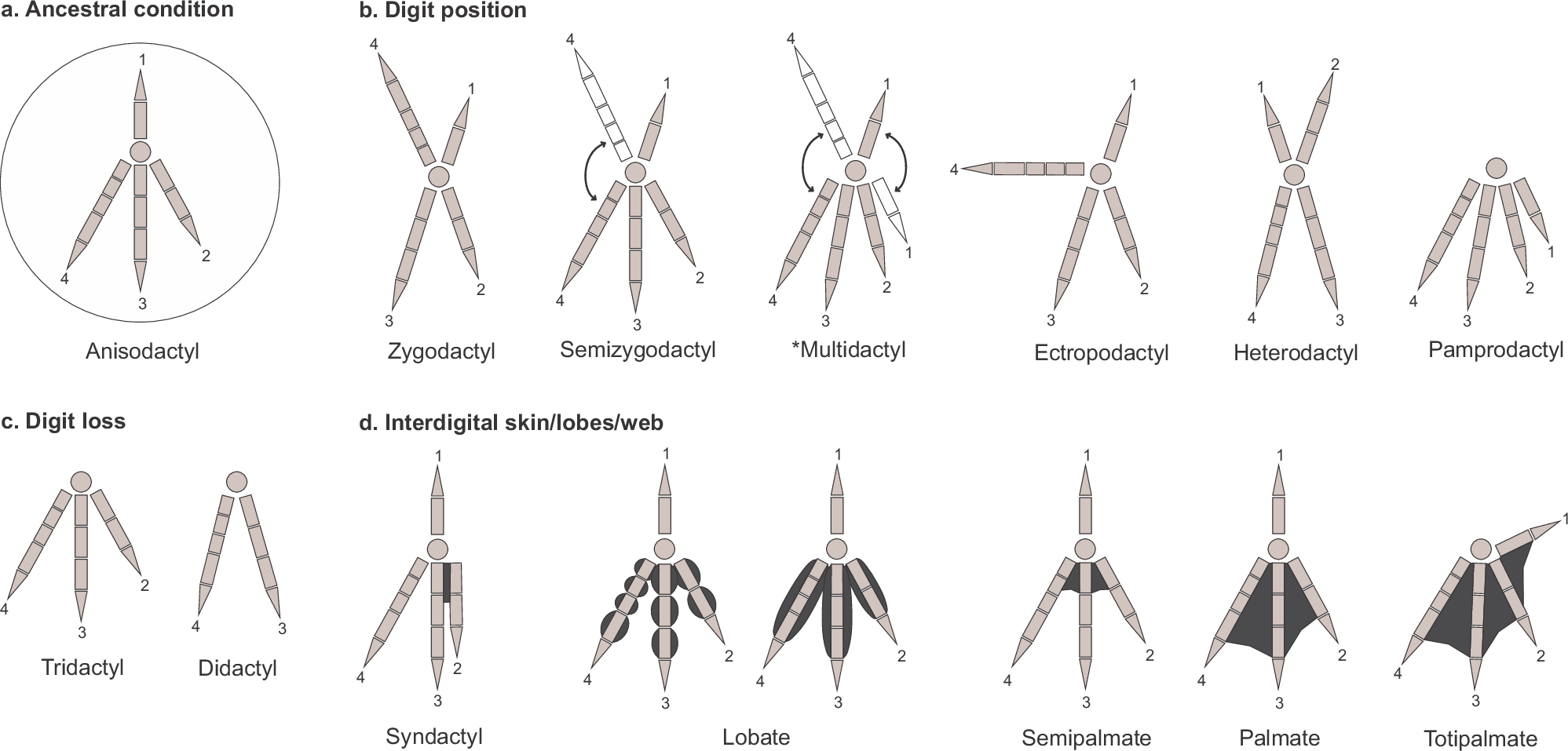
What foot adaptation and function characterize Phasianidae (Grouse and pheasants)?
Anisodactyl: Supports walking and scratching on the ground.
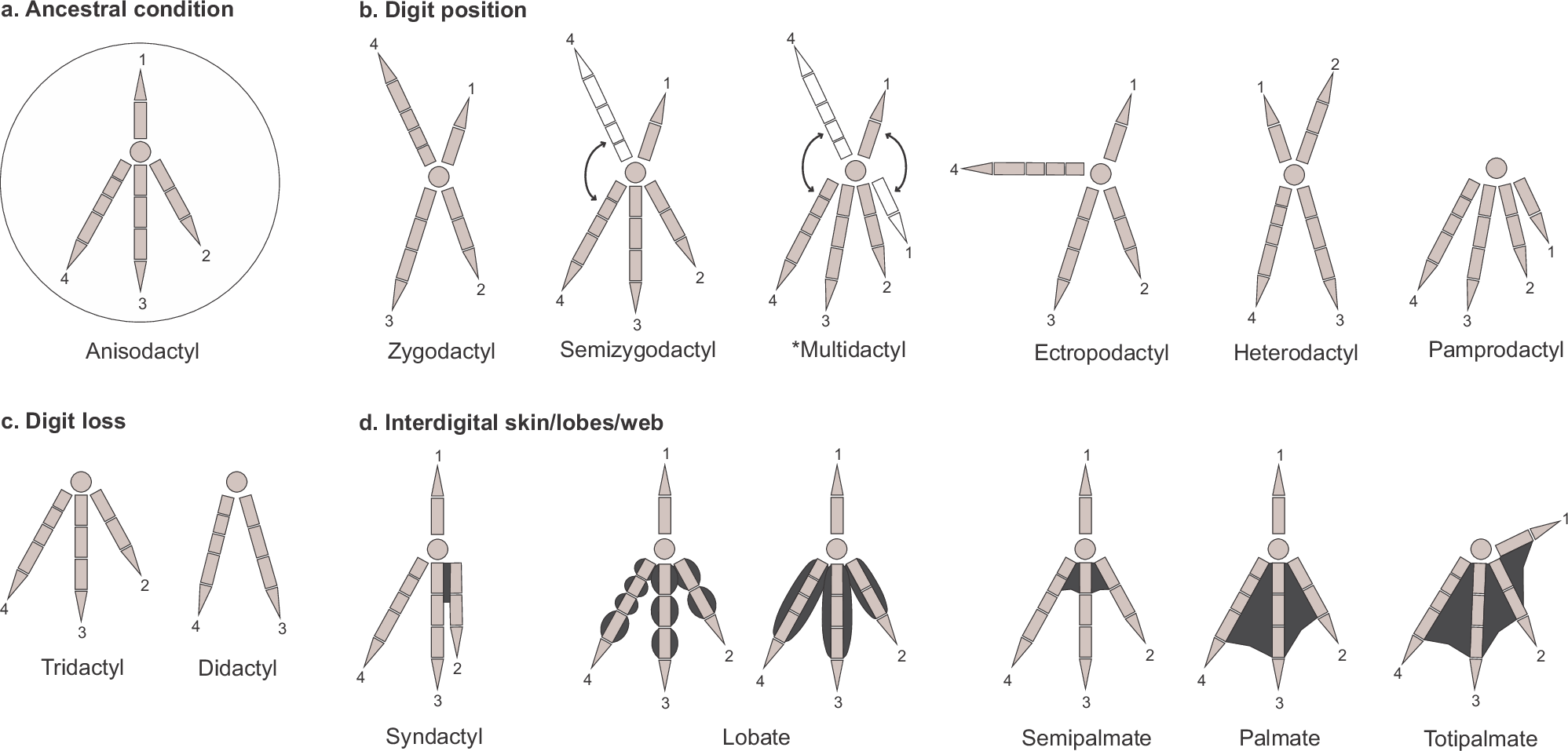
What foot adaptation and function characterize Columbidae (Pigeons and doves)?
Anisodactyl: Allows a secure grip when perching.

What foot adaptation and function characterize Trochilidae (Hummingbirds)?
Anisodactyl: Provides a grip for perching; feet are not adapted for walking.
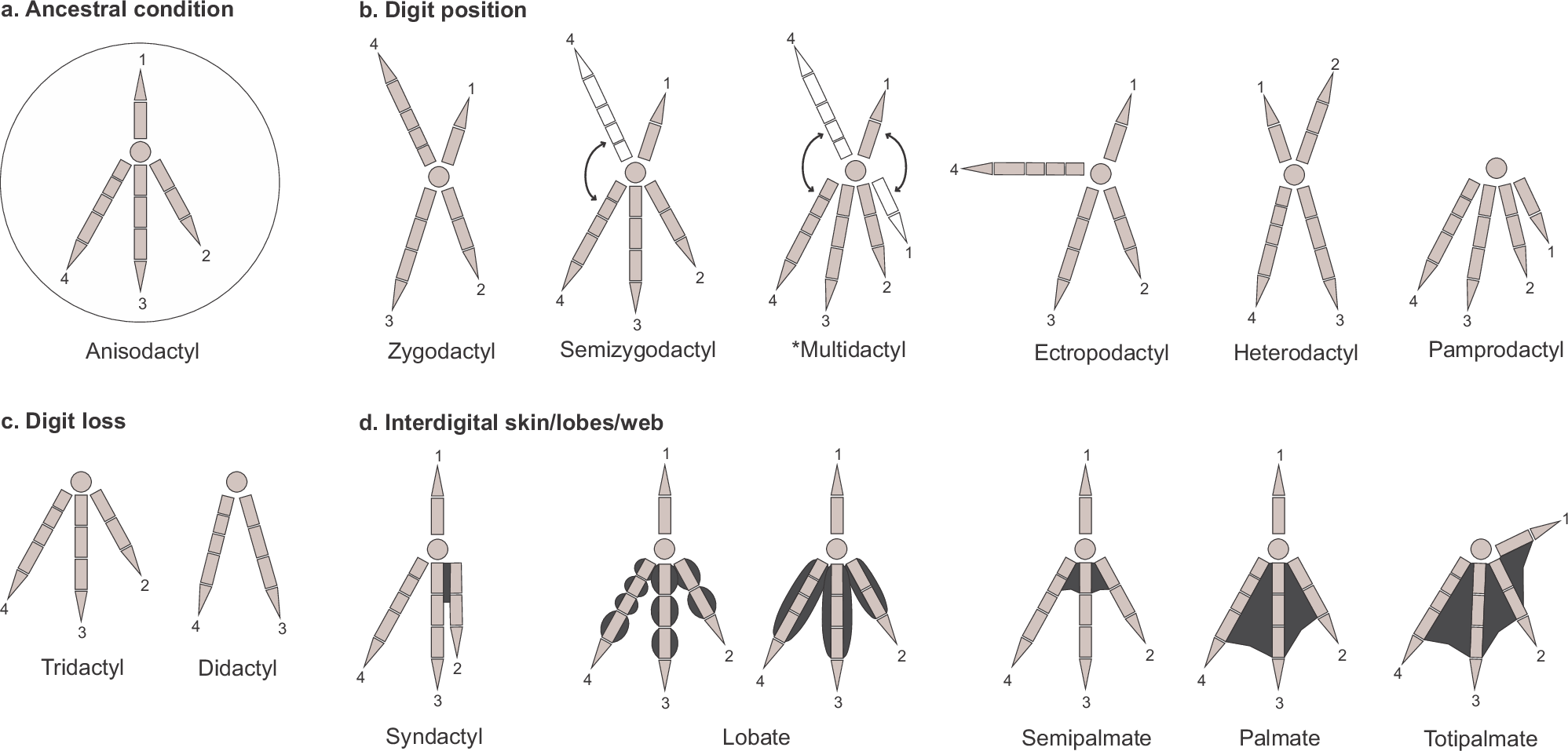
What foot adaptations and functions characterize Rallidae and Coots?
Rallidae: Long toes help distribute weight over soft ground. Coots: Lobed toes help with swimming and walking over soft surfaces.
What foot adaptation and function characterize Gruidae (Cranes)?
Anisodactyl: Long toes provide balance while walking in wetlands.

What foot adaptation and function characterize Haematopodidae (Oystercatchers)?
Anisodactyl: Provides stability while walking along rocky shorelines.

What foot adaptations and functions characterize Scolopacidae and phalaropes?
Scolopacidae: Supports walking and foraging in shallow water and mud. Phalarope: Lobed toes provide propulsion while swimming.

What foot adaptation and function characterize Alcidae (Auks, murres and puffins)?
Palmate: Webbed toes provide propulsion while swimming and diving.

What foot adaptation and function characterize Gaviidae (Loons)?
Palmate: Webbed toes provide powerful propulsion underwater.

What foot adaptation and function characterize Phalacrocoracidae (Cormorants)?
Totipalmate: All four toes are connected by webbing for powerful swimming.

What foot adaptation and function characterize Pelecanidae (Pelicans)?
Totipalmate: All four toes are connected by webbing for propulsion in water.

What foot adaptation and function characterize Ardeidae (Bitterns and herons)?
Anisodactyl: Long, spread-out toes provide balance and distribute weight while wading.

What foot adaptation and function characterize Cathartidae (New World vultures)?
Anisodactyl: Toes provide grip while perching and walking.

What foot adaptation and function characterize Pandionidae (Ospreys)?
Semizygodactyl: Reversible outer toe allows a two-forward, two-backward grip on slippery fish.

What foot adaptation and function characterize Accipitridae (Hawks, eagles and allies)?
Anisodactyl: Strong toes and talons grip and capture prey.

What foot adaptation and function characterize Tytonidae (Barn owls)?
Semizygodactyl: Reversible outer toe helps grip prey.

What foot adaptation and function characterize Strigidae (Typical owls)?
Semizygodactyl: Reversible outer toe allows different toe arrangements for gripping prey and perching.
What foot adaptation and function characterize Alcedinidae (Kingfishers)?
Syndactyl: Two forward toes are partially fused, providing stability when perching.

What foot adaptation and function characterize Picidae (Woodpeckers and sapsuckers)?
Zygodactyl: Two toes forward and two backward provide a strong grip while climbing tree trunks.

What foot adaptation and function characterize Falconidae (Falcons)?
Anisodactyl: Strong toes and talons help capture and hold prey.

What foot adaptation and function characterize PASSERIFORMES?
Anisodactyl: Three toes forward and one backward provide a secure grip for perching.