Exercises 21, 22, 26 - Reflexes, General Senses, Special Senses: Olfaction & Gustation
 Call Kai
 Learn
 Practice Test
 Spaced Repetition
 Match
 Flashcards
 Knowt Play
1/88

There's no tags or description
Looks like no tags are added yet.
89 Terms
reflex
is a rapid and predictable automatic responses to stimuli
Can be innate (intrinsic)
Can also be learned (acquired)
Mediated over neural pathways is called ?
reflex arcs
include all of those reflexes that involve stimulation of the skeletal muscles by the SNS
Somatic reflexes
Activates smooth muscle, cardiac muscles, and glands
are mediated by the ANS and we usually aren’t aware of them
autonomic reflexes
Regulate body functions such as digestion, elimination, blood pressure, salivation, and sweating
it is the site of the stimulus
Receptor
transmits the stimulus
Sensory neuron
in spinal cord
integration center
conducts to impulses to the effector
motor. neuron
muscle or gland
effector

identify this structure
dorsal root ganglion

identify this structure
unipolar neuron/ sensory or afferent neuron

identify this structure
multipolar neuron/ motor or efferent neuron

identify this structure
integration center multipolar neuron/ interneuron

identify this structure
effector (could be muscle, gland etc)

identify this structure
receptors
what do the somatic reflexes affect
they affect skeletal muscle
a somatic, spinal reflex that occurs in response to stretching within a muscle
stretch reflex
what happens when you strike the patellar or achilles tendon
it causes the muscle spindles within the associated muscle to stretch and increase their nerve activity
Causes the muscle fibers to contract and resist the stretching
how to preform a bicep reflex and what’s its normal response
Tap the biceps brachii tendon near its insertion at the radial tuberosity
normal response is flexion at the elbow

what reflex is this
bicep reflex

what reflex in this
triceps reflex

what reflex is this
ankle-jerk reflex
how to preform a tricep reflex and what’s its normal response
Tap the triceps brachii tendon near its insertion at the olecranon of the ulna
Normal response is extension at the elbow
how to preform a ankle-jerk reflex and what’s its normal response
Tap the calcaneal tendon
normal response is plantar flexion
come back to slide 13
Superficial cord reflexes
Result from pain & temperature changes in skin and mucosal

what reflex is this
plantar reflex
normal response toes curl down in adults

what reflex is this
babinski reflex
normal response toes curl up but abnormal in adults

corneal reflex
Cranial nerve V (trigeminal)
Initiating this reflex causes the subject to blink
Function is to protect the eye

gag reflex
Cranial nerves IX (glossopharyngeal) and X (vagus)
The posterior pharyngeal wall elevates as the pharyngeal muscles contract, and the subject gags
what does the autonomic reflex affect
affects smooth muscles, cardiac muscle, and glands etc
Pupillary light reflex
Ipsilateral constriction of the pupil
Reflex occurs on the same side stimulated
consensual reflex
Contralateral constriction of the pupil
Reflex occurs on the opposite side stimulated
what are sensory receptors
The dendritic endings of sensory neurons
May be free or encapsulated
Specialized cells that associate with the dendrites of sensory neurons
Exteroceptors
Senses stimuli external to the body, Found close to the body surface
touch, pain, and vision
Interoceptors or visceroceptors
Senses stimuli arising from within the body
visceral pain, nausea, stretch pressure
Proprioceptors
Senses the position & movements of the body
Located in inner ear, muscles, tendons & joints
Muscle spindles & golgi tendon organs
Thermoreceptors
cold and warm receptors
Mechanoreceptors
Physical deformation: vibration, touch, pressure, stretch, tension, hearing, balance
Located in skin, viscera, joints, inner ear
Chemoreceptors
Respond to chemicals: odor, taste, dissolved chemicals in body fluids
Nociceptors
Respond to tissue damage: trauma or ischemia

identify this structure
free nerve ending
Bare dendrites of a sensory neuron and most abundant in epithelia & connective tissue
Associated with pain, thermal, tickle, itch and some touch

identify this structure
hair follicle receptor
Also called a root hair plexus
Free nerve ending entwines in the hair follicle
what cell Sense hair movements

identify this structure
tactile corpuscle (meissner’s corpuscle)
Heavy touch, pressure, stretching of the skin, joint movements
Located in the dermis, subcutaneous, ligaments, tendons and joint capsules
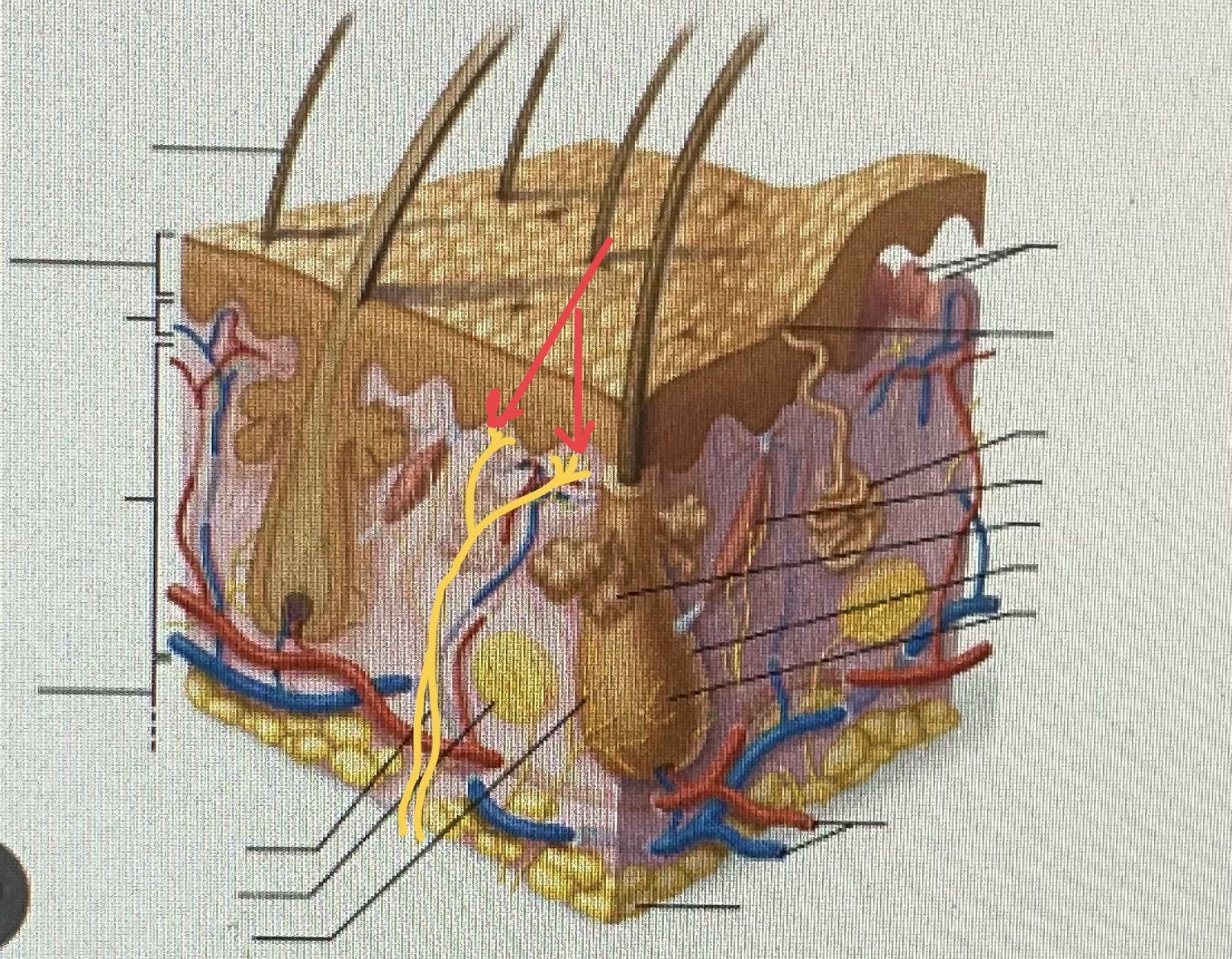
identify this structure
tactile discs (merkel disc)
Sense light touch: texture, shapes, edges
Merkel discs=merkel cell + free nerve ending
Located in the stratum basale of the epidermis

identify this structure
Bulbous corpuscle (Ruffini corpuscle)
Heavy touch, pressure, stretching of the skin, joint movements
Located in the dermis, subcutaneous, ligaments, tendons and joint capsules

identify this structure
lamellar corpuscle (pacinian corpuscle)
Deep pressure, stretch, tickle, vibration
Deep in the dermis and mainly found in the hands, genital, feet, breast, & some organs
Separate Receptor Cells
Receptor cell synapses with a sensory neuron
Found in the skin, inner ear and taste buds
GENERAL SENSORY RECEPTORS OF THE SKIN are also called..
cutaneous receptors

what cell structure is this
Tactile (Meissner) corpuscle
Heavy touch, pressure, stretching of the skin, joint movements
Located in the dermis, subcutaneous, ligaments, tendons and joint capsules

what cell structure is this
Lamellated (Pacinian) corpuscles
Deep pressure, stretch, tickle, vibration
Deep in the dermis and mainly found in the hands, genital, feet, breast, & some organs

what cell structure is this
Bulbous (Ruffini) corpuscles
Heavy touch, pressure, stretching of the skin, joint movements
Located in the dermis, subcutaneous, ligaments, tendons and joint capsules

Identify this structure
Dermal papilla

Identify this structure
Epidermal ridges

what cell structure is this
Tactile disc (Merkel disc )
Sense light touch: texture, shapes, edges
Merkel discs=merkel cell + free nerve ending
Located in the stratum basale of the epidermis
what is gustation
is a taste and is a chemical sense
chemicals dissolved in salvia
what is olfaction
it is smell and is a chemical sense
chemicals are dissolved in fluids of the nasal membranes
Olfactory epithelium
contains the olfactory receptors which are localized on the roof of the nasal cavity and are covered by mucus
They are bipolar neurons with cilia
Supporting cells
epithelial surround the olfactory receptors
basal cells
stem cells
olfactory glands
responsible for mucus production
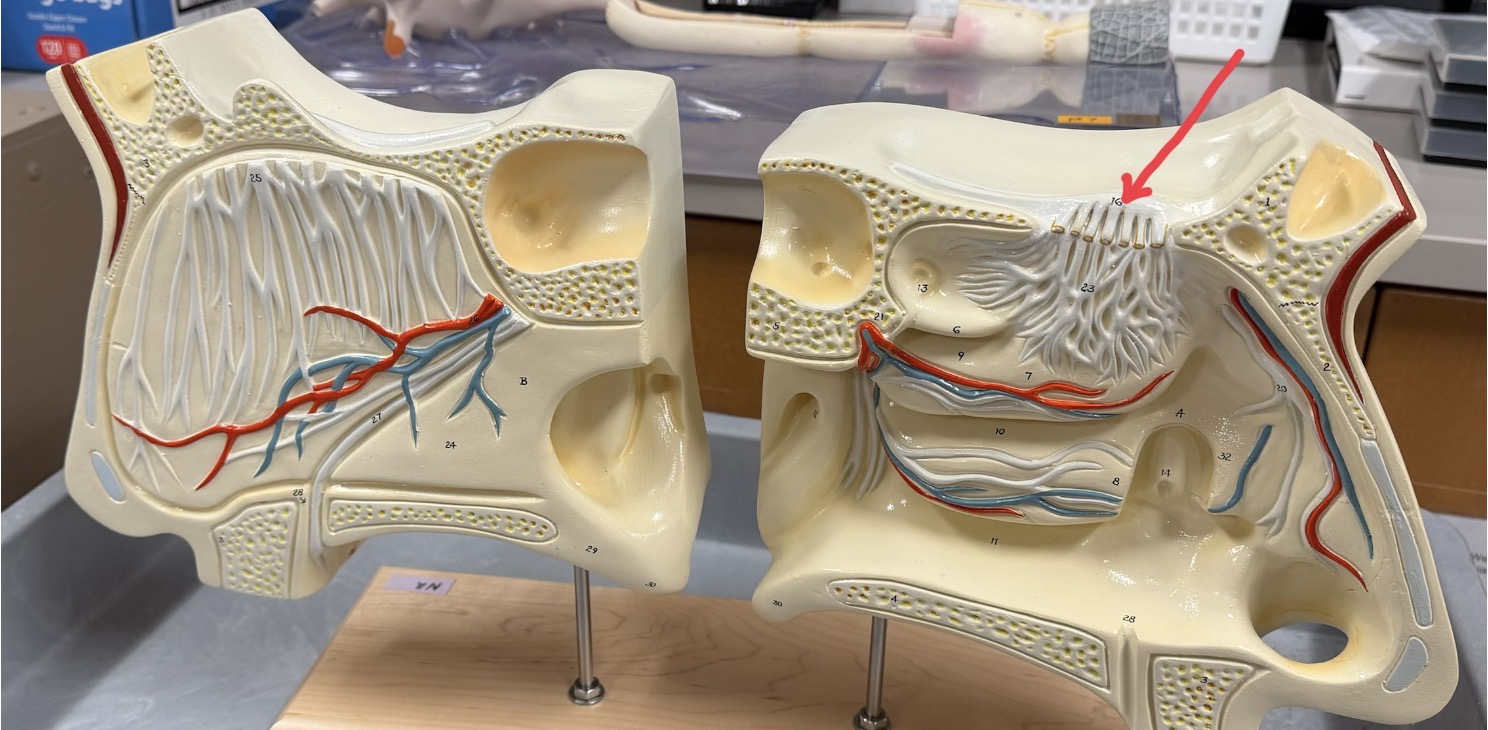
what structure is this
olfactory bulb

what structure is this
olfactory nerve
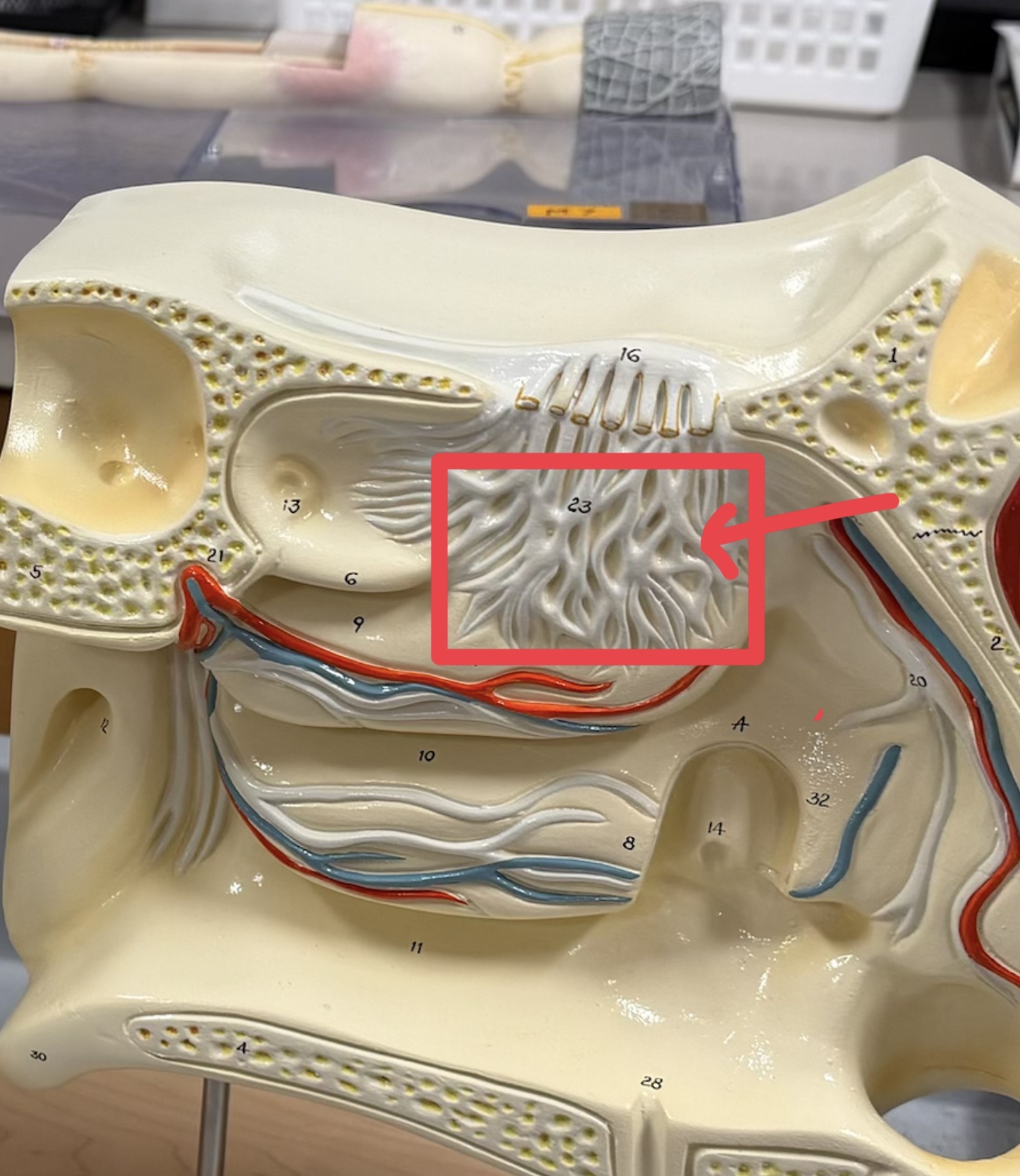
what structure is this
olfactory epithelium

what structure is this
cribriform plate of ethmoid bone

what structure is this
olfactory tract
what does the tongue contain
lingual papillae

what structure is this and what’s its function
Foliate
on the sides of the tongue containing the taste


what structure is this and what’s its function
fungiform papillae
mushroom like containing the taste buds


what structure is this and what’s its function
circumvallate
In a V formation on the back of the tongue. Contain taste buds.


what structure is this and what’s its function
filiform
numerous but do not contain any taste
gustatory cells or taste cells
Several nerve fibers enter each taste bud and supply sensory nerve endings to each gustatory cell
When chemicals contact the gustatory hairs of a gustatory cell, the gustatory cell depolarizes
what is a gustatory receptor cell
receptor cell for taste
what is a transitional cell
developing gustatory cells
What is gustatory hair
the sensitive part of the taste cells

what cell structure is this and what’s it function
taste pores
opening for the gustatory hair

what cell structure is this
circumvallate papilla

what cell structure is this
foliate papilla

What cell structure is this
Taste buds

what cell structure is this
filiform papillae

what cell structure is this
taste pores

Facial
anterior 2/3 of the tongue
glossopharyngeal
posterior 1/3 of the tongue
trigeminal
will carry all the other information such as texture and temperature
sweet receptors
respond to Na+ (metallic) ions
sour receptors
respond to acidic solutions
bitter receptors
respond to alkaloids

umami (delicious) receptors
respond to the amino acid glutamate found in cheese and meat
Gustatory discrimination
is from the combined effects of
smell, texture and temperature on taste