7: Structural and Functional Unit of Life
 Call Kai
 Learn
Learn Practice Test
 Spaced Repetition
 Match
Match Flashcards
 Knowt Play
1/45

There's no tags or description
Looks like no tags are added yet.
Name | Mastery | Learn | Test | Matching | Spaced | Call with Kai | Chat |
|---|
No analytics yet
Send a link to your students to track their progress
46 Terms

Cells
Smallest living subunit of organism, most between 1-100 microns in diameter
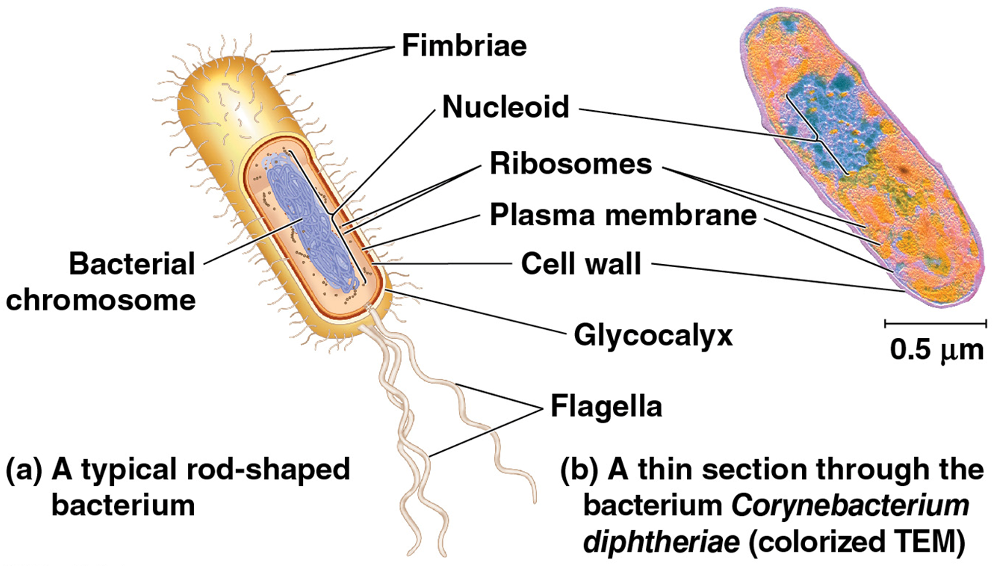
Prokaryotic Cells
Don’t have true membrane-enclosed nucleus, no membrane bound organelles, nucleoid, small/circular DNA, unicellular
Nucleoid
Region where DNA is concentrated

Eukaryotic Cells
Membrane-bound organelles that compartmentalize their functions, nuclear envelope, large, linear DNA, unicellular/multicellular
Nuclear Envelope
Double membrane nucleus is bound in
Cellular Specialization
Degree of relaxed constraints on cell size + shape to allow cellular specialization within multicellular organisms
Genomic DNA
Regardless of specialization, genomic DNA contained within nucleus remains largely unchanged
Observable Differences
Arise from differential gene expression across specialized cell types, results in production of different proteins that leads to different structures + functions
Odd Prokaryote
Thiomargarita magnifica, unicellular organisms up to 2 cm length, membrane enclosed nucleoids, large water filled sac

Energy & Matter Transformations
System of internal membranes synthesize + modify proteins/lipids/carbs
Genetic Information Storage & Transmission
DNA in nucleus contains instructions to make proteins, ribosomes are sites of protein synthesis

Selective Permeability
Ability to differentiate between different types of molecules only allowing some molecules through, some properties stem from intrinsic diffusion rates for different molecules across membrane, activity of various protein-based membrane transporters affects relative rates of movement of various substances across biological membrane
Phospholipids
Make most of membranes of all cellular compartments, amphipathic molecules with hydrophobic tails + hydrophilic heads
Fluid Mosaic
Characterization of membranes of all compartments, dynamic structures composed of phospholipids, proteins, carbohydrates, + cholesterol
Catabolic Reactions
Break down large macromolecules into smaller molecules + releases energy
Anabolic Reactions
Use energy generated in catabolic reactions + raw materials gathered by cell to synthesize larger biomolecules
Endomembrane System
Separates cell into different compartments/organelles with unique conditions due to selective permeability of lipid bilayers (nucleus, endoplasmic reticulum, Golgi apparatus, lysosomes)
Compartmentalization
Of nucleus structure achieved via nuclear envelope,

Nuclear Envelope
Double lipid bilayer separating nuclear contents from cytoplasm, both layers perforated by pore structures to regulate entry/exit of RNAs/proteins/macromolecules
Chromosomes
Discrete units genetic information/DNA is housed/organized into, # varies among organisms
Nucleolus
Most prominent features within undividing nucleus, where ribosomal RNA synthesizes + along with proteins imported from cytoplasm via nuclear pores assembled into ribosomal subunits, subunits exit nucleus + finally assemble into full ribosomes in cytoplasm
Ribosomes
Cellular machinery carrying out protein synthesis given certain set of genetic instructions,

Endoplasmic Reticulum (ER)
Accounts for more than ½ of total membrane in many eukaryotes, membrane continuous with nuclear envelop to allow RNA exported from nucleus to interact with ribosomes studded on outer surface of nuclear envelope + on rough surface of ER
Smooth ER
Lacks ribosomes, synthesizes lipids, detoxifies drugs + poisons, stores calcium ions
Rough ER
Surface studded with ribosomes, bound ribosomes that secrete glycoproteins covalently bonded to carbohydrates, distributes transport vesicles, secretory proteins surrounded by membranes, membrane factory

Golgi Apparatus
Flattened membranous sacs called cisternae, cis face region of organelle facing toward ER that receives material from ER, trans/shipping face posterior to cis face + points toward plasma membrane of cell
Steps of Transportation
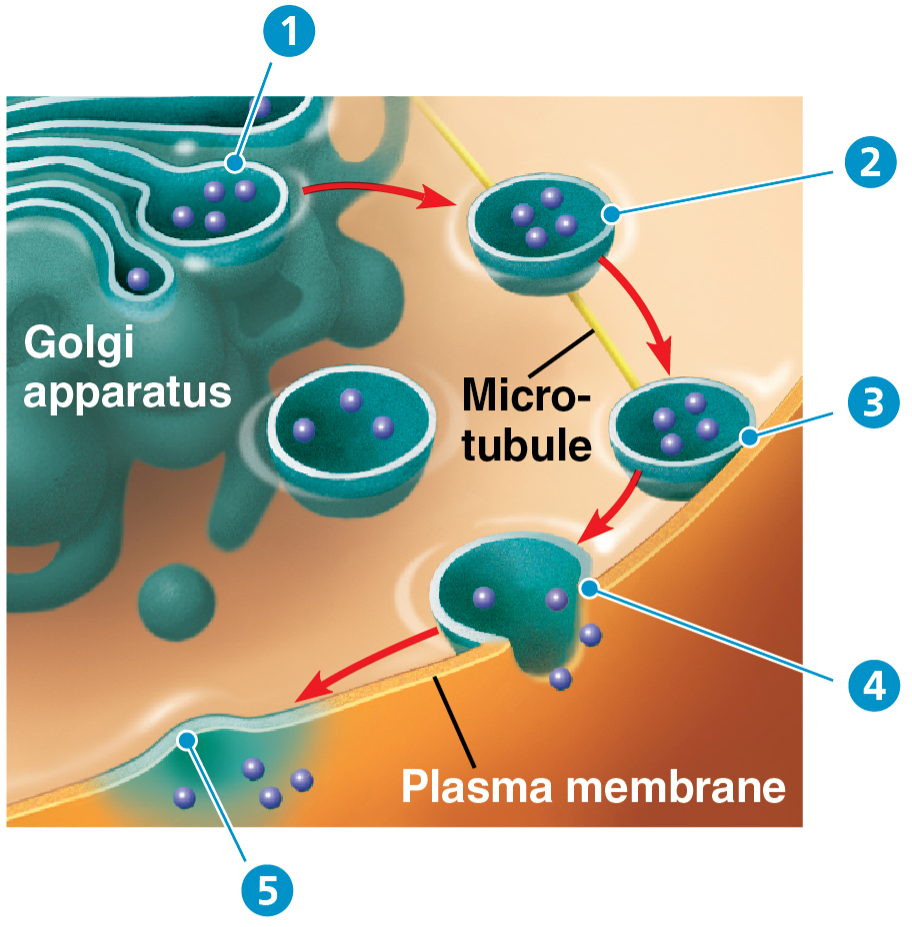
Folded proteins + lipids from ER sent to cis face through transport vesicles, Golgi modifies/concentrates/tags products, tagged products sent into new vesicles (secretory vesicles) that bud off trans face of GA to transport to appropriate destination

Lysosomes
Sites of hydrolysis, membranous sacs of hydrolytic/digestive enzymes made in rough ER that are further refined in GA, work in relatively low pH (more acidic than cytosol) so must be contained within compartment formed by lysosome’s membrane, leakage all at once too much for cell survival, phagocytosis + autophagy
Lysosome Phagocytosis
Cell engulfed by another cell, forms food vacuole that’s lipid bilayer enclosed package of food brought in from outside of cell, hydrolytic enzymes digest macromolecular structures in whatever cell took in, 2 phospholipid bilayer compartments merge with one another
Lysosome Autophagy
Use enzymes to recyle cell’s own organelles + macromolecules
Vacuoles
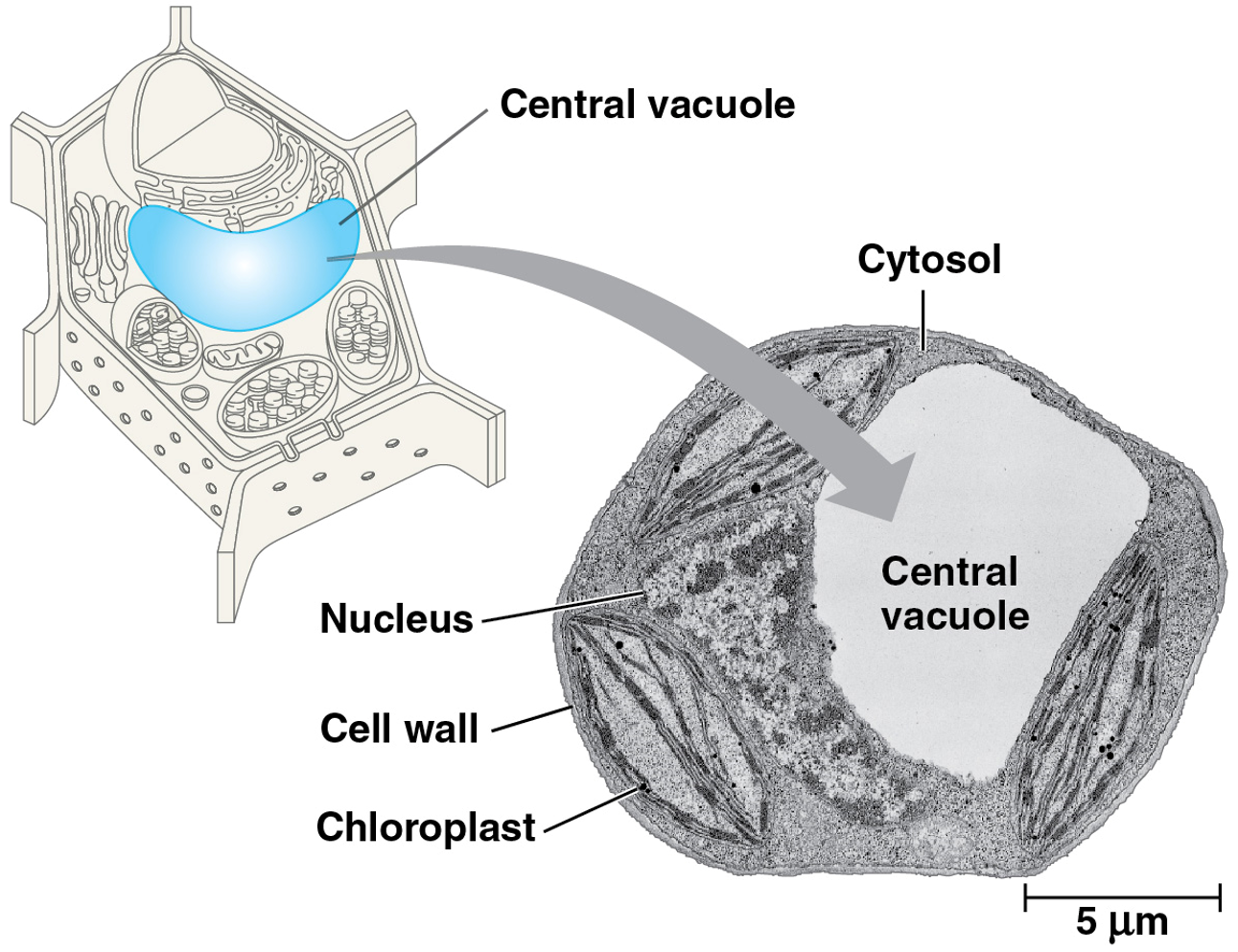
Large vesicles derived from ER + GA with diverse functions, in plants serve as storage containers for proteins/important organic compounds (cells of seeds), small vacuoles may contain defensive chemistry that deters herbivory only after leaf experiences damage/pigments in flower petals attract pollinators
Central Vacuole
Most prominent feature in plant cell, cell main reservoir of inorganic ions (potassium/chloride), swollen with water that cytosol of plant cell appears pushed up against cell wall in thin layer
Transport Across Cell Membrane
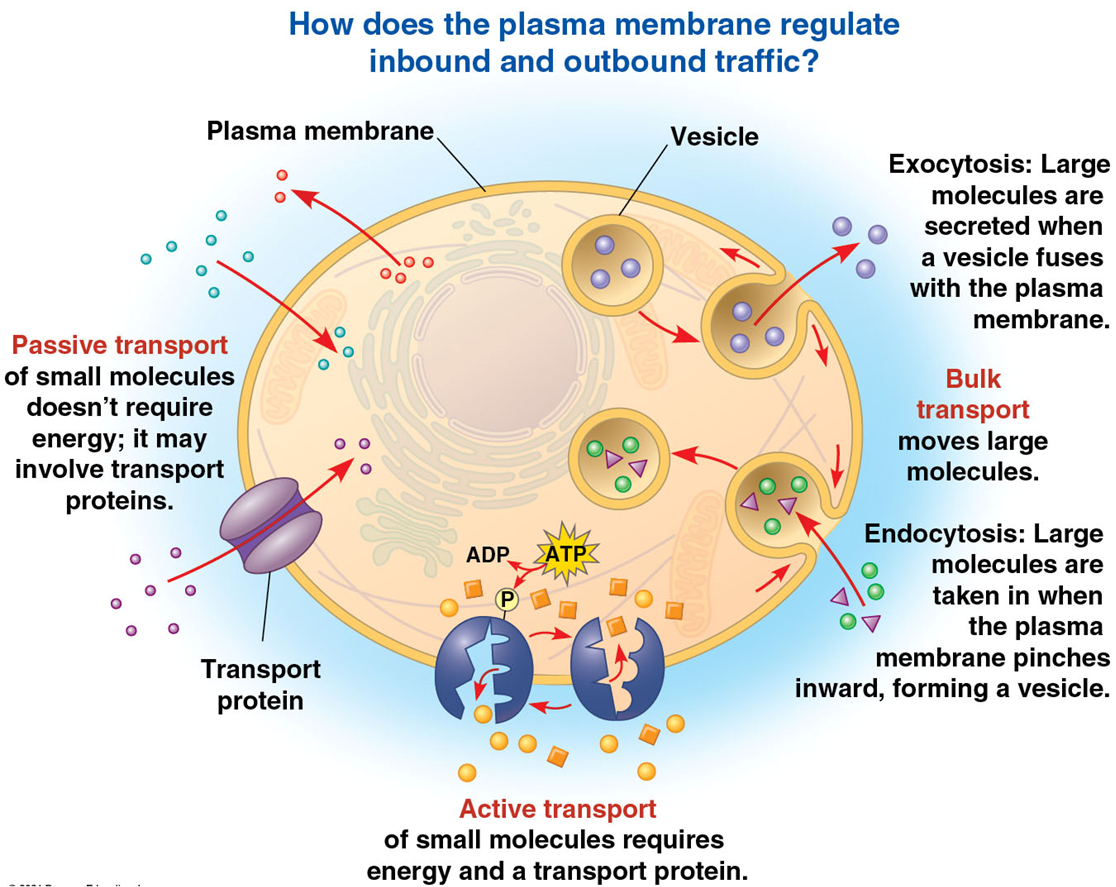
Small molecules + water enter/leave cell through lipid bilayer/via transport proteins, larger molecules (polysaccharides, proteins) cross membrane in bulk
Vesicles
How large molecules (polysaccharides, proteins) cross membrane in bulk
Exocytosis
Transport vesicles migrate to membrane to fuse with it + release contents outside of cell, important for signaling + communication
Endocytosis
Molecules + large substances taken into cell via vesicles, membrane forms pocket that deepens + pinches off to form vesicle around material for transport
3 Endocytosis Types
Phagocytosis, pinocytosis, receptor-mediated endocytosis
Phagocytosis

Pinocytosis

Receptor-Mediated Endocytosis


Motor Proteins
Interaction required for cellular motility with elements of cytoskeleton, energy input as ATP

Mitochondria
Sit of cellular respiration


Chloroplasts
Sit of photosynthesis


Endosymbiotic Theory
Ancestor of modern eukaryotes engulfed ancestors of modern membrane-bound organelles, mutualism that’s not standard exploitation interaction

Evidence for Endosymbiotic Theory
Mitochondria + chloroplasts reproduce same way as prokaryotes, DNA + ribosomes similar to free-living prokaryotes, 2 membranes with inner one more like prokaryotes + outer like eukaryotes
Euglena
Genus of single-celled flagellate eukaryotes conditionally heterotrophic + autotrophic, chloroplasts have 3 membranes suggesting endosymbiotic event