HOSA Behavioral Health
 Call Kai
 Learn
Learn Practice Test
 Spaced Repetition
 Match
Match Flashcards
 Knowt Play
1/31

There's no tags or description
Looks like no tags are added yet.
Name | Mastery | Learn | Test | Matching | Spaced | Call with Kai | Chat |
|---|
No analytics yet
Send a link to your students to track their progress
32 Terms
CNS (central nervous system)
Uses brain and spinal cord. Receives info from nerves → processes → responds with motor output
PNS (peripheral nervous system)
made up of nerves. carries messages between CNS and muscles, organs, senses.
Somatic (part of PNS)
Conscious, voluntary actions. Includes efferent fibers (carries info from CNS → muscles; e = exit) and afferent fibers (carries info from muscles → CNS; a = arrive)
Autonomic (part of PNS)
involuntary actions, autonomic = automatic. includes sympathetic and parasympathetic systems
Sympathetic (part of autonomic, which is part of PNS)
s = stress; prepares body for stress-related activities. includes dilating pupils, inhibiting salivation, increasing heart rate
Parasympathetic (part of autonomic, which is part of PNS)
p = peaceful; normal body routines. includes constricting (decreases) pupils, slows heart rate.
left & right hemispheres of brain
connected by corpus callosum; each hemisphere controls opposite side of body

major brain region: forebrain
largest section; has cerebral cortex (higher level processes like consciousness, thought, learning). each cerebral hemisphere has 4 lobes: frontal, parietal, temporal, occipital.

frontal lobe (part of forebrain)
reasoning, motor control (using motor cortex), emotion, decision making, language (broca’s area: controls speech. b = bro can’t talk).
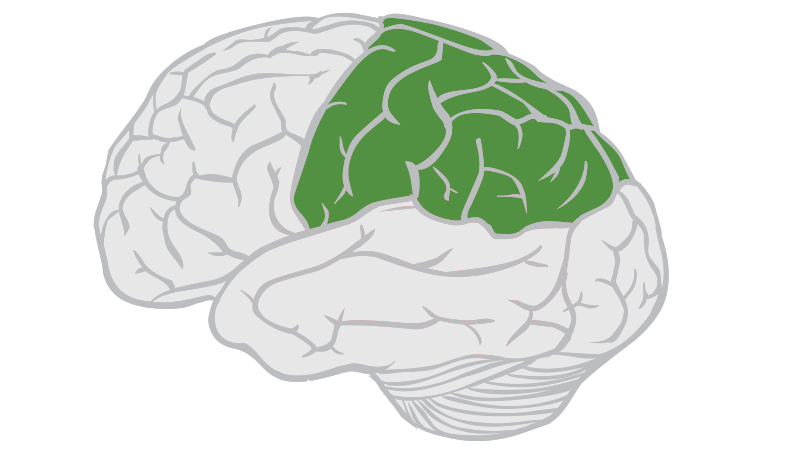
parietal lobe (part of forebrain)
processing sensory info through somatosensory cortex (touch/sensation)

temporal lobe (part of forebrain)
t = tempo = sound. memory, emotion, hearing (wernicke’s area: understanding speech).

occipital lobe (part of forebrain)
o = optics = eyes. processes visual info using primary visual cortex
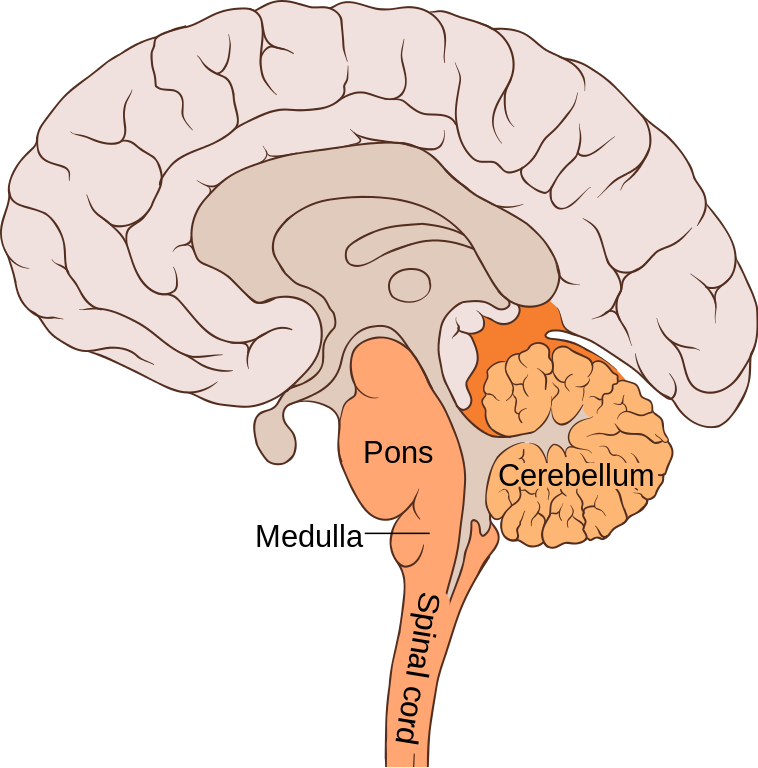
major brain region: hindbrain
back of head, connected to spinal cord. includes medulla, pons, cerebellum.

medulla (part of hindbrain)
controls automatic processes (autonomic system) including breathing, blood pressure, and heart rate.

pons (part of hindbrain)
“bridge” to connect hindbrain to rest of brain; helps regulate brain activity during sleep

cerebellum (part of hindbrain)
controls balance, coordination, movement, and motor skills by receiving messages from muscles in ear; processes procedural memory (long-term memories).
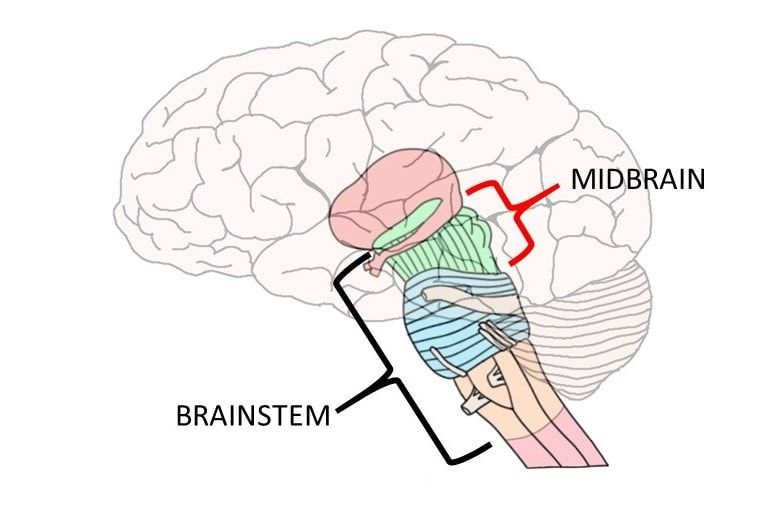
major brain region: midbrain
deep inside brain, between forebrain and hindbrain. includes reticular formation: regulates sleep/wake cycle, arousal, and alertness.
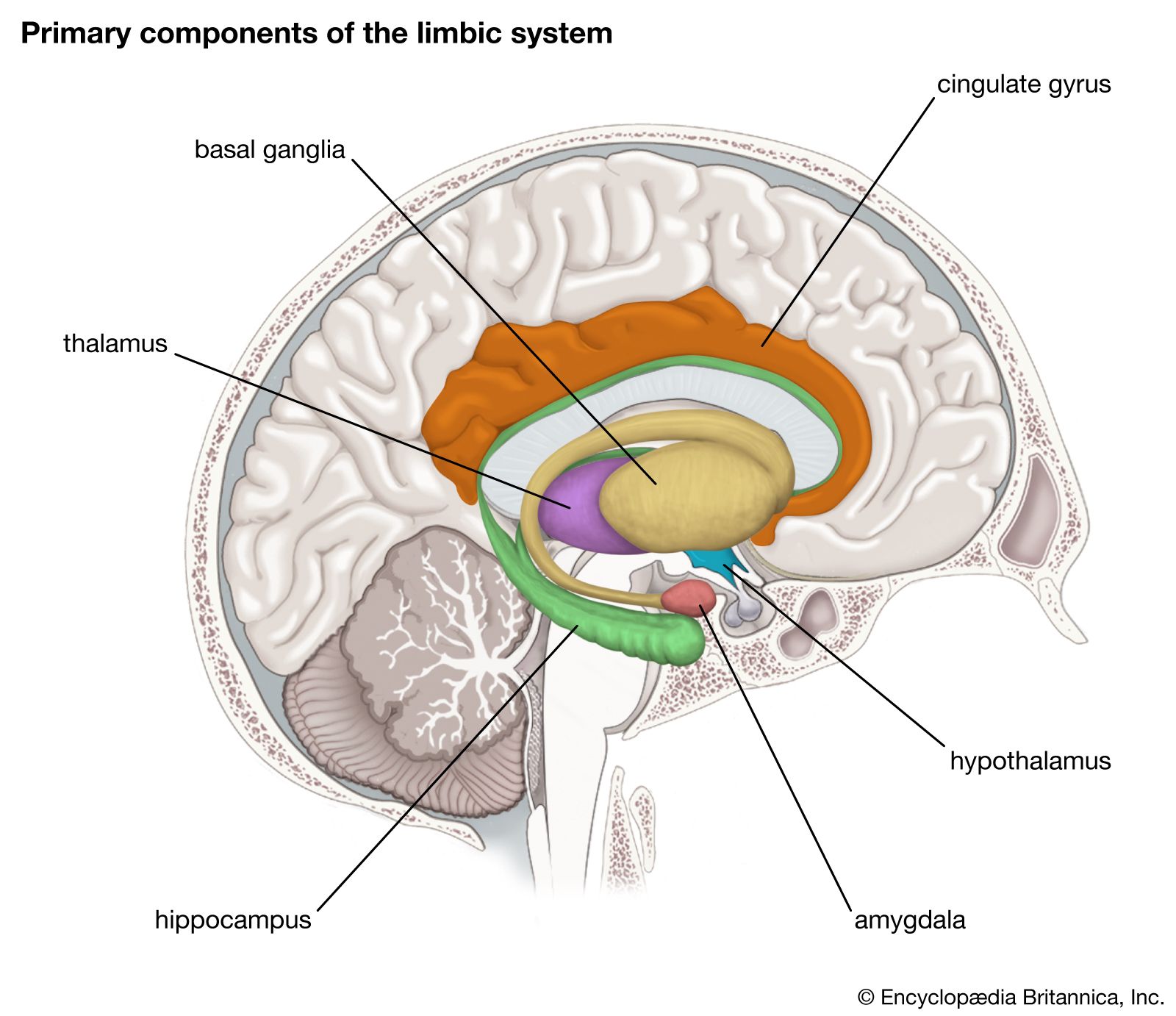
Limbic system
processes emotions & memory through hippocampus, amygdala, and hypothalamus.

hippocampus
learning and memory

amygdala
emotions and giving emotional meaning to memories
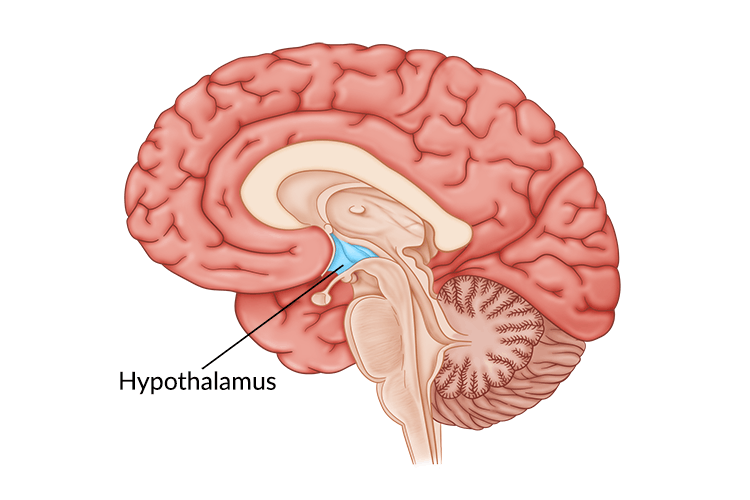
hypothalamus
regulated homeostasis (body temperature, appetite, blood pressure). also involved in regulated sexual motivation, behavior.

Thalamus
sensory relay; all senses (except smell) go through it to be sent to different parts of brain

endocrine system
glands make hormones (chemical messengers) that bind to receptors to send signals.
Hormone
widespread (through bloodstream), slower to take effect, longer lasting
neurotransmitter
local (released to nearby receptors), faster to take effect, shorter lasting

pituitary (major endocrine gland)
growth hormone; regulates growth & hormone release

thyroid (major endocrine gland)
thyroxine, triiodothyronine; regulated metabolism & appetite

pineal (major endocrine gland)
melatonin; regulated sleep cycles

adrenal (major endocrine gland)
epinephrine (adrenaline), norepinephrine (raise BP); stress response, increase metabolic activities

pancreas
insulin (lowers blood sugar levels), glucagon (raises sugar levels); regulates blood sugar levels

ovaries (major endocrine gland)
estrogen (female sexual development), progesterone (stabilizes body post-ovulation); mediate sexual motivation & behavior
testes (major endocrine gland)
androgens like testosterone (male sex hormone); mediate sexual motivation & behavior