Caloric Intake & energy expenditure
 Call Kai
 Learn
Learn Practice Test
 Spaced Repetition
 Match
Match Flashcards
 Knowt Play
1/142

There's no tags or description
Looks like no tags are added yet.
Name | Mastery | Learn | Test | Matching | Spaced | Call with Kai | Chat |
|---|
No analytics yet
Send a link to your students to track their progress
143 Terms
Functions to convert nutrients into energy. Major food sources include whole grains, pork, seeds, and trout.
Vitamin B1 (Thiamine)
Aids in energy production and fat metabolism. Major food sources include yogurt, milk, organ meats, and almonds.
Vitamin B2 (Riboflavin)
Daily caloric requirements for 2-year-olds
1,000calories
Daily caloric requirements for children aged 3 to 5 years
Sedentary: 1,200calories | Active: 1,400 to 1,600calories
Daily caloric requirements for males aged 6 to 8 years
Sedentary: 1,400calories | Active: 1,600 to 2,000calories
Daily caloric requirements for females aged 6 to 8 years
Sedentary: 1,200 to 1,400calories | Active: 1,400 to 1,800calories
Daily caloric requirements for males aged 9 to 12 years
Sedentary: 1,600 to 1,800calories | Active: 1,800 to 2,400calories
Daily caloric requirements for females aged 9 to 12 years
Sedentary: 1,400 to 1,600calories | Active: 1,600 to 2,200calories
Daily caloric requirements for males aged 13 to 18 years
Sedentary: 2,000 to 2,400calories | Active: 2,200 to 3,200calories
Daily caloric requirements for females aged 13 to 18 years
Sedentary: 1,600 to 1,800calories | Active: 2,000 to 2,400calories
Daily caloric requirements for males aged 19 to 20 years
Sedentary: 1,600calories | Active: 2,800 to 3,000calories
Daily caloric requirements for females aged 19 to 20 years
Sedentary: 2,000calories | Active: 2,200 to 2,400calories
Daily caloric requirements for males aged 21 to 40 years
Sedentary: 2,400calories | Active: 2,600 to 3,000calories
Daily caloric requirements for females aged 21 to 40 years
Sedentary: 1,800 to 2,000calories | Active: 2,000 to 2,400calories
Daily caloric requirements for males aged 41 to 60 years
Sedentary: 2,200calories | Active: 2,400 to 2,600calories
Daily caloric requirements for females aged 41 to 60 years
Sedentary: 1,600 to 1,800calories | Active: 1,800 to 2,200calories
Daily caloric requirements for males aged 60 years and older
Sedentary: 2,000calories | Active: 2,200 to 2,600calories
Daily caloric requirements for females aged 60 years and older
Sedentary: 1,600calories | Active: 1,800 to 2,000calories
Converts nutrients to energy. Major food sources include whole grains, pork, seeds, and trout. (water soluble)
Vitamin B1 (Thiamine)
Aids energy production and fat metabolism. Major food sources include yogurt, milk, organ meats, and almonds. (water soluble)
Vitamin B2 (Riboflavin)
Helps produce energy from food. Major food sources include meat, fish, nuts, grains, and legumes. (water soluble)
Vitamin B3 (Niacin)
Involved in fatty acid synthesis. Major food sources include mushrooms, tuna, avocado, and chicken. (water soluble)
Vitamin B5 (Pantothenic acid)
Helps the body release sugar for energy and supports immune function. Major food sources include organ meats, salmon, tuna, and potatoes. (water soluble)
Vitamin B6 (Pyridoxine)
Breaks down carbohydrates, fats, and protein. Major food sources include organ meats, eggs, salmon, and sunflower seeds. (water soluble)
Vitamin B7 (Biotin)
Necessary for proper cell division. Major food sources include leafy green vegetables, orange juice, eggs, beans, and avocado. (water soluble)
Vitamin B9 (Folate)
Aids red blood cell formation, as well as proper nervous system and brain function. Major food sources include clams, beef, salmon, milk, and yogurt. (water soluble)
Vitamin B12 (Cobalamin)
Promotes iron absorption, wound healing, bone formation, and immune function. Major food sources include Brussels sprouts, citrus fruits, spinach, berries, tomatoes, and potatoes. (water soluble)
Vitamin C (Ascorbic acid)
Functions to convert nutrients into energy. Major food sources include whole grains, pork, seeds, and trout.
Vitamin B1 (Thiamine)
Aids in energy production and fat metabolism. Major food sources include yogurt, milk, organ meats, and almonds.
Vitamin B2 (Riboflavin)
Daily caloric requirements for 2-year-olds
1,000calories
Daily caloric requirements for children aged 3 to 5 years
Sedentary: 1,200calories | Active: 1,400 to 1,600calories
Daily caloric requirements for males aged 6 to 8 years
Sedentary: 1,400calories | Active: 1,600 to 2,000calories
Daily caloric requirements for females aged 6 to 8 years
Sedentary: 1,200 to 1,400calories | Active: 1,400 to 1,800calories
Daily caloric requirements for males aged 9 to 12 years
Sedentary: 1,600 to 1,800calories | Active: 1,800 to 2,400calories
Daily caloric requirements for females aged 9 to 12 years
Sedentary: 1,400 to 1,600calories | Active: 1,600 to 2,200calories
Daily caloric requirements for males aged 13 to 18 years
Sedentary: 2,000 to 2,400calories | Active: 2,200 to 3,200calories
Daily caloric requirements for females aged 13 to 18 years
Sedentary: 1,600 to 1,800calories | Active: 2,000 to 2,400calories
Daily caloric requirements for males aged 19 to 20 years
Sedentary: 1,600calories | Active: 2,800 to 3,000calories
Daily caloric requirements for females aged 19 to 20 years
Sedentary: 2,000calories | Active: 2,200 to 2,400calories
Daily caloric requirements for males aged 21 to 40 years
Sedentary: 2,400calories | Active: 2,600 to 3,000calories
Daily caloric requirements for females aged 21 to 40 years
Sedentary: 1,800 to 2,000calories | Active: 2,000 to 2,400calories
Daily caloric requirements for males aged 41 to 60 years
Sedentary: 2,200calories | Active: 2,400 to 2,600calories
Daily caloric requirements for females aged 41 to 60 years
Sedentary: 1,600 to 1,800calories | Active: 1,800 to 2,200calories
Daily caloric requirements for males aged 60 years and older
Sedentary: 2,000calories | Active: 2,200 to 2,600calories
Daily caloric requirements for females aged 60 years and older
Sedentary: 1,600calories | Active: 1,800 to 2,000calories
Converts nutrients to energy. Major food sources include whole grains, pork, seeds, and trout. (water soluble)
Vitamin B1 (Thiamine)
Aids energy production and fat metabolism. Major food sources include yogurt, milk, organ meats, and almonds. (water soluble)
Vitamin B2 (Riboflavin)
Helps produce energy from food. Major food sources include meat, fish, nuts, grains, and legumes. (water soluble)
Vitamin B3 (Niacin)
Involved in fatty acid synthesis. Major food sources include mushrooms, tuna, avocado, and chicken. (water soluble)
Vitamin B5 (Pantothenic acid)
Helps the body release sugar for energy and supports immune function. Major food sources include organ meats, salmon, tuna, and potatoes. (water soluble)
Vitamin B6 (Pyridoxine)
Breaks down carbohydrates, fats, and protein. Major food sources include organ meats, eggs, salmon, and sunflower seeds. (water soluble)
Vitamin B7 (Biotin)
Necessary for proper cell division. Major food sources include leafy green vegetables, orange juice, eggs, beans, and avocado. (water soluble)
Vitamin B9 (Folate)
Aids red blood cell formation, as well as proper nervous system and brain function. Major food sources include clams, beef, salmon, milk, and yogurt. (water soluble)
Vitamin B12 (Cobalamin)
Promotes iron absorption, wound healing, bone formation, and immune function. Major food sources include Brussels sprouts, citrus fruits, spinach, berries, tomatoes, and potatoes. (water soluble)
Vitamin C (Ascorbic acid)
Promotes bone formation, vision, tooth formation, immune function, and cellular function. Major food sources include fish liver oil, beef liver, dairy products, green leafy vegetables, and sweet potatoes. (fat soluble)
Vitamin A
Supports bone and teeth development, along with absorption and metabolism of calcium and phosphorus. Major sources include fish oil, milk, eggs, dairy products, and sunlight. (fat soluble)
Vitamin D
Helps fight infection and supports healthy red blood cells. Major food sources include almonds, wheat germ, sunflower seeds, and spinach. (fat soluble)
Vitamin E
Essential for blood clotting and bone health. Major food sources include spinach, liver, butter, kale, and parsley. (fat soluble)
Vitamin K
List of fat-soluble vitamins
Vitamin A, Vitamin D, Vitamin E, and Vitamin K
List of water-soluble vitamins
Vitamin B1 (Thiamine),
Vitamin B2 (Riboflavin),
Vitamin B3 (Niacin),
Vitamin B5 (Pantothenic acid),
Vitamin B6 (Pyridoxine),
Vitamin B7 (Biotin),
Vitamin B9 (Folate),
Vitamin B12 (Cobalamin),
Vitamin C (Ascorbic acid)
(ALL B VITAMINS + C)
Noncarbon, inorganic nutrients that promote health and support optimal functioning of the body.
menerals
The body needs some minerals in larger amounts (macrominerals) and others in smaller amounts (trace minerals).
what are the primary minerals needed by the body are
calcium, chromium, copper, iodine, iron, magnesium, manganese, phosphorus, potassium, selenium, sodium, and zinc
List of macrominerals
Calcium, Phosphorus, Magnesium, Sodium, Chloride, Potassium, and Sulfur
Supports proper function and structure of teeth and bones, muscle function, and blood pressure regulation. Major food sources include milk, milk products, broccoli, leafy greens, and legumes. (macromineral)
Calcium
Supports healthy bones and teeth and assists with acid-base balance. Major food sources include eggs, fish, poultry, and milk. (macromineral)
Phosphorus
Supports muscle contraction, immune system health, and nerve transmission. Major food sources include legumes, green vegetables, and seafood. (macromineral)
Magnesium
Supports fluid balance, nerve transmission, and muscle contraction. Major food sources include salt, soy sauce, processed foods, and meats. (macromineral)
Sodium
Supports fluid balance and stomach acid production. Major food sources include salt, meats, soy sauce, and processed foods. (macromineral)
Chloride
Supports fluid balance, muscle function, and nerve transmission. Major food sources include bananas, fruit, legumes, and whole grains. (macromineral)
Potassium
Located in protein molecules. Major food sources include eggs, meat, fish, and legumes. (macromineral)
Sulfur
List of trace minerals
Iron, Magnesium, Copper, Zinc, Iodine, Fluoride, and Selenium
Vital to the transport of oxygen throughout the body. Major food sources include organ meats, red meats, leafy green vegetables, and iron-fortified foods. (trace mineral)
Iron
Part of several enzymes. Major food sources include nuts, some fish, brown rice, avocado, spinach, and bananas. (trace mineral)
Magnesium
Involved in iron metabolism. Major food sources include legumes, whole grains, organ meats, and water. (trace mineral)
Copper
Supports normal growth, wound healing, and immune function. Major food sources include meats, fish, whole grains, and vegetables. (trace mineral)
Zinc
Supports thyroid regulation. Major food sources include seafood, iodized salt, and dairy products. (trace mineral)
Iodine
Supports bone and teeth development. Major sources include fluorinated water, and foods and beverages prepared with fluorinated water. (trace mineral)
Fluoride
Provides defense against oxidative damage. Major food sources include grains, meats, and seafood. (trace mineral)
Selenium
An essential nutrient that makes up more than half of the body weight and is required by systems in the body to function properly.
Water
Primary functions of water in the human body
Promotes brain function, hydrates and flushes out wastes, regulates body temperature, and acts as a lubricant.
Besides drinking water, major dietary sources of water intake
Fruits and vegetables
Recommended daily total water intake for females according to the National Academy of Sciences
2.7L to 3L
Recommended daily total water intake for males according to the National Academy of Sciences
3.5L to 3.7L
The number of calories a food contains related to its volume or weight.
calorie density
Foods that allow a person to consume a larger volume for fewer calories while feeling full (e.g., fruits and vegetables)
Low-calorie-dense foods
Foods that deliver a higher number of calories in a smaller or equal portion size (e.g., French fries)
High-calorie-dense foods
Primary dietary benefits of consuming low-calorie-dense foods
Promotes a nutrient-rich diet and aids in weight loss or maintenance
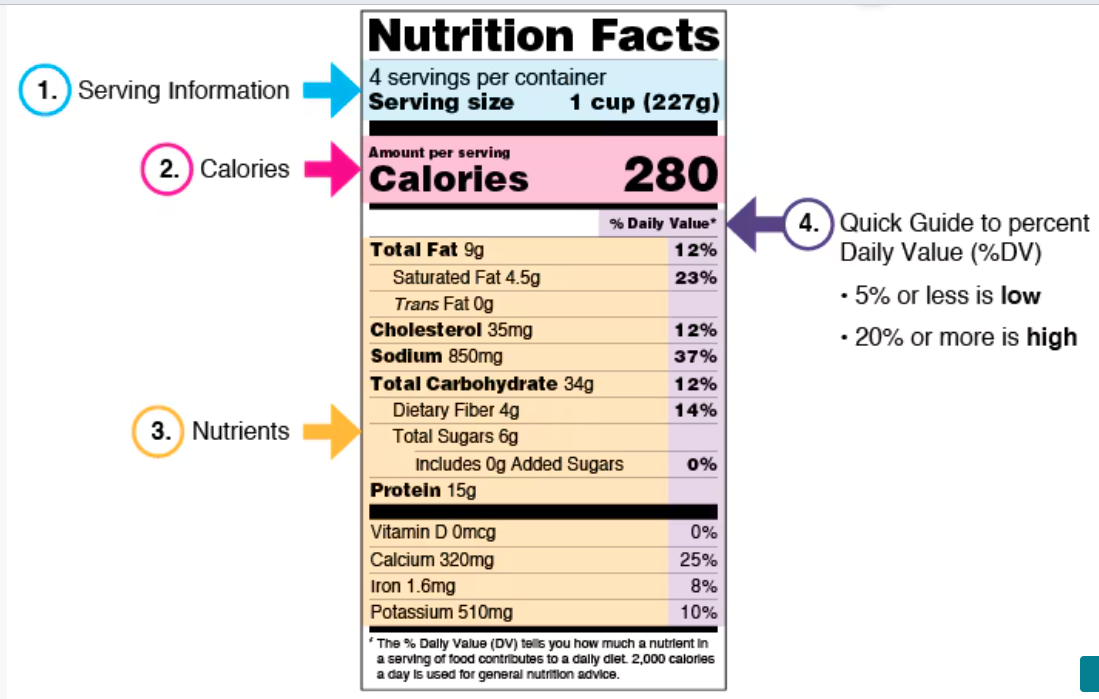
Key components covered on nutritional labels
Serving size, calories, a breakdown of nutrients, and percent daily values
Type of cholesterol commonly referred to as "bad cholesterol"
LDL (Low-density lipoprotein)
Type of cholesterol commonly referred to as "good cholesterol"
HDL (High-density lipoprotein)
Effect of trans fats on LDL cholesterol levels
Raises LDL cholesterol levels in the blood
Effect of trans fats on HDL cholesterol levels
Lowers HDL cholesterol levels in the blood
Total sugars
Sugars that occur naturally in foods
Added sugars
Sugars added to food that are not naturally occurring
Recommended daily fiber intake for females aged 19 to 30 years
28g/day
Recommended daily fiber intake for females aged 31 to 50 years
25g/day
Recommended daily fiber intake for females aged 51 years and older
22g/day
Recommended daily fiber intake for males aged 19 to 30 years
34g/day
Recommended daily fiber intake for males aged 31 to 50 years
31g/day