PA 3 Anatomy 3
 Call Kai
 Learn
 Practice Test
 Spaced Repetition
 Match
 Flashcards
 Knowt Play
1/56

There's no tags or description
Looks like no tags are added yet.
57 Terms


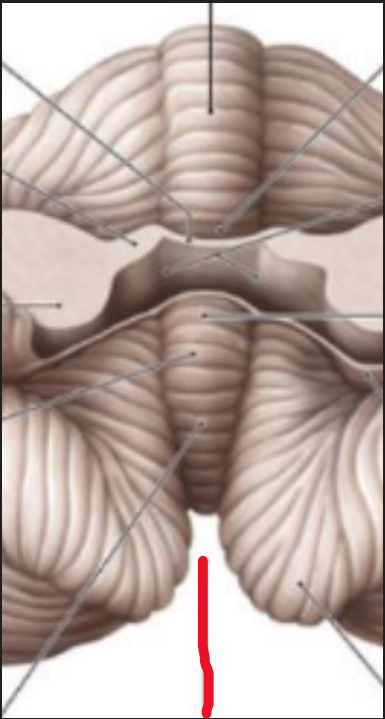


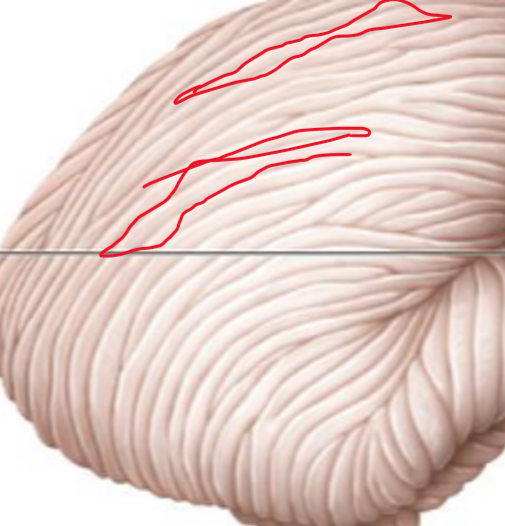

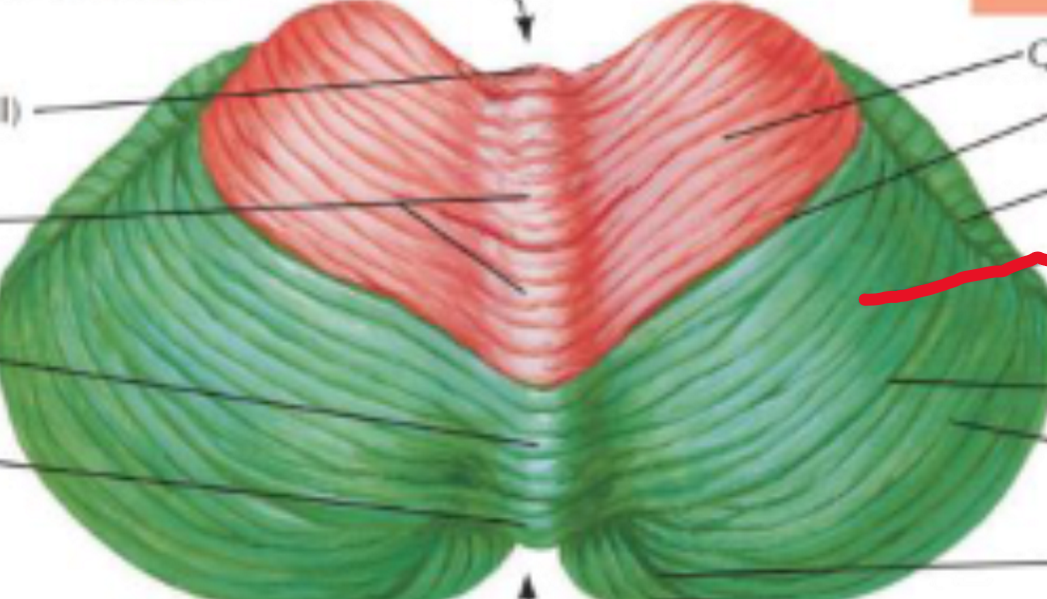

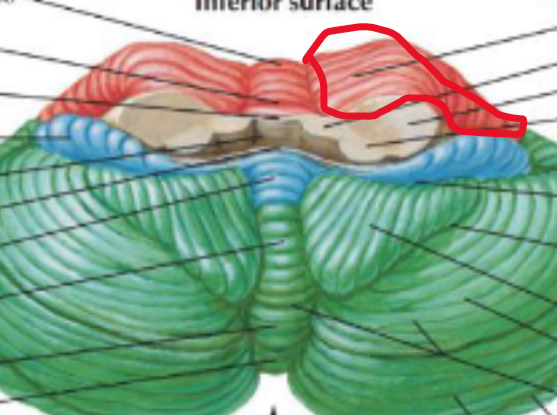
What is this?
Lobus anterior cerebelli | Latin: front lobe of cerebellum | ID: Region anterior to primary fissure. | A1/A2 link: Lobus superior pulmonis = upper lung lobe (A2). | Exam: Includes lingula, central lobule and culmen.
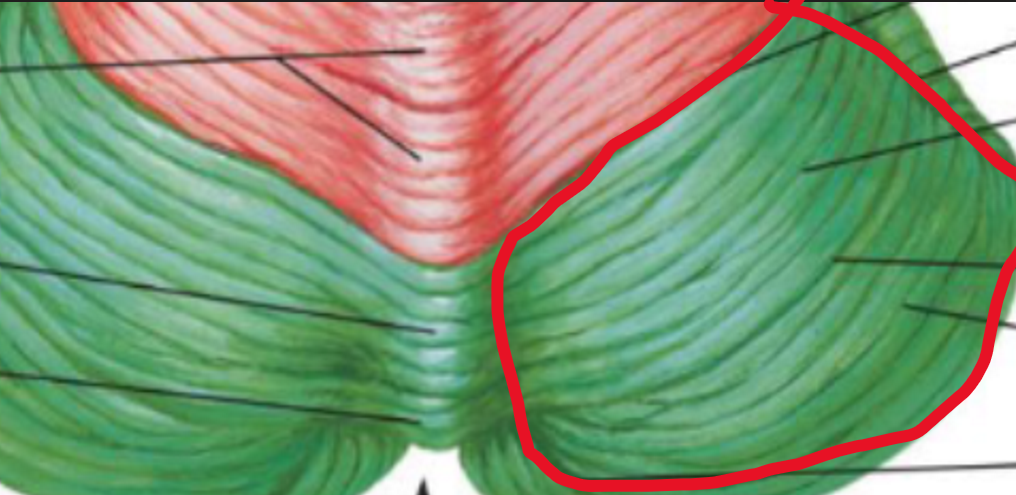
What is this?
Lobus posterior cerebelli | Latin: back lobe of cerebellum | ID: Large region between primary and posterolateral fissures. | A1/A2 link: Lobus hepatis = liver lobe (A2); lobus means lobe.
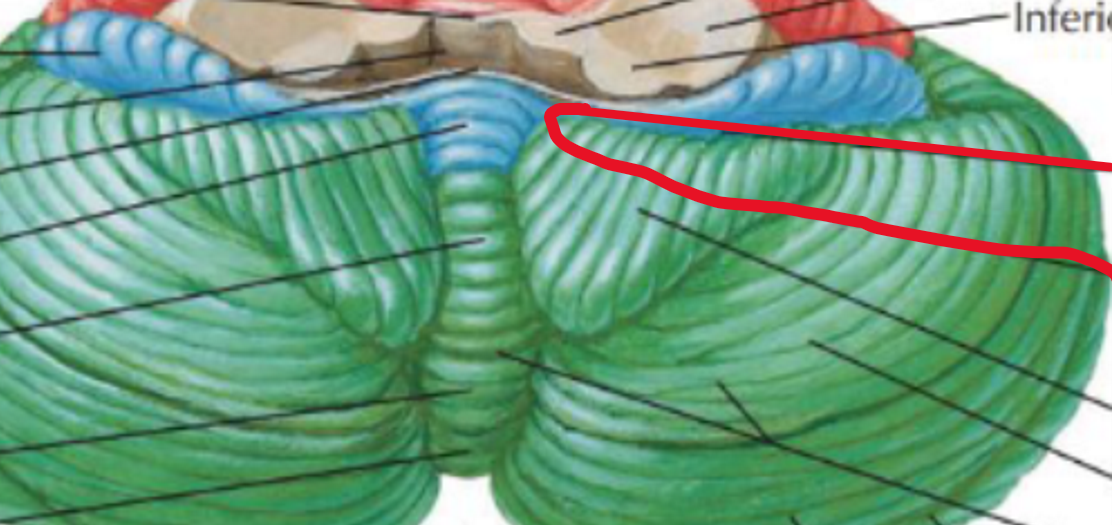
What is this?
Lobus flocculonodularis | Latin: flake-and-small-knot lobe | ID: Small anteroinferior region containing nodulus and flocculi. | A1/A2 link: Flocculus = small tuft; nodulus = little knot. | Exam: Vestibular balance and eye-movement control.
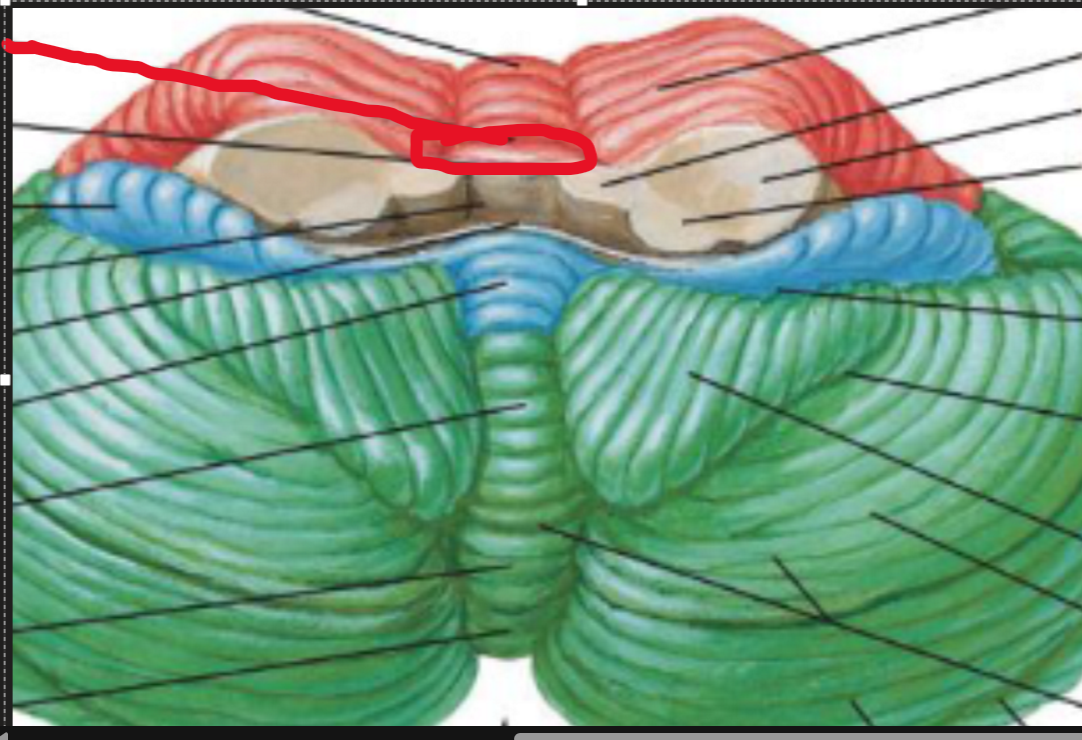
What is this?
Lingula cerebelli | Latin: little tongue of cerebellum | ID: Tiny anterior vermian lobule on superior medullary velum. | A1/A2 link: Lingula mandibulae = tongue-shaped projection (A1); lingual nerve (A1). | Exam: No distinct hemispheric counterpart in supplied table.
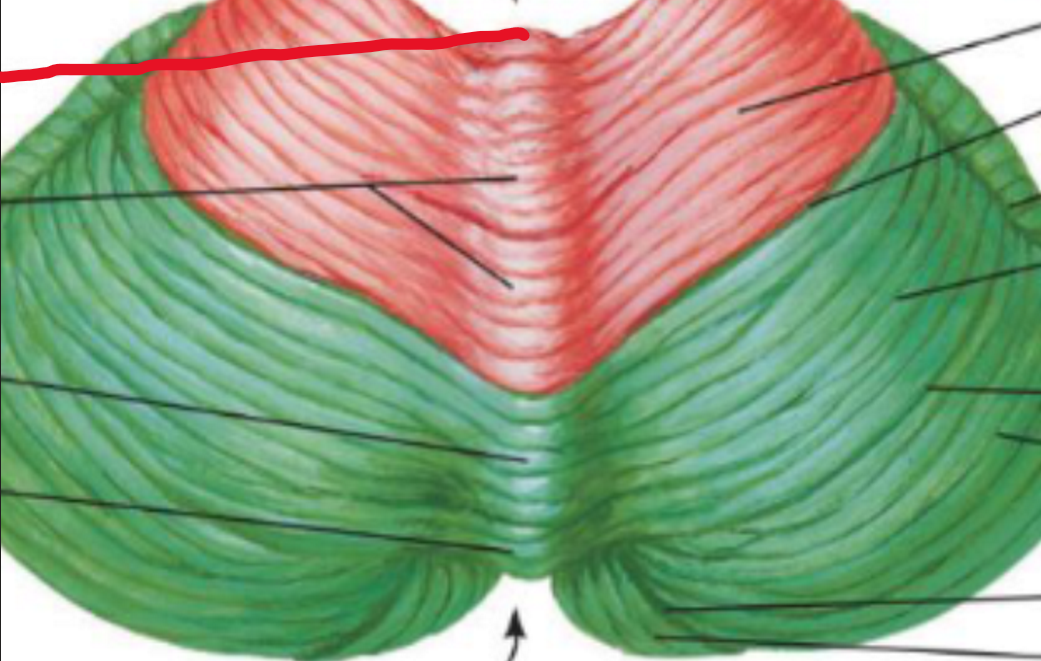
What is this?
Lobulus centralis | Latin: small central lobe | ID: Vermian lobule behind lingula and before culmen. | A1/A2 link: Centralis means central; canalis centralis of spinal cord. | Exam: Lateral counterpart: ala lobuli centralis.
What is this?
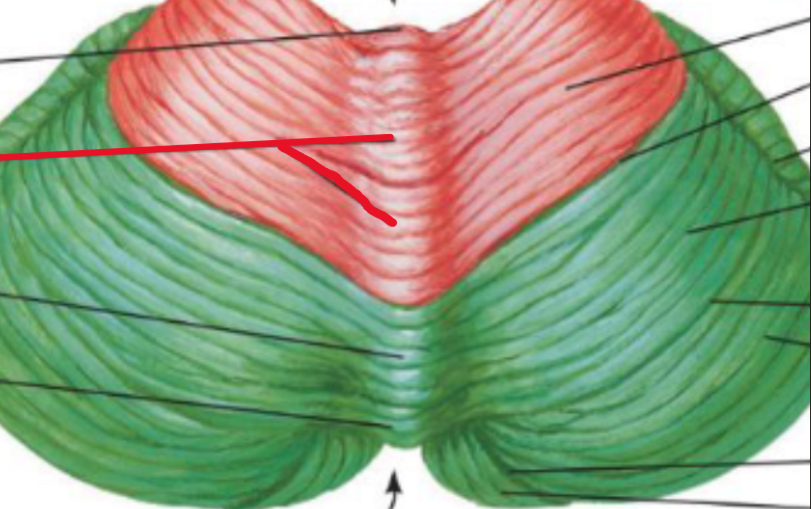
Culmen | Latin: summit / peak | ID: Prominent elevated upper vermis immediately before primary fissure. | A1/A2 link: Culmen is Latin for summit; crest/peak-like bone landmarks (word analogy). | Exam: Partner: lobulus quadrangularis.

What is this?
Declive | Latin: slope / downward incline | ID: Upper vermis immediately behind primary fissure. | A1/A2 link: Declivis = sloping; descriptive contrast to culmen = peak. | Exam: Partner: lobulus simplex.

What is this?
Folium vermis | Latin: leaf of the vermis | ID: Thin midline lobule posterior to declive. | A1/A2 link: Folium means leaf; related to folia cerebelli. | Exam: Partner: superior semilunar lobule.

What is this?
Tuber vermis | Latin: swelling / lump of vermis | ID: Posterior vermian lobule curving onto inferior surface. | A1/A2 link: Tuber is a swelling; tuber ischiadicum = ischial tuberosity (A1). | Exam: Partner: inferior semilunar lobule.
What is this?
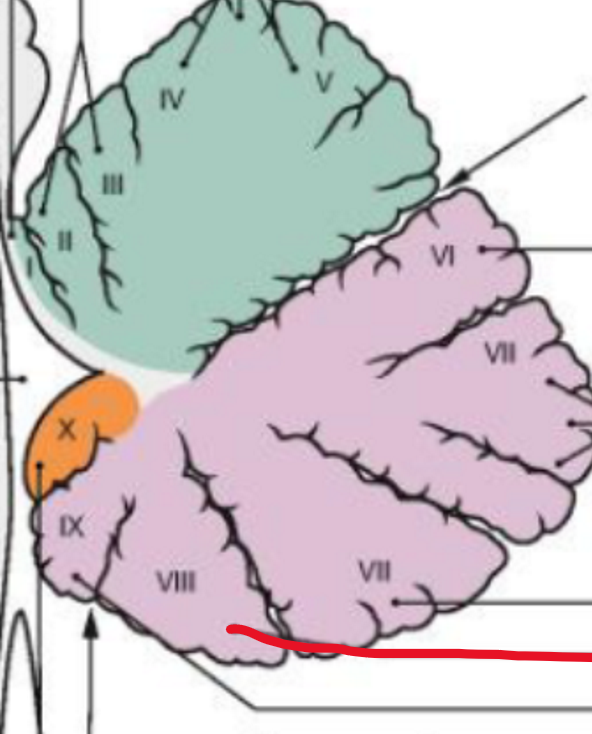
Pyramis vermis | Latin: pyramid of vermis | ID: Pyramid-shaped lower vermian lobule before uvula. | A1/A2 link: Pyramis medullae oblongatae = medullary pyramid (A3); renal pyramids (A2). | Exam: Partner: lobulus biventer.
What is this?
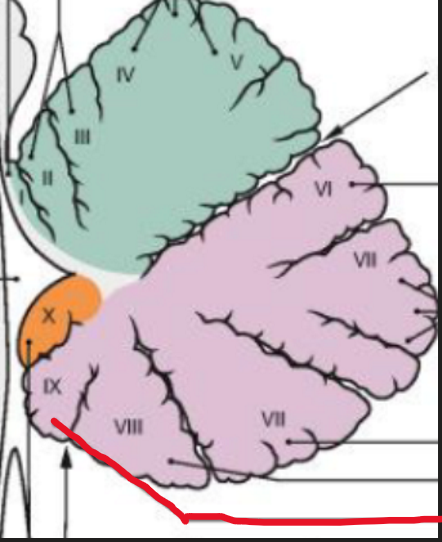
Uvula vermis | Latin: little grape / uvula of vermis | ID: Midline inferior lobule between pyramis and nodulus. | A1/A2 link: Uvula palatina = hanging projection of soft palate (A2). | Exam: Paired lateral counterparts: cerebellar tonsils.

What is this?
Nodulus vermis | Latin: little knot / nodule | ID: Tiny anterior-inferior vermian lobule near fourth ventricle. | A1/A2 link: Noduli lymphatici = lymph nodules (A2). | Exam: Together with flocculi forms flocculonodular lobe.
What is this?
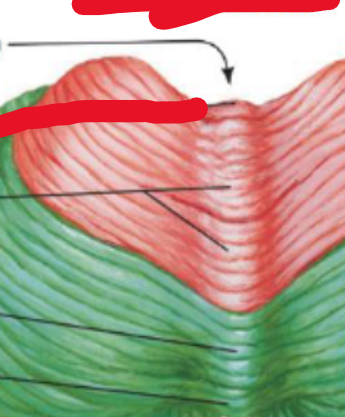
Ala lobuli centralis | Latin: wing of central lobule | ID: Small lateral continuation of central vermian lobule. | A1/A2 link: Ala ossis ilii = wing of ilium (A1); ala nasi = wing of nose. | Exam: Partner: lobulus centralis.

What is this?
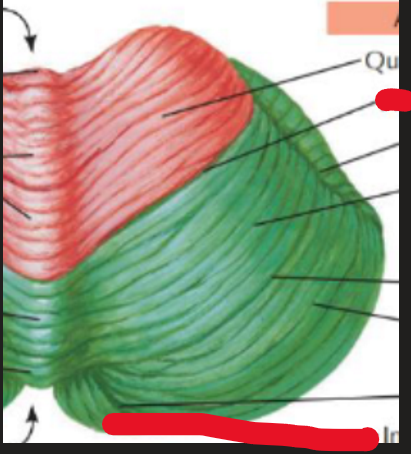
Lobulus quadrangularis | Latin: four-sided little lobe | ID: Broad upper hemispheric region lateral to culmen, before primary fissure. | A1/A2 link: Musculus quadratus lumborum / pronator quadratus (A1): four-sided. | Exam: Partner: culmen.

What is this?
Lobulus simplex | Latin: simple little lobe | ID: Upper hemispheric region lateral to declive, behind primary fissure. | A1/A2 link: Simplex = simple; unlike compound structures. | Exam: Partner: declive.

What is this?
Lobulus semilunaris superior | Latin: upper half-moon little lobe | ID: Upper posterior hemispheric crescent lateral to folium. | A1/A2 link: Semilunaris = half-moon; semilunar valves of aorta/pulmonary trunk (A2). | Exam: Partner: folium vermis.
What is this?
Lobulus biventer | Latin: two-bellied little lobe | ID: Inferior hemispheric lobule lateral to pyramis, near tonsil. | A1/A2 link: Musculus digastricus = two bellies (A1); same shape idea. | Exam: Partner: pyramis vermis.

What is this?
Tonsilla cerebelli | Latin: little almond / cerebellar tonsil | ID: Paired rounded inferior lobules beside uvula. | A1/A2 link: Tonsilla palatina = palatine tonsil (A2); same word, unrelated structures. | Exam: Herniation through foramen magnum can compress medulla.

What is this?
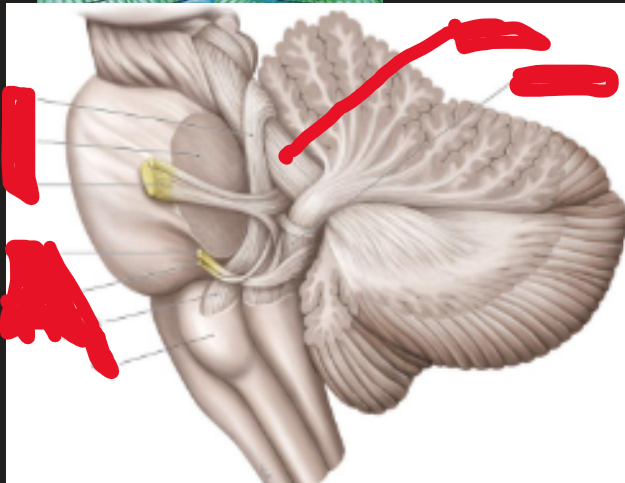
Flocculus | Latin: little tuft / flake | ID: Tiny irregular tuft on anteroinferior cerebellum beside brainstem. | A1/A2 link: Flocculus = small tuft of wool; not a peripheral nerve/muscle. | Exam: Lateral partner of nodulus.
What is this?
Pedunculus cerebellaris superior | Latin: upper cerebellar stalk | ID: Paired white-matter bundles from cerebellum toward midbrain. | A1/A2 link: Pedunculus cerebri = cerebral peduncle; pedunculus means stalk. | Exam: Main deep-nuclear output toward thalamus/red nucleus.

What is this?
Pedunculus cerebellaris inferior | Latin: lower cerebellar stalk | ID: White-matter connection between dorsolateral medulla and cerebellum. | A1/A2 link: Inferior = lower; compare inferior neurovascular structures (A1). | Exam: Carries spinocerebellar, olivary, vestibular inputs.

What is this?
Corpus restiforme | Latin: rope-shaped body | ID: Major part of inferior cerebellar peduncle near medulla. | A1/A2 link: Corpus = body; corpus sterni and corpus vertebrae (A1). | Exam: Restiformis means rope-like.

What is this?
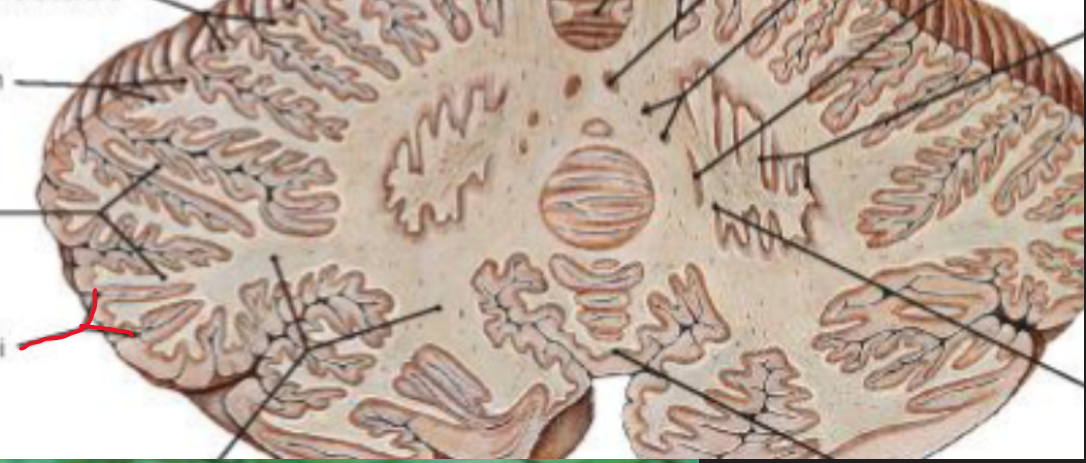
Arbor vitae cerebelli | Latin: tree of life of cerebellum | ID: Branching tree-like white-matter pattern on sagittal section. | A1/A2 link: Arbor = tree; compare the bronchial tree (A2) as shape analogy. | Exam: Pattern, not a separate nucleus.
What is this?
Substantia grisea cerebelli | Latin: gray substance of cerebellum | ID: Outer cortex plus deep cerebellar nuclei. | A1/A2 link: Substantia grisea spinalis = spinal cord gray matter (A3).

What is this?
Substantia alba cerebelli | Latin: white substance of cerebellum | ID: Deep white matter with branching laminae. | A1/A2 link: Substantia alba spinalis = spinal cord white matter (A3).

What is this?
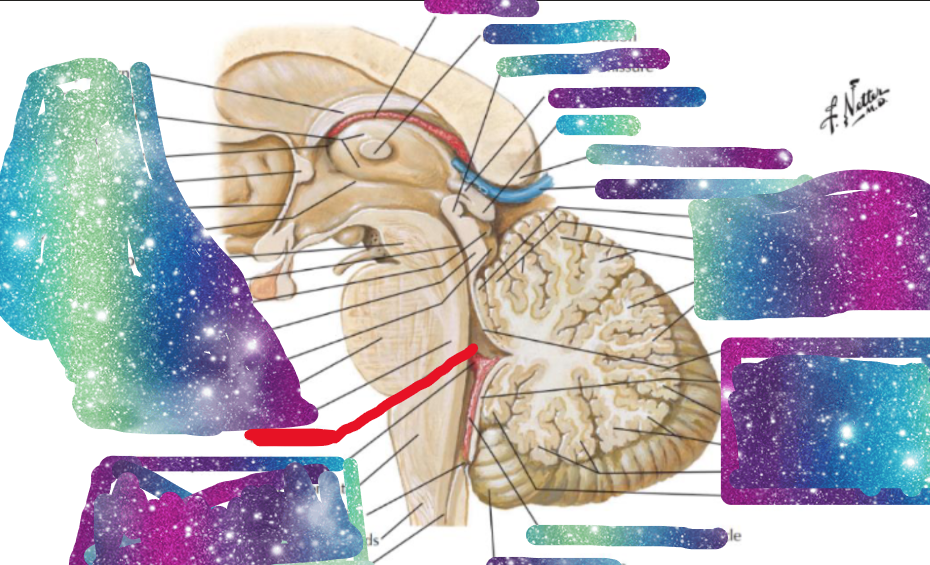
Velum medullare superius | Latin: upper marrow-like veil | ID: Thin sheet between superior cerebellar peduncles; supports lingula. | A1/A2 link: Velum palatinum = soft palate (A2); velum means veil. | Exam: Part of superior fourth-ventricle roof.
What is this?
Ventriculus quartus | Latin: fourth little cavity / ventricle | ID: CSF space between cerebellum and dorsal pons/medulla. | A1/A2 link: Ventriculus cordis = chamber of heart (A2); ventriculus = little belly/chamber. | Exam: Its roof faces cerebellum.

What is this?
Tentorium cerebelli | Latin: tent of cerebellum | ID: Dural fold separating cerebellum from occipital cerebral lobes. | A1/A2 link: Tendo = tendon is DIFFERENT root from tentorium (tent-like). | Exam: Supratentorial vs infratentorial compartments.

What is this?
Falx cerebelli | Latin: sickle of cerebellum | ID: Small vertical dural fold between inferior cerebellar hemispheres. | A1/A2 link: Falx cerebri = sickle-shaped dural fold (A3); falx = sickle. | Exam: Near posterior cerebellar notch.
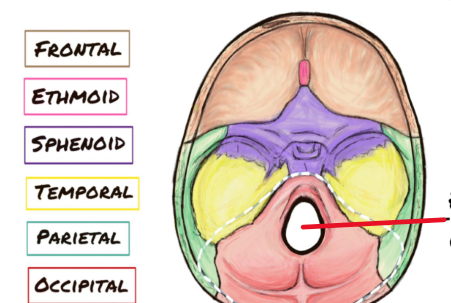
What is this?
Foramen magnum | Latin: large opening | ID: Large opening in occipital bone below cerebellar tonsils. | A1/A2 link: Foramen = opening; foramina in sphenoid and vertebrae (A1). | Exam: Tonsillar herniation can compromise medulla.