COMPLETE MICRO LAB MIDTERM PRACTICE
 Call Kai
 Learn
 Practice Test
 Spaced Repetition
 Match
 Flashcards
 Knowt Play
1/130

There's no tags or description
Looks like no tags are added yet.
131 Terms
what reproduces via sporangiospores
rhizopus
this mold you can find on the white/gray mycelia on bread
rhizopus
this mold you can find used in the fermentation of japanese sake
rhizopus
this is a precursor to cortisone
rhizopus
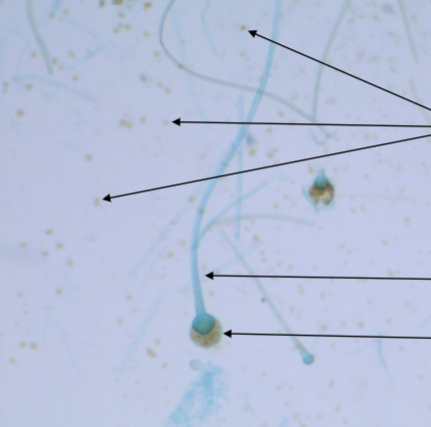
what are the top three arrows pointing towards
sporangiospore

what is the second to bottom arrow point towards
sporangiophore

what is the bottom arrow point towards
sporangium
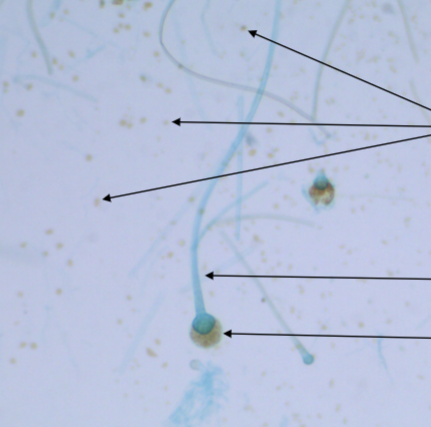
what is this called and what domain is it under
rhizopus, fungi
what fungi reproduces vis conidiospores
aspergillus
what fungi do you find used in the production of citric acid, soy sauce, and vinegar
aspergillus
what fungi produces mycotoxins that may cause food poisoning
aspergillus
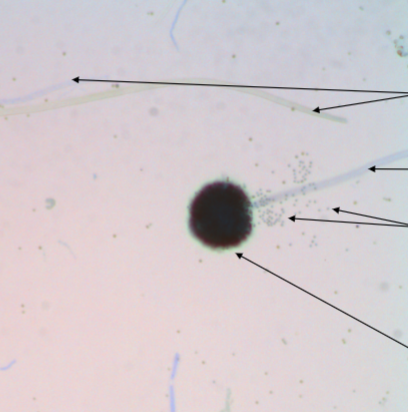
what is this called
aspergillus

what are the top two arrows pointing to
hyphae

what is the second arrow from the bottom pointing to
conidiospores

what are the little dots called
conidiospores
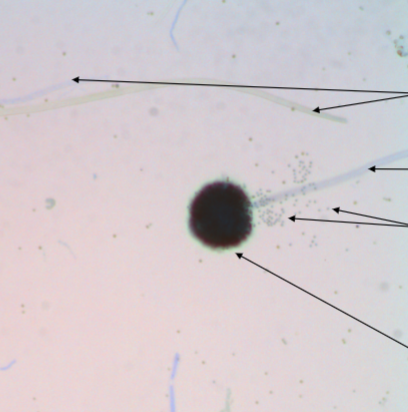
what is the bottom arrow pointing to
the conidium
what fungi reproduces via budding
saccharomyces cerevisiae
what fungi is also known as “sugar mold” or “sugar fungus”
saccharomyces cerevisiae
what fungi is extremely helpful in identifying human proteins
saccharomyces cerevisiae
what fungi is commonly used in baking, brewing and food supplements
saccharomyces cerevisiae
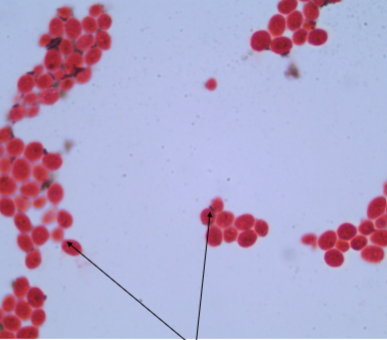
what is this
saccharomyces cerevisiae
what fungi produces via basidiospores
coprinus
this fungi means “of dung”
coprinus
this fungi known as the “ink cap”
coprinus

what are the arrows pointing to
gils

what is the top arrow pointing
basidiospores

what is the middle arrow pointing to
basidia

what is the bottom arrow pointing to
gills
what protista moves via cilia
Balantidium coli
what protista goes from a cyst to a trophozoite
Balantidium coli
what is the largest pathogenic protozoan
Balantidium coli
what is the only known ciliated human pathogen
Balantidium coli
most infections are asymptomatic, or it can cause diarrhea, abdominal pain, or perforation of the bowel
Balantidium coli

what is this
balantidium coli

what is the white arrow pointing to
micronuclei
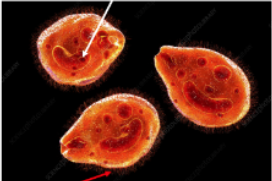
what is the red arrow pointing to
cilia
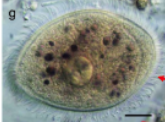
what is this
Balantidium coli

what is this
balantidium coli
this protista moves via flagella
trichomonas vaginalis
this protista has a unique elongated nucleus
trichomonas vaginalis
this is the only flagellate known to infect urogenital tracts
trichomonas vaginalis
this causes trichomoniasis, a sexually transmitted infection
trichomonas vaginalis

what is this
trichomonas vaginalis
this protista moves via pseudopodia
entamoeba histolytica
this protista also has a life cycle o a cyst and a trophozoite
entamoeba histolytica
this causes acute amebic dysentery
entamoeba histolytica
this causes extra intestinal amebiasis
entamoeba histolytica
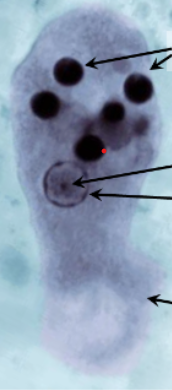
what are the dark black circles that the two top arrows are pointing to
ingested red blood cells
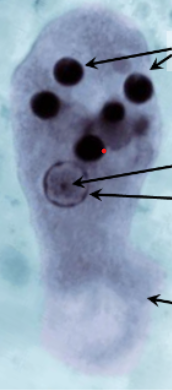
what is the two center arrows pointing to
the nucleus, endosome, membrane, and condensed chromatin

what is the bottom arrow pointing to
pseudopod
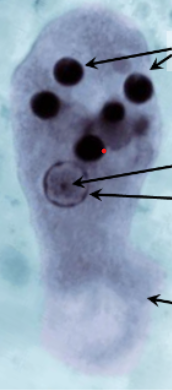
what is this called
entamoeba histolytica
this is a non motile protista
plasmodium melariae
this is spread by a vector (mosquito)
plasmodium melariae
this is one of the four species that cause malaria
plasmodium melariae
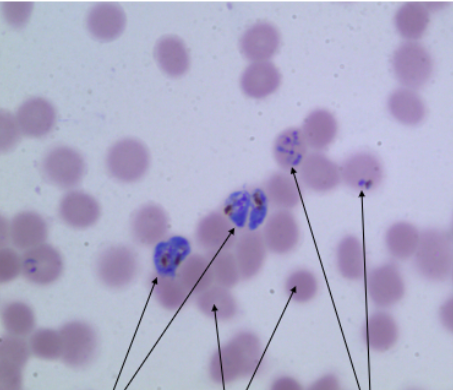
what are the two first arrows pointing to
leukocytes

what are the second two arrows pointing to
erythrocytes/ red blood cells

what are the last two arrows pointing to
infected erythrocytes
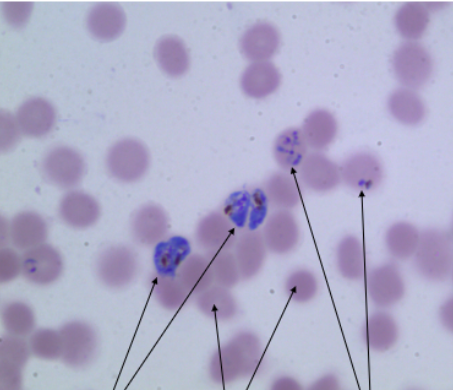
what is this
plasmodium melariae
is staphylococcus aureus gram positive or negative
gram positive
staphylococcus aureus morphology
staphylococcus
this can cause MRSA (skin infection)
staphylococcus aureus
this can cause toxic shock syndrome
staphylococcus aureus
this can cause food poisoning
staphylococcus aureus
this is in the normal flora for humans
staphylococcus aureus

what is this
staphylococcus aureus
is streptococcus pyogenes gram positive or gram negative
gram positive
streptococcus pyogenes morphology
streptococcus
AKA group A Strep (GAS)
streptococcus pyogenes
this causes 90% of all strep infections- strep throat, rheumatic fever, glomerulonephritis, scarlet fever, erysipelas, and puerperal sepsis
streptococcus pyogenes
this is only pathogenic to humans
streptococcus pyogenes
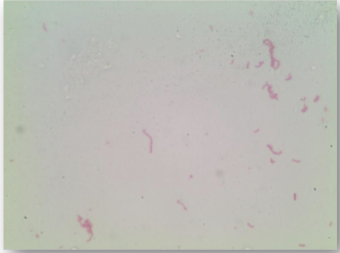
what is this
streptococcus pyogenes
is micrococcus luteus gram positive or gram negative
gram positive
micrococcus luteus morphology
sarcina
this is usually non pathogenic
micrococcus luteus
human normal flora found on skin, mucous membrane and oropharynx
micrococcus luteus
this is also found in the environment
micrococcus luteus
this is non pathogenic
micrococcus luteus

what is this
micrococcus luteus
is corynebacterium diphtheriae gram positive or gram negative
gram positive
corynebacterium diphtheriae morphology
single bacillus
this is plieomorphic (changes between rod and club shaped)
corynebacterium diphtheriae
this contains metachromatic granules which store polyphosphate (energy dense compound)
corynebacterium diphtheriae
this causes diphtheria
corynebacterium diphtheriae
humans can be carriers of this
corynebacterium diphtheriae
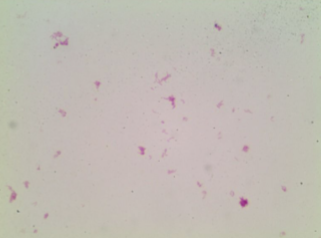
what is this
corynebacterium diphtheriae
is bacillus megaterium gram positive or negative
gram positive
bacillus megaterium morphology
streptobacillus
this produces endospores
bacillus megaterium
the reservoir for this is the soil
bacillus megaterium
this is often used in research, especially in biotechnology
bacillus megaterium
this is usually non pathogenic (ba…)
bacillus megaterium

what is this
bacillus megaterium
is neisseria gonorrhoeae gram positive or gram negative
gram negative
neisseria gonorrhoeae morphology
primarily diplococcus
this causes gonorrhea
neisseria gonorrhoeae
this causes salpingitis
neisseria gonorrhoeae
this causes ophthalmia of the newborn
neisseria gonorrhoeae
this is found in the intracellular and extracellular in infected individuals
neisseria gonorrhoeae

what is this
neisseria gonorrhoeae
is treponema pallidum gram positive or gram negative
gram negative