PSYCH exam 5
 Call Kai
 Learn
 Practice Test
 Spaced Repetition
 Match
 Flashcards
 Knowt Play
1/103

There's no tags or description
Looks like no tags are added yet.
104 Terms
Social Psychology
The study of how people think about, influence, and are affected by other people
Attributions
Inferences that people draw about the causes of events and behavior
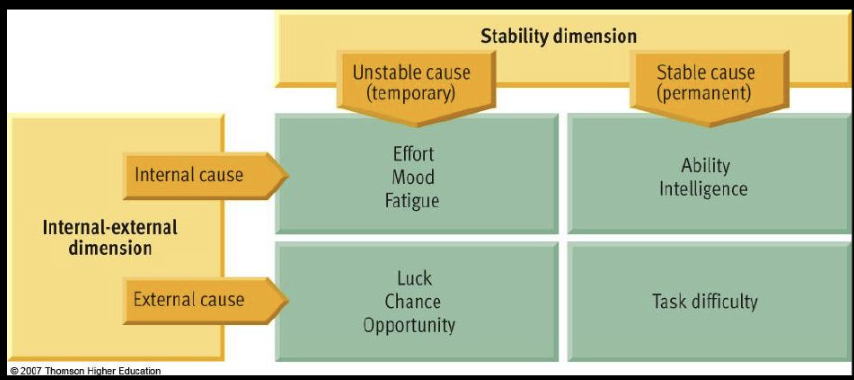
Internal-external dimension:
Internal attributions: explanations based on personal traits
External attributions: explanations based on situational factors
Stability dimension:
Unstable cause: temporary, able to change
Stable cause: permanent, unable to change
Attribution Model
Actor-Observer bias
Tendency to attribute our own behavior to external, situational factors while attributing the same behavior from other people as due to internal, dispositional factors. Ex: people are so inconsidereate when someone else litters…but there is no dustbin when you yourself litter
Fundamental Attribution Error
The “other people” part of the actor-observer bias - we believe others do things because of their internal traits.
Ex: A coworker arrives 20 minutes late to a team meeting, and you immediately think, "They are lazy, disorganized, and don't care about their job." But they were actually late because of a family emergency
Self-serving bias
Tendency to make internal attributions for our successes and external attributions for our failures
Problem when you fail: Lack of accountability!
Just world hypothesis
The belief that the world is just/fair—people ge tthe outcomes they deserve
Good people get good things; bad people get bad things
Allows people to feel the world is predictable, they have control of outcomes
Related to the FAE
Attitudes
Our feelings, opinions, and beliefs about people, objects, and ideas
Three components of attitudes (ABCs!):
Affective: emotional response to the topic/people/idea
Behavioral: how we act in regards to the topic/person/idea
Cognitive: how/what we think about the topic/person/idea
We aren’t born with attitudes; we learn them!
Can be taught directly, learn through personal experience, or learn through observation
Attitudes can influence actions
Our attitudes can affect our actons, especially when:
They are very strong
You spend time talking about and practicing them
The topic affects you directly