Chapter 3 - functional groups
 Call Kai
 Learn
 Practice Test
 Spaced Repetition
 Match
 Flashcards
 Knowt Play
1/21

There's no tags or description
Looks like no tags are added yet.
22 Terms
2 parts of organic molecules
Carbon backbone: carbon and hydrogen skeleton of a molecule
Functional groups: groups of atoms/bonds that determine the properties and reactivity of a molecule
Alkane
Hydrocarbon
Made up of carbons and hydrogens with only C-C sigma bonds (only single bonds)
no functional group
Alkene
Hydrocarbon
Made up of carbons and hydrogens with C-C double bonds
functional group - C-C double bond
Alkynes
Hydrocarbon
Made up of only carbons and hydrogens with a C-C triple bond as a functional group
Aromatic ring
Benzene ring (6 carbon ring with alternating double bonds)
Phenyl
Benzene attached to an OH
Benzyl group
When CH2 is between a phenyl ring and the rest of the carbon backbone
Heteroatoms
Atoms other than carbon or hydrogen
C-Z bonds
bonds to electronegative atoms (where Z = electronegative element)
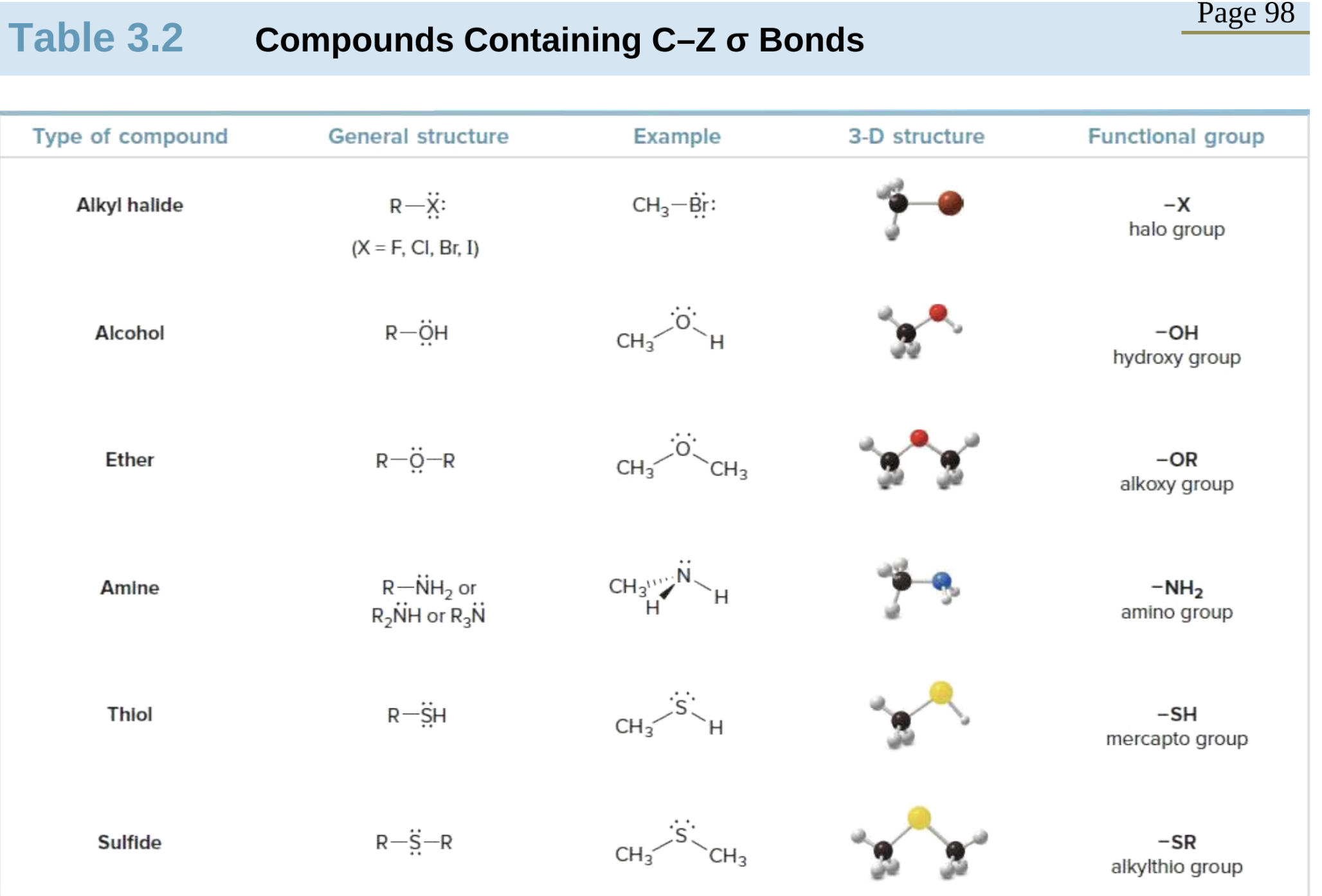
Alkyl halide (functional group name, general structure)
Contains C-Z bonds
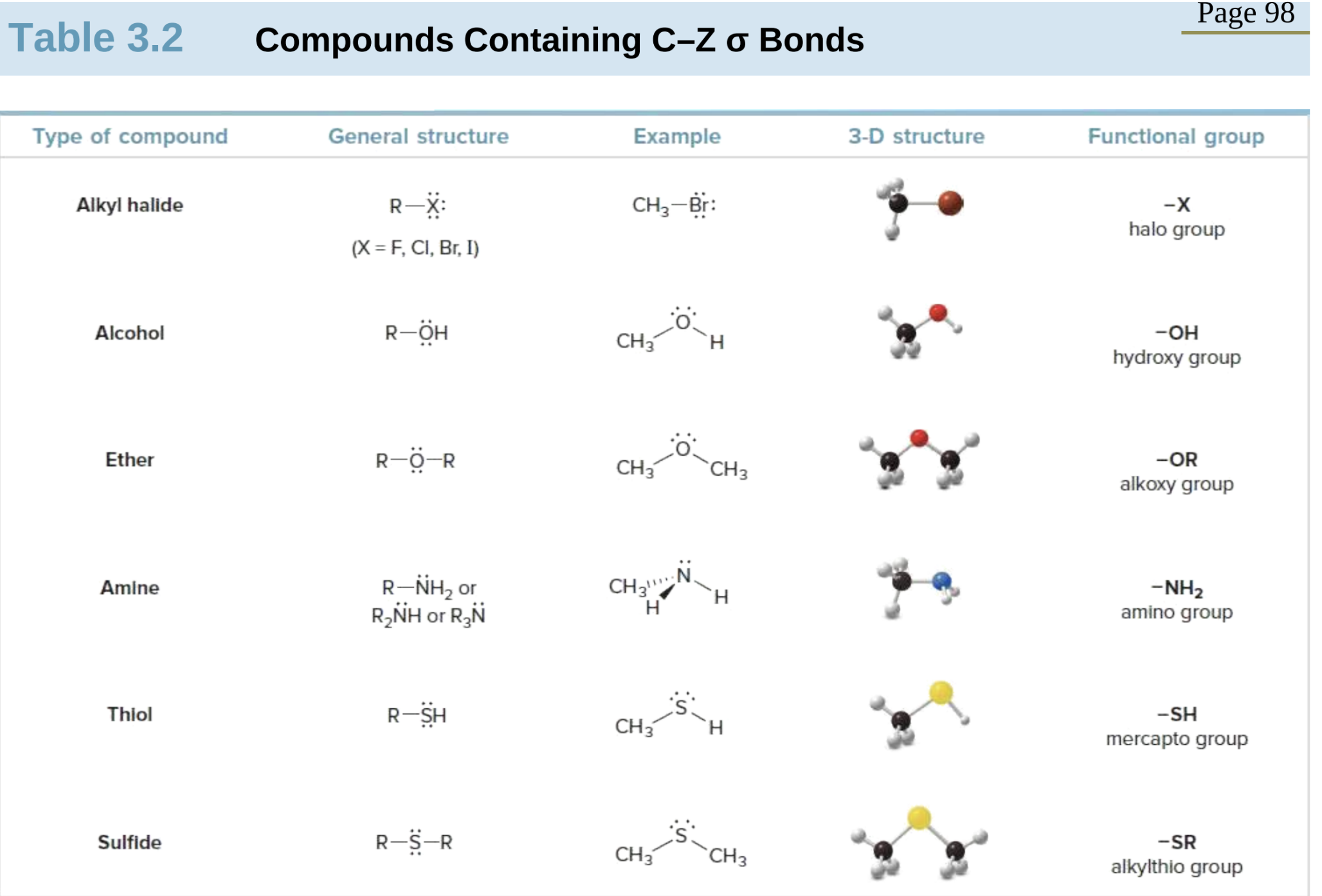
Alcohol: (functional group name, general structure)
Contains C-Z bonds

Ether - (functional group name, general structure)
Contains C-Z bonds

Amine: (functional group name, general structure)
Contains C-Z bonds

Thiol: (functional group name, general structure)
Contains C-Z bonds

Sulfide: (functional group name, general structure)
Contains C-Z bonds
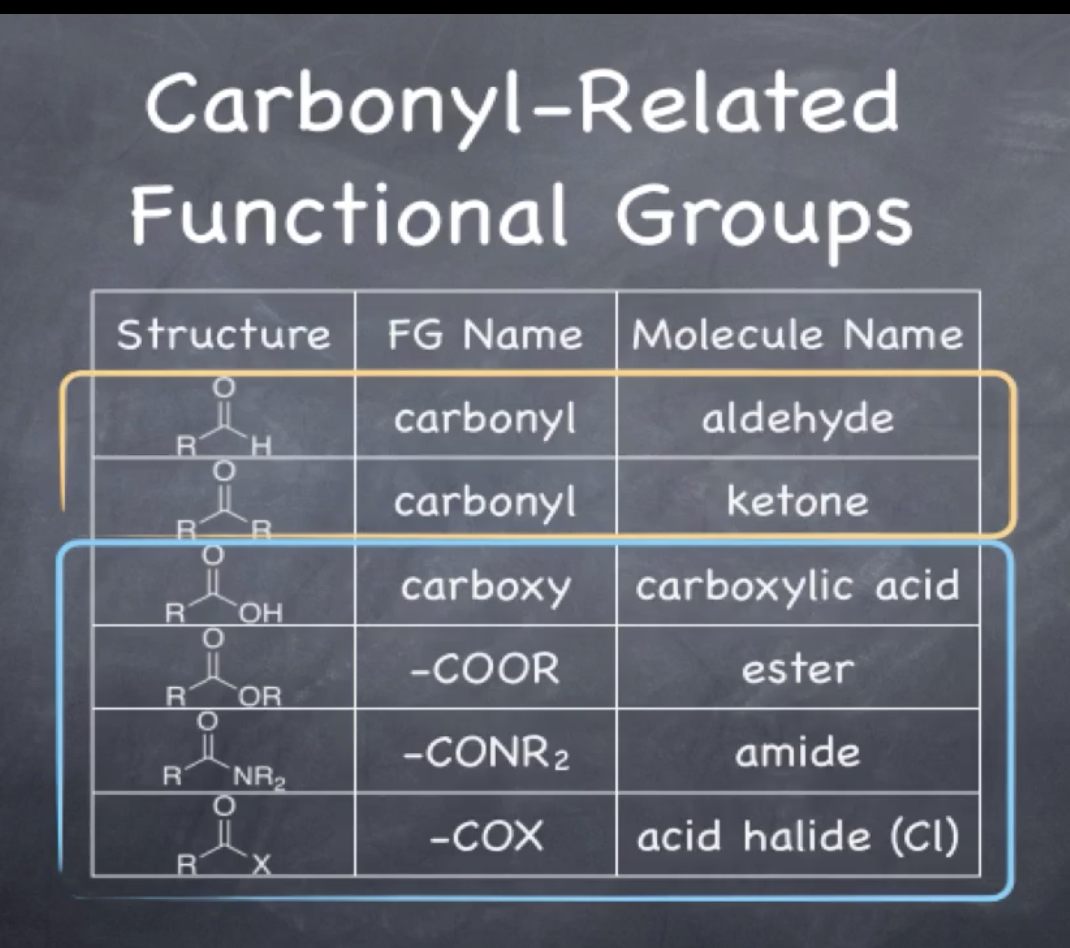
Aldehyde: (functional group name, general structure)
Contains C=O bond

Ketone: (functional group name, general structure)
Contains C=O bond
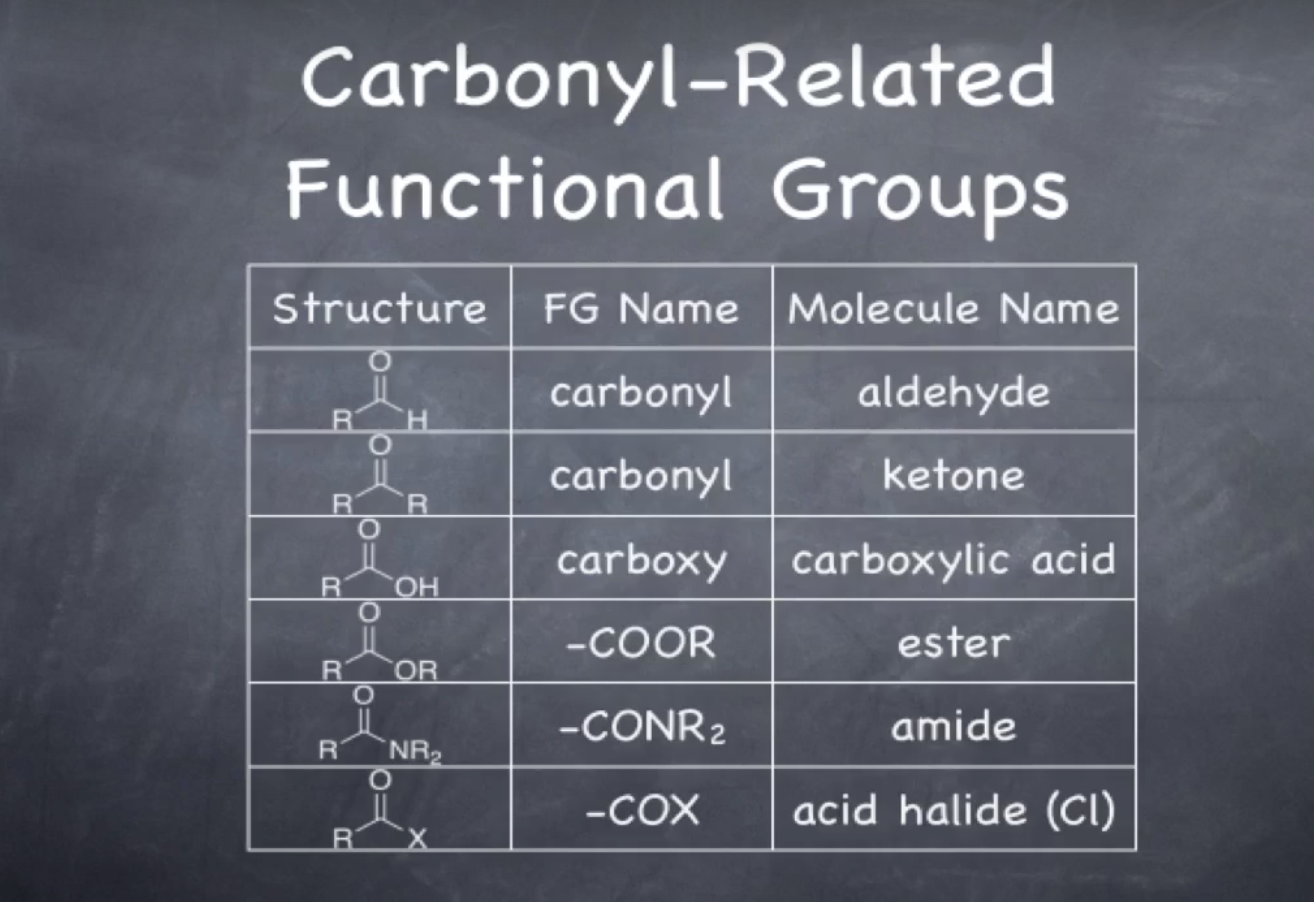
Carboxylic acid: (functional group name, general structure)
contains C=O bond
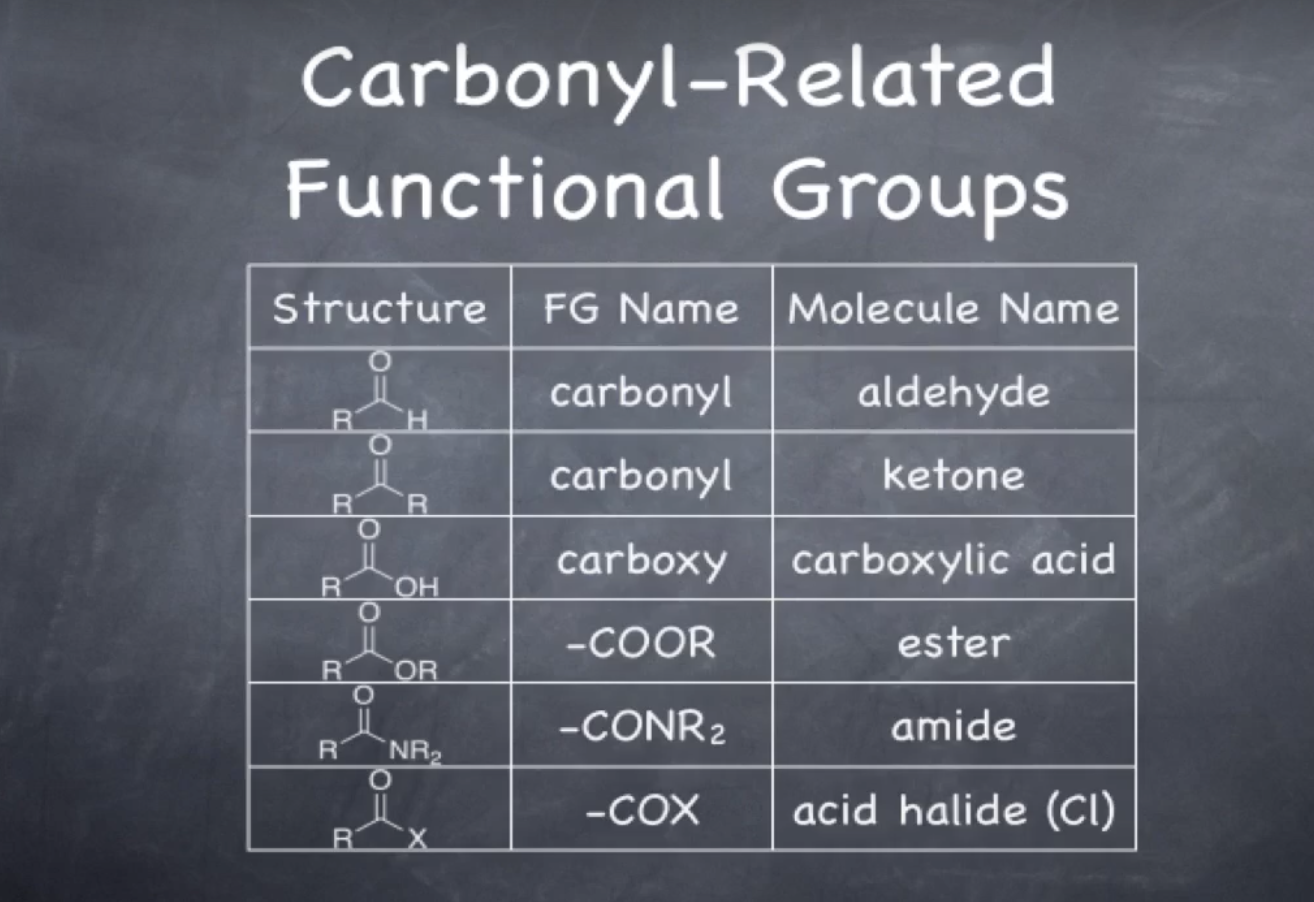
Ester: (functional group name, general structure)
Contains C=O bond

Amide: (functional group name, general structure)
contains C=O bond

Acid halide (Cl): (functional group name, general structure)
Contains C=O bond

Carbonyl-related functional groups: which groups have similar behavior to each other?
Answer