Molecular Bio. Exam 3, Measuring Gene Expression
 Call Kai
 Learn
 Practice Test
 Spaced Repetition
 Match
 Flashcards
 Knowt Play
1/15

There's no tags or description
Looks like no tags are added yet.
16 Terms
Methods of measuring gene expression
all measure RNA abundance (which doesnt necessarily match protein abundance)
Northern blot, RT-qPCR, RNA-seq
northern blot
RNA size and approx abundance
reveals transcript length and possible splice variants
direct method
RT-qPCR
sensitive, targeted quantification
requires validated reference genes and assays
indirect method
RNA-seq
transcriptome-wide discovery
broader coverage, but limited quantification resolution
for this method, think back to NGS methodology
sample to conclusion / steps of gene expression methods
sample replicates
RNA: extract, quantify, assess, integrity
assay: hybridize or reverse transcribe / amplify
analyze: normalize and asses uncertainty
work flow of northern blot
separate: denaturating agarose gel resolves RNAs by size
transfer: RNA moves from gel to a membrane (nylon); is immobilized
hybridize: labeled probe binds to a complementary sequence (gene of interest)
Detect: band position (size) and intensity (amount) can be measured

reading a northern blot
band position: transcript size
band intensity: amount of probe-bound target
multiple bands: possible splice variants or cross hybridization
when is northern blot used
transcript size determination
identification of alternative splice variants for your gene of interest
limitations of northern blotting
lower sensitivity and throughput than RT-qPCR; relatively large RNA input and lengthy workflow
conventional RT-PCR vs real-time RT-qPCR
endpoint
RT-PCR: RNA → cDNA → agarose gel
band presence (semi quantitative intensity) at the end of cycling
RT-qPCR
RNA → cDNA → fluorescence monitored each cycle
quantifies a signal during amplification
RT = reverse transcriptase
qPCR = quantitative PCR
RT-qPCR workflow
RNA quality: prevent degradation and genomic DNA contamination
Reverse transcription: synthesize cDNA from RNA using reverse transcriptase
qPCR: Amplify target with PCR; use fluorescence chemistry
Interpretation: Cq → validated quantities → normalization
reverse transcriptase primers
uses Olgio(dT): PolyA+transcripts
random primers: broader RNA coverage
Gene specific primers: selected transcripts
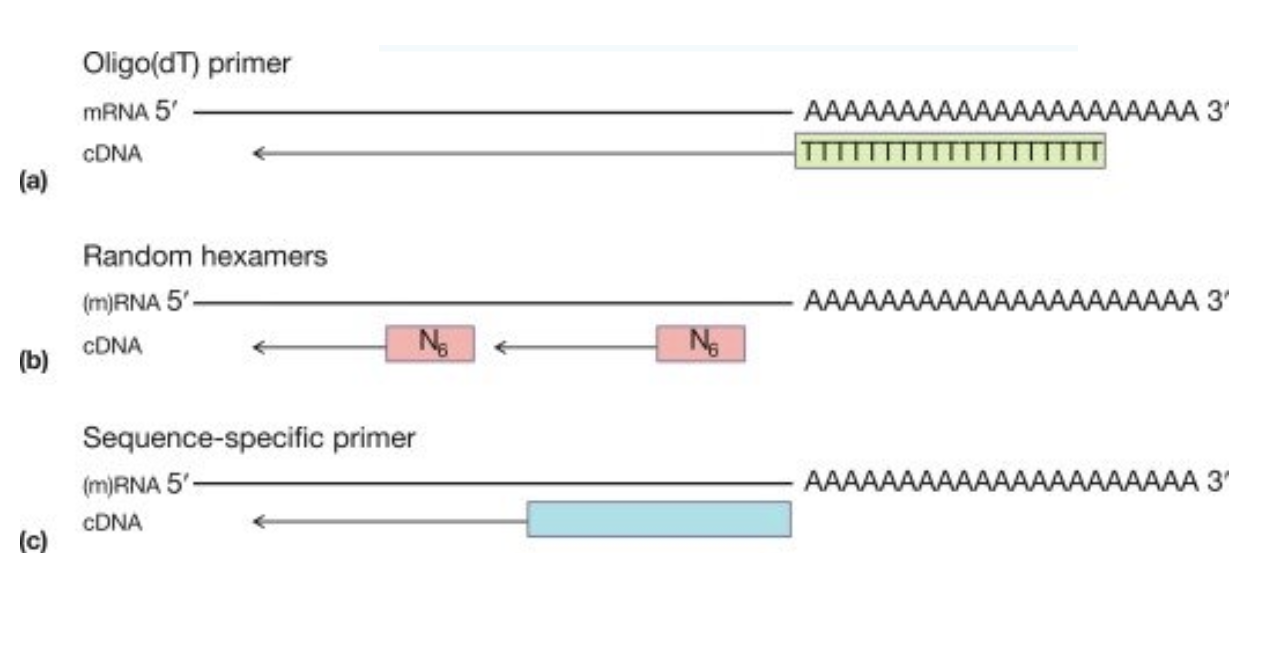
reverse transcriptase design choices
keep RNA inputs comparable
use matched RT conditions and an appropriate priming strategy
a high-quantity qPCR assay cannot repair biased or inconsistent cDNA synthesis
DNA-binding dye for fluorescence probe for RT-PCR
signal increases with double stranded DNA accumulation during each cycle
affordable and flexible
detects intended amplicons and unwanted sdDNA (specificity checks / controls needed)
SYBR Green

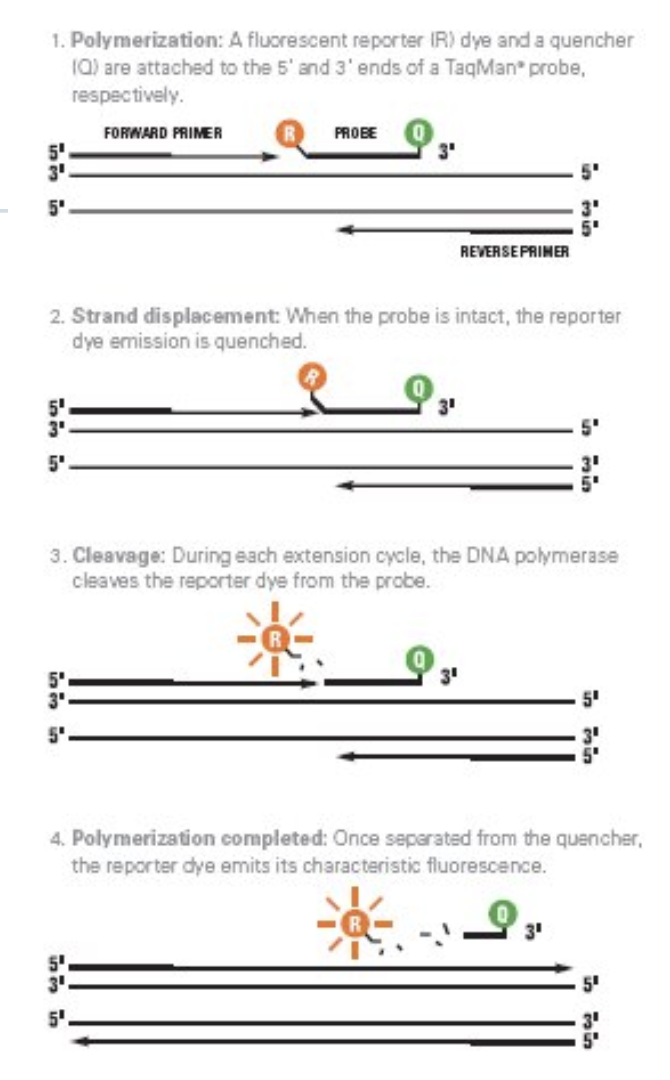
hydrolysis probe
target-specific labeled probe carriers reported and quencher
polymerase cleavage separates reporter from quencher
higher sequence specificity (compared to SYBR green)
TaqMan
amplification curve
Cq (quantify cycle)
cycle at which defined fluorescence threshold is crossed
sometimes called cycle threshold value (Ct)
lower Cq generally indicates more starting target DNA (template)
Cq is an instrument and analysis dependent; it is not direct molecule count
