Plant Id workshop 1
 Call Kai
 Learn
Learn Practice Test
 Spaced Repetition
 Match
Match Flashcards
 Knowt Play
1/16

There's no tags or description
Looks like no tags are added yet.
Name | Mastery | Learn | Test | Matching | Spaced | Call with Kai | Chat |
|---|
No analytics yet
Send a link to your students to track their progress
17 Terms
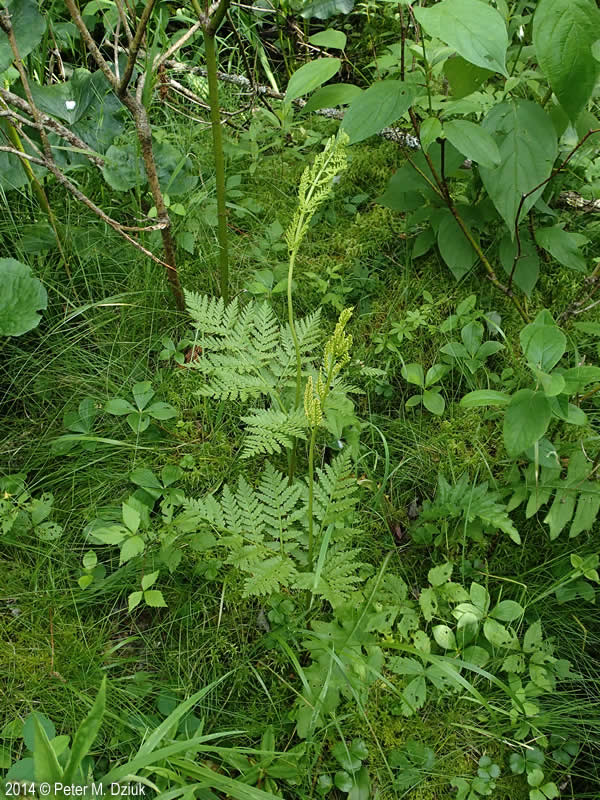
Botrypus virginianus: rattlesnake fern. Ophioglossaceae, Seedless vascular fern. Leaves: 1 large sterile blade + fertile spike.up to 12 leaflets in Sporangia on the spike. Botrypus = grape-like cluster; virginianus = Virginia/New World origin.
Botrychium matricariifolium
Ophioglossaceae; matricary grapefern. Seedless vascular fern. 2-part frond: sterile blade + fertile spike. Sporangia in grape-like clusters. Botrychium = grape cluster; matricariifolium = leaves resembling Matricaria.
Osmunda claytoniana
Osmundaceae; interrupted fern. Seedless vascular fern. Pinnate frond with fertile pinnae in the middle, separating sterile sections. Sporangia on fertile pinnae. Osmunda = fern genus; claytoniana honors John Clayton.
Pteridium aquilinum
Dennstaedtiaceae; bracken fern. Seedless vascular fern. Large, triangular, 3×-divided fronds. Marginal sori along leaflet edges. Pteridium = little wing; aquilinum = eagle-like, referring to frond shape.
Cystopteris fragilis
Dryopteridaceae; fragile fern. Seedless vascular fern. Delicate, finely divided pinnate fronds. Round sori with indusia. Cystopteris = bladder fern; fragilis = fragile, describing its delicate fronds.
Woodsia oregana
Dryopteridaceae; Oregon woodsia. Seedless vascular fern. Small pinnate fronds; narrow segments. Sori beneath pinnae with hair-like/fragmented indusia. Woodsia honors Joseph Woods; oregana = of Oregon.
Thelypteris palustris
Thelypteridaceae; northern marsh fern. Seedless vascular fern. Pinnate fronds with narrow segments, often pale beneath. Round sori on underside. Thelypteris = female fern; palustris = of marshes.
Equisetum arvense
Equisetaceae; field horsetail. Seedless vascular plant. Hollow jointed stems; fertile spring stems differ from green sterile shoots. Terminal cone (strobilus) bears sporangia. Equisetum = horse tail; arvense = of fields.
Equisetum hyemale
Equisetaceae; tall scouring rush. Seedless vascular plant. Tall, stiff, unbranched, jointed green stems with toothed sheaths. Terminal strobilus bears sporangia. Equisetum = horse tail; hyemale = winter, referring to persistent stems.
Abies balsamea
Pinaceae/Abietoideae; balsam fir. Evergreen tree. Flat needles, soft and rounded, attached singly; cones upright. Abies = fir; balsamea = balsam-producing, referring to resin.
Larix laricina
Pinaceae/Laricoideae; tamarack. Deciduous conifer. Needles in clusters on short shoots; turns yellow and drops in fall. Small upright cones. Larix = larch; laricina = larch-like.
Picea pungens
Pinaceae/Piceoideae; blue spruce. Evergreen tree. Stiff, sharp, four-sided needles attached singly; cones hang downward. Picea = spruce; pungens = sharp-pointed, referring to needles.
Pinus ponderosa
Pinaceae/Pinoideae; ponderosa pine. Evergreen tree. Needles in bundles of 3, relatively long; large woody cones with prickles. Pinus = pine; ponderosa = heavy/massive, referring to large size.
Pinus banksiana
Pinaceae/Pinoideae; jack pine. Evergreen tree. Short twisted needles in bundles of 2; cones are small, curved and often remain closed. Pinus = pine; banksiana honors Sir Joseph Banks.
Juniperus scopulorum
Cupressaceae; Rocky Mountain juniper. Evergreen tree/shrub. Scale-like adult leaves, sometimes needle-like juvenile leaves; berry-like seed cones. Juniperus = juniper; scopulorum = of rocky cliffs/mountains.