Chapter 4 Organic Chemistry Flashcards
 Call Kai
 Learn
Learn Practice Test
 Spaced Repetition
 Match
Match Flashcards
 Knowt Play
1/34

Earn XP
Description and Tags
Vocabulary flashcards generated from Chapter 4 organic chemistry lecture notes covering molecular structures, functional groups, hydrocarbons, and lipids.
Name | Mastery | Learn | Test | Matching | Spaced | Call with Kai | Chat |
|---|
No analytics yet
Send a link to your students to track their progress
35 Terms
Molecular formula
A chemical formula that shows the number of atoms of each element in a molecule.
Condensed structure formula
A structural formula that shows all the atoms in a molecule but uses as few bonds as possible.
Lewis structure
A structural representation that shows complete connectivity, including all atoms and all bonds.
Skeletal structure
A structural representation that shows carbon bonds through lines with implied hydrogens, draws non-carbon elements at the end using their symbols (showing hydrogens bonded to them), and omits lone pairs.

Saturated hydrocarbons
Hydrocarbons containing only single bonds between carbon and hydrogen, indicating that each carbon atom is bonded to the maximum number of hydrogen atoms.

Unsaturated hydrocarbons
Hydrocarbons that contain double or triple bonds.
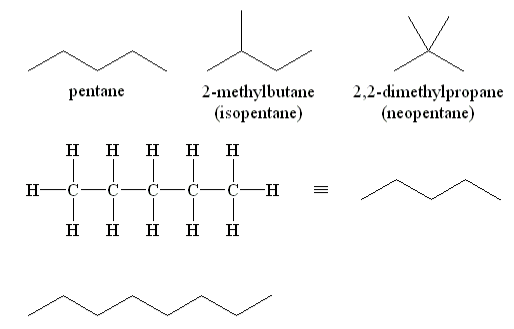
Straight chain alkanes
Unbranched carbon atom chains named based on the number of carbons, using a Greek prefix and the suffix "-ane" for 5 or more carbons.
General formula for alkanes
CnH2n+2
Cycloalkanes
Alkanes arranged in rings, named by adding the prefix "cyclo-".
Cyclopropane
The simplest cycloalkane, with the molecular formula C3H6.
Heteroatoms
Atoms in organic molecules other than carbon and hydrogen.
Functional group
A specific arrangement of atoms that serves as the reactive part of a molecule and classifies organic molecules based on characteristic properties and reactivity; represented with "R" for any carbon-containing group.

Quaternary amines
Amines that gain a positive charge when they become quaternary.
Terpenes
Compounds containing alkenes that are responsible for smells and flavors.
Alkynes
Unsaturated hydrocarbons containing a carbon-carbon triple bond (C≡C).

Aromatics
Unsaturated hydrocarbons with noticeable odors that contain a benzene ring with stable, spread-out electrons.

Polycyclic Aromatic Hydrocarbons (PAHs)
Compounds containing multiple fused benzene rings that are formed during the incomplete combustion of organic material, which can damage DNA and increase cancer risk.

Lipids
Fatty acids composed of long hydrocarbon chains attached to a −COOH group.

Saturated fatty acids
Fatty acids containing no carbon-carbon double bonds (C=C).

Monounsaturated fatty acids
Fatty acids containing one carbon-carbon double bond (C=C).

Polyunsaturated fatty acids
Fatty acids containing two or more carbon-carbon double bonds (C=C).
Functions of fats
Functions that include insulating the body, protecting organs, and supporting nerve function.

Thiols
R-SH: sulfur analog of alcohols

Sulfides
R-S-R, sulfur analog of ethers

Disulfides
R-S-S-R, important in protein structure

Phosphate groups
Contain P bonded to multiple oxygens, common in ATP, DNA, and energy transfer

Alcohol
Have classifications depending on how many carbons are attached to its -OH group

Amines
Have classification based on how many carbons attached to nitrogen

Carbonyl Group
C=O: defining feature, surrounding atoms show specific family

Aldehyde
Carbonyl is at end of a chain (bonded to H)
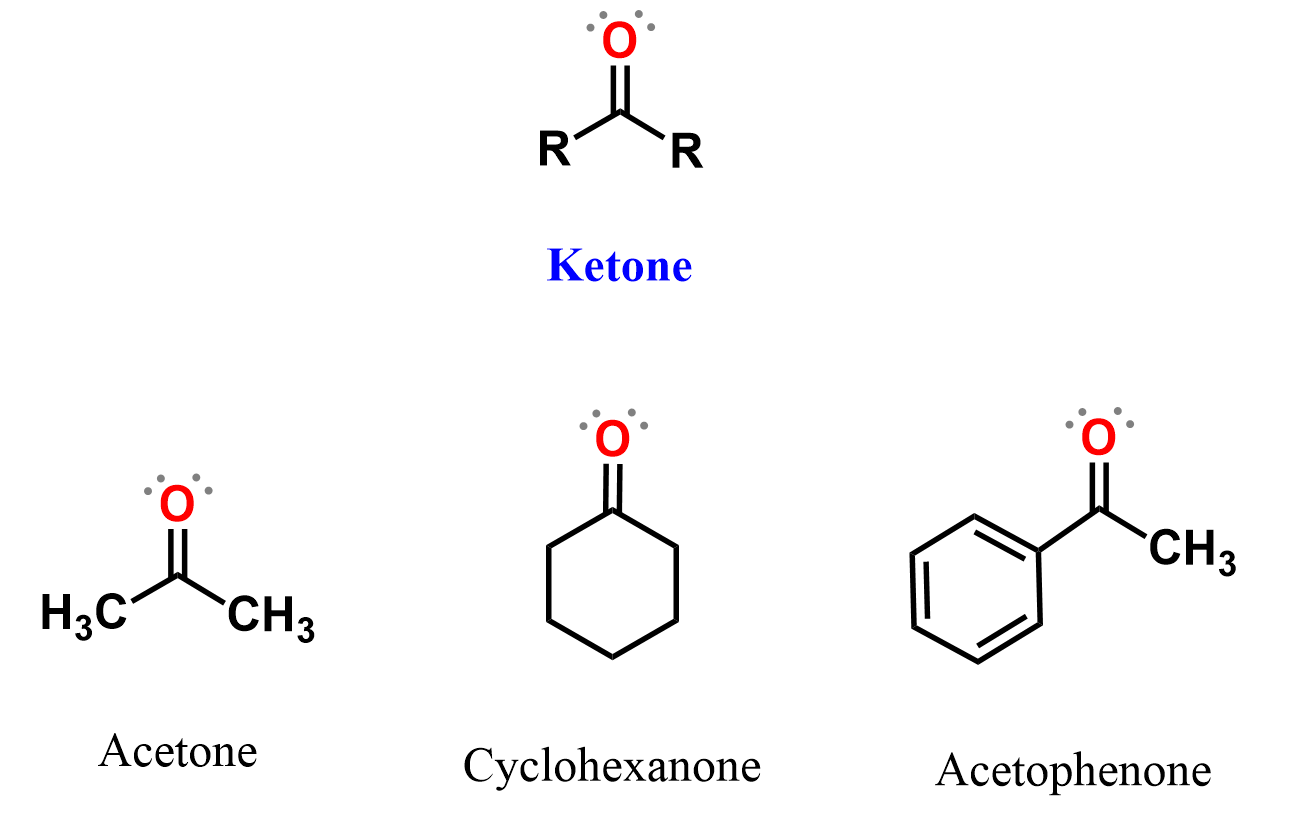
Ketone
Carbonyl within a chain (c=o within carbons)

Carboxylic acid
Carbonyl + -OH on the same carbon
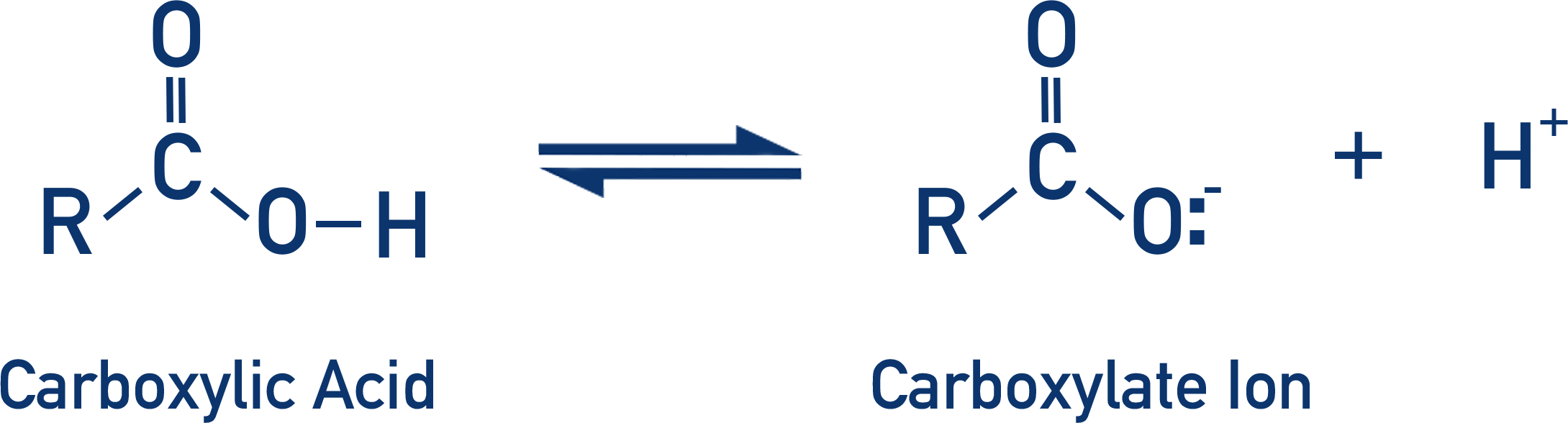
Carboxylate
Depronated acid (-COO-)

Ester
Carbonyl derivative, carbonyl bonded to oxygen (-OR), formed from acids + alcohols, common in fats, oils, fragrances

Amide
Carbonyl derivative, carbonyl bonded to a nitrogen (-NR2), formed from acids + amines, found in proteins (peptide bonds)