Particle model and thermal energy - Physics Science Revision
 Call Kai
 Learn
 Practice Test
 Spaced Repetition
 Match
 Flashcards
 Knowt Play
1/23

There's no tags or description
Looks like no tags are added yet.
24 Terms
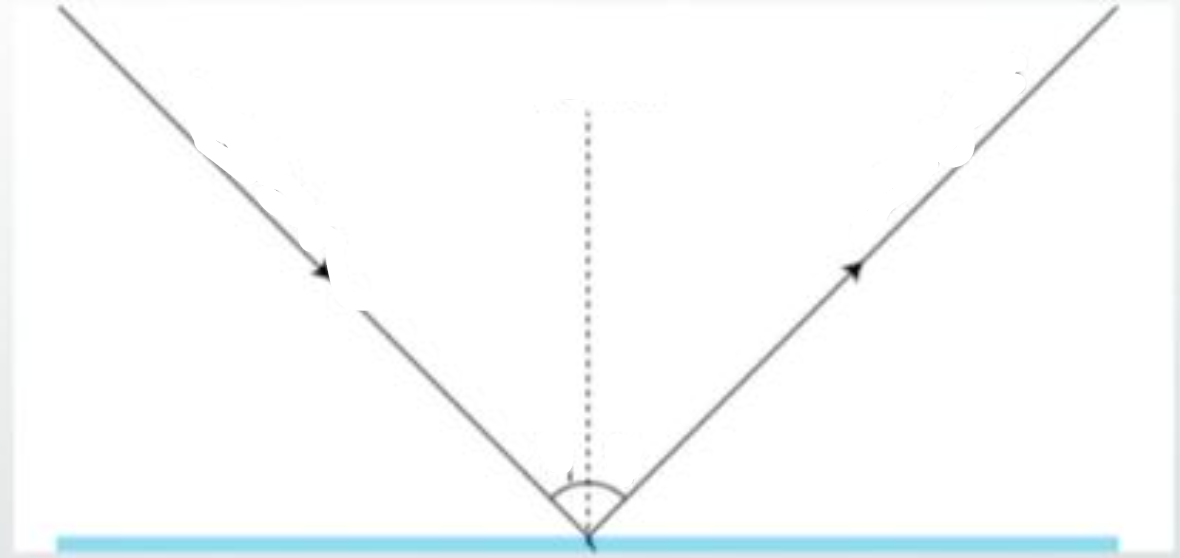
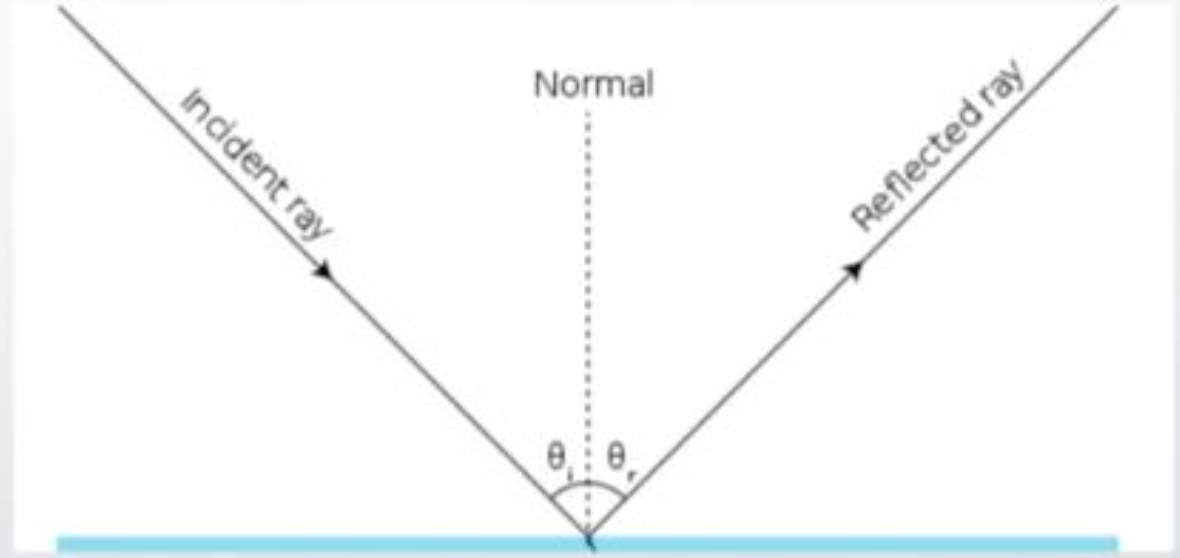
Where is the incident ray?


Where is the reflected ray?


Where is the normal?

Where is the refracted ray and angle of refraction?

Incident ray definition:
An incident ray is the ray of light that travels towards and hits a surface or object.
Quick summary of normal, incident ray, reflected ray:
Incident ray = incoming light.
Reflected ray = light that bounces off the surface.
Normal = imaginary line at 90° to the surface.
State the law of reflection:
The angle of incidence is always equal to the angle of reflection. Both angle are measured from the normal. Example: If the angle of incidence is 35°, the angle of reflection is also 35°.
What is a reflected ray?
A ray of light that bounces off a surface after hitting it.
What is a refracted ray?
A ray of light that changes direction when entering a different medium due to a change in speed.
What is the normal?
An imaginary line drawn at 90° (perpendicular) to the surface where the light ray hits.
What is the angle of incidence?
The angle between the incident ray and the normal. It is represented by i
What is the angle of reflection?
The angle between the reflected ray and the normal. It is represented by r
What is refraction?
The bending of light as it changes speed when travelling from one medium into another.
What happens when light enters a more optically dense medium?
Light slows down and bends towards the normal.
What happens when light enters a less optically dense medium?
Light speeds up and bends away from the normal.
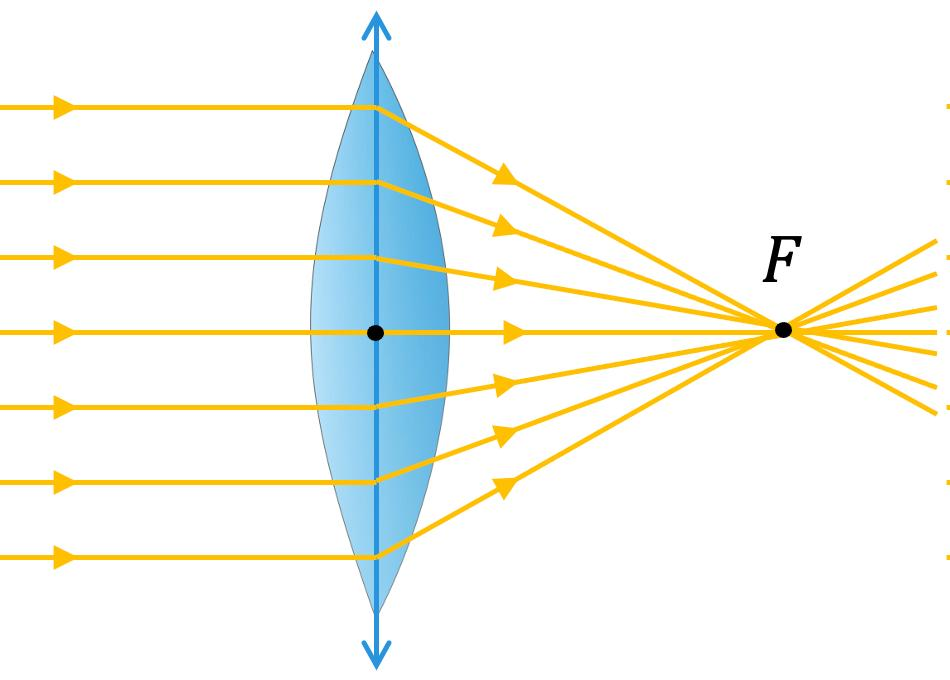
What lens is this?
Convex lens
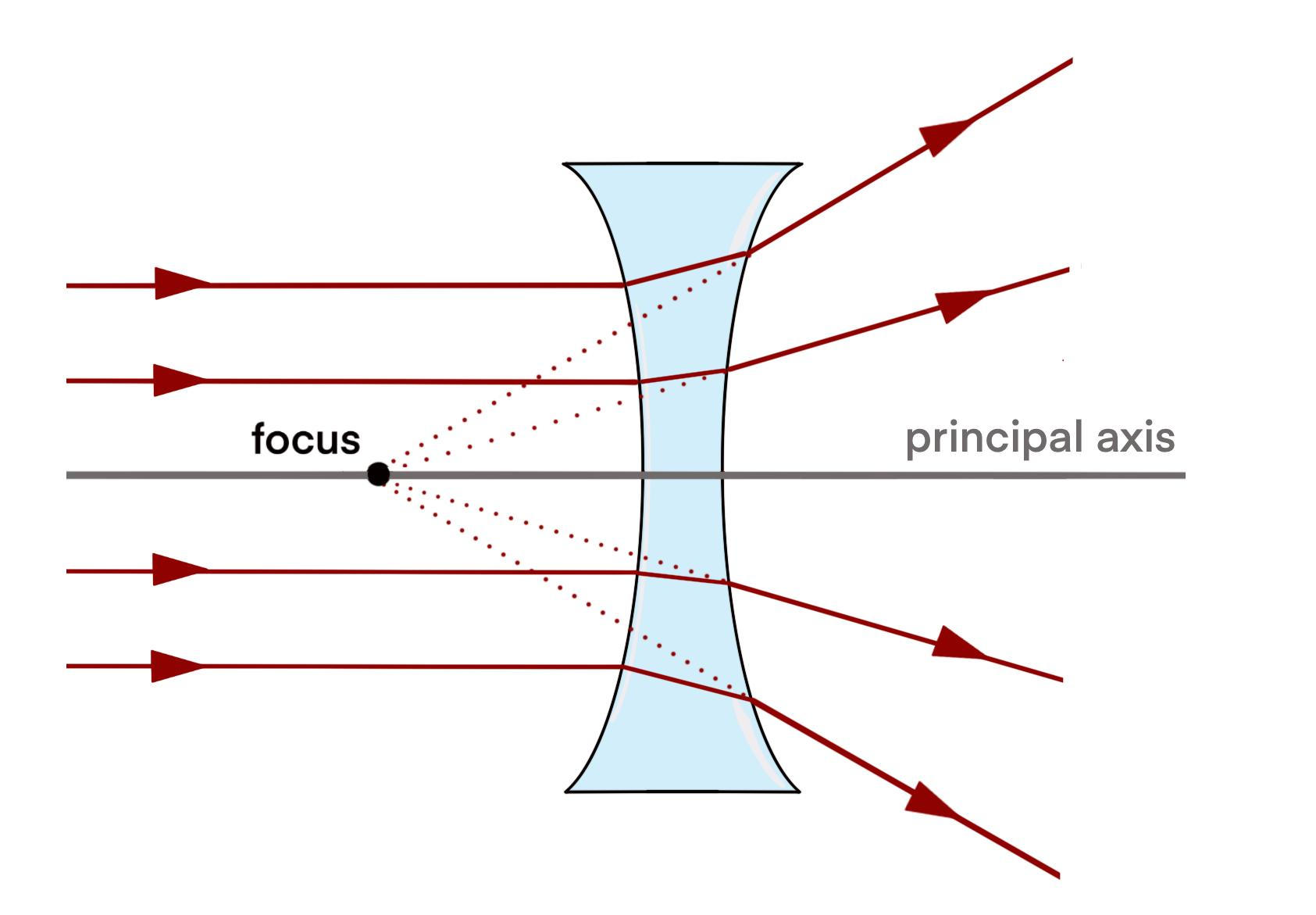
What lens is this:
Concave lens
What is a convex lens?
A converging lens that is thicker in the middle and thinner at the edges. It bends light rays towards each other so they meet at a focal point.
What is a concave lens?
A diverging lens that is thinner in the middle and thicker at the edges. It bends light rays away from each other.
What is the focal point?
The point where parallel light rays meet after passing through a convex lens, or appear to come from when passing through a concave lens.
How does changing lens thickness affect light?
Thicker lens = bends light more strongly and has a shorter focal length.
Thinner lens = bends light less strongly and has a longer focal length.
What are ray diagrams used for?
To show the path of light through lenses and help determine the position, size and characteristics of an image.
Principal ray rules for Convex Lens
Convex lens (brings light together)
Parallel rays → bend towards the focal point.
Centre rays → travel straight.
Focal point rays → come out parallel.
Principle ray rules for Concave Lens
Concave lens (spreads light apart)
Parallel rays → spread out.
Rays aimed towards the opposite focal point → come out parallel.
Centre rays → travel straight.