BSCI223: Central Dogma, Transcription, Translation
 Call Kai
 Learn
 Practice Test
 Spaced Repetition
 Match
 Flashcards
 Knowt Play
1/84

There's no tags or description
Looks like no tags are added yet.
85 Terms
What is phenotype?
Expressed characteristics of an organism
What are the examples that phenotype can be the presence of?
Biochemical pathway, pigment production, motility
What are these examples of?
(E. coli)
Straight rods
Occur singly or in pairs
Can be motile by peritrichous flagella
Oxidase-negative
Catalase-positive
Phenotypes
What is genotype?
Sequence of DNA encoding genes in the genome
What is genome?
Entire genetic complement in the cell
What does genome include?
Genes and intervening sequence in all DNA (chromosome + plasmids)
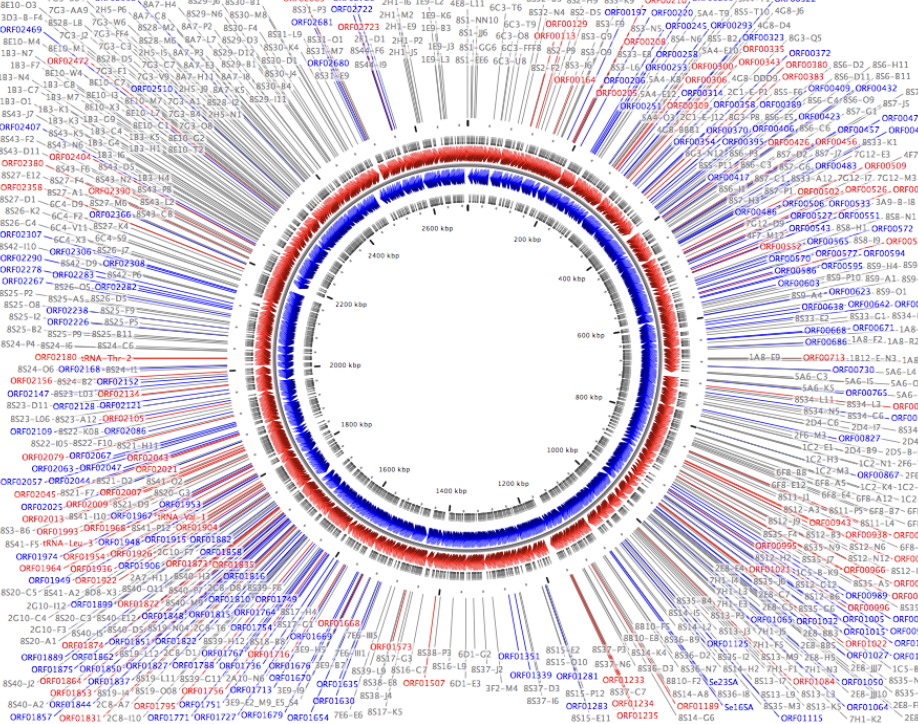
Information is organized on the what?
Chromosome
What direction do genes go in?
Both directions (left and right)

The gene name is lacZ, what is the protein name?
LacZ
The gene name is pmoA, what is the protein name?
PmoA
What is the protein name based on function for LacZ?
B-galactosidase
What is the protein name based on function for PmoA?
Particulate Methane Monooxygenase
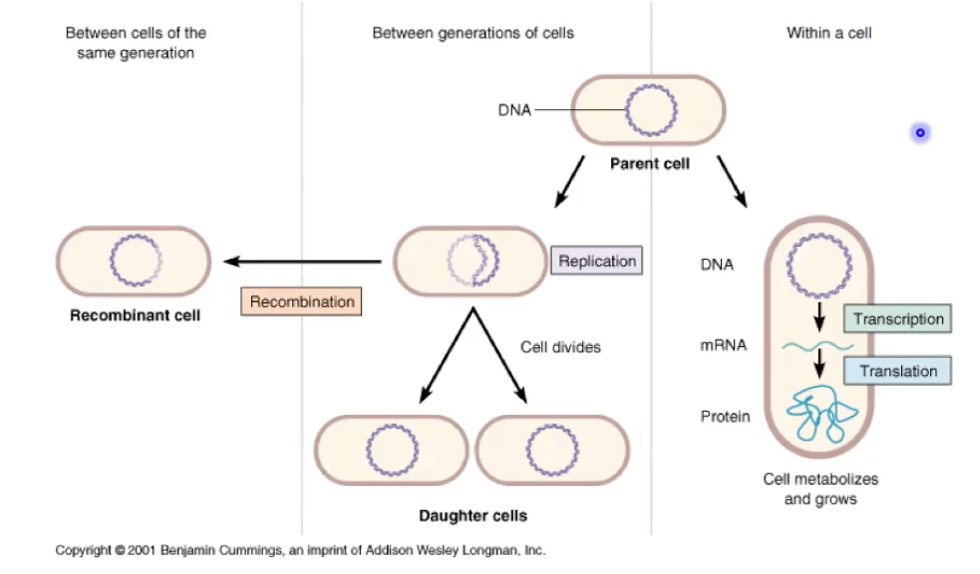
Within a single cell, what is the flow of genetic information?
DNA to mRNA to Protein

What is the process called where DNA is used to make mRNA?
Transcription
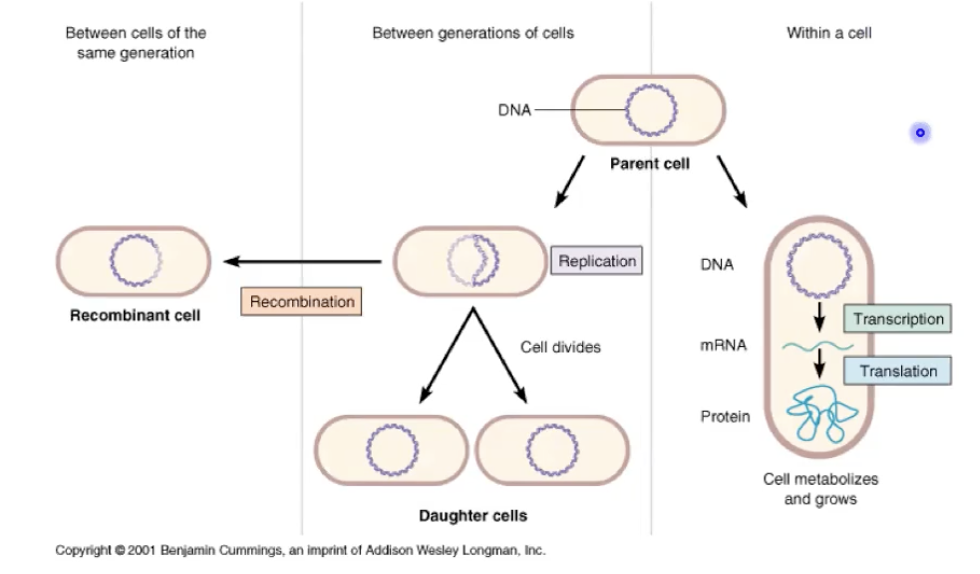
What is the process called where mRNA is used to make Protein?
Translation
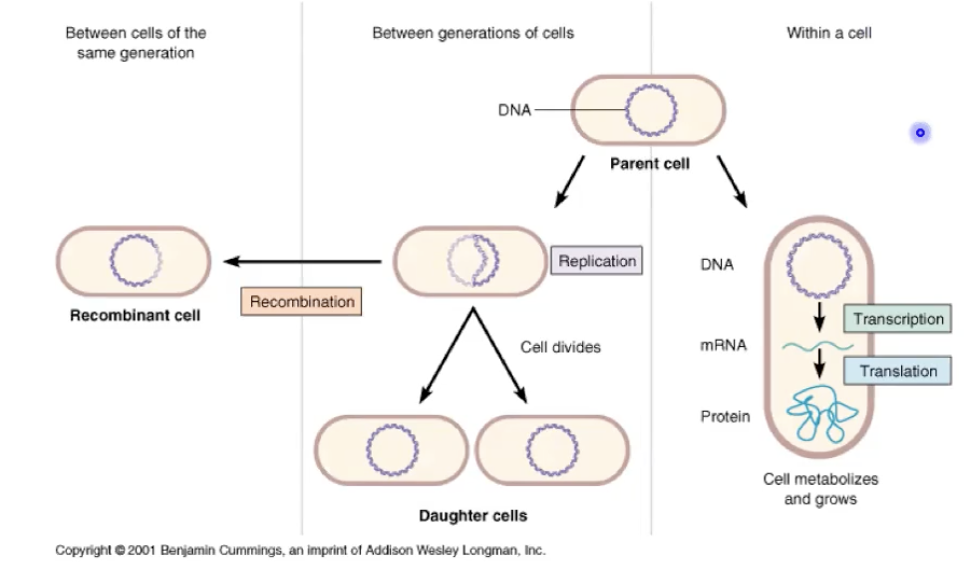
What is the ultimate result of the cell metabolizing and growing (as shown in the diagram)?
The cell grows and prepares for division/reproduction

How is genetic information passed from a "Parent cell" to "Daughter cells"?
Through Replication of the DNA followed by Cell Division

What must happen to the DNA before a cell divides?
It must undergo Replication so both daughter cells receive a copy

In the diagram, what structure represents the genetic material?
A circular DNA molecule (likely a plasmid or bacterial chromosome)

What is the process called when genetic material is transferred between cells of the same generation?
Recombination (or Horizontal Gene Transfer)
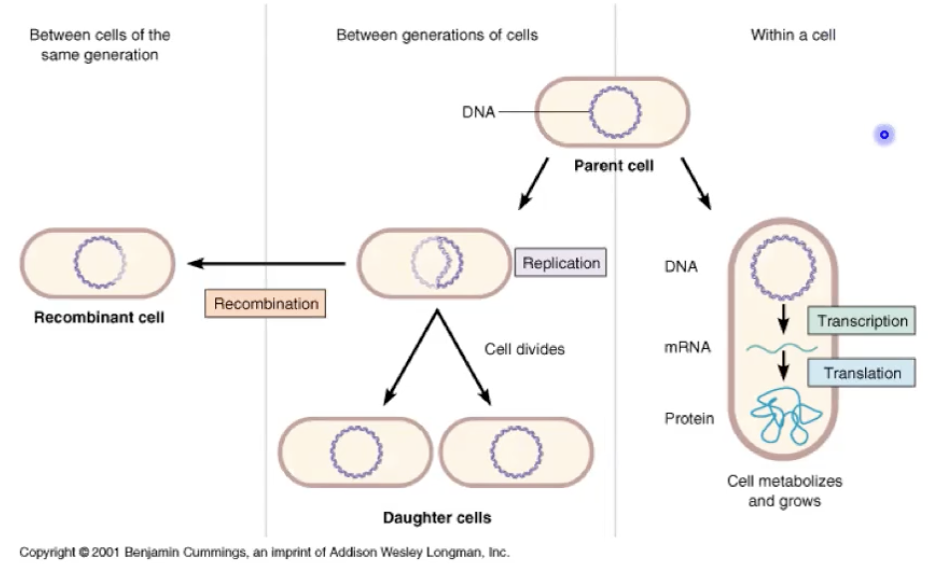
What are the three "directions" or contexts of genetic flow shown in this diagram?
Within a cell (Expression).
Between generations (Replication/Division).
Between cells of the same generation (Recombination).

Does the "Central Dogma" (DNA →→ RNA →→ Protein) describe flow within a cell or between cells?
Flow within a cell (transcription and translation)
What is the central dogma?
Genetic flow of information from DNA to RNA to protein

What is A?
DNA (genotype)
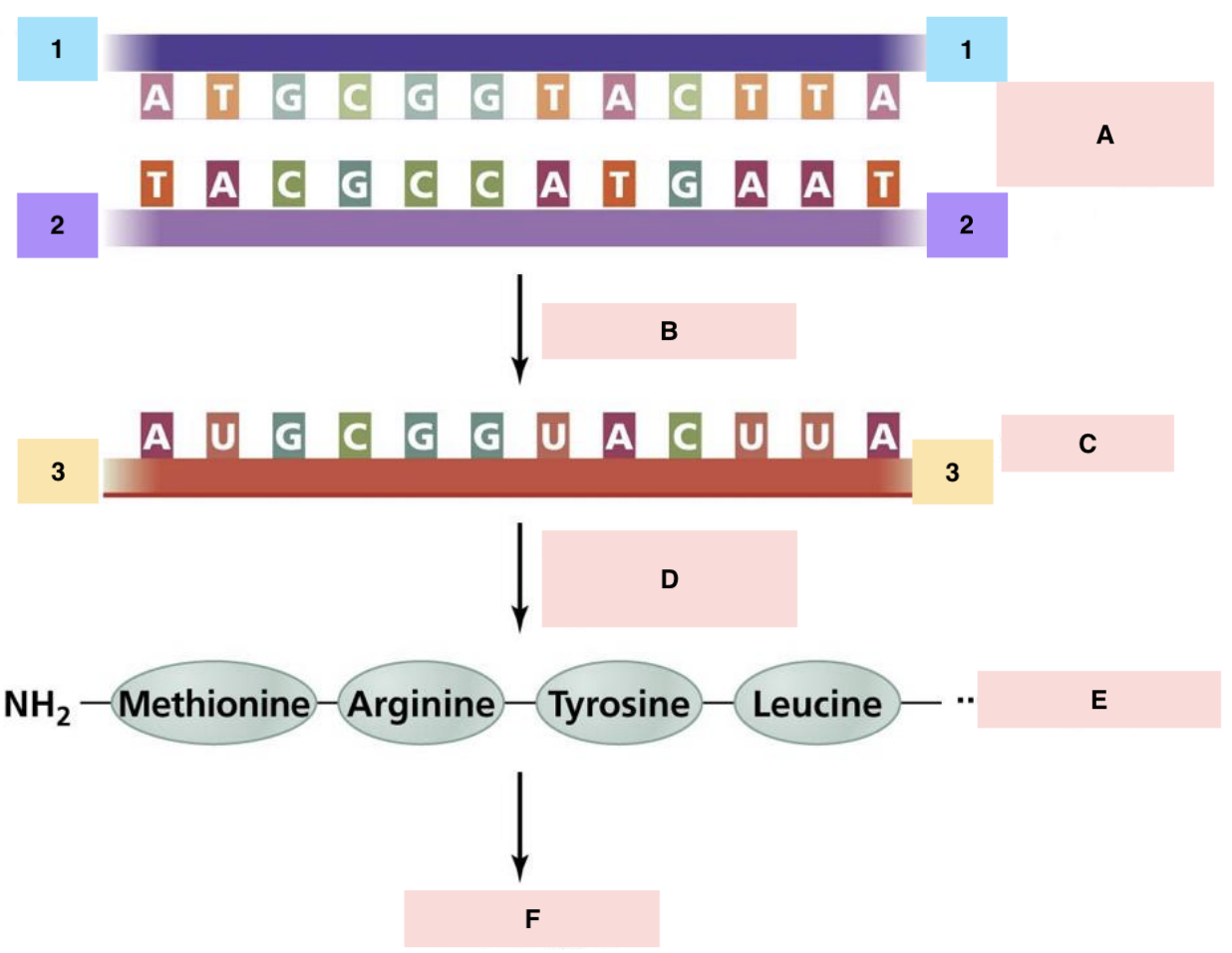
What is 1?
5’ and 3’

What is 2?
3’ and 5’

What is B?
Transcription
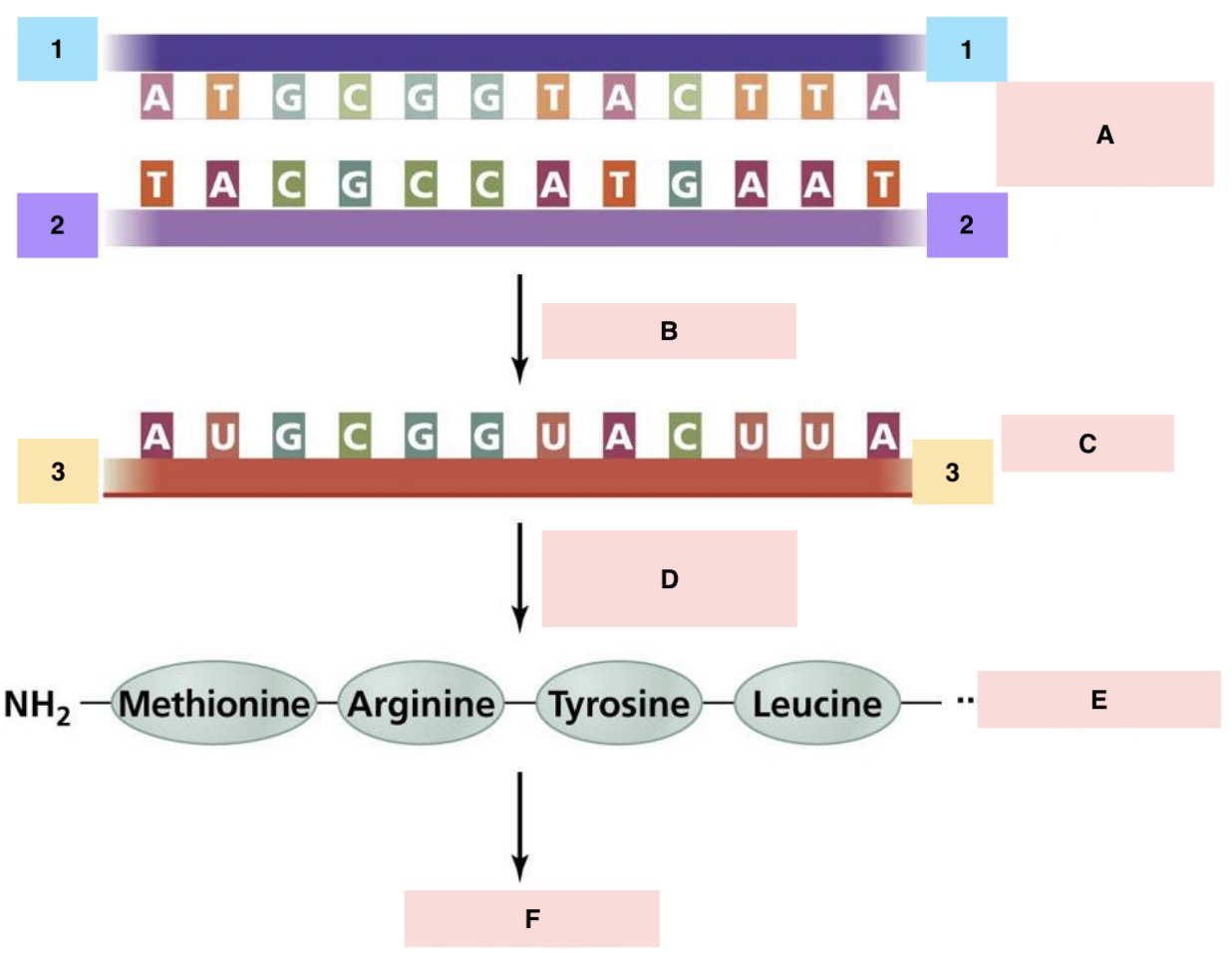
What is C?
mRNA

What is 3?
5’ and 3’

What is D?
Translation by ribosomes

What is E?
Polypeptide (make up protein)

What is F?
Phenotype
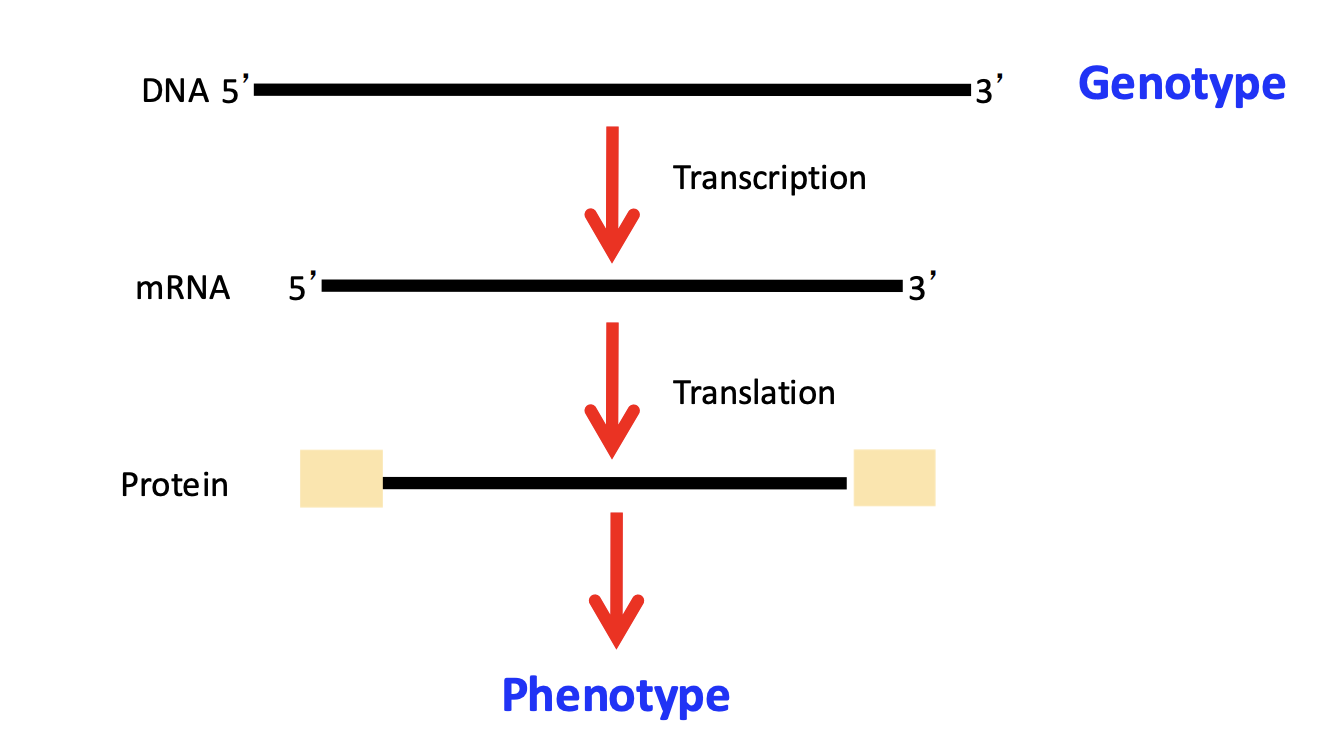
What direction does protein go in?
N to C
Replication, transcription & translation all have what repetitive processes?
Build polymers of nucleotides or amino acids
What 3 major steps do all replication, transcription & translation have?
Initiation, elongation, and termination
What is initiation?
Bind polymerizing machine, first monomer to template (DNA polymerase, RNA polymerase, ribosome)
What is elongation?
Read template, add next monomer (DNA, RNA, protein)
What is termination?
Release machine and completed product

What does transcription begin with?
Promoters
What is a promoter?
DNA sequence that tells the RNA polymerase where it needs to bind to start transcription

Promoters have what that RNA Polymerase reocognizes?
Recognition sequences

What is the large molecular machine made of 5 proteins in one complex, binds DNA, and reads sequence → polymerizes RNA?
RNA Polymerase
How does RNA Pol bind to DNA?
Sigma (σ) factors
What are the sigma (σ) factors?
Smaller proteins that guide RNA polymerase to the target DNA sequence (consensus sequence) on promoter (Where to go)

What is the direction for upstream?
3’ to 5’

What is the direction for downstream?
5’ to 3’

The sigma factor recognizes the red areas. Interpret what the -35 means.
35 nucleotides upstream from the plus one site

What is the first step of transcription initiation?
RNA polymerase attaches nonspecifically to DNA and travels down its length until sigma recognizes a promoter sequence and keeps going until plus one site.
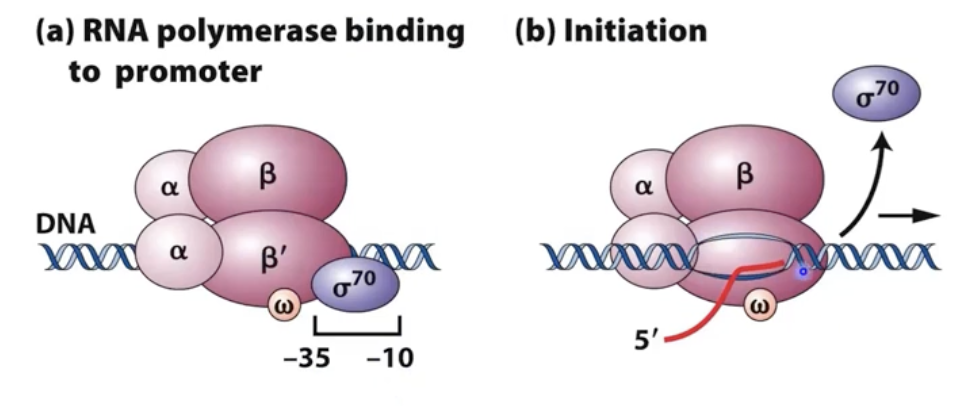
What does the sigma factor do in initiation?
Recognizes the plus one site, and is released or stays
What is the second step of transcription initiation after rocognizing the promoter?
RNA polymerase unzips the DNA molecule beginning at the promoter.
What happens after transcription initiation?
Elongation
What happens in transcription elongation?
rNTP (triphosphate ribonucleotides) align with their DNA complements and RNA polymerase links them together, synthesizing RNA.
What is not needed in transcription elongation?
Primer
The rNTP provide the energy required for what?
RNA synthesis
What are the two types of transcription termination?
Self-termination and enzyme-dependent termination
What happens in transcription self-termination?
Transcription of DNA terminator sequences causes the RNA to fold, loosening the grip of polymerase on DNA.
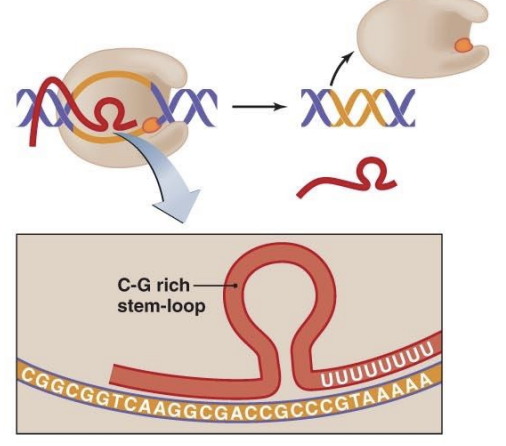
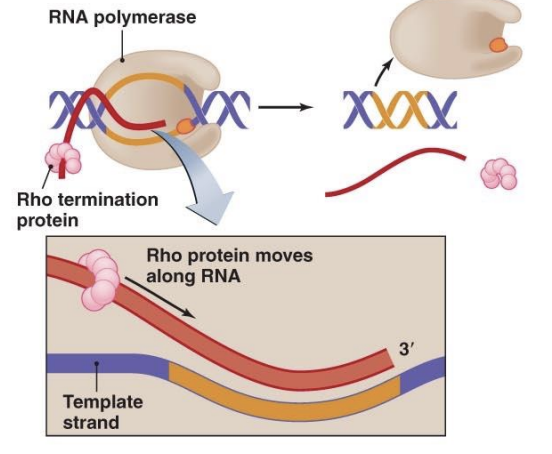
What happens in transcription enzyme-dependent termination?
Rho pushes between polymerase and DNA, releasing polymerase, RNA transcript and Rho.

Transcribe this.
5’CCATGATTACGGATTCACTGGCCGTCGTTTTACAACGTCGTGACTGGGAAAACC3’ 3’GGTACTAATGCCTAAGTGACCGGCAGCAAAATGTTGCAGCACTGACCCTTTTGG5’
5’CCAUGAUUACGGAUUCACUGGCCGUCGUUUUACAACGUCGUGACUGGGAAAACC3’
After transcription, what changed?
T to U

What is A?
Transcription start site

What is B?
Transcription stop site

What is C?
Ribosome binding site
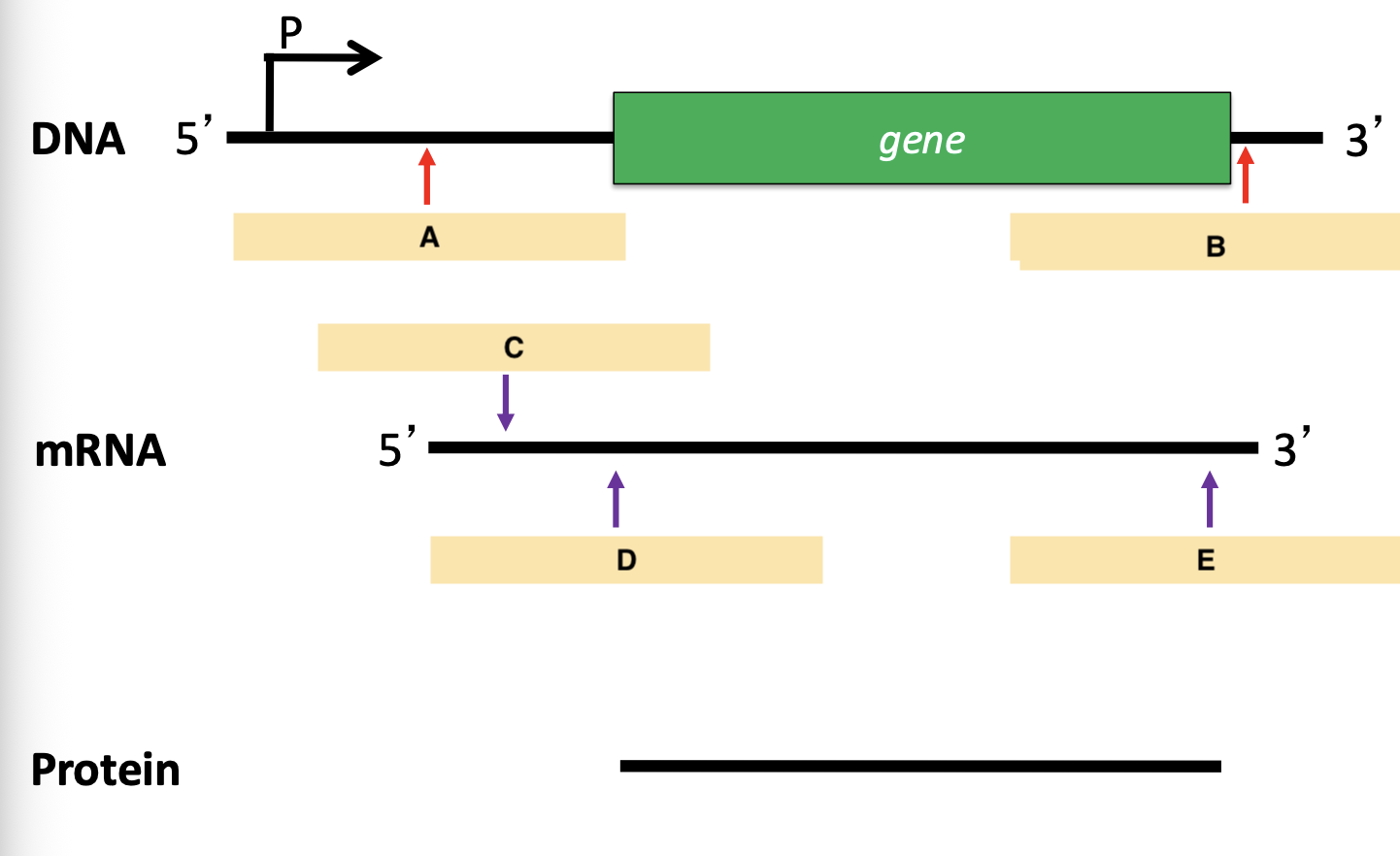
What is D?
Translation start site
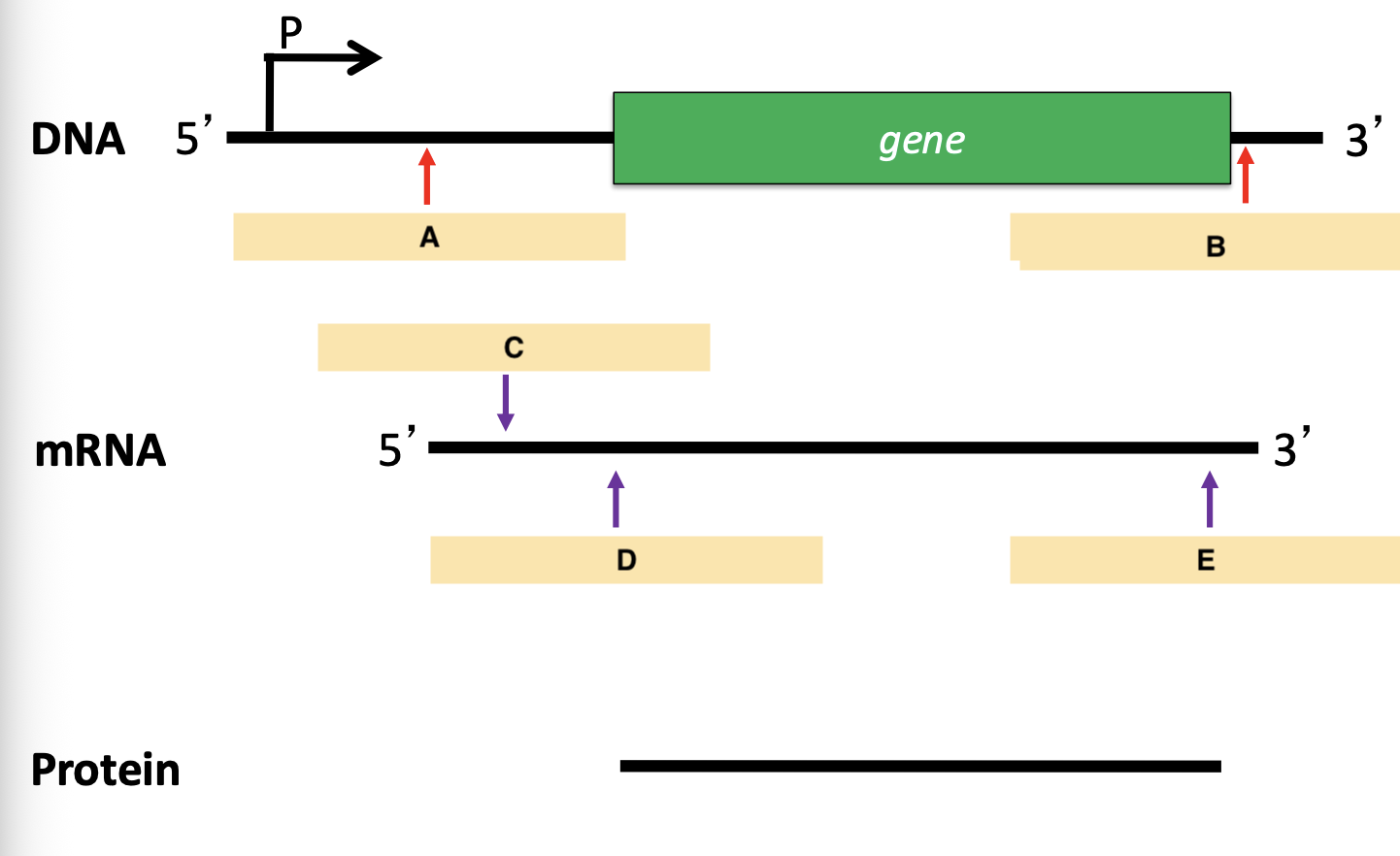
What is E?
Translation stop site
What is a set of 3 nucleotides encoding an amino acid (or when to stop/ start) known as?
Codon
What is the degeneracy of the genetic code (3rd nucleotide can vary and still produce the same amino acid) known as?
Wobble

What is A?
Start codon

What is B?
Sense codon

What is C?
Stop codon (nonsense codon)

What is D?
Shine-Dalgarno Sequence

What is E?
70S Ribosome
What are 70S ribosomes?
Machines responsible for protein synthesis
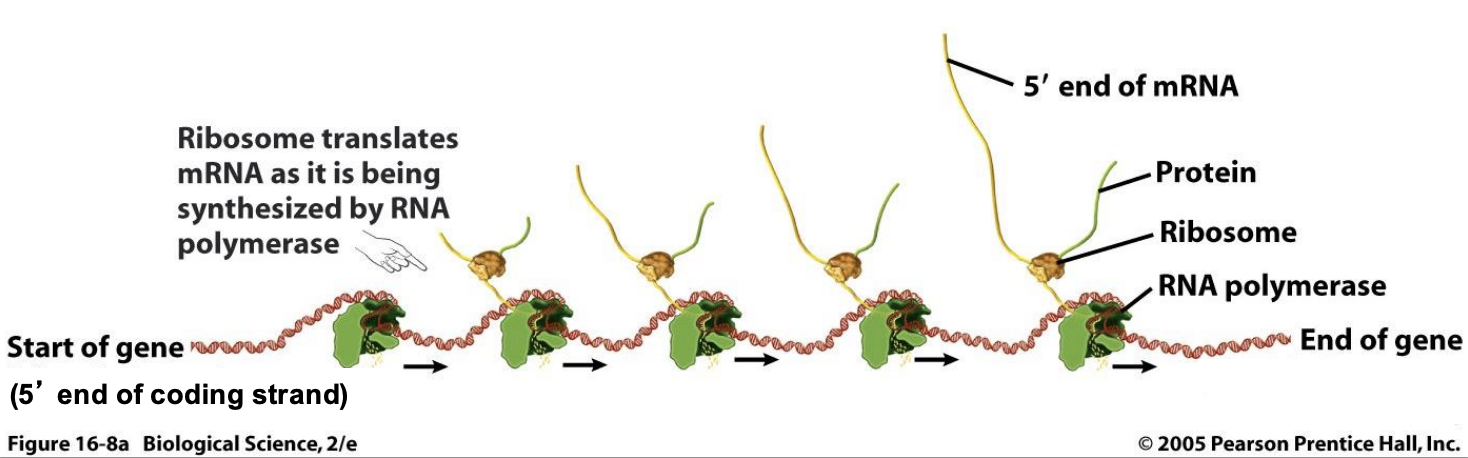
Prokaryotic translation is coupled with what?
Transcription
If prokaryotic translation is coupled transcription, ribosome translates mRNA as it is being what?
Synthesized by RNA polymerase
Where is the transcription start site known as?
+1 initiation site

Where do you begin?
Start codon
Which of the following do DNA replication and transcription have in common?
A. DNA templates
B. Directionality
C. RNA product
D. Polymerases
E. Initiation at a promoter
A, B, D
Where does initiation of DNA replication begin?
A. +1 initiation site
B. oriC
C. Promoter sequence
D. Start codon
B
Which of the following DNA strands is replicated in a discontinuous manner? Pick all that apply.
A. Template strand
B. Lagging strand
C. Leading strand
D. Coding strand
B
We use the term “semi-conservative” when we talk about DNA replication. To what does this term refer?
A. One strand of the DNA is the original template strand, and the
other is newly formed.
B. Mutations are sometimes made during replication, so the DNA
sequence is somewhat conserved.
C. Replication occurs continuously on one side of the replication fork,
but not the other.
A
Which of the following is true about the promoter sequence?
A. It’s where the mRNA transcript starts to be made.
B. It’s where the RNA Polymerase binds to the DNA.
C. It’s where the ribosome binds the mRNA strand.
D. It contains highly conserved sequences recognized by the sigma
factor.
E. It’s where protein begins to be made.
B, D

What would be the transcribed mRNA sequence for this DNA fragment?
A. 5’ ATG CAG TCT GGA 3’
B. 5’ TAC GTC AGA CCT 3’
C. 5’ AUG CAG UCU GGA 3’
D. 5’ UAC GUC AGA CCU 3’
C

What would be the translated amino acid sequence for this mRNA fragment? (Use 3-letter a.a. names)
5’AUG CAG UCU GGA 3’
Met Gln Ser Gly

Which of these DNA sequences will produce a full-length protein?
A. ATG CCA CAA GGT TGA
B. ATG TAA CCA CAA GGT
C. TAG CCA CAA GGT ATG
D. AAG CCA CAA GGT TGA
A
Which choice indicates the appropriate directionality of your mRNA sequence?
A. 5’ NNNNN 3’
B. 3’ NNNNN 5’
C. N- NNNNN -C
D. C- NNNNN -N
A