Exercise 5 - Head and Neck
 Call Kai
 Learn
Learn Practice Test
 Spaced Repetition
 Match
Match Flashcards
 Knowt Play
1/102

There's no tags or description
Looks like no tags are added yet.
Name | Mastery | Learn | Test | Matching | Spaced | Call with Kai | Chat |
|---|
No analytics yet
Send a link to your students to track their progress
103 Terms

Ethmoid (1)

Ethmoid (1)

Frontal (1)

Frontal (1)

Frontal (1)

Lacrimal (2)

Lacrimal (2)

Mandible (1)
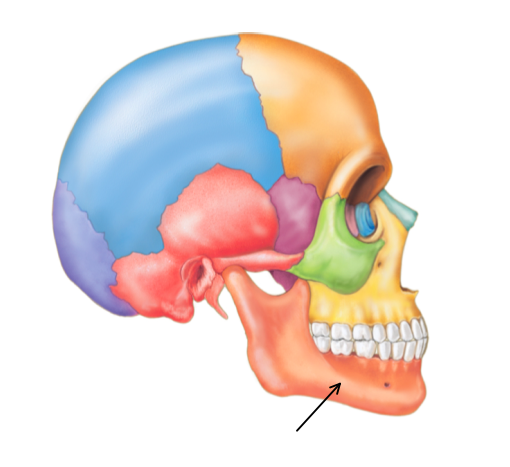
Mandible (1)

Coronoid Process

Coronoid Process

Mandibular Condyle

Mandibular Condyle

Mandibular Foramen
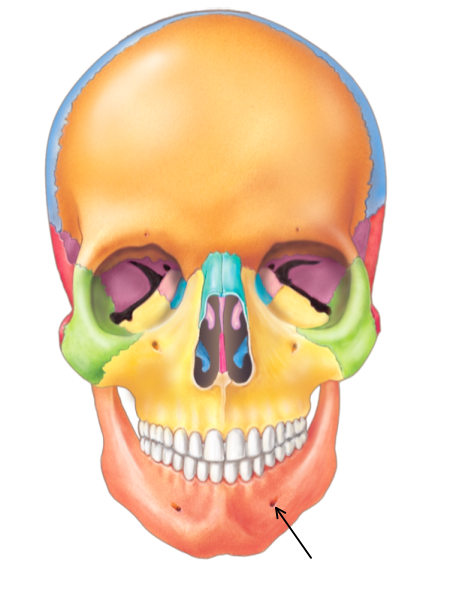
Mental Foramen

Mental Foramen
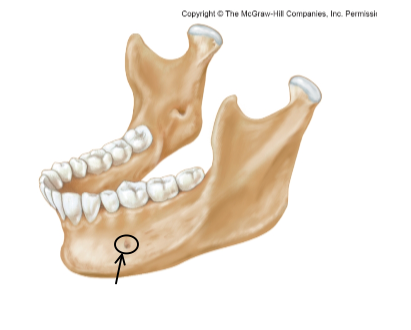
Mental Foramen

Mandibular Ramus

Mandibular Ramus

Maxilla (2)

Maxilla (2)

Nasal (2)

Nasal (2)

Occipital (1)

Occipital (1)

Foramen Magnum

Occipital Condyle

Palatine (2)

Parietal (2)

Parietal (2)
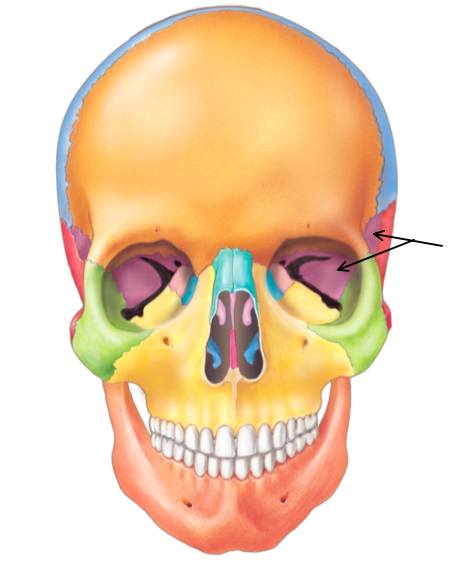
Sphenoid (1)

Sphenoid (1)
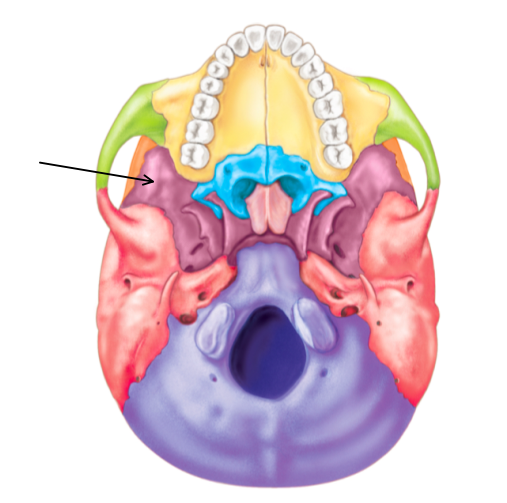
Sphenoid (1)

Foramen Ovale

Temporal (2)

Temporal (2)

Temporal (2)

Mandibular Fossa

Mastoid Process

Stylomastoid Foramen

Zygomatic Process

Vomer (1)

Vomer (1)

Zygomatic (2)

Zygomatic (2)

Zygomatic (2)

Temporal Process

Jugular Foramen

Zygomatic Arch

Zygomatic Arch

The Pink
Anterior Fontanel
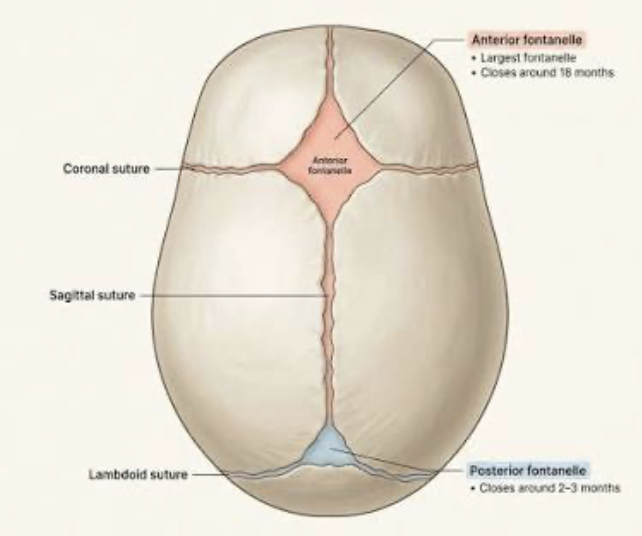
The Blue
Posterior Fontanel
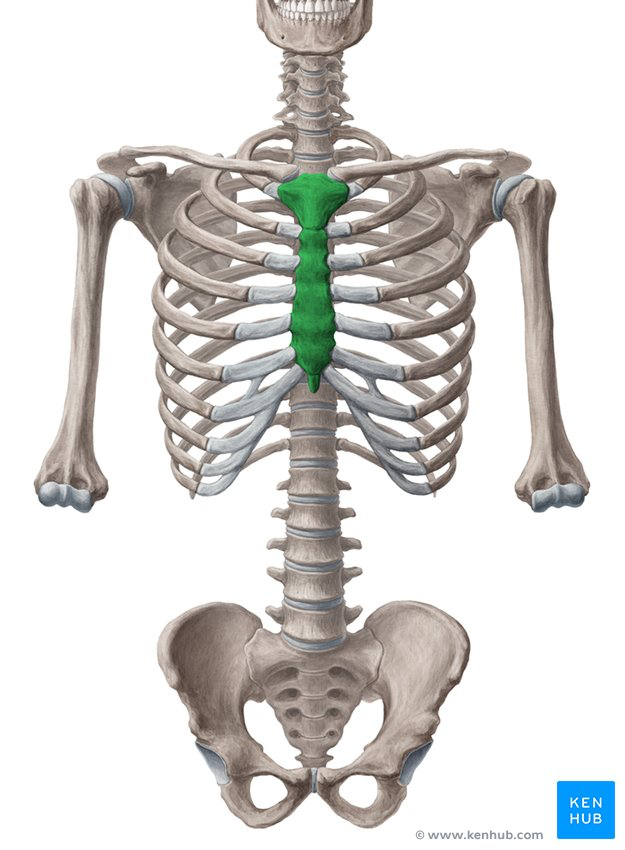
Sternum

Clavicle

To the right
Sternal or Medial End of The Clavicle

To the left
Lateral or Acromial End of the Clavicle

Hyoid Bone

Coronal Suture

Coronal Suture

Lambdoid Suture

Lambdoid Suture

Sagittal Suture
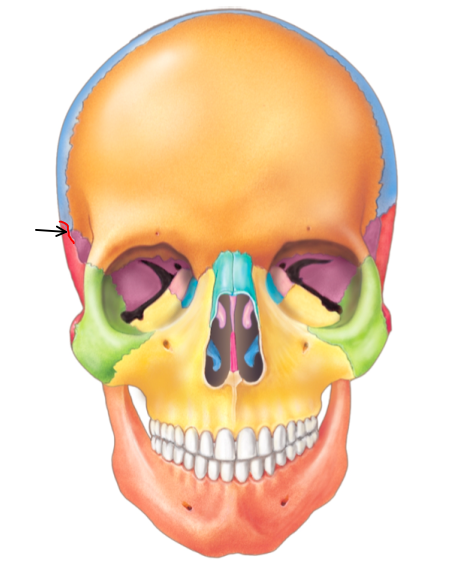
Squamous Suture

Squamous Suture

suture - cranial and facial bones

gomphosis - tooth fastened into mandible or maxilla

"modified" hinge - temporal bone and mandible

Buccinator

Epicranius (occipitofrontalis)

Masseter

orbicularis oculi

orbicularis oris

sternocleidomastoid
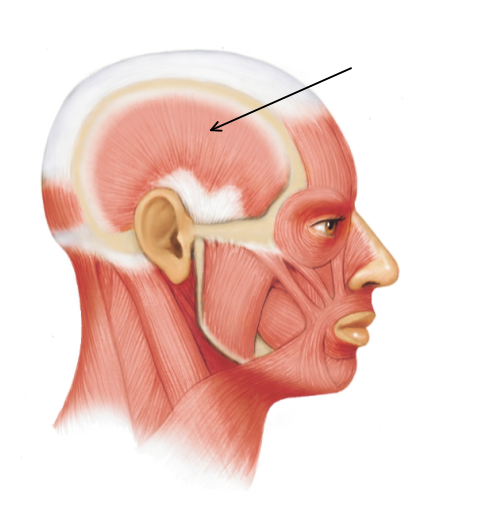
Temporalis
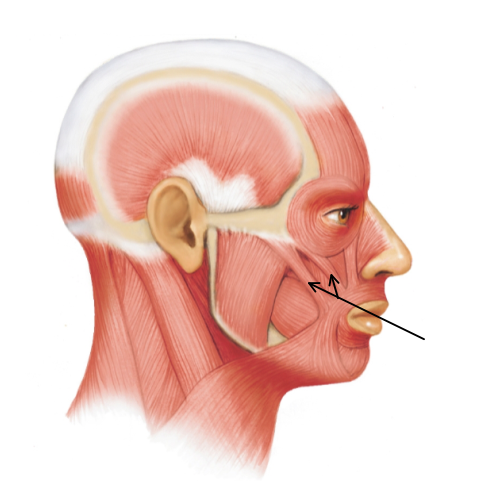
Zygomaticus Group
The large opening in the base of the skull where the spinal cord exits is called the
______________________________.
foramen magnum
Based on their anatomy, the sutures of the skull are a type of ______________________________
joint. The two sutures that follow body planes are the ______________________________ and
______________________________ sutures. Based on their degree of movements, these joints are
______________________________.
fibrous, coronal, sagittal, synarthrotic
The ______________________________ foramen is a feature of the skull because it cannot be
viewed on any individual bone in isolation.
jugular
A depression or relatively deep pit in a bone is called a(n) ______________________________
fossa
The ______________________________ of the temporal bone and the
______________________________ of the zygomatic bone join together to form the
______________________________.
zygomatic process, temporal process, zygomatic arch
he joint between a tooth and its bony socket is specifically called a
______________________________ joint. When classified by its degree of movement, this joint is
______________________________. When classified by its anatomy, this is a
______________________________ joint.
gomphosis, synarthrotic, fibrous
Raising a body part is called ______________________________ while lowering a body part is
called ______________________________. Both of these movements are possible at the
temporomandibular joint.
elevation, depression
Fetal and infant skulls have a membranous region called a(n) ______________________________
between certain cranial bones.
fontanel
When classifying bones by shape, all bones of the face are ______________________________
irregular
A “catch-all” term for a prominent projection on a bone is a(n)
______________________________.
process
A(n) ______________________________ is an opening in a bone that serves as a passageway for
blood vessels, nerves, and/or ligaments.
foramen
A feature of a bone described as a structure given off from another larger structure is a(n)
______________________________.
ramus
Moving a part of the body forward is called ______________________________ while moving a
part of the body backward is called ______________________________. Both of these movements
are possible at the joint between the mandibular condyle and the mandibular fossa.
protraction, retraction
An interlocking line of union between bones is called a(n) ______________________________.
The two that join the parietal, temporal, and occipital bones are the
______________________________ and the ______________________________
suture, lambdoidal, squamous
Based on their shape, all the bones of the cranium are classified as
______________________________ bones.
flat
The joint between the mandible and temporal bone is specifically called a(n)
______________________________ joint. When classified by its degree of movement, this joint is
______________________________. When classified by its anatomy, this is a
______________________________ joint.
modified hinge, diarthrotic, synovial
The bones in all fibrous joints are held together by ______________________________ tissue.
dense fibrous
A(n) ______________________________is a rounded process of a bone located at an articulation
site.
condyle
he ______________________________ bone, which does not form a joint with any other bone,
supports the tongue and is an attachment point for muscles involved in swallowing.
hyoid
The mandibular fossa and mandibular condyle are covered with a thin layer of
______________________________ cartilage. This forms the articular cartilage typical of synovial
joints and helps to minimize friction.
hyaline
Buccinator
Compresses cheeks inward as when blowing air out, retracts corner of mouth
Epicranius (occipitofrontalis)
Elevates eyebrows (as when surprised)
Masseter
Elevates and protracts mandible
Orbicularis Oculi
Closes eye (as in blinking or squinting)
Orbicularis oris
Draws lips together (as in kissing)