Abdominal Cavity
 Call Kai
 Learn
 Practice Test
 Spaced Repetition
 Match
 Flashcards
 Knowt Play
1/46

There's no tags or description
Looks like no tags are added yet.
47 Terms

what is this and what does it contain
urogential ridge
—kidney development
—gonad development (testes/ovaries)

name pieces
parietal peritoneum
visceral peritoneum
mesenteric peritoneum
mesentery (entire mesentery containing all VAN, CT)
define peritoneal and retroperitoneal organs
peritoneal organs have mesenteries
retroperitoneal organs are behind the peritoneum (which is the coelum)
explain the difference between primary retroperitoneal and secondary retroperitoneal organs of the abdomen
primary (1st) retroperitoneal organs are the urogenital ridge (kidney & gonads)
secondary (2nd) retroperitoneal organs are the digestive system organs

explain what is happening here
this is gut tube development, through this image, we are watching it during development
what is happening is that the cavity is crowing it (like the home depot bucket & the hose)
—in the 3rd image, parts of the mesothelium degenerate and the mesentery was lost (this is where the gut tube is clashing against the parietal peritoneum
explain how you can see either the peritoneal or retroperitoneal organs
peritoneal organs can be seen here, retroperitoneal organs are all the structures behind this (hidden)
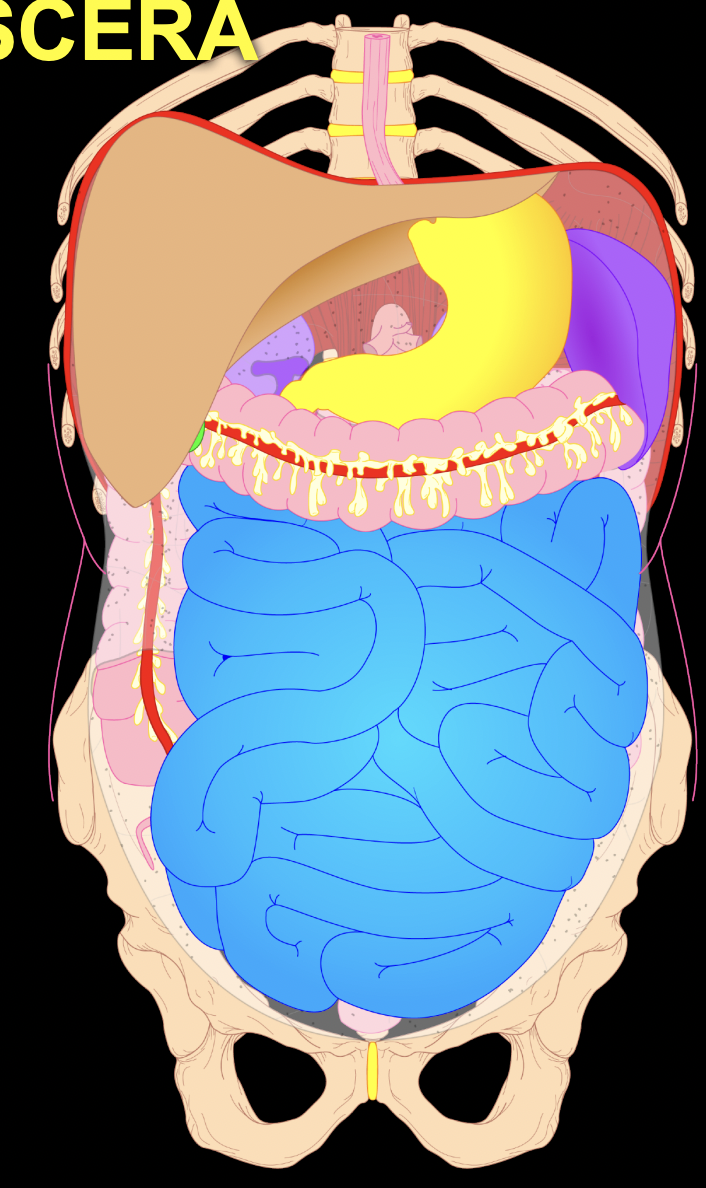
what is the difference between primary retroperitoneal and secondary retroperitoneal
primary retroperitoneal: organs of the abdomen including the urogenital ridge (meaning the kidneys and gonads)
secondary retroperitoneal: digestive system organs
stomach
peritoneal or retroperitoneal
line coming off of esophagus
the stomach is peritoneal

liver
peritoneal or retroperitoneal
liver is peritoneal
cut mesentery of the liver shown on top right

pancreas
peritoneal or retroperitoneal and why (remember primary vs secondary)
secondary retroperitoneal since it is branching off of the duodenum (digestive system organ)
spleen
peritoneal or retroperitoneal and why
peritoneal - since it formed within the mesentery/coelum of the stomach
—the spleen is actually a lymph node organ
small intestine (different structures within too)
peritoneal or retroperitoneal
duodenum - secondary retroperitoneal
jejunum & ileum - peritoneal (what you can see on the outside)
large intestine
peritoneal or retroperitoneal
all vertical parts are what
the large intestine weaves in and out of the peritoneal coelom
-all vertical parts of the large intestine are secondary retroperitoneal
—secondary retroperitoneal= ascending colon, descending colon, rectum
—peritoneal= caecum, transverse colon, sigmoid colon

name all structures visible
what do the different omentum’s connect?
(blue line) parietal peritoneum
(green line) visceral peritoneum
(red top) diaphragm
(yellow line) mesentary
(red line) greater omentum - connecting visceral to visceral (organ-organ) stomach to the transverse colon-barrier between strucutres-comes off of the greater curvature of the stomach
(red line) lesser omentum -comes off of/attachment at the lesser curvature of the stomach

explain everything going on here, orient
this is the gut and its vascular supply
aorta (mouth more superior, anus more inferior)
gut tube
(most superior) celiac trunk — supplies foregut
superior mesenteric artery — supplies midgut
inferior mesenteric artery — supplies hindgut
adoral branches going towards the mouth
aboral branches going away from the mouth
What is the benefit of the adoral and aboral gut branches? What is the meaning of the names?
Benefit=more collateral flow opportunity
ADoral=towards the mouth
ABoral=away from the mouth
explain how each artery branching off of the aorta supplies the different sections of the gut
celiac trunk supplies the foregut
—esophagus, stomach, duodenum, pancreas, gallbladder
superior mesenteric artery
—jujuenum, iliem, caecum, ascending colon, transverse colon
inferior mesenteric artery
—sigmoid colon, rectum
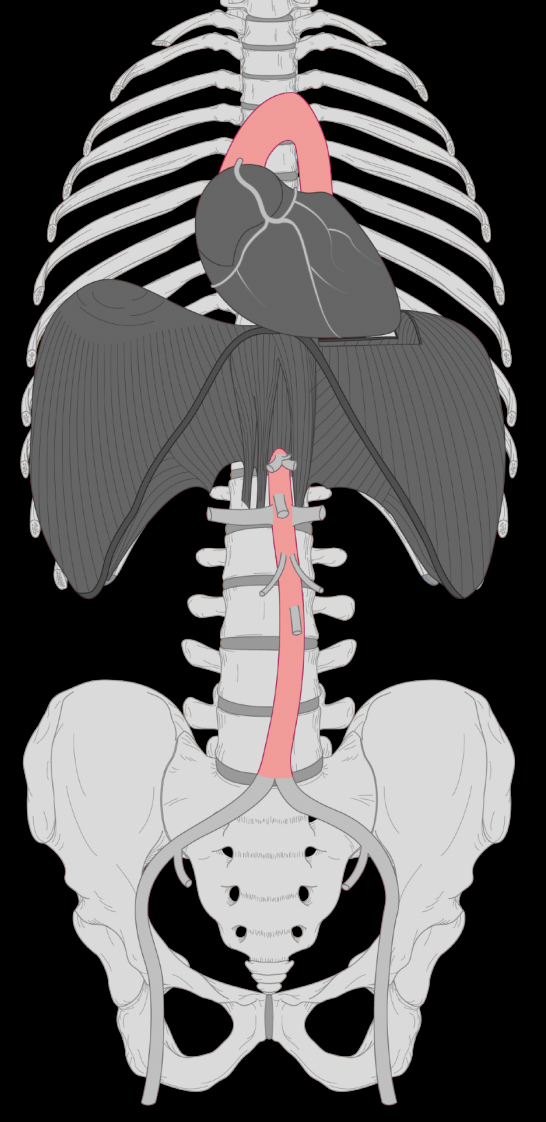
name everything visible here branching off of the aorta into the abdominal cavity
celiac trunk —supplies foregut
superior mesenteric artery —supplies midgut
renal artery —supplies kidneys
gonadal artery —supplies testicular and ovarian arteries
inferior mesenteric artery —supplies hindgut
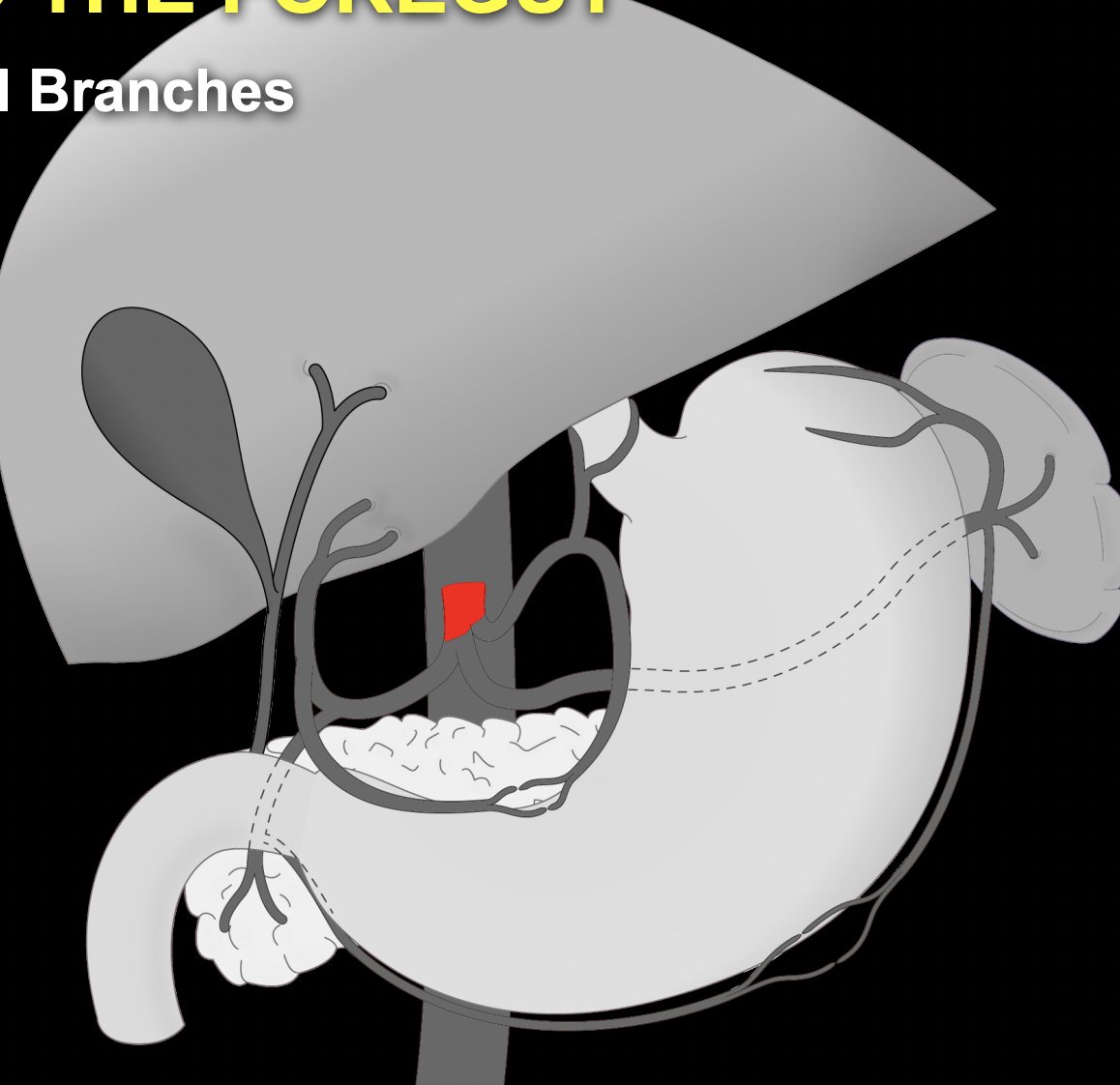
now we are in the arterial supply to the foregut, name, where would the greater omentum be in this image
celiac trunk
the greater omentum would be attaching to the greater curvature of the stomach

name
left gastric artery

name
esophageal artery
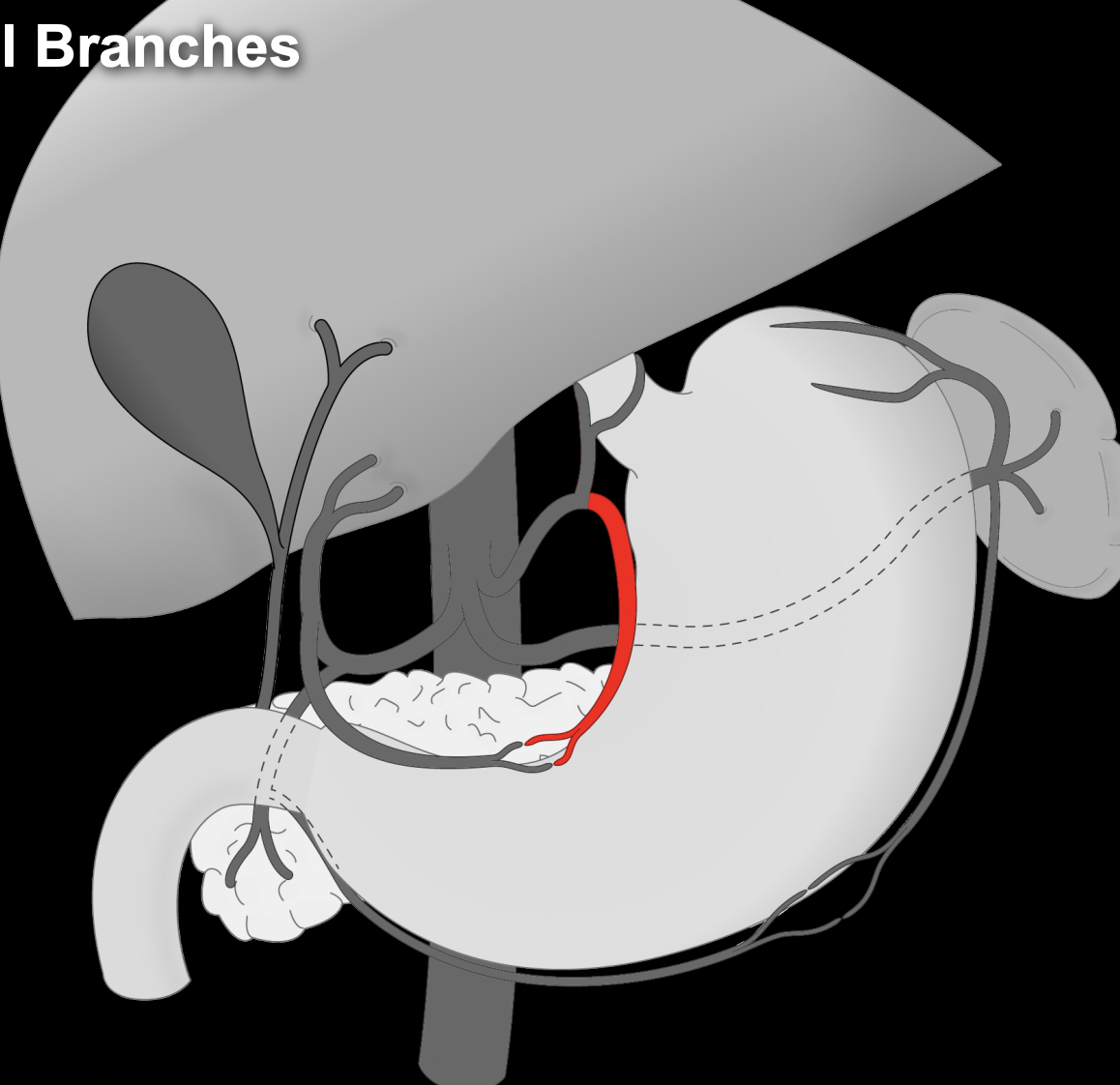
name
left gastric artery
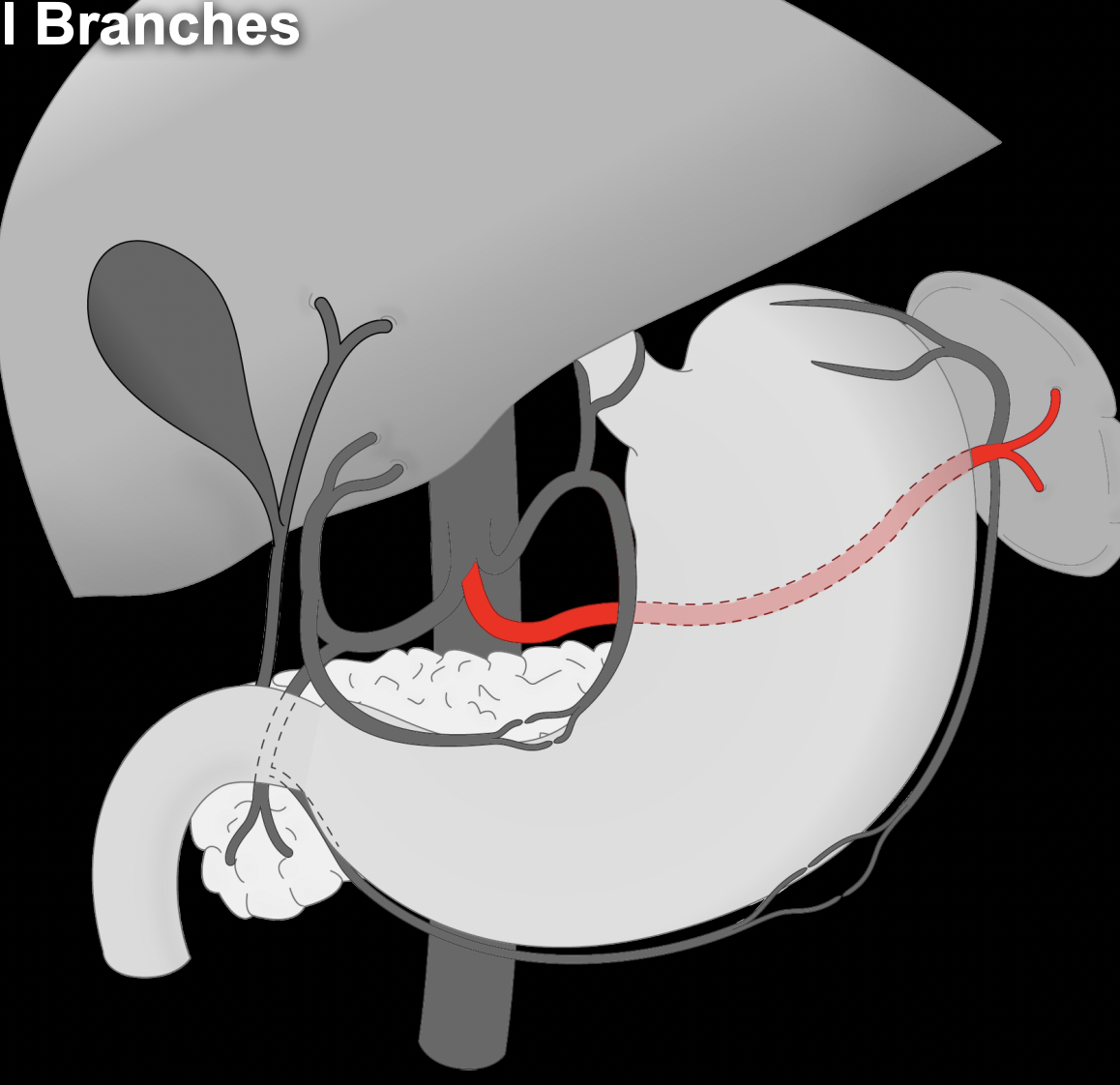
name
splenic artery

name
short gastric artery

name
left gastro-omental artery

name
hepatic artery

name
right gastric artery
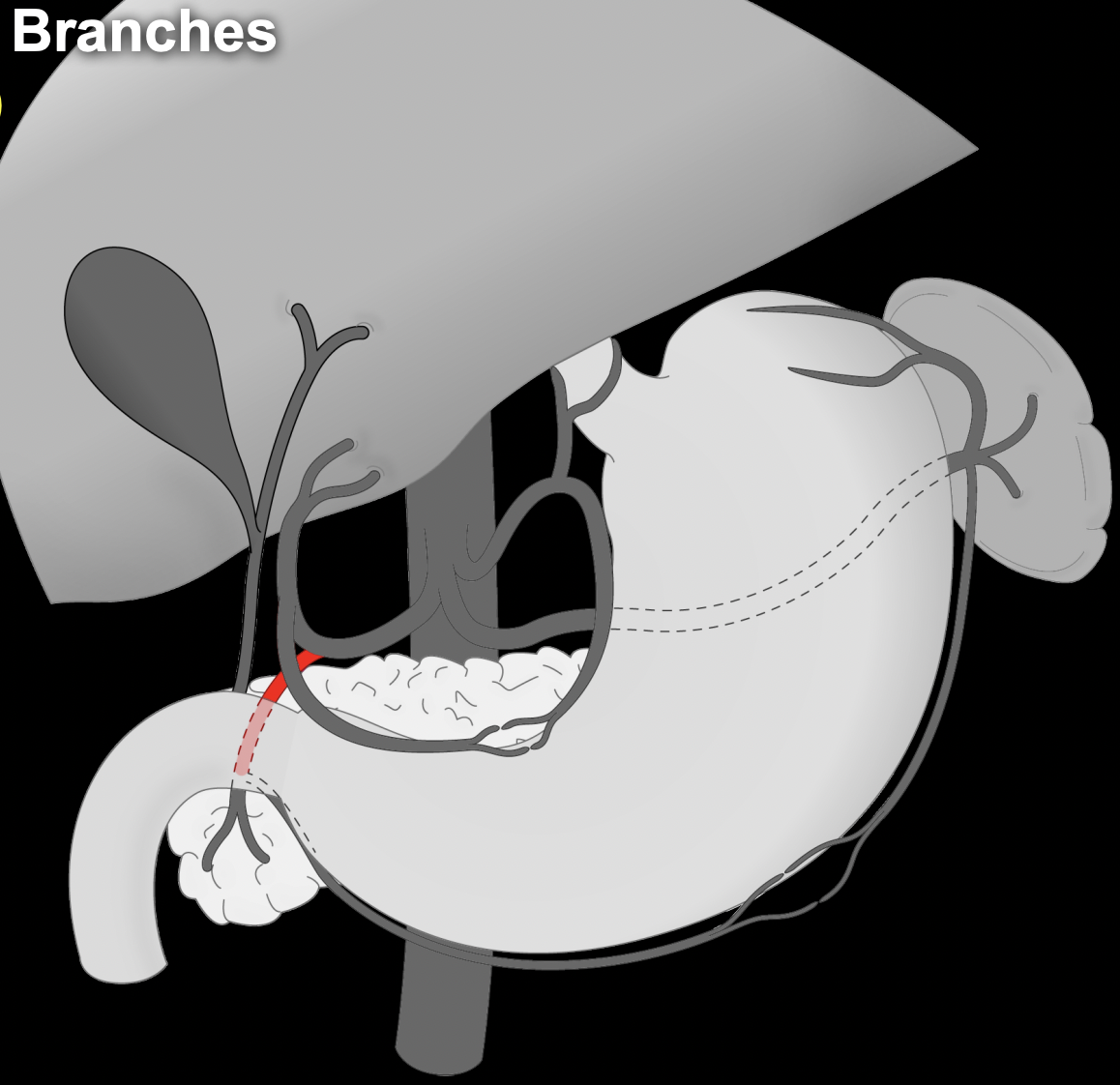
name
gastroduodenal artery
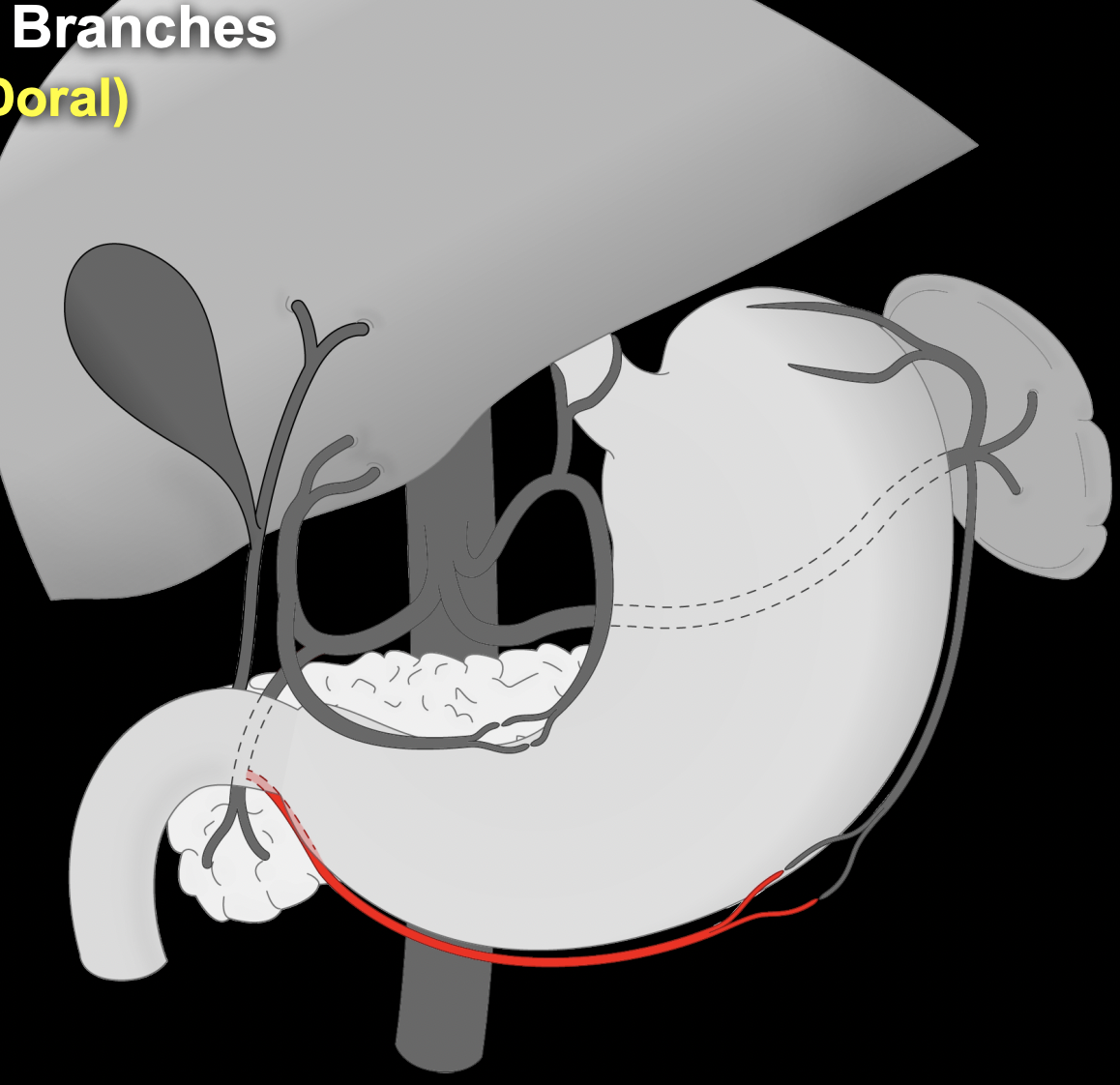
name
right gastro-omental artery
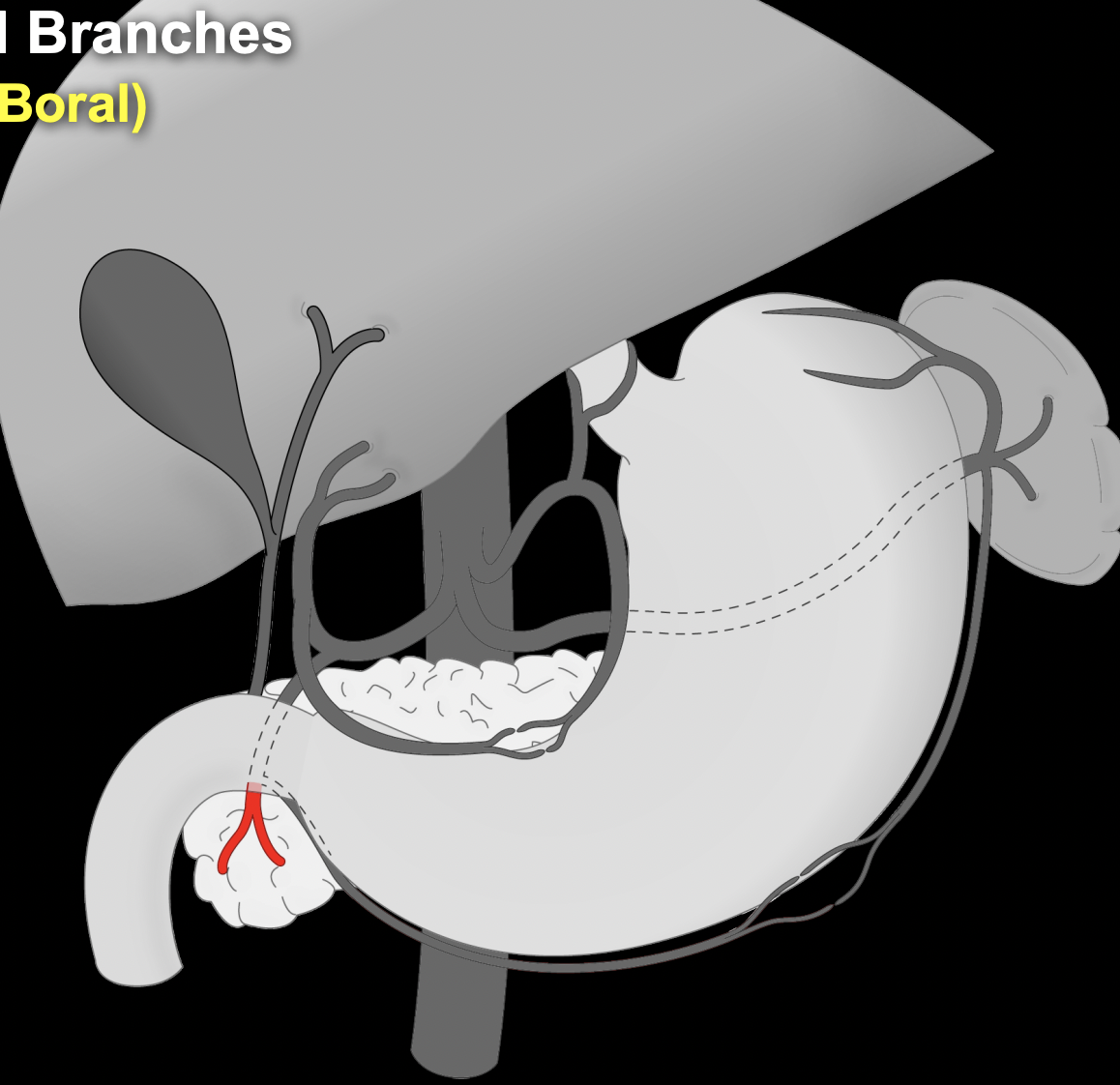
name
pancreaticduodenal artery

name everything
liver, gallbladder, esophagus, stomach, duodenum, pancreas, spleen
celiac trunk
left gastric artery
—esophageal artery
splenic artery
—short gastric artery
—left gastro-omental artery
hepatic artery
—right gastric artery
—gastroduodenal artery
—pacreaticduodenal artery
—right gastro-omental artery

venous drainage of abdominal viscera, name them and where they drain from
hepatic veins, drain from liver into IVC
renal veins, drain from kidneys into IVC
gonadal veins, asymmetrical in venous drainage (left drains into renal vein, right drains into IVC)
What is a portal system? What happened to the veins in the gut tube?
the veins in the gut tube did not disappear, they grew during development to form the hepatic portal system
a portal system is when blood flows through 2 capillary beds before returning to the heart.
ex. heart —→ artery —→ capillary bed —→ portal system —→ capillary bed 2
What must all blood pass through in the abdominal region before returning to the heart and why
In the abdominal region, all blood must pass through the liver before returning to the heart.
—the liver processes nutrients, especially sugars, without the hepatic portal system, blood would flow directly back into the IVC, causing an overload of blood sugar and we would all be diabetics (we cannot have nutrient rich blood go through the IVC, it must go through the liver first)
What is the hepatic portal system
the digestive tract is the 1st capillary bed
the liver is the 2nd capillary bed
—wherever blood goes, it must go through the liver before returning to the heart
without the hepatic portal system, we could have serious blood sugar fluctuations after meals
the hepatic portal system also works to filter toxins

so we are now returning blood to the heart, so we have to go through the hepatic portal system first, orient this piece first name it
IVC, liver (cut), esophagus, fundus of stomach, spleen, pancreas, where the greater omentum would be, stomach covering that whole area, duodenum
hepatic portal vein

name, you can do this!
left gastric vein

name
right gastric vein
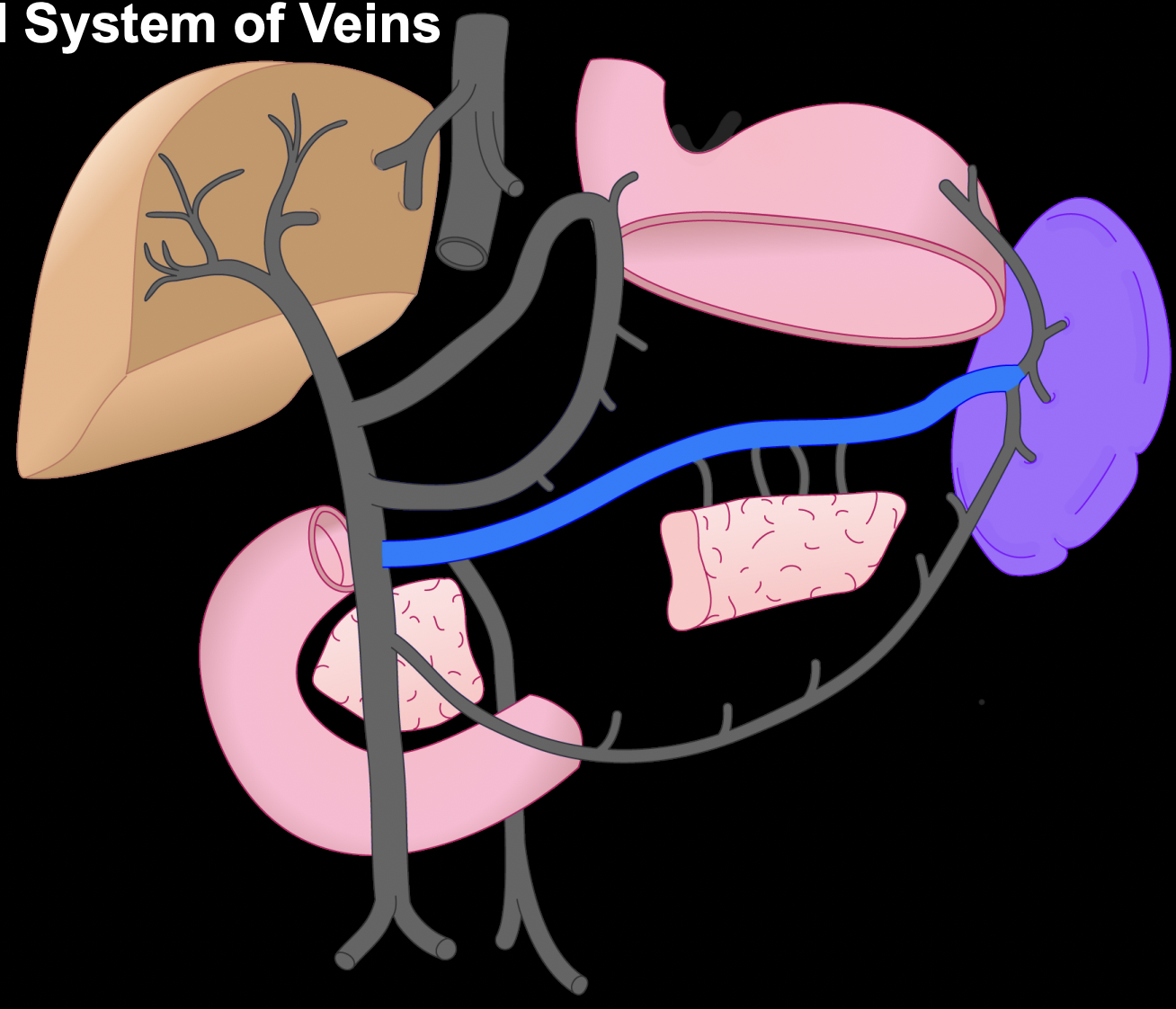
name
splenic vein
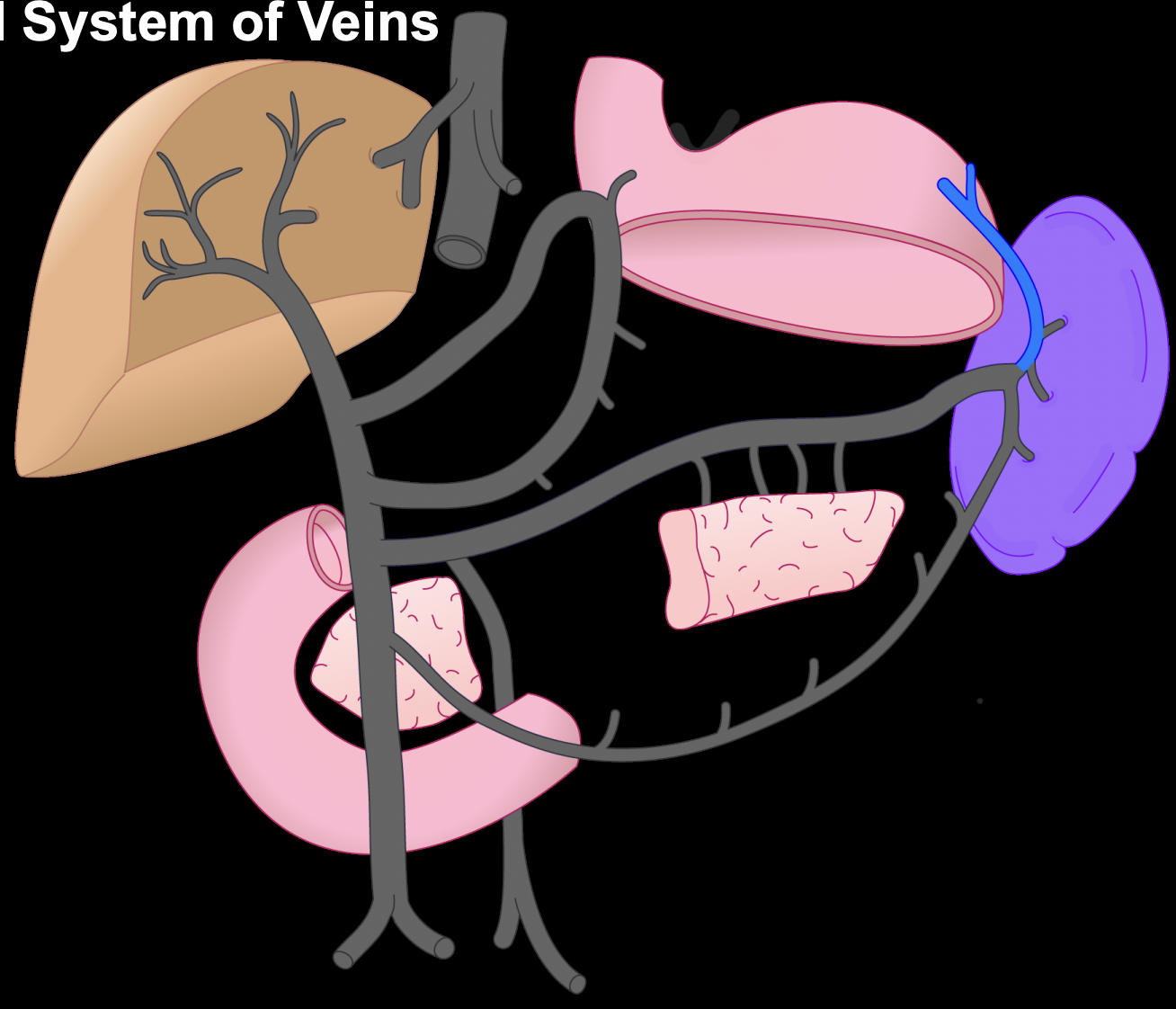
name
short gastric vein

name
left gastro-omental vein

name
inferior mesenteric vein

name
superior mesenteric vien

name
right gastro-omental vein
what 2 veins anastamos to become the hepatic portal vein
the superior mesenteric vein and the splenic vein anastemos to become the hepatic portal vein
once the blood as come from any and all roads in the hepatic portal system, where does it drain into, what happens here and where does it go
hepatic portal vein
from the hepatic portal vein —→ the blood goes into the capillary system inside the liver, which is called the hepatic sinusoids —→ then the blood goes into the hepatic veins —→ IVC —→ heart
explain how the abdominal viscera is innervated
the abdominal viscera is innervated by the autonomic nervous system by two ways, sympathetic and parasympathetic
—the sympathetic trunk runs down the vertebral column sending out sympathetic splanchnic nerves to innervate smooth muscle
—on the parasympathetic side, the vagus nerve innervated the foregut (esophagus, stomach, duodenom, gallbladder, pancreas) to the end of the midgut (jejunum, ileum, ascending colon, transverse colon. the pelvic splanchnic nerve innervate the hindgut (descending colon, sigmoid colon, rectum)