Div Lab practical 1
 Call Kai
 Learn
 Practice Test
 Spaced Repetition
 Match
 Flashcards
 Knowt Play
1/64

There's no tags or description
Looks like no tags are added yet.
Name | Mastery | Learn | Test | Matching | Spaced | Call with Kai | Chat |
|---|
No analytics yet
Send a link to your students to track their progress
65 Terms
Synapomorphy
A shared special or derived character in two or more taxa that has been inherited
from the most recent common ancestor
Character
recognizable feature of an organism
Character state
condition of said character
Ephemeral Character
recognizable but temporary feature of an organism
Lab 1: Bioquest, Where?
Rand tract
Compound Microscope
-Magnification 40-1000x (magnification =eyepiece x objective)
-Eyepieces are 10x, objectives are 4x, 10x, 40x, 100X (for oil)
-Light transmitted through specimen
Hand Lens
Typically 10x but variable, portable, good for field use
Stereoscopic Microscope (dissecting)
-Eyepieces are 10x, zoom range 0.8-3.5x, total magnification 8-35x
- Light reflected off specimen, provides 3-D image
Dichotomous Keys
-Paired choices (couplets) used to ID organisms
-Compares different character states of the same character
3 Types of Biodiversity
Genetic, Species, Ecosystem
Shannon Weiner Index
-From 0 (single species present) to 5 (evenly distributed)
-Both evenness and richness considered
Cladogram
Displays evolutionary relationships
Heterotroph
Must feed on organic materials that have originated from other plants and animals
Hymenium
Spore-bearing tissue of ascomycetes and basidiomycetes
Mycelium
Mass of hyphae, often hidden in substrate, which forms the body
Septate hyphae
Regular divisions in hyphae
Arbuscules
Symbiotic relationship
root in anouther root

appressoria
Breaking into cell wall
harmfull

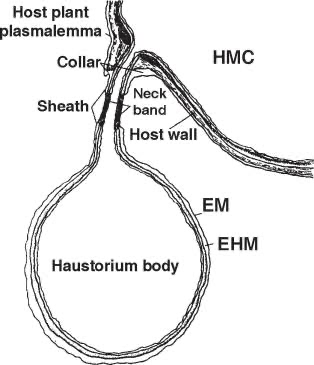
haustoria
fungi uses haustoria to break in and steal nutriance
hyphal noose
basidialmycota, wraps around and kills
Ecological roles of fungi
Decomposers (saprobes), symbionts (mutualists, parasites), pathogens, predators (nematode-trappers)
Dolipore structure
-not present in allbasidiomycetes)
-regulates the movement of large organelles (such as nuclei) between hyphal cells
dikaryotic state requierment
Clamp connections on hyphae
Conidia
Ascomycota Asexual propagule
YEASTS
Unicellular, asexual reproduction by budding or fission. Growth form, not a taxonomic term
Crustose
(lichen) Flattened thallus, firmly attached to substrate
Foliose
(Lichen) Leaf-like, mostly flat, composed of lobes, loosely attached
Fruticose
(Lichen) Three-dimensional, branched, attached at a single point
Lichen layers
cortical, algal, and medulla
Heteroecious
Need two hosts to complete life cycle
Autoecious
Only one host needed
Pathologist hosts
Primary host it whatever one causes more economic damage
Mycoligist hosts
Primary host is reproduction stages (Urediniospore and Teliospores)
Plasmogomy
Fusion of cellular content of 2 parent cells
Karyogomy
-After Plasmogomy
-Fusion of 2 nuclei
Spermatia
-plasmogomy
-Flask shaped, holds spermatia
-forms aeciospore
Aeciospore
-Cup shaped
-infects next host
Urediniospores
-Pimple shaped
-Spores amplify infection
Teliospores
-resting spores
-Falls to the ground and germinates
Basdiospore
-Gets to aecial host and germinates to start cycle again
aerial host
1st host (Spermatia and Aeciospores)
Telio host
2nd Host (Urediniospores and Teliospores)
Macrocyclic
All five stages
Microcyclic
Teliospores and basidiospores only
Demicyclic
Lack Uredinial stage
Zygomycota synapomorphy
Zygosporangium bearing a single zygospore (terms often used interchangeably)
Clade
Taxon containg comen ansestor and taxons decending from it (morphological group)
Convergent evolution
same trait diferent ancestors
mycelium
mass of hyphae
mycorrhiza
symbiotic fungi on plant root
saprobe
organism that lives on dead or decaying matter
basidium
club shaped cell where karyogamy and meiosis take place, basidospores are formed
thallus
undifferentiated vegitative tissue forming the body of the fungus
bioblitz
experts document all liveing organisums in a given area in a short amount of time
electron microscope
gets very close
steps to turn off microscope
1) move to scanning objective
2)remove slide/specimin
3)turn off microscope
4)unplug and wrap up
5)cover microscope
observeing with compound microscope
start observeing with stage at highest level
focuseing at highest objective
only use fine adjustment knob
bad mushrooms to make a spore print
-permeninal corks
-ink caps
-puffballs
where spore produceing cells are located
-gills
-pores
-teeth
hyphae
-long and filaments
-make up fungus
basidiosores mounted
on sterigmata
basidium
terminal cells of reproductive hypha where spores are produced
Ballistospores
spores forcefully propelled from site for dispersal
Hymenium
fertail spore-bearing tissue of manny fungi fruiting bodies