Unit 3
 Multiple Choice & FRQ
 Call Kai
1/35

Earn XP
Description and Tags
36 Terms
How do you calculate Arithmetic Density?
Arithmetic Density = Total Population / Total land area
How do you calculate Physiological Density?
Physiological Density = Total Population / Arable land Area
How do you calculate Agricultural Density?
Agricultural Density = Number of Farmers / Arable land Area
What is Carrying Capacity?
The maximum number of people an area can support without damaging that area’s resources.
Total Fertility Rate (TFR)
The average number of children a women will have in her child bearing years (15-49). This is specifically talking about only the number of children a women will have, not about the rate at which a country will grow. It also does not account for deaths.
RNI
RNI = Crude Birth Rate (CBR) - Crude Death Rate (CDR) / 10. This is different from TFR because it accounts not just for births, but for deaths as well. It is representative at the rate at which the country is growing, not just births itself.
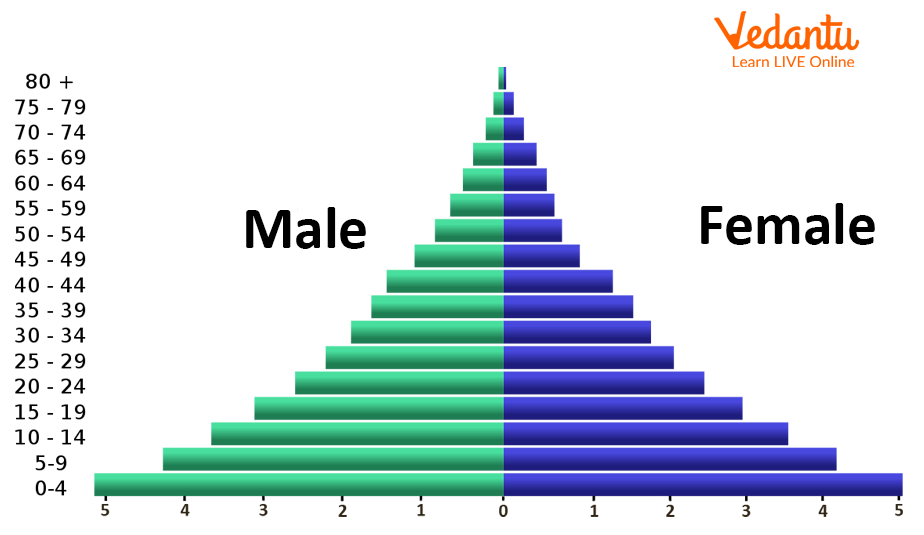
What type of shape is this?
What type of Dependency is this?
Is this a Stage 2, 3, 4, or 5?
What type of TFR, CBR, CDR, and life expectancy does this country have? Why?
LDC / MDC?
Examples?
Wide base.
Youth Dependency.
Stage 2.
High TFR, high CBR, rapidly declining CDR, still low life expectancy. Children are not likely to survive long but are needed to work on the farms. Improved nutrition and sanitation leads to a dropping death rate.
LDC (usually)
Niger, Mali, South Sudan.
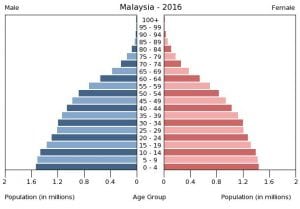
What type of shape is this?
What type of Dependency is this?
Is this a Stage 2, 3, 4, or 5?
What type of TFR, CBR, CDR, and life expectancy does this country have? Why?
LDC / MDC?
Examples?
Triangle with the corners cut off.
Youth Dependency.
Stage 3.
Falling TFR and CBR, CDR falls more slowly, life expectancy starts to increase. Urbanization, less children are needed for agricultural work, children are expensive. Increase in healthcare, female employment and education. Life expectancy and CDR continue to increase due to the progression of healthcare and nutrition.
Semi-Periphery country- countries between LDC and MDC.
Turkey, Mexico, Indonesia, India.
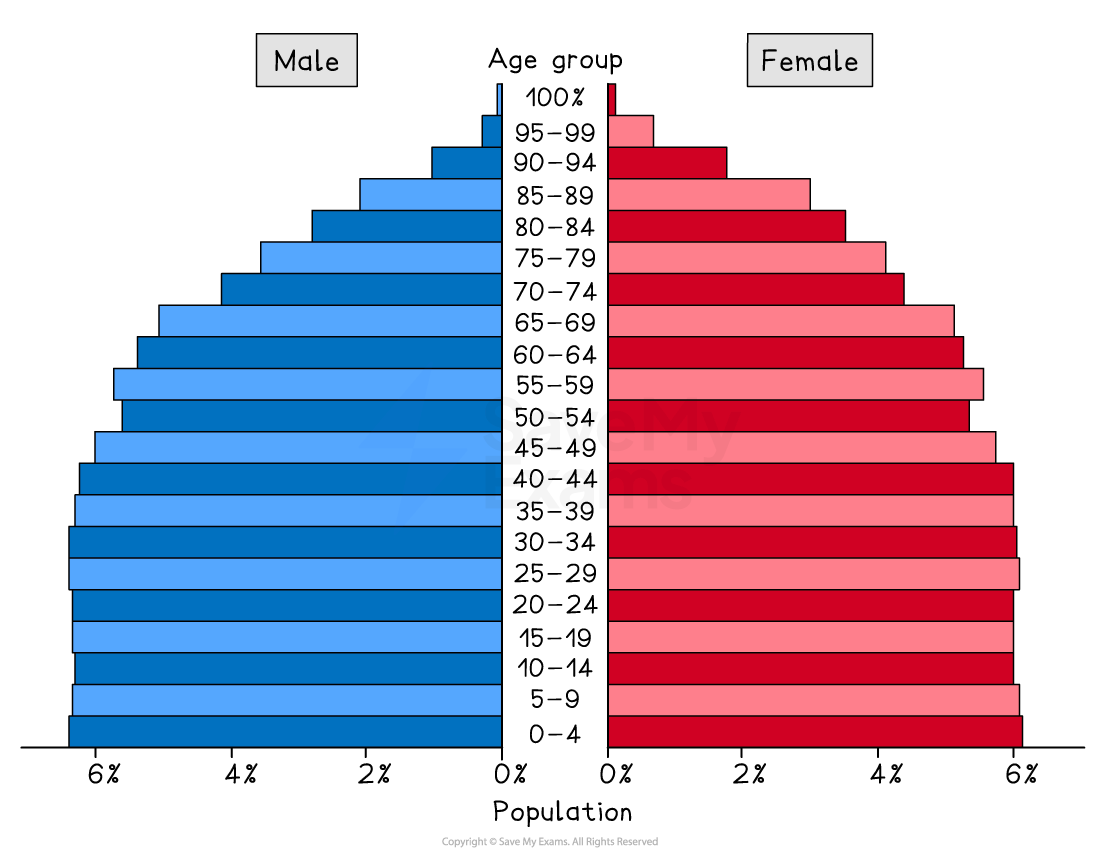
What type of shape is this?
What type of Dependency is this?
Is this a Stage 2, 3, 4, or 5?
What type of TFR, CBR, CDR, and life expectancy does this country have? Why?
LDC / MDC?
Examples?
Rectangle shape.
Beginning to shift to an elderly dependency.
Stage 4.
Low TFR and CBR. Low CDR. Continuing to increase life expectancy. Urbanization, less children are needed for agricultural work, children are expensive. Increase in healthcare, female employment and education. Very good healthcare, nutrition, sanitation.
MDC (Except China)
China, Australia, US, Canada, South Korea.

What type of shape is this?
What type of Dependency is this?
Is this a Stage 2, 3, 4, or 5?
What type of TFR, CBR, CDR, and life expectancy does this country have? Why?
LDC / MDC?
Examples?
Inverted Triangle.
Elderly Dependency.
Stage 5
Low TFR and CBR. Low CDR. Most medically advanced, highest life expectancy. Women Empowerment, more healthcare.
MDC
Japan, Germany.
LDC
MDC
Malthusian Theory
Human population grows exponentially while food supply grows linearly, which eventually leads to a catastrophic shortage of resources.
Boserup Theory
Population growth drives agricultural intensification and technological innovation, meaning food production expands to meet rising demand.
Pro-natalist policy
Anti-natalist Policy
Step Migration
Chain Migration
Guest Workers
Rural to Urban Migration
This is the most common form of migration.
Ravenstein's laws of migration
Remittances
Push Factor
Pull factor
Intervening Oppurtunities
Intervening Obstacles
Refugees
Asylum
Changing roles of women and how this has impacted the fertility rates. What happens to TFR when women are educated or have access to women’s health care?
Epidemiological Transition Model
Infectious and parasitic diseases, malnutrition, and famine. Bubonic plague, cholera, smallpox, and tuberculosis.
De-escalating infectious diseases alongside newly emerging urban and occupational illnesses. Cholera, typhoid, and recurring infectious outbreaks in crowded industrial areas.
Chronic, non-communicable, and degenerative conditions linked to aging and lifestyle. Heart disease, stroke, cancer, and diabetes.
Degenerative ailments whose onset is pushed back to older ages through advanced medicine. Alzhiemer’s, Dementia, cardiovascular diseases.
A blend of delayed degenerative sicknesses and resurfacing infectious pathogens. Drug resistant bacteria.
Epidemiological Transition Model Stage 1
Epidemiological Transition Model Stage 2
Epidemiological Transition Model Stage 3
Epidemiological Transition Model Stage 4
Epidemiological Transition Model Stage 5