Unit C: HOW A BILL BECOMES A LAW
 Call Kai
 Learn
 Practice Test
 Spaced Repetition
 Match
 Flashcards
 Knowt Play
1/6

There's no tags or description
Looks like no tags are added yet.
7 Terms
Step 1: Introduction
Step 1: Introduction
A representative from either the House of Representatives or the Senate drafts and sponsors a bill. The bill starts out in that chamber. (NOTE: bills for raising money MUST go to the House of Representatives first).

Step 2: Standing Committee
Step 2: Standing Committee
The bill is initially sent to an appropriate STANDING COMMITTEE. It is studied and debated.

Step 3: Revising & Setting Rules
Step 3: Revising & Setting Rules
Subcommittee & Markup
The bill may be referred to a more specialized SUBcommittee for further study. The subcommittee reviews the bill and “marks” it up. They make amendments and adjustments before sending it back to the standing committee for approval.
Rules Committee
The bill is sent to the RULES COMMITTEE. The committee determines the rules for debate for the bill (VERY POWERFUL).
Step 4: Floor Consideration & Debate
Step 4: Floor Consideration & Debate
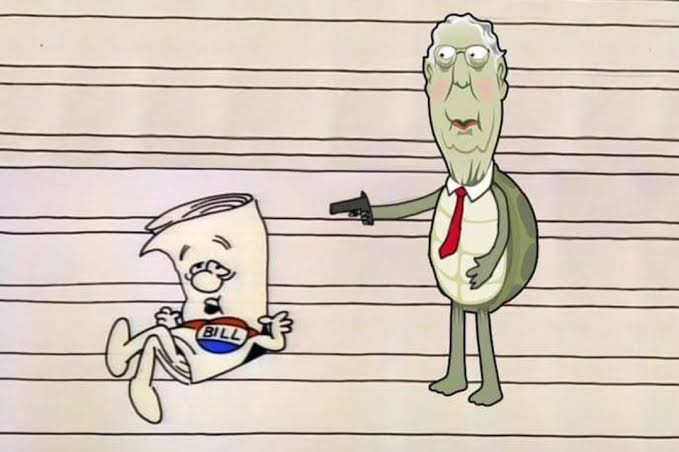
The entire chamber debates and votes on the bill. The bill may die.
Step 5: Resolution of Differences
Step 5: Resolution of Differences
If the bill is passed by a simple majority, it is sent to the other chamber of Congress. There, the committee process is repeated. Differences are resolved in a temporary committee called a CONFERENCE COMMITTEE. Both chambers must agree on the bill.

Step 6: Presidential Action
Step 6: Presidential Action
The Speaker of the House and Vice President sign the bill and sent it to the President. The President can either sign the bill or veto it (or pocket veto it).


Step 7: Overriding a Presidential Veto
Step 7: Overriding a Presidential Veto
Congress can override a veto with a 2/3 vote in each chamber. If 2/3 of the House and 2/3 of the Senate vote, the bill can then become law.