ARTH 469: Art of the Aztec Empire Midterm Review
 Call Kai
 Learn
Learn Practice Test
 Spaced Repetition
 Match
Match Flashcards
 Knowt Play
1/26

Earn XP
Description and Tags
Vocabulary flashcards covering key sculptures, architectural monuments, and codices from the Formative through Postclassic periods of Mesoamerica for the ARTH 469 midterm exam.
Name | Mastery | Learn | Test | Matching | Spaced | Call with Kai | Chat |
|---|
No analytics yet
Send a link to your students to track their progress
27 Terms

Coatlicue sculpture, dating to the Late Postclassic period. Her name means snake skirt. She was the mother of Huitzilopochtli. She was buried underground at one point, but they dug her out to put her on display at the university. People started leaving offerings, and they got scared that the Mesoamerican religion would come back, so they buried her again.

Stone of Coyolxauhqui, Late Postclassic period, ornamented with bells, only daughter of Coatlicue, she gets all of her 400 brothers to kill their mom because they were told her unborn son Huitzilopochtli would be the strongest of them all. Instead of him dying with his mother, he is born fully armored and fights off all of his siblings and dismembers Coyolxauhqui.

Huitzilopochtli figure, Late Postclassic period. God of war, he is often depicted with a hummingbird headdress and associated characteristics; he is seen as small but fearless. Is one of the most prominent deitys

Codex Boturini, dating to Late Postclassic. It records the Mexica's orgin story from Aztlan to Tenochtitlan, marking the moment their traditional history was written down.

Colossal Head 5, Early Formative Period. A monumental stone head sculpted by the Olmec at San Lorenzo, reflecting the civilization’s advanced stone-carving skill.

Monument 10, San Lorenzo: an Olmec seated stone sculpture holding an object, originating from San Lorenzo and dating to Early Formative Period. It offers rare evidence of early Mesoamerican rulers being depicted in seated, personal poses, providing insight into Olmec social roles and ceremonial practice.

Altar 5, La Venta, an Olmec stone altar Middle Formative Period. It is a key example of Olmec ceremonial sculpture, showing ritual themes of lineage and rulership.

Monument 1, Chalcatzingo, Middle Formative Period, is an important example of Olmec art, providing insight into role of rulers in rituals.

Pyramid of the Sun, the largest pyramid structure at Teotihuacan, was constructed during the Classic Period. it served as a monumental centerpiece of the city, reflecting Teotihuacan's immense political, religious, and architectural power as one of the largest structures in Mesoamerica.

Huehueteotl old god of fire sculpture. Classic Period it is one of the few Teotihuacan sculptures of a specific deity, and its crouched pose with a brazier on his head reflects the Mexica's later reverence for Teotihuacan as a sacred ancestral site.
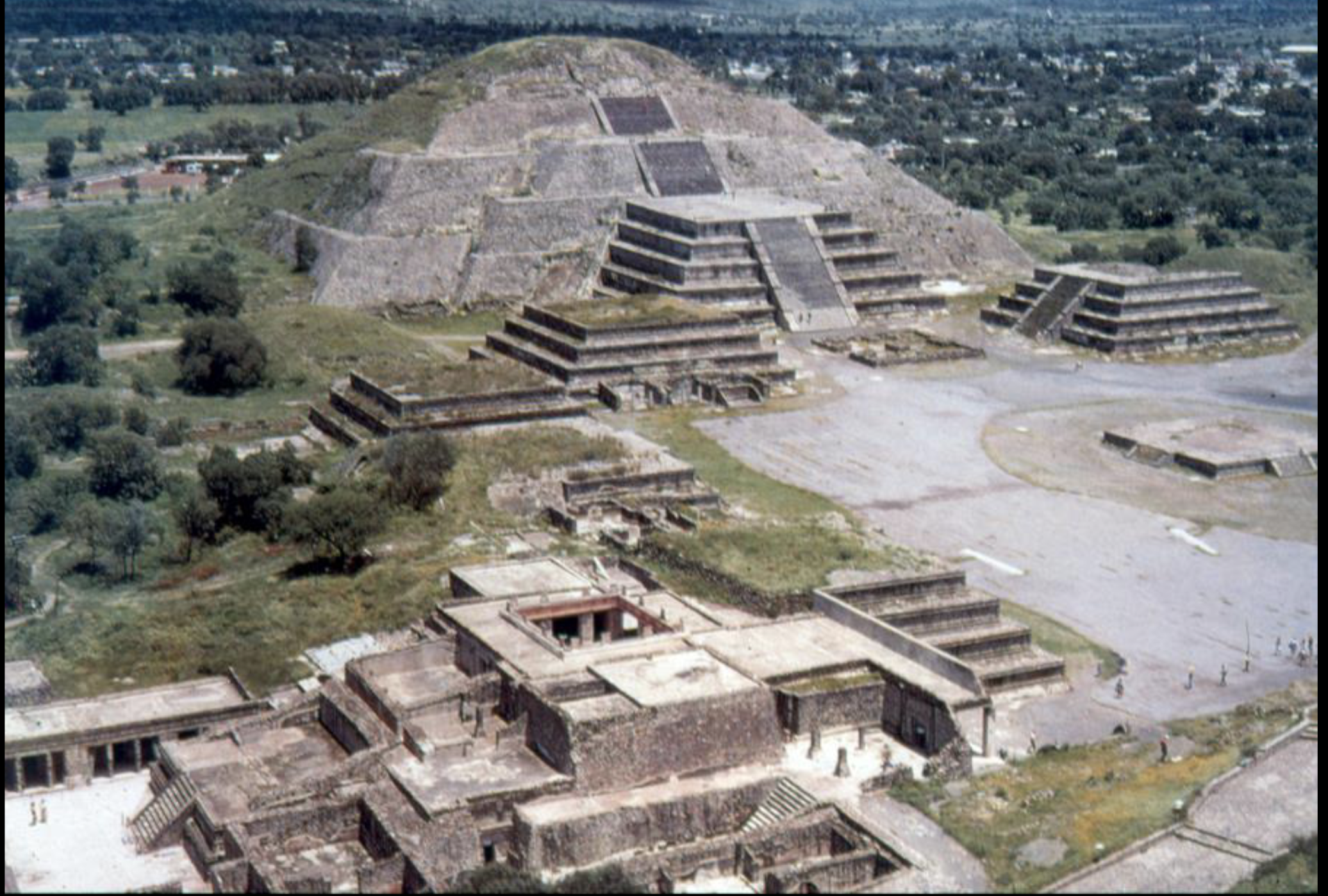
Pyramid of the Moon, Classic Period A major ceremonial stepped pyramid located in Teotihuacan. it anchored the city's central axis and was the site of ritual ceremonies, its position framing the mountain.

Temple of Quetzalcoatl, Classic Period, is one of the city's most elaborately decorated structures; it reflects Teotihuacan's religious beliefs and the importance of Quetzalcoatl in Mesoamerican culture.

Offering 45, Classic Period in Teotihuacan. it provides direct archaeological evidence of the sacrificial and dedicatory rituals performed at the temple, revealing the religious practices

Stone Mask, Classic Period Teotihuacan, it reflects Teotihuacan's tradition of idealized portraiture, where masks like this were often placed over the faces of the dead, connecting art with funerary and ritual practice.

Theater-style Censer, Classic Period A ceramic incense burner created in Teotihuacan. it reflects the city's ritual practices, with the decorated plaques and central face likely representing deities or ancestors during ceremonial and funerary rites.

Tlalocan Mural, from Teotihuacan, Classic Period, it depicts Tlalocan, the paradise of the rain god Tlaloc, offering a rare glimpse into Teotihuacan's vision of the afterlife

Pyramid of the Plumed Serpents, an Epiclassic period, it demonstrates the continuity of Mesoamerican religious traditions after Teotihuacan's decline, as later cultures adopted the feathered serpent cult, showing how Teotihuacan's legacy continued

Pyramid B, Tula, Early Postclassic Period. it is topped by the famous Atlantean warrior columns and reflects Toltec military power and the importance of warrior cults in Postclassic Mesoamerican society.

Atlantean column, Early Postclassic period Pyramid B in Tula by the Toltec. it reflects Toltec military ideology and the elevation of warrior cults, with its stylized armor and weapons embodying the idealized warrior-ruler.

Chacmool, from Tula (Early Postclassic Period). it represents a type of sacrificial altar that later spread widely across Mesoamerica, It has influences artists from all over the world and they have made their own verisons.

Palacio Quemado,Toltec at Tula, Hidalgo Early Postclassic. It was the administrative and ceremonial heart of the Toltec capital reflecting Toltec political authority.

Codex Fejéváry-Mayer, Late Postclassic Period A pre-Hispanic Nahua manuscript from Central Mexico, East West North and south based symbols

Scene from the Middle Pages, Codex Borgia, Late Postclassic Period centered on Tlaloc the god of rain and fertility. They map the dual nature of rain, both nourishing and destructive
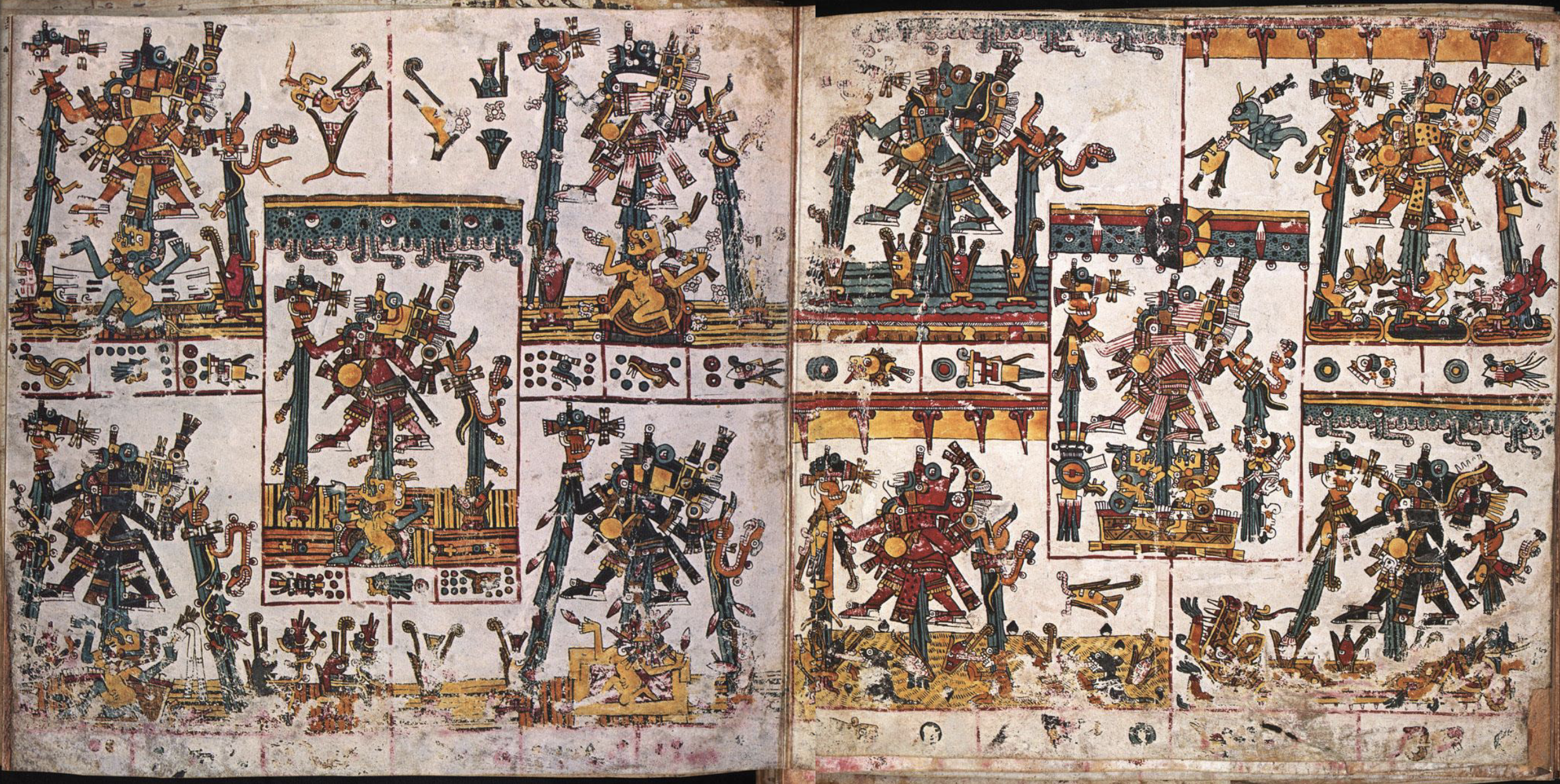
“Tlaloc Pages” Borgia. Nahua, Late Postclassic Period feature Tlaloc, the rain god, shown in shifting aspects alongside companion goddesses amidst fields of maize to illustrate both life-giving and destructive agricultural conditions.

Ornament from Monte Albán Tomb 7, gold, Late Postclassic Period Mixtec, Oaxaca. A luxurious tomb with gold and silver is the richest archeological site of the Americas, and lots of jewelry was found in it.

Scene from Codex Nuttall, ca. Late Postclassic Period, Mixtec, Oaxaca, shows a story where the Mixtec people went to conquer land. This is significant because it is one of the few books that is left that can show the history of the Mixtec people and how they lived.

Scene from Codex Selden, Late Postclassic Period, Mixtec, Oaxaca. This shows the story of Lady 6 Monkey, and it is important because Codex Selden is dedicated to her, and she is known as the Queen of the Hill of sand.