L8 Biological/medicinal use of TMs
 Call Kai
 Learn
 Practice Test
 Spaced Repetition
 Match
 Flashcards
 Knowt Play
1/21

There's no tags or description
Looks like no tags are added yet.
22 Terms
Main biological targets of metallo-drugs

Nucleic acid targets
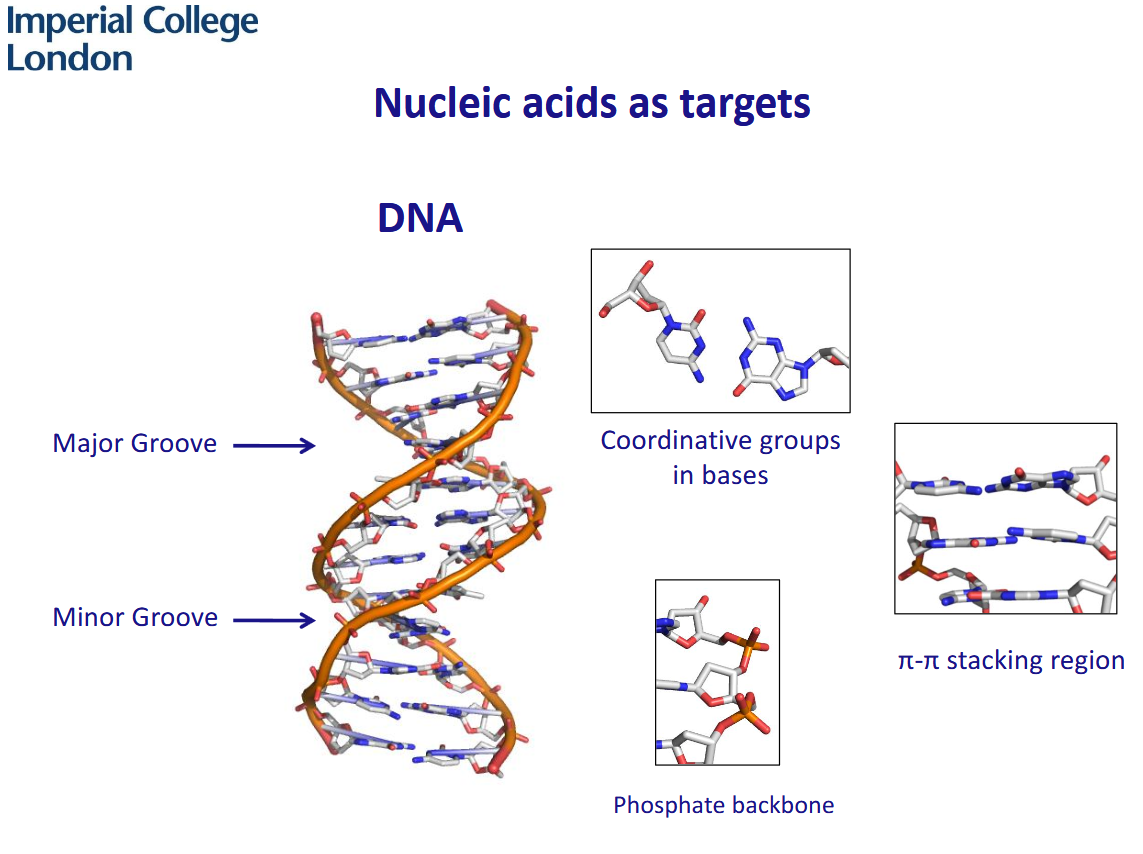
Nucleic acid target binding modes

Direct coordination with nucleobases

Actual available coordinating sites

Other potential interactions with DNA
Coordinating to DNA bases
Intercalation between DNA bases
Interaction with phosphate backbone in the minor groove
Proteins as targets

Binding to a protein pocket

Coordinating to an amino acid

Main platinum based anticancer drugs

Mode of action of platinum complexes

Changes to cisplatin as it enters the cell

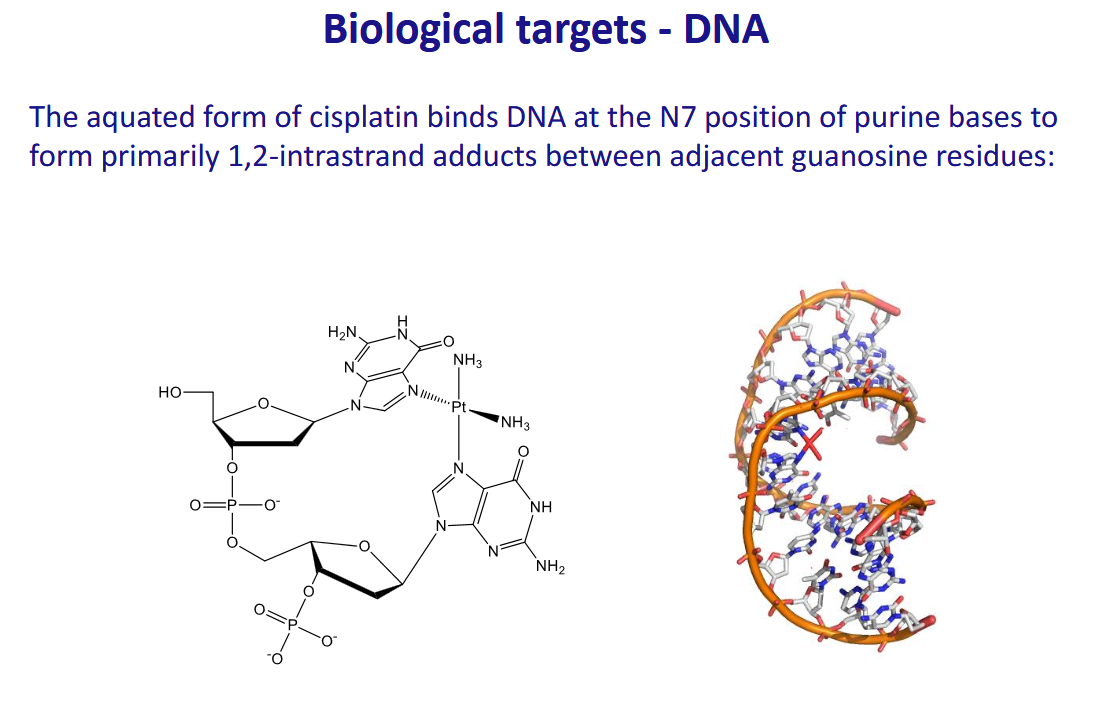
Cisplatin binding target
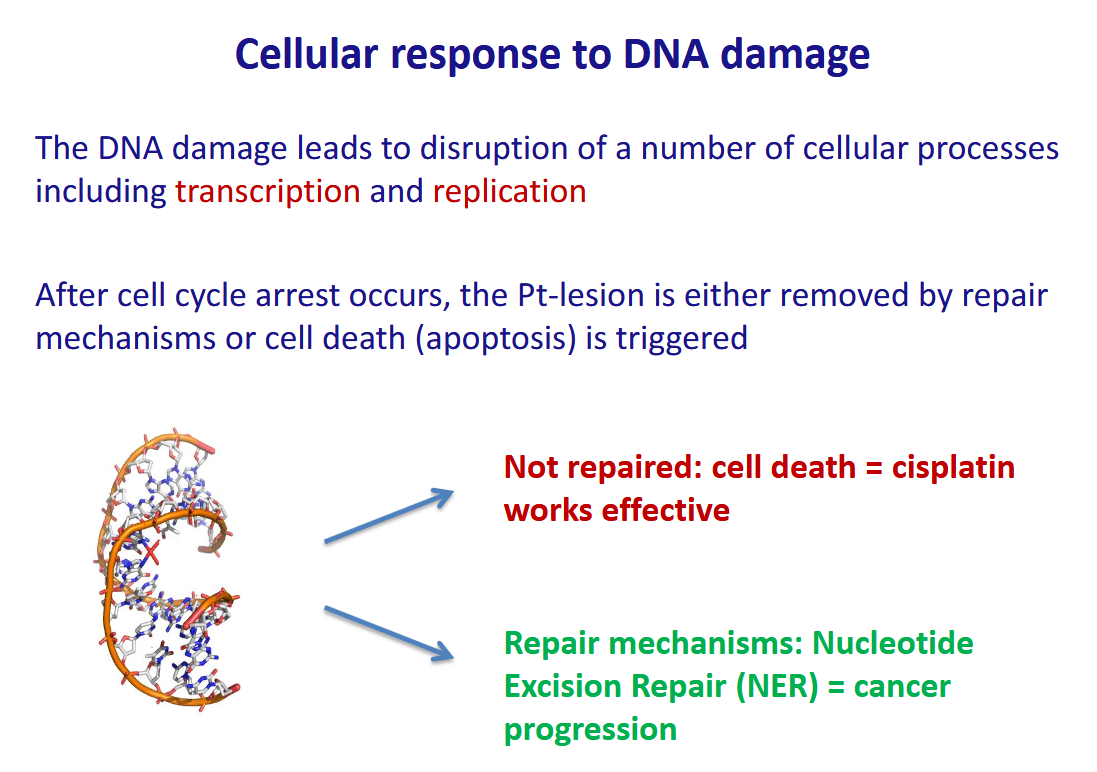
Cell response to cisplatin
Ideally cancer cells will not be able to repair the damage
Non-platinum metal anticancer compounds

Ruthenium anticancer compounds
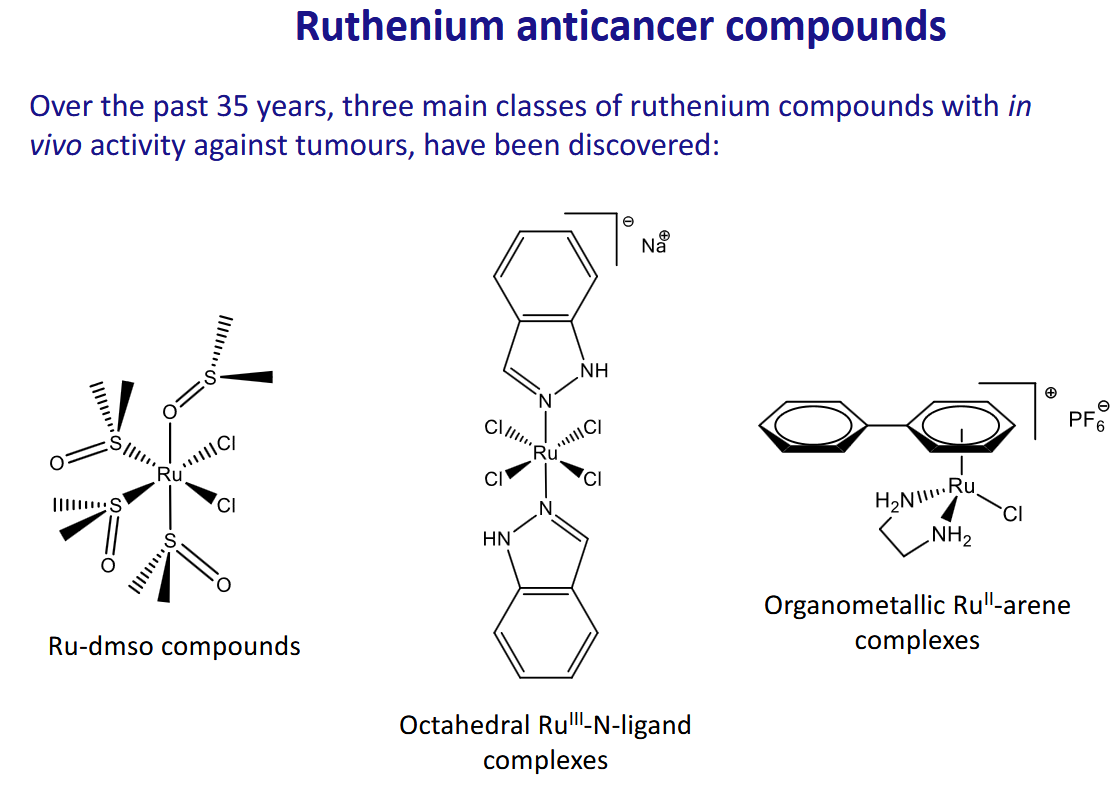
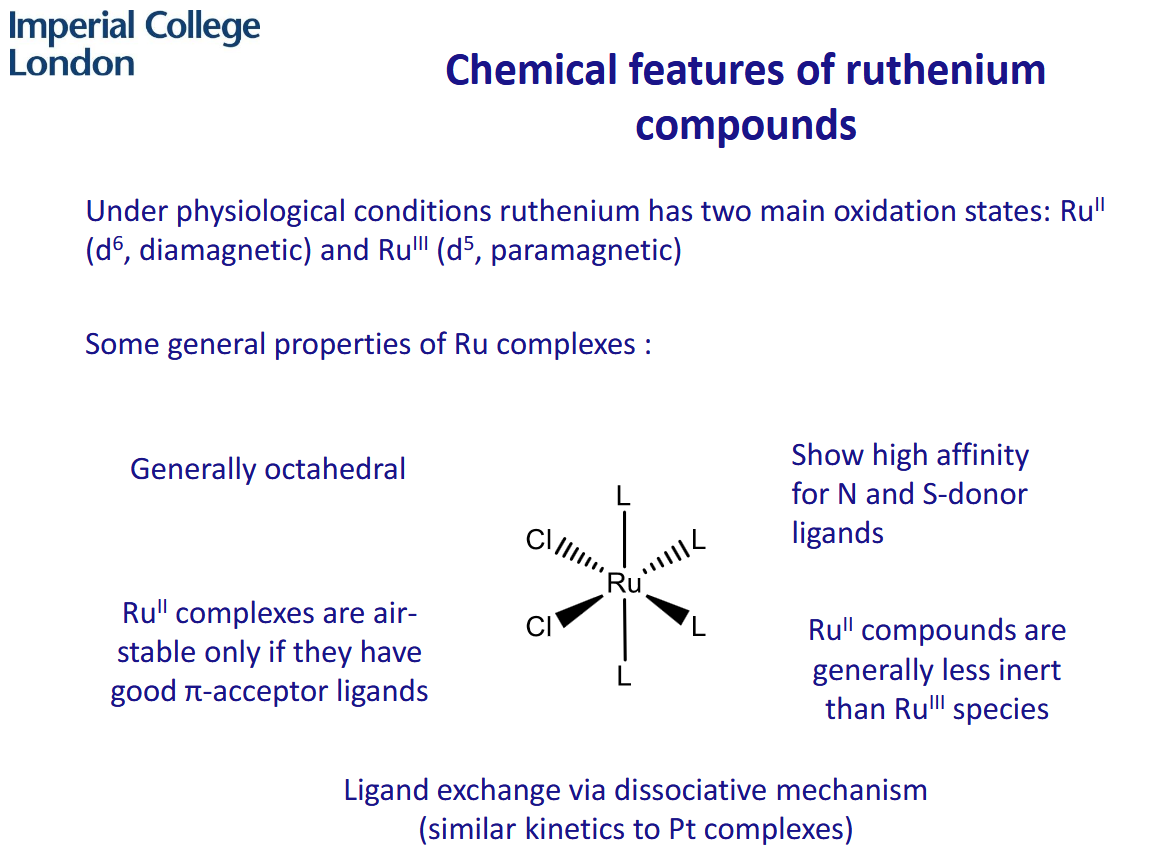
Chemical features of ruthenium
compounds
Note it has two oxidation states to platinum’s one
NAMI-A and the progression of Ru based anticancer drugs

NAMI-A therapeutic features

Titanium anticancer compounds

Titanocene as a potential drug
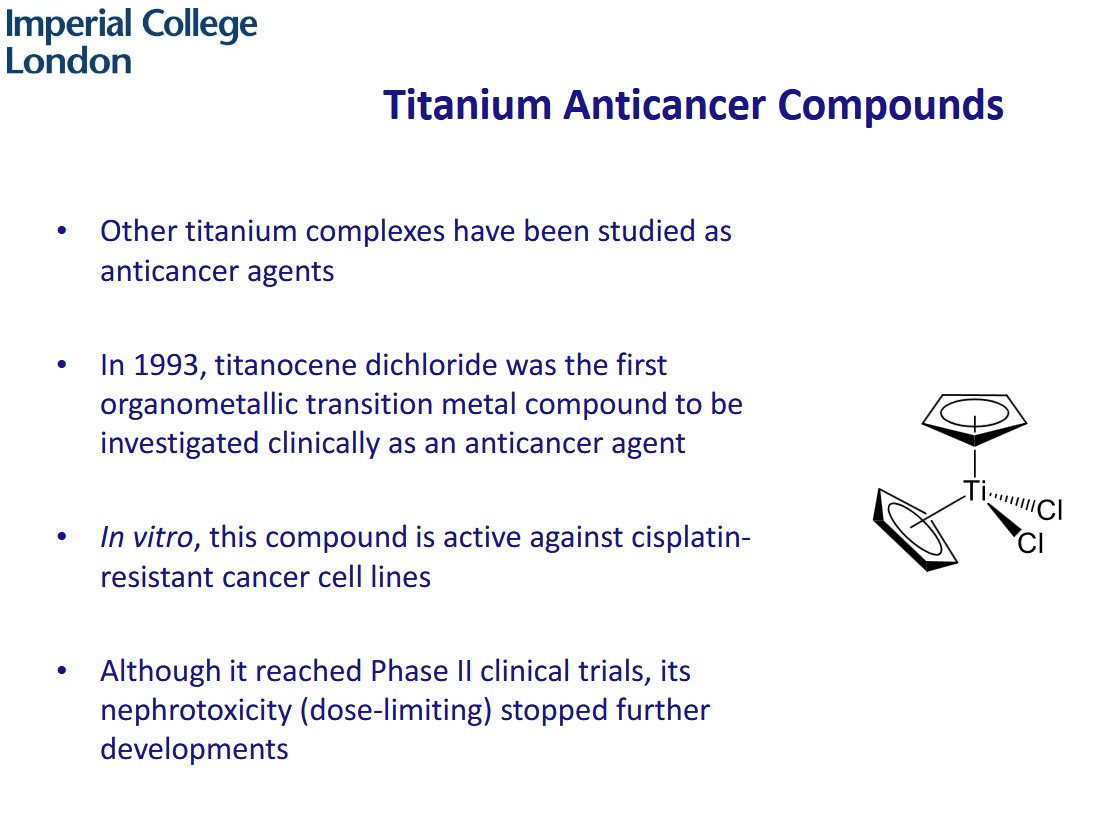
Developments in Ti drugs
