bio exam 2: Lipids & Nucleic Acids
 Call Kai
 Learn
 Practice Test
 Spaced Repetition
 Match
 Flashcards
 Knowt Play
1/35

There's no tags or description
Looks like no tags are added yet.
36 Terms
Lipids
Fatty molecules made of C, H, and O that don't dissolve in water and don't form long repeating chains (polymers).

Glycerol
The 3-carbon backbone molecule that connects to fatty acids
Fatty Acid
A long chain of carbon and hydrogen with an acid group (−COOH−COOH) at one end
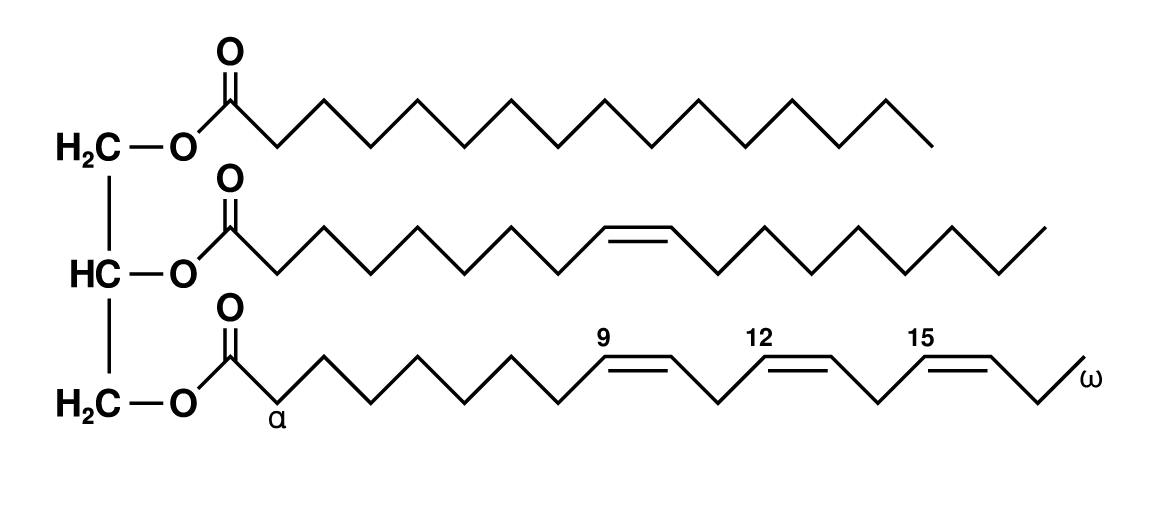
Triglyceride
The main type of body fat, made of 1 glycerol backbone attached to 3 fatty acid chains

Dehydration Synthesis
he chemical process that links glycerol to fatty acids by removing water molecules
Saturated Fat
A fat with only single bonds between carbons; packed with hydrogen, making it solid at room temperature (like butter)
Unsaturated Fat
A fat with one or more double bonds; liquid at room temperature (like plant oil)
Monounsaturated vs. Polyunsaturated
Monounsaturated has 1 double bond; polyunsaturated has 2 or more double bonds
Hydrogenation
Artificially adding hydrogen to unsaturated fats to make them more solid and last longer on store shelves
Trans-Fat
Unhealthy, fake fats created by partial hydrogenation; linear in shape, solid, and difficult for your body to break down (found in junk food)
Adipose Tissue
Body fat deposits that store energy, insulate against heat loss, and cushion internal organs
Eicosanoids
Fatty signaling molecules made from arachidonic acid that control blood clotting, pain, and inflammation
Thromboxanes
Help blood clot
Prostaglandins
Signal pain and trigger labor contractions
Leukotrienes
Coordinate the body’s immune response to injury
Cholesterol /Sterols
Ring-shaped lipids made by animals or eaten in food; used to build cell membranes, hormones, vitamin D, and bile salts
Steroid Hormones
Chemical messengers like testosterone, estrogen, and cortisol made from cholesterol
Bile Salts
Digestion-helping molecules made from cholesterol in the liver that break down (emulsify) big fat blobs into small droplets
Vitamin D
Made when sunlight hits cholesterol in the skin; needed to absorb calcium and phosphorus
Phospholipid
The main ingredient in cell membranes, made of a water-loving (polar) phosphate head and two water-fearing (nonpolar) fatty acid tails
Nucleic Acid
Large molecules (like DNA and RNA) built from nucleotide units that store and transfer genetic instructions to build proteins
Nucleotide
The monomer unit of nucleic acids, made of 3 parts: a phosphate group, a 5-carbon sugar, and a nitrogenous base
Phosphate Group
The negatively charged part of a nucleotide that gives DNA and RNA a overall negative charge
Deoxyribose vs. Ribose
Deoxyribose is the 5-carbon sugar in DNA; Ribose is the 5-carbon sugar in RNA
Purines
Double-ringed bases: Adenine and Guanine
Pyrimidines
Single-ringed bases: Cytosine, Thymine, and Uracil
Complementary Base Pairing
Bases match up specifically via hydrogen bonds: A pairs with T (or U in RNA), and G pairs with C
Antiparallel
The two strands of a DNA double helix run parallel to each other, but face in opposite directions
Phosphodiester Bond
The strong chemical bond linking the sugar of one nucleotide to the phosphate of the next, building the "backbone"
DNA
Double-stranded genetic blueprint containing A, T, G, and C
RNA
Single-stranded copy of genetic info containing A, U, G, and C
mRNA
Temporary copy of a gene used as a template to build a protein
tRNA
The truck that picks up and delivers specific amino acids to the ribosome
rRNA
The physical RNA helper that makes up the structure of a ribosome
ATP (adenosine triphosphate)
A specialized nucleotide carrying 3 phosphate groups that serves as the cell’s primary energy molecule