Bio 103 Exam 3 (McMullen)
 Call Kai
 Learn
 Practice Test
 Spaced Repetition
 Match
 Flashcards
 Knowt Play
1/124

There's no tags or description
Looks like no tags are added yet.
125 Terms
Interphase
cell grows, performs its normal functions, and prepares for division; consists of G1, S, and G2 phases
G1 phase
the cell grows in size and organelles double in size
S phase
DNA replication ("S"= synthesize)
G2 phase
cell growth, production of enzymes and other proteins
two categories of mitosis
1. karyokinesis (division of cell nucleus)
2. cytokinesis (division of cytoplasm)
prophase
1. chromatin condenses to form chromosomes; nuclear membrane and nucleoli disappear
2. centrosomes move apart and form polar spindle fibers
3. kinetochore fibers attach to proteins called kinetochores within the centromere of each chromatid pair
centromere
Area where the chromatids of a chromosome are attached

chromatid
one of two identical "sister" parts of a duplicated chromosome

chromatin
Clusters of DNA, RNA, and proteins in the nucleus of a cell

kinetochore
A specialized region on the centromere that links each sister chromatid to the mitotic spindle.

metaphase
the kinetochore and its fibers move the chromosomes to the equatorial plate where they form a line
anaphase
1. chromatids separate and move to opposite poles
2. the centromeres move first and the arms drag behind
what are the longest and shortest phases of mitosis
prophase is the longest; anaphase is the quickest
telophase
1. the spindle fibers break down
2. nuclear membranes, nucleoli, and chromatin reappear
cytokinesis in plant cells
1. cell plate forms from inside out by vesicles produced by dictyosomes
2. cell plate becomes middle lamella
3. cell wall is laid down
the result of mitosis
1. 2 genetically identical diploid body cells with a complete set of chromosomes identical to the mother cells
2. growth/ replacement of cells in multicellular organisms
3. means of asexual reproduction in uni/multicellular organisms
what allows plants to reproduce asexually?
rhizomes, stolons, and plantlets
rhizomes
horizontal underground stems
stolons
horizontal above ground stems
plantlets
miniature plants on special leaves that produce new plants at a later time (formed at the margins of leaves)
what allows animals to reproduce asexually
fragmentation, budding, and fission
fragmentation
a portion of an individual can break free and regenerate an entire organism
budding
a miniature offspring forms on the parent and then breaks off
fission
the separation of a parent into two or more individuals of roughly equal size
what are some animals that reproduce asexually
sponge, sea anemone, hydra
advantages of asexually reproduction
1. create numerous offsprings quickly
2. quickly colonize a new habitat
3. can reproduce in isolation (no mate)
4. perpetuates successful combinations of genes
*most advantageous in a stable, favorable environment
meiosis
a type of cell division that results in four daughter cells each with half the number of chromosomes of the parent cell, as in the production of gametes and plant spores. **reduction division
sexual reproduction
gamete formation (meiosis) and syngamy (fertilization)
syngamy
The fusion of two gametes to form a diploid zygote in fertilization.
meiosis i
separates homologous chromosomes
meiosis ii
sister chromatids separate
prophase i
1. the chromosomes condense and group in pairs
2. the nuclear envelope breaks down.
3. crossing-over occurs (recombination)
tetrads
synapse of homologous pairs; four chromatids from homologous chromosomes

metaphase i
tetrads line up in the middle of the cell
anaphase i
homologues separate and move to opposite poles ; sister chromatids stay together
telophase i
1. homologous chromosomes have reached the poles; nuclear envelopes may/not form and cytokinesis may/not occur
2. newly forming cells are haploid; each chromosome has two non-identical sister chromatids
interkinesis
period of time between meiosis I and meiosis II during which no DNA replication takes place.
prophase ii
1. the nuclear envelope breaks down and spindle fibers reform
2. starting cells are the haploid cells made from meiosis i
metaphase ii
the chromosome line up on equatorial plane
anaphase ii
sister chromatids separate and move to opposite poles
telophase ii
1. the spindle fibers disappear, and a nuclear membrane forms around each set of chromosomes.
2. newly forming gametes are haploid
3. cytokinesis takes place
results of meiosis
4 haploid daughter cells; each has 25% of DNA and half the amount of chromosomes
fertilization of egg and sperm result in...
diploid offspring with 50% of DNA and homologous pair of chromosomes
importance of meiosis
genetic variation in species
** in humans: over 64 trillion different combinations w/o considering crossing over
green plants
green algae and land plants
land plants
nonvascular plants, vascular seedless plants, gymnosperms, angiosperms
most primitive green plant
green algae
green plant synapomorphies
chlorophyll b, grana in chloroplasts, cellulose & hemicellulose are major cell wall components, plasmodesmata, and starch is the food storage product
plasmodesmata
channels through cell walls that connect the cytoplasms of adjacent cells
differences between land plants and green algae
gametangia, diploid embryo, and cuticle
gametangia
outer, sterile layer of protective plants
diploid embryo
grows into a multicellular, sporophyte generation
cuticle
outer, waxy covering which prevents them from losing water since they have to live on land
most primitive LAND plants
nonvascular plants: liverwort, hornwort, moss
once thought to cure liver disease
liverwort (according to the Doctrine of Signatures)
hornworts
1. mature sporangium releases spores
2. spores become gametophyte
moss
most advanced nonvascular plant due to stomata; has hydroids and leptoids (similar to xylem and phloem)
haploid generation
gametophyte
diploid generation
sporophyte
sporic meiosis
alternation of generations
vascular plants
have organs (roots, stems, and leaves) and a vascular tissue system (xylem and phloem)
seed plants
have seed = embryo, nutritive tissue, seed coat
2 types: gymnosperms and angiosperms
gymnosperms
A plant that produces seeds that are exposed rather than seeds enclosed in fruits; no flowers
ex: pine
pine
males cone (pollen grains), female cone (ovule)
angiosperms
1. flowers
2. fruits
3. double fertilization
4. 3 or 8 nucleate macrogametophyte
largest angiosperm
eucalyptus
smallest angiosperm
wolffia (duckweed)
two classes in phylum anthophyta
monocotyledones and eudicotyledones
characteristics of moncots
1. one cotyledon apart of each embryo
2. flower parts in 3's or multiples of 3
3. parallel leaf venation
4. scattered stem vascular bundles
monocot examples
coconut palm, trillium, rice, wheat, corn
characteristics of dicots
1. 2 cotyledons apart of each embryo
2. flowers in 4's or 5's
3. distinct ring of stem vascular bundles
4. net leaf venation
examples of dicots
cinquefoil, daisy, strawberry, poppy, cactus, lima beans
typical flower parts
ovule, receptacle, sepal, stamen (anther/ filament), petal, pistol (stigma, style, ovary)
ovule
female reproductive structure of a seed plant where the haploid egg develops; becomes seeds
receptacle
The base of a flower; the part of the stem that is the site of attachment of the floral organs.
sepal
A leaflike structure that encloses the bud of a flower; for protection
stamen
the male reproductive organ of a flower
anther
the part of a stamen that contains the pollen.
filament
the stalk of a stamen; supports the anther
petal
attracts pollinators
pistil
female reproductive organ of a flower
stigma
where pollen lands
style
The stalk of a flower's carpel, with the ovary at the base and the stigma at the top; "pollen tube"
inflorescence
cluster of flowers
(panicle, spike, raceme, head, catkin)
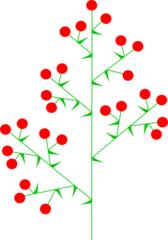
panicle
a branched, indeterminate inflorescence with flowers on short stalks along the axis (most complex)
spike
single stalk with flowers directly on the stalk (simplest)
ex: corn

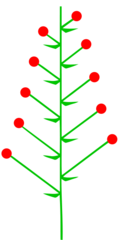
raceme
central stem with flowers on small stalks
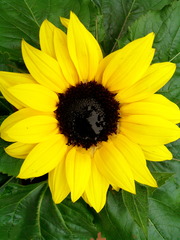
head
outer (ray) and disc (inside) flowers
catkin
slim cylindrical flower cluster with few or no petals; hanging arrangements

pollination syndrome
a set of flower characteristics associated with a particular type of pollinator; pollinators and flowers coevolve
beetle pollination
1. eat their way through petal (ovules are found deeper)
2. pollinate one large flower or inflorence
3. clumsy, primitive, unsophisticated
bee pollination
1. white or yellow flowers
2. nectar guides
3. some orchid flowers resemble female bees that male bees copulate with them
4. nectar robbing: no pollination occurs but bees get nectar
fly pollination
1. foul odor
2. pollen sticks to body
moth pollination
1. active at night
2. pale flowers; strong odor
butterfly pollination
1. attractants: brightly colored flowers
2. rewards: abundant nectar
bird pollination
1. bright colors (reds); no odor
2. pollen attaches to beak and feathers
bat pollination
1. fermented smell
2. mostly in tropics
wind pollination
1. pollination of plants by means of pollen carried on the wind
2. no odor, no petals
ex: corn
water pollination
pollen floats on water between flowers
three types of fruits
aggregate, multiple, simple